Electric vehicle sales in Connecticut have fallen precipitously since the elimination of federal tax credits by the Trump administration last September, according to new data from the Department of Energy and Environmental Protection.
While the trend mirrors a wider national slump in EV sales, some experts expressed optimism this week that the rising price of gasoline — driven by the ongoing war in Iran — could begin to nudge drivers back towards electric and plug-in hybrid vehicles.
Connecticut’s CHEAPR program, which continues to offer financial incentives to residents buying new EVs, recorded an all-time high in demand for EVs in December 2024, when nearly 1,000 monthly purchases were made using state rebates. (Data from the program, which is published monthly, does not reflect all EV sales in the state. However, it can serve as a leading indicator for overall registration numbers, which are updated twice a year).
The distribution of rebates surged again, briefly, last summer just before the expiration of federal tax credits worth up to $7,500 for new EVs and up to $4,000 for used vehicles. Those federal credits became unavailable after Sept. 30.
window.addEventListener(“message”,function(a){if(void 0!==a.data[“datawrapper-height”]){var e=document.querySelectorAll(“iframe”);for(var t in a.data[“datawrapper-height”])for(var r,i=0;r=e[i];i++)if(r.contentWindow===a.source){var d=a.data[“datawrapper-height”][t]+”px”;r.style.height=d}}});
Afterwards, EV rebates plunged by more than 80% in October before rebounding slightly over the last several months, according to CHEAPR data.
Officials attributed at least part of that steep decline to car-buyers rushing to purchase EVs ahead of the deadline for federal tax credits. But more broadly, the shift in federal policy has simply made EVs less affordable for many people who would otherwise be interested making the switch from internal combustion engines.
“It’s not unexpected. These are the consequences of the federal government walking back longstanding federal tax supports for clean vehicles,” said Department of Energy and Environmental Protection Commissioner Katie Dykes. “Of course, that’s going to mean that some consumers may be maybe left out and find that EVs are not an option for them at the moment.”
The decline in sales has not meant there are fewer EVs on the road in Connecticut. In December, there were more than 73,156 electric and plug-in hybrid vehicles registered in the state, a 20% increase over the previous year.
window.addEventListener(“message”,function(a){if(void 0!==a.data[“datawrapper-height”]){var e=document.querySelectorAll(“iframe”);for(var t in a.data[“datawrapper-height”])for(var r,i=0;r=e[i];i++)if(r.contentWindow===a.source){var d=a.data[“datawrapper-height”][t]+”px”;r.style.height=d}}});
One positive sign for EV adoption in recent months has been a national uptick in the number of people purchasing used vehicles, according to Barry Kresch, the president of the Electric Vehicle Club of Connecticut.
Kresch said that interest is being driven glut of used EVs entering the market as leases expire on cars that were originally eligible for the federal tax incentives under the so-called “leasing loophole” included in the Inflation Reduction Act of 2022. The wide availability of those used EVs has made their price more comparable with their gas counterparts.
“If you’re in the used car market and you’re seeing the price of gas, it looks like a pretty attractive deal,” Kresch said. “As far as the price of gas affecting new vehicle sales, I think prices would have to stay high for a while.”
Ann Munley, the director of association operations for the Connecticut Automotive Retailers Association, said in a statement on Thursday that buyers remain interested in EVs despite the recent fluctuations in the market.
“Connecticut’s franchised new car dealers are working closely with customers to highlight the latest advancements in range, performance and affordability as automakers continue to expand their EV offerings,” Munley said. “With a robust selection of models available at local dealerships, car buyers have opportunities to explore EV options in person and find a vehicle that fits their needs and budget.”
window.addEventListener(“message”,function(a){if(void 0!==a.data[“datawrapper-height”]){var e=document.querySelectorAll(“iframe”);for(var t in a.data[“datawrapper-height”])for(var r,i=0;r=e[i];i++)if(r.contentWindow===a.source){var d=a.data[“datawrapper-height”][t]+”px”;r.style.height=d}}});
Total Connecticut EV registration grew by 5,500 vehicles from July to December 2025, regardless of rebate participation. That’s a decline from the peak of 8,378 new vehicles registered during the first half of 2024.
Of those new registrations, fewer than half participated in Connecticut’s rebate program, according to CHEAPR data from the same period.
During the surge in EV purchases made prior to the expiration of the federal tax credits last year, DEEP officials temporarily cut the size of state rebates available through the CHEAPR program in order to “ration” the limited amount of funds available.
In October, once the federal tax credits were gone, CHEAPR rebates for fully electric vehicles were increased to $1,000, while the amount available for plug-in hybrids remained at $500. Some vehicle owners may get up to $4,000 total in additional incentive under the Rebate+ program for low and moderate-income buyers, or people living in environmental justice communities.
Still, those increases have not been enough to spur demand for EVs after the loss of the more valuable federal tax incentives, according to Kresch.
“I think what we can say is the [state] incentive is too small on its own to fill the gap,” Kresch said. “It’s good that it’s there, but it’s only $1,000.”
Kresch pointed out that lawmakers are currently considering two different pieces of legislation, Senate Bill 416 and House Bill 5153, that would amend the eligibility requirements of the CHEAPR program to be more geared toward low-income buyers and used vehicles. Kresch said he would like to see lawmakers go even further and allow people to use the state rebates to purchase used models of higher-priced vehicles that were exempt from the program when new.
In the meantime, with the loss of the federal incentives, the steady rise of gasoline prices — which, in Connecticut, hit over $4 per gallon this week — may be pushing consumers towards electric vehicles.
The average price of a gallon of gasoline in Connecticut was $4.02 on Thursday, according to AAA. That was an increase of nearly 38% from one month ago.
window.addEventListener(“message”,function(a){if(void 0!==a.data[“datawrapper-height”]){var e=document.querySelectorAll(“iframe”);for(var t in a.data[“datawrapper-height”])for(var r,i=0;r=e[i];i++)if(r.contentWindow===a.source){var d=a.data[“datawrapper-height”][t]+”px”;r.style.height=d}}});
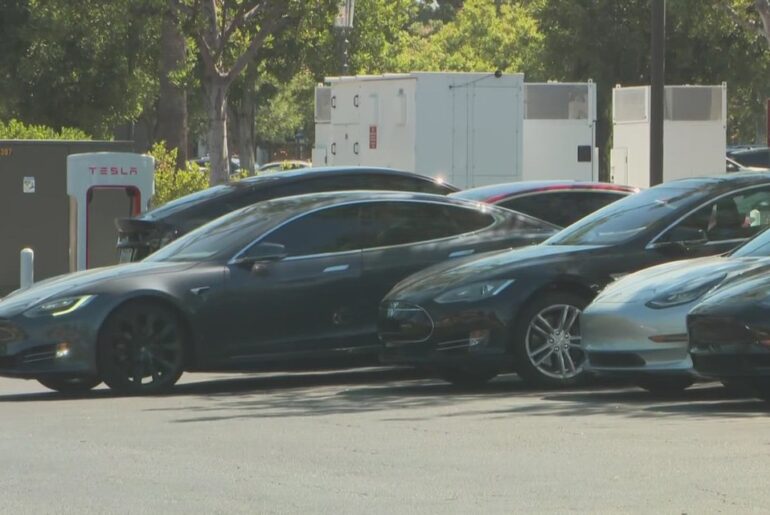
Tesla — which is by far the most popular EV brand in Connecticut — reported a slight increase in global sales over the first three months of the year, according to the New York Times. The paper also reported that several other automakers have seen similar boosts in EV sales in recent months.
Dykes noted that EVs accounted for about 6% of all new vehicles sold in Connecticut during the final quarter of 2025. While that number was a decline from over 10% throughout most of last year, it was on par with the market for EVs as recently as 2022.
“I think those folks who might have assumed that regulatory rollbacks … or rolling back federal tax credits would be the nail in the coffin of electric vehicles, have maybe not really been in touch with with consumer sentiment lately,” Dykes said.
She added, “the elimination of the federal tax credit has certainly had an impact on consumer consumer adoption, but I think it’s ultimately just going to contribute to maybe a slower pace of adoption.”
This article first appeared on CT Mirror and is republished here under a Creative Commons Attribution-NoDerivatives 4.0 International License.