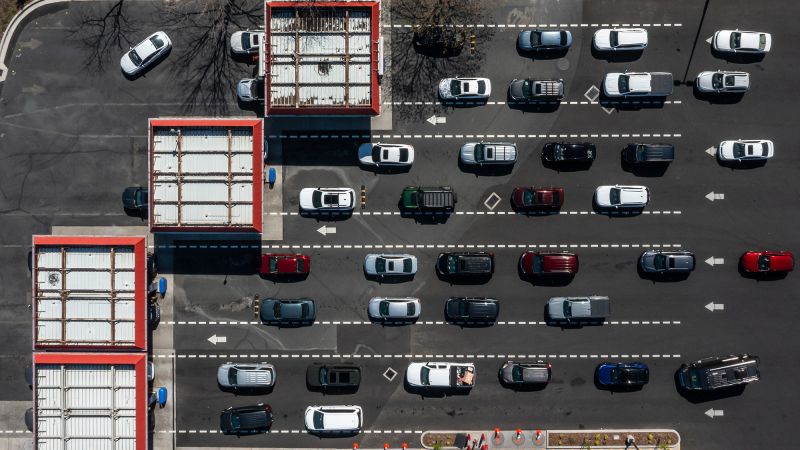
Tim Heitman has been checking the gas prices at his local Costco every day since the US-Israeli conflict with Iran started. But he isn’t bothered by the fact that the cost has jumped by more than $1 a gallon over the past month or so. That’s because the Seattle resident drives an electric vehicle.
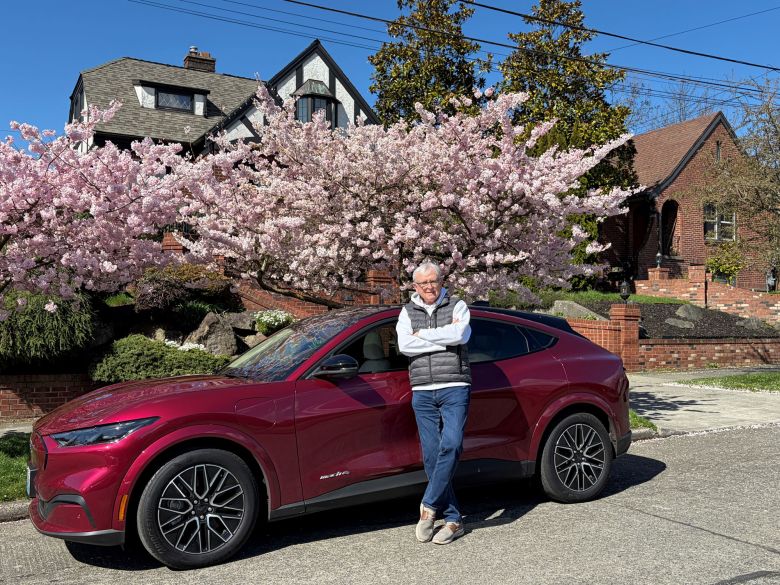
Gas prices weren’t a consideration when he decided to purchase a Ford Mustang Mach-E last June to replace his Audi Q7 SUV – he mainly liked the look of the car and enjoyed the test drive. But now Heitman is especially happy that he can fill up with electrons in his driveway, as he puts it. He estimates he would have paid around $70 more for gas in recent weeks than it has cost him to charge the Mustang at home.
“I smile every time I drive by the gas line at Costco,” said Heitman, 75, who worked in commercial real estate.
More than a dozen EV owners have written to CNN about how they have been able to avoid the spike in gas prices that is squeezing many Americans’ wallets and exacerbating the nation’s affordability crisis. Gas topped $4 a gallon on Tuesday, up $1.04 from the end of February, when the war began.
While electricity prices have also climbed in recent years, many EV owners interviewed said they have escaped a steep increase in their utility bills because they also installed solar panels or they charge their cars at times of the day when electricity is less expensive.
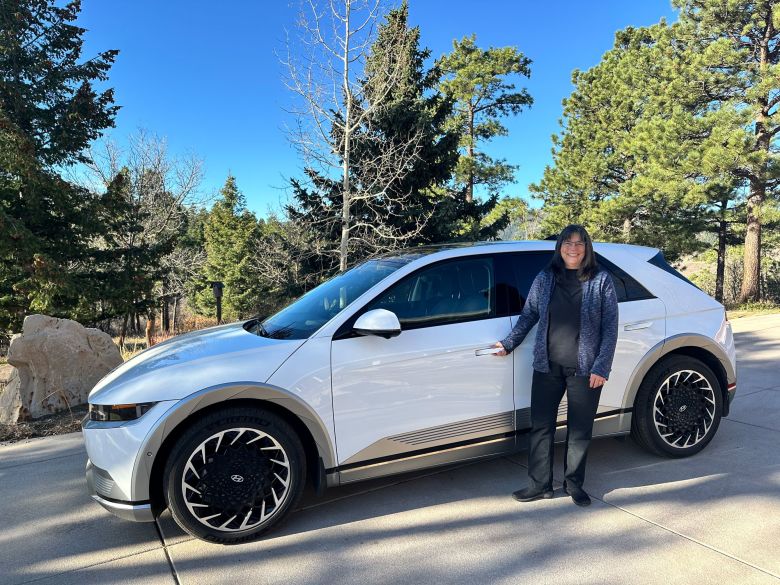
Angela Kantola likes to say she “drives on sunshine.”
A retired conservation biologist who lives in the foothills outside of Denver, Kantola and her husband, Don Wallace, leased and then bought a 2021 Nissan Leaf S Plus and added a Hyundai Ioniq 5 in 2024 because they are concerned about global climate destabilization. They took advantage of state and now-discontinued federal tax incentives to switch to EVs, and the rooftop solar panels they installed in 2022 create enough energy to charge the cars.
“It’s a real blessing to be driving an EV right now,” said Kantola, 64. “My heart goes out to the people paying $4 or more a gallon.”
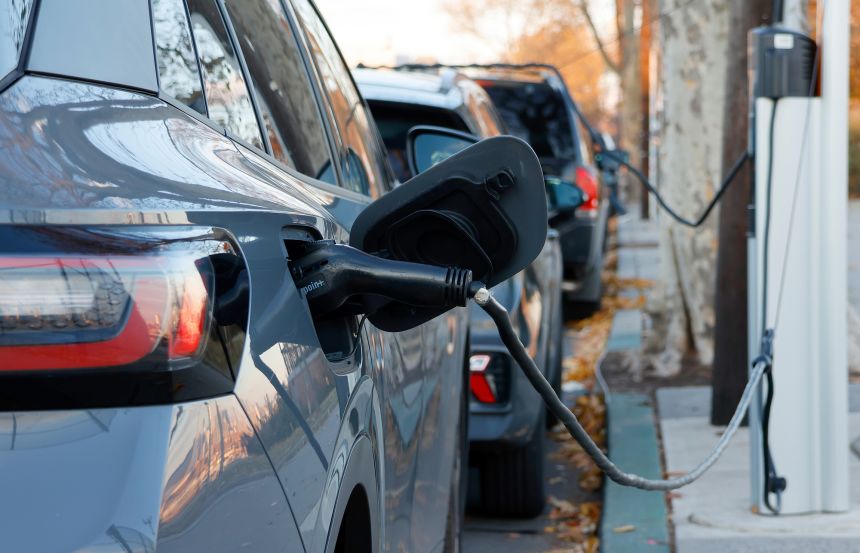
While Kantola and other EV owners told CNN they hope the higher gas prices will spur an EV buying spree, that’s not likely to happen, experts say. The cars are more expensive, and there’s no sign that automakers plan to ramp up their EV production.
US EV purchases fell by about 30,000 vehicles last year, from 1.23 million to 1.2 million, driven by the end of the $7,500 tax credit for EV buyers. Edmunds, which provides car shopping guidance, predicts another 20% drop this year, the biggest on record.
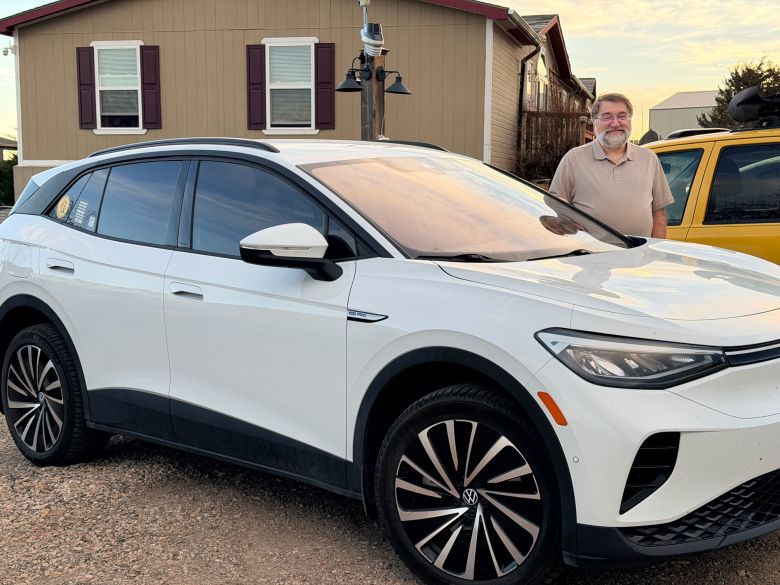
Without his Volkswagen ID.4 SUV, Jason Widdoss would have a tough time affording his 100-mile roundtrip daily commute from his home in Douglas, Wyoming, to his job as a tech worker for a neighboring county. If he drove a gas car, the recent $1 a gallon spike in prices would have prompted him to ask his boss to work more from home.
Widdoss and his family are already struggling with the high cost of groceries, clothing, home repairs and other expenses. They also have gas vehicles so he, his wife and two of their adult children are pooling their resources to rack up fuel points at Kroger to help offset the rising price at the pump. Charging the ID.4 at home overnight costs a lot less.
“It helps dramatically with stabilizing an otherwise hemorrhaging budget,” Widdoss, 56, said.
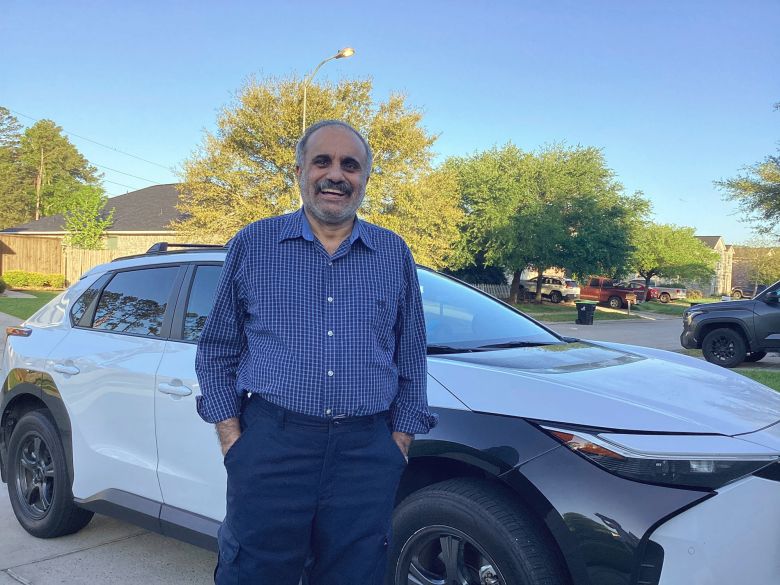
Houston resident Trevor Khurana hears his friends complaining about how much more they are paying at the pump, but he doesn’t tell them that he dodged that bullet by purchasing a Toyota BZ4X SUV in 2024 and installing solar panels the following year. None of his buddies have shown any interest in electric vehicles.
Khurana, 62, who works at a local airport, was initially skeptical about swapping out his 2014 Toyota Prius for a fully electric vehicle. But he did some research and determined that it would save him money. He now pays $0 for gas and an average of $42 a month for electricity.
“I feel bad for people with gas cars, but I made the right decision at the right time,” Khurana said.
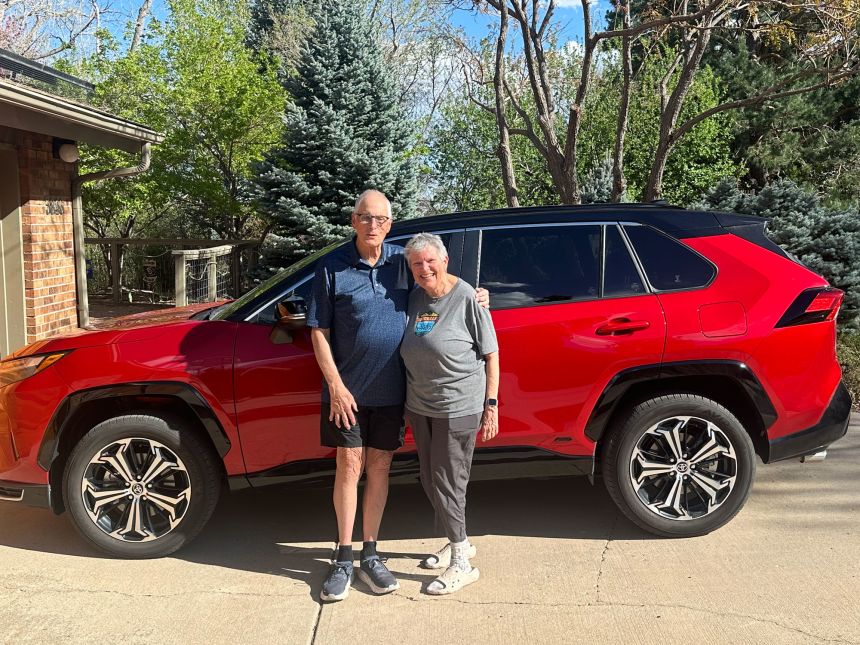
When Gary McClelland was driving a Honda CRV, he would look at gas prices and check if they were cheaper at Costco. But last fall, he and his wife, Lou, bought a Toyota RAV4 Plug-in Hybrid, which they charge at home in Boulder, Colorado. It allows them to run errands and visit their daughter and her family without stopping at a gas station.
They did have to contend with the spike in gas prices when they recently drove 350 miles to Kearney, Nebraska, to meet up with college friends and to photograph birds. But even though they had to spend $49 to fill up the tank, he still loves having the hybrid vehicle.
“Now I don’t even think about gas prices,” said McClelland, 78, a professor emeritus at University of Colorado Boulder. “It’s irrelevant unless I’m going on a long trip.”