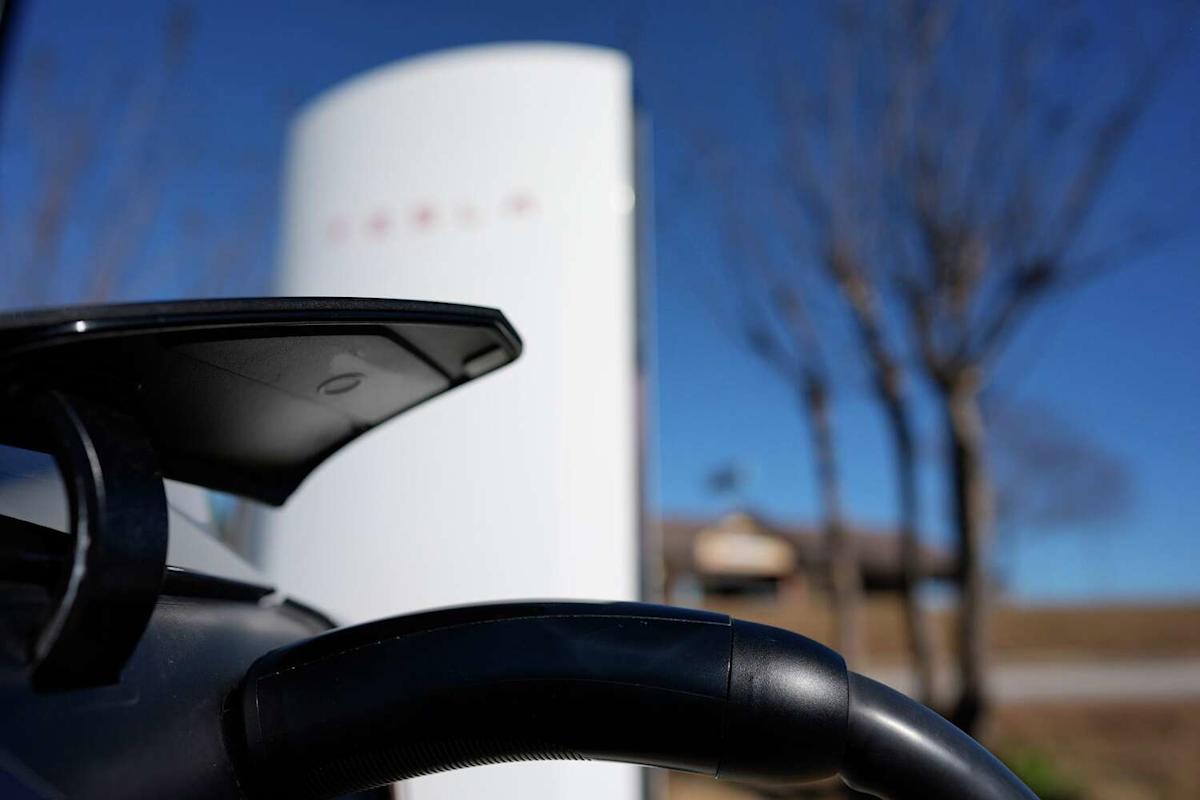
For the past four years, electric vehicle chargers have been popping up along Texas highway corridors, but they may not work fast enough for traveling drivers.
The chargers are being funded through the National Electric Vehicle Infrastructure Formula Program, a $5 billion federal initiative providing states with 80% of the necessary funds to implement EV chargers along major highways. State and private funds supply the other 20%. NEVI expects to provide a national network of 500,000 EV chargers by 2030.
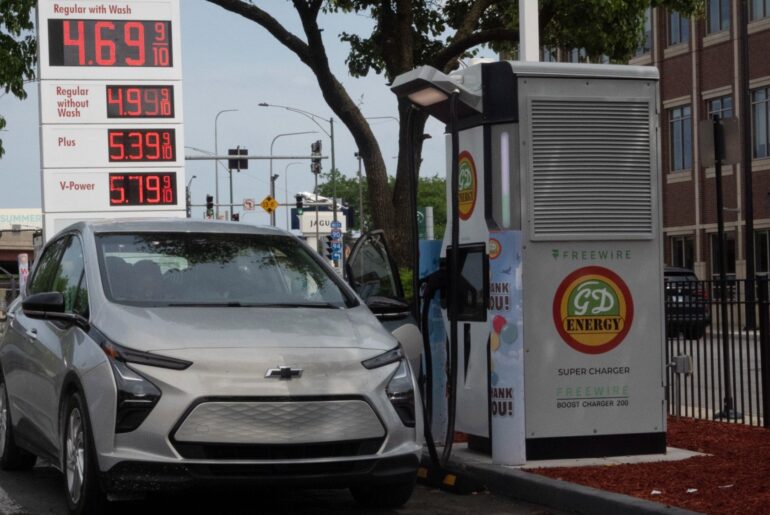
Chargers are split into three categories: level two, similar to the ones EV owners install in their homes and best for overnight; direct current fast chargers, best for shorts stops and on the go; and megawatt, used on the go for large, heavy duty vehicles.
By the time the project is completed, Texas will have spent more than $400 million in NEVI funds. The North Central Texas Council of Governments estimates there are currently 818 level two charger stations (2,043 ports) and 194 DC fast charger stations (1,086 ports) on public highways and alternate fuel corridors in the region. This means only 34.7% of the charger ports across North Texas highways and AFCs are DC fast chargers, the rest being level two, which were discouraged by the Texas Department of Transportation for highway use.
“Level two doesn’t make sense along transit corridors,” said John Higham, vice president of communications and public affairs for the national Electric Vehicle Association. “Level two in certain rural communities makes perfect sense depending on where it’s installed… level two is not a tool to get you from point A to point B as efficiently as possible.” Higham drives a zenith red Lucid Air and charges it at home using solar panels. This is his 7th EV.
Level two chargers can take up to 10 times longer than DC fast chargers, according to the U.S. Department of Transportation. However, level two chargers are cheaper and faster to install, with the council estimating costs at about $16,500 per port. DC fast chargers can cost around $94,000 per port.
Lori Clark, senior program manager for the North Texas council’s alternative fuel and energy program, noted the price difference as well as charging speed difference. She said many of the level two chargers “were built by the private sector separate from the TxDOT program” and “have been around for many years.”
In Texas, the deployment plan is split into two phases. The first, completed in January, focused on “fully building out” alternative fuel corridors – designated routes offering accessible charging along major interstates and highways. The corridors are not only for EVs but also provide hydrogen, propane, and both compressed and liquefied natural gas stations.
Phase one also included providing direct current fast chargers within one mile of the highway for every 50 miles of road.
“People really want and they’re really focused on DC fast charging because they’re very used to going to a gas station and filling up quickly, so that is what the industry has focused on,” Lindsey Perkins said, director of communications for Plug In America. “I do think that over time people will probably find more value in level two chargers.” She drives a midnight silver metallic Tesla Model 3 and has been an EV owner for eight years.
Phase two, which starts in May, focuses on providing chargers to rural areas and adding more charging blocks to urban areas by allocating money to necessary Metropolitan Planning Organizations. Potential rural counties include Erath, Johnson, Kaufman, Palo Pinto and Somervell. TxDOT allocated up to $60 million dollars for this phase. Nationally, 1 million EVs will be supported after completion.
Both Perkins and Higham said as longtime EV drivers, they have seen an increase in fast chargers popping up all over the country.
Interstate 35 through Dallas, Austin and San Antonio is considered one of the most robust highways for EVs in Texas, with more than 20% of all EV chargers on I35, I-35E and I-35W, according to TxDOT’s official charger location list. NEVI funding requires each station to have four DC fast charging ports, and allow users to be able to pay without a subscription service or app.
States receive funding every fiscal year after completing and submitting a detailed use plan to the Federal Highway Administration. The plan must also explain community engagement outcomes, as well as physical and cyber security strategies. As stated in the NEVI guidelines, funds received from the federal government “shall be for projects directly related to the charging of a vehicle and only for EV charging infrastructure that is open to the general public or to authorized commercial motor vehicle operators from more than one company.” States are also encouraged to consider “proximity of existing off highway travel centers, fuel retailers and small businesses” when proposing charging locations.
TxDOT will select chargers and their locations at the April monthly meeting. The decision will be made prior to the May grant cycle. Officials from the council of governments stated they wanted to make their decisions as soon as possible.
“We would like to be ready,” Clark said during the March Regional Transportation Council meeting. “We would like our region to be one of the first out the gate that benefits from these investments.”