The rise in gasoline prices due to the effects of the war in the Middle East is sparking increased interest among consumers in electrified vehicles, according to new data released this week by car shopping site CarGurus.com.
But that interest isn’t likely to pay the dividend of a sustained spike in sales of battery electric cars, trucks or SUVs if the war ends soon and gas prices recede.
“It’s kind of described as kind of a sugar rush,” observed Kevin Roberts, director of economic and market intelligence for CarGurus, in an interview. “Consumers are highly interested in fuel efficient vehicles when gas prices are going up or at a certain elevated point. Historically, we’ve seen that as soon as gas prices start to come down, consumers tend to go back to what they like previously, which tends to be large, large SUVs and pickup trucks.”
That view echoes comments from Cox Automotive executive analyst Erin Keating who declared during a webcast March 25, “the one genie that often goes back in the bottle is gas prices. If tensions de-escalate tomorrow and gas stabilizes at, say, $2.80, the urgency to switch power trains fades quickly. This isn’t a permanent shift in consumer preference, yet. It’s a conditional response to conditions that may or may not persist.”
The average price of a gallon of regular grade gasoline on April 1 stood at $4.06 compared with $3.20 a year ago, according to the Triple A.
Prices varied across the U.S. and range from $3.27 to $5.89 a gallon.
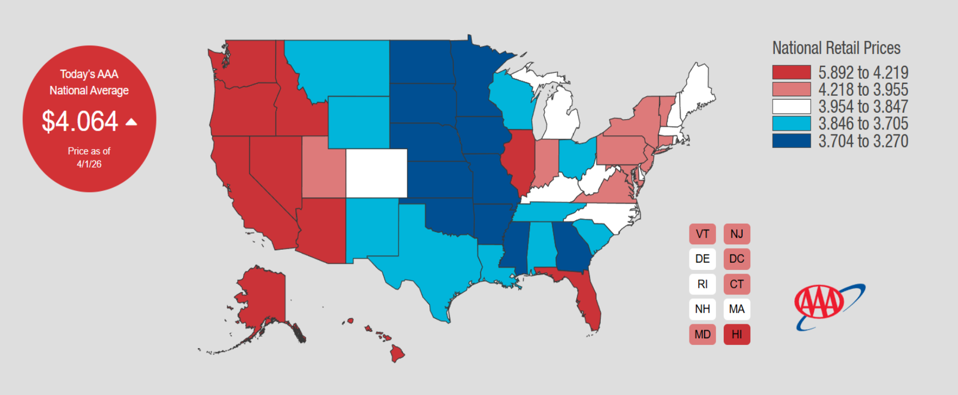
Graphic by Triple A showing range of gasoline prices as of April 1, 2026.
Triple A
That pain at the pump drove dismayed consumers to begin investigating alternatives to internal combustion engine-powered vehicles.
The share of views on new EV listings on CarGurus.com increased by 25% since the beginning of March, based on a rolling 7-day average, while the share of new hybrid listing views were up 11%.
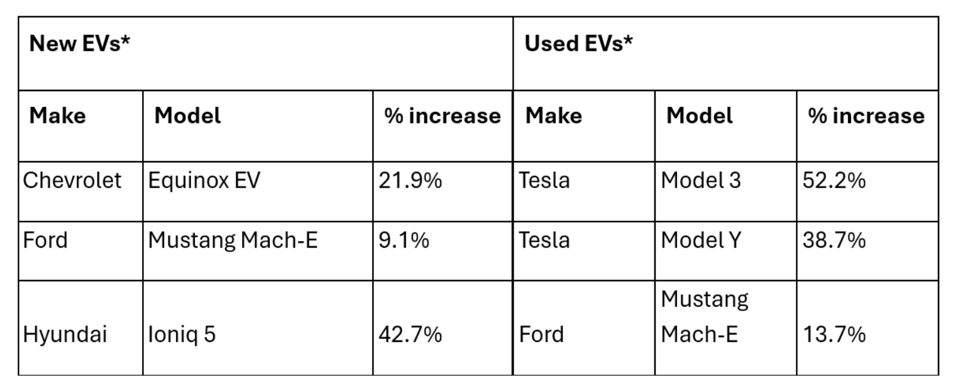
CarGurus chart showing increased interest in new and used EVs in March, 2026 as gasoline prices rose sharply due to the war in the Middle East.
CarGurus.com
The pattern was similar for used vehicles as EV share increased by 32% and hybrid views were up 15%, according to CarGurus data.
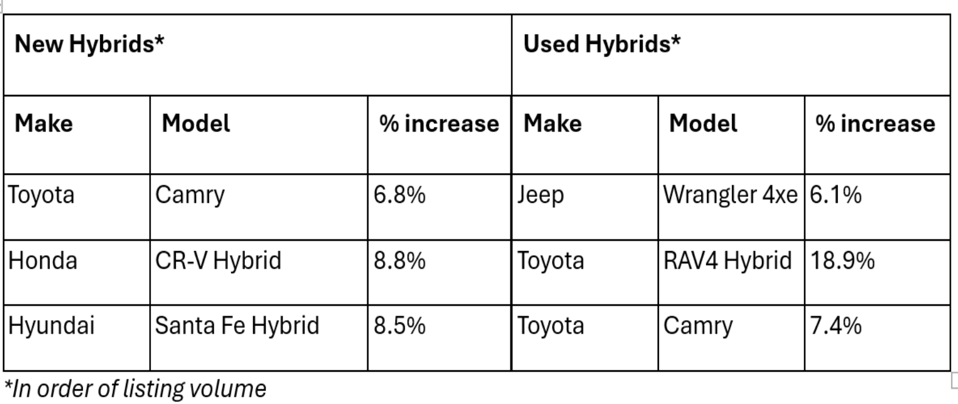
CarGurus chart showing increased consumer interest in new and used hybrid vehicles during March, 2026.
CarGurus.com
Indeed, interest in electrified vehicles may be growing while gas prices are high, but especially in the case of pure battery-electric vehicles, that’s no indication consumers are ready to pull the trigger on a purchase.
EV sales had already nosedived after the $7,500 federal income tax credit was discontinued at the end of September. They’ve remained inert.
Looking at EV sales data from October through March, Roberts noted EV sales were down from the same period a year ago.
On Wednesday, General Motors Co. reported first quarter EV sales were up 20% from the same quarter a year ago but only “slightly” from the last three months of 2025.
Toyota Motor North America bundled all electrified vehicle sales in its data, which includes hybrids, reporting first quarter sales were down 0.5% but up 2.5% in March as the war and its effects escalated.
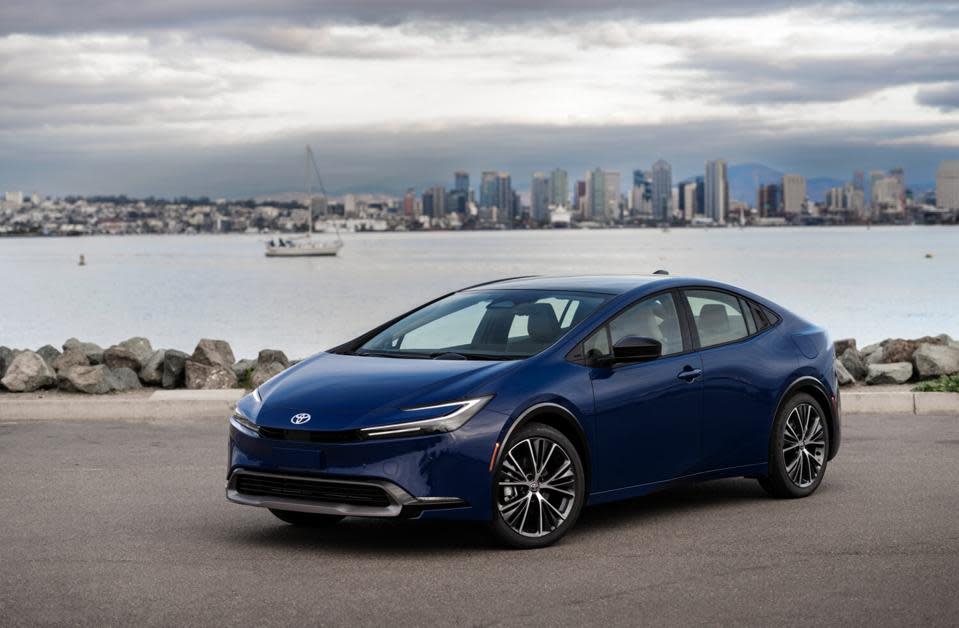
2026 Toyota Prius Limited hybrid car.
Nathan Leach-Proffer
But it’s hybrids that are doing the heavy lifting as consumers looking to save gas but turned off by charging and price concerns related to EVs, prefer vehicles that allow them to continue to pop into a gas station to refuel.
Sales of new electrified vehicles have reached a record 26% share of the U.S. market according to Cox data.
That’s no thanks to EVs, noted Cox Automotive director, industry insights, Stephanie Valdez Streaty during last week’s first quarter presentation, who pointed out, hybrids are “now the fastest growing powertrain, outpacing battery electric and plug in hybrid.”
There is some daylight for battery-electric vehicles regardless of the resolution of the situation in the Middle East. But those EVs will be pre-owned.
A loophole in the federal program allowed for owners of leased EVs to receive a tax credit, even for vehicles that might not have otherwise qualified.
With the leases on those two and three-year old vehicles about ready to expire, a big glut of late-model EVs is expected to arrive on used car lots, offering an opportunity to consumers who just couldn’t swing a new electric vehicle, especially if gas prices remain high, predicted Roberts.
That’s a big “if.”
“I’d say the market really depends on how long you think gas prices are going to stay elevated for,” said Roberts. “If they’re going to stay elevated for an extended period of time, I think consumer interest in more fuel efficient vehicles will sustain.”
The bigger “if” is if that interest evolves from browsing, to buying.
This article was originally published on Forbes.com