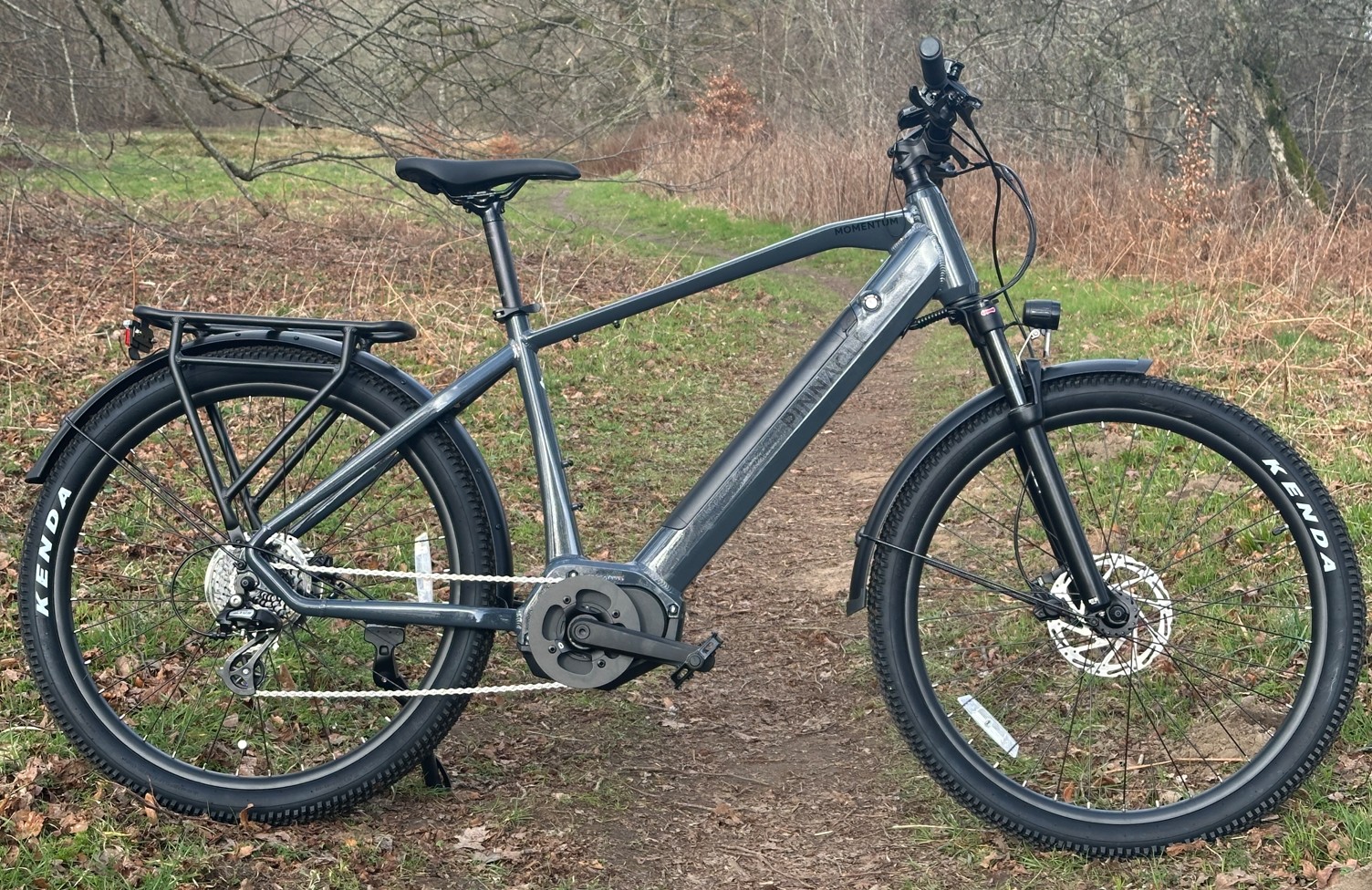
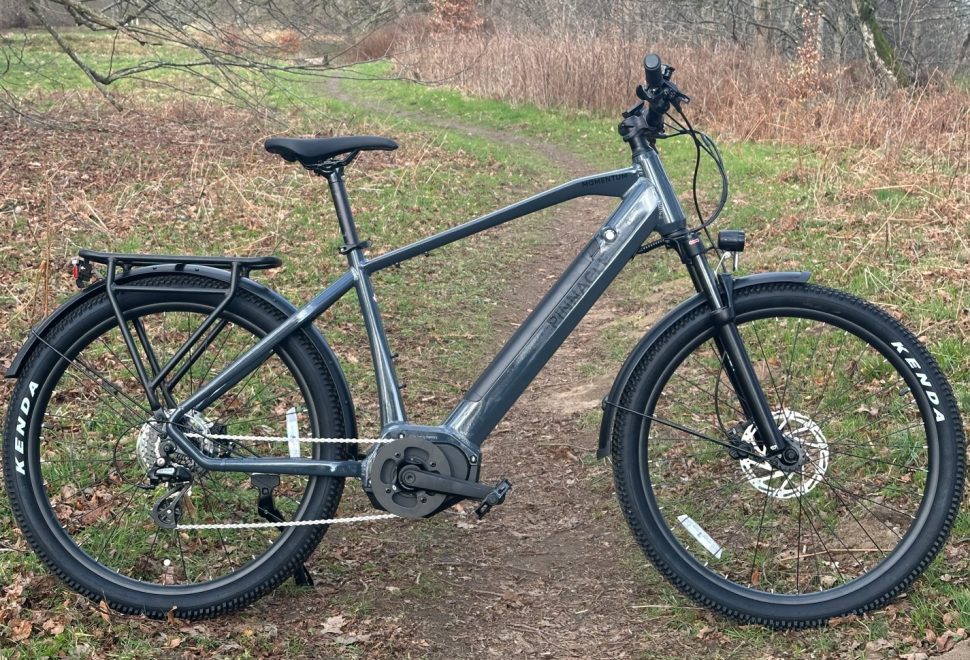
The Pinnacle Momentum is a product of the house brand of Evans Cycles, owned by retail giant the Frasers Group – so local support isn’t far off, which is a point that we often reflect on at Cycling Electric when factoring in the pros and cons of the many online or budget brands popping up in our review content nowadays.
To see a quality 70Nm mid-drive motor and large-ish battery on any bike at this price point is unheard of. When you add in all the urban-friendly accessories like a kickstand, mudguards, a rack and lights, the overall package is compelling. The bike performs off-road like it was twice the price, so it’s hard to imagine you’re riding a bike that costs so little. Even if you never take it off-road, the overall package is very well-suited to battling the urban jungle. It’s capable of hauling a child, shopping, towing a trailer or whatever you need to do.
Before you dive deeper, if you’re shopping for an electric bike on a budget, we have guides to the best electric bikes under £1,000, £1,500 and £2,000, as well as tons of sector specific guides covering bikes just like this one. Better still, we’re giving you the opportunity to compare and contrast electric bikes in person at four locations this year. Find out more about our Cycling Electric Demo Day series, starting this month at the iconic London Lee Valley Velopark.
Pinnacle Momentum review: The headline details
£1,250 | View offer
Pros
Very low price for the spec
Out-of-the-box practicality
Surprisingly capable off-road
Support via Evans Cycles
Cons
Noisy fork
Available power drops off below 40%
Specifications
Stated range: Realistic range, as tested, 30 miles
Frame material: 6061 alloy
Motor: Ananda M60BBTR
Battery: PY Manyu EEL Mini, 417wh
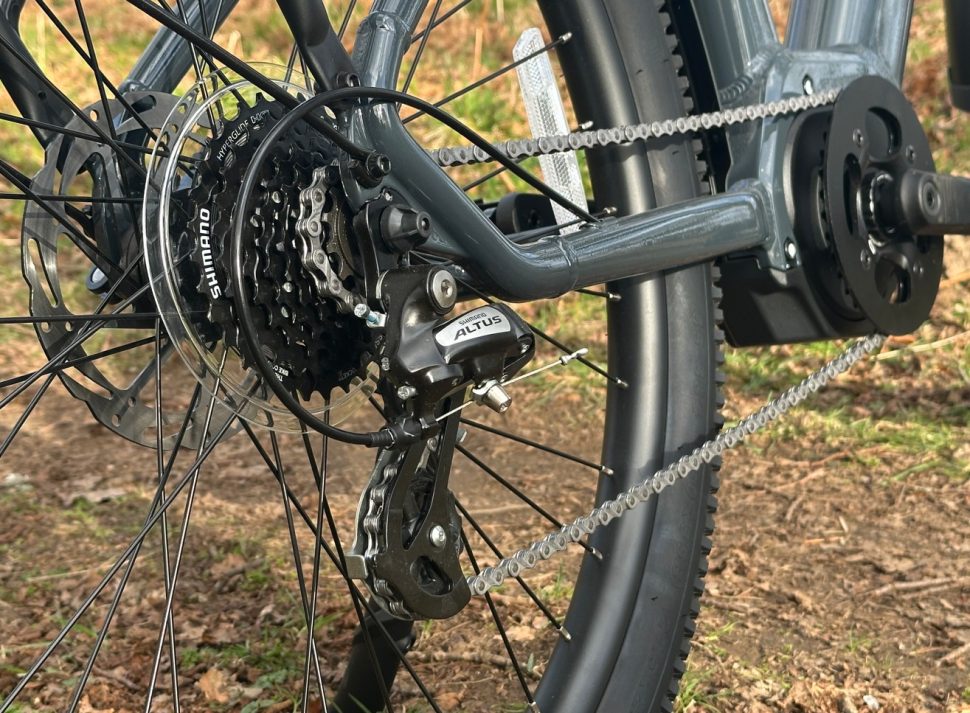
Drivetrain: Shimano Altus 8-speed
Brakes: Tektro HD-M275, hydraulic disc brakes
Saddle: Contoured hybrid sport saddle
Tyres: Kenda K1293, 27.5 x 2.4″
Suspension: 100mm suspension fork with lockout
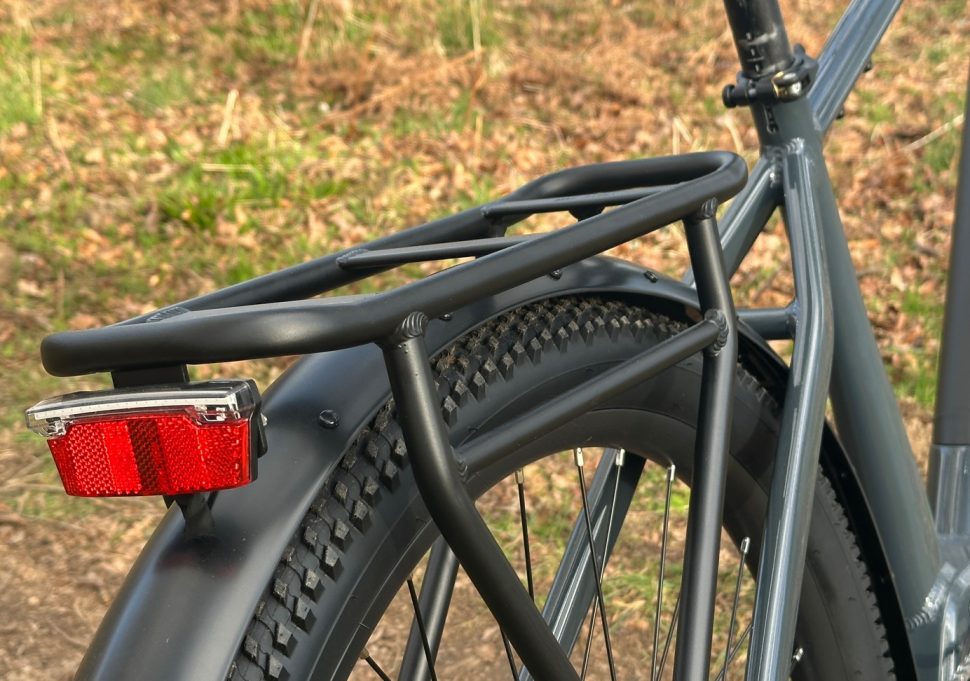
Included accessories: Pannier rack, kickstand, mudguards, lights front and rear
Who is this e-bike for?
The Pinnacle Momentum was tested for ride quality, experience and endurance, for multi-hour rides across varied terrain with as much context as possible given to the price point within which this value-led e-bike sits. The bike was ridden through the Scottish Highlands, up and down significant climbs and along different forest tracks and muddier MTB trails.
Our tester, Michael Vincent, is a long-time road, gravel and MTB rider, with decades of experience running cycle clubs and events, reviewing and repairing bikes. He’s a Bosch, Shimano and Fazua-certified engineer with his own cycle service business.
Pinnacle Momentum review: The build quality
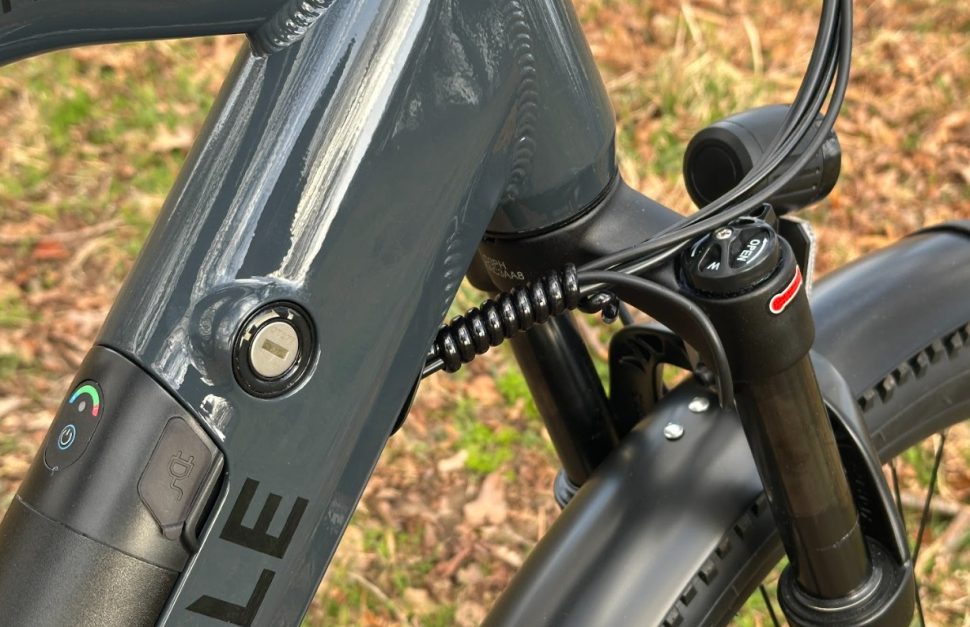
The design is a traditional frame shape, with QR axles and normal dropouts. This means you do need to keep an eye on the QR skewers, keeping them done up nice and tight as QR skewers were never designed from the outset to handle the forces of disc brakes and e-bike motors.
The paint job is lovely – probably the thing that makes most people think the bike costs twice what it does. The welds and fittings are all nicely done. Clearly the factory is paying attention to detail. Obviously, the spec has been done to a tight budget, as you’d expect at this price.
That said, you’re getting quality Tektro brakes instead of a no-name generic and a Shimano Altus drivetrain. The brakes even use a 180mm rotor on the front to improve braking performance where it matters most – another sign of thoughtful design. The only component on the bike that screams ‘budget’ is the fork – more on that later.
A mid-motor, at this price?
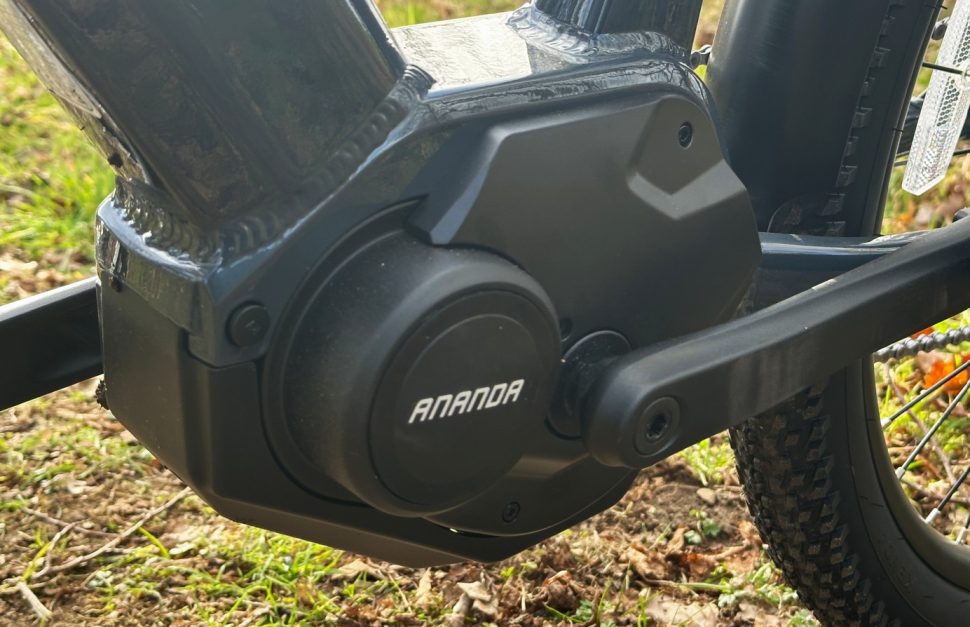
The Ananda M60 motor is a quality bit of kit. Ananda are a massive e-bike player you’ve likely never heard of. They make circa 10 million motors a year out of numerous factories globally, and do pretty much everything in-house, including their own controller circuitry, meaning they have a good grip on quality. Because it’s a mid-drive motor with torque sensing, the power comes on smoothly and quietly – easily comparable with Bosch units, which is high praise. The removable battery is a 417Wh unit, which again for the price is very respectable.
The motor controller is a nice, clear LCD unit, showing you all the information you’re likely to want. The battery level isn’t shown in percentage; instead, you get five bars, and they seem to match usage closely. The light is controlled with the plus button, and the walk assist with the minus. A small niggle is that the bike powers on at level 1, which is no major drama. A nice surprise was to discover a USB-A port on the lower side of the controller, capable of charging your phone (or anything else) at 1 amp.
Pinnacle Momentum review: How does it perform?
I have many years of experience with Bosch motors – and I can say the Ananda 70Nm experience is comparable, which is high praise. The motor is quiet – once you’re moving above walking pace you won’t hear it above wind noise. 70Nm is on par with lower-spec Bosch Active Line models, and I’d say most people couldn’t tell the difference. I did notice a small roll off in available power once you’re down to 40%, or around two bars remaining, but that’s a minor thing.
The fat 2.4-inch tyres and decent mid-drive motor, along with full mudguards, rack and lights mark the Momentum out as an ‘SUV’ bike – meaning a practical, load-lugging go-anywhere machine. Not the fastest, but capable of traversing rough terrain through a city or the countryside without issue.
The relatively high gearing of the 12-32T 8-speed cassette means you won’t exactly be winching yourself up super-steep hills, the way you would with a mega-low-range cassette with a largest cog north of 40T. But on flatter terrain, 70nm paired with a lowest gear of 32T is plenty – helped by a relatively small 36T chainring. The momentum is crying out for an eventual upgrade to Shimano CUES 4000 once parts start to wear out – and as Pinnacle spec’d the Momentum with an HG freehub, that’s an easy job.
I was quite happy taking the Momentum through pretty deep bogs, through rooty, technical singletrack and blasting down gravel roads. Bridleways and canal paths will disappear under the fat rubber, as will unmaintained city streets.
My longest ride on the momentum was exploring around my neighbourhood trails, a total of about 25 miles, with 375 Metres of climbing. The bike was at level five assist the whole time – the highest. That ride completely flattened the battery – so Pinnacle’s claim of ‘realistic range 30 miles’ seems about right, if you’re in flatter terrain and not racing up every incline. Once the battery dies, the Ananda motor is surprisingly easy to pedal unassisted.
When the battery got down to two bars there was a noticeable decrease in available power. This is common amongst cheaper batteries, which lack advanced battery management systems, and therefore struggle to maintain the same output as voltage falls. Power assist didn’t disappear entirely by any means – it just wasn’t as much fun as the first 60% of the battery.
Practical for all purposes
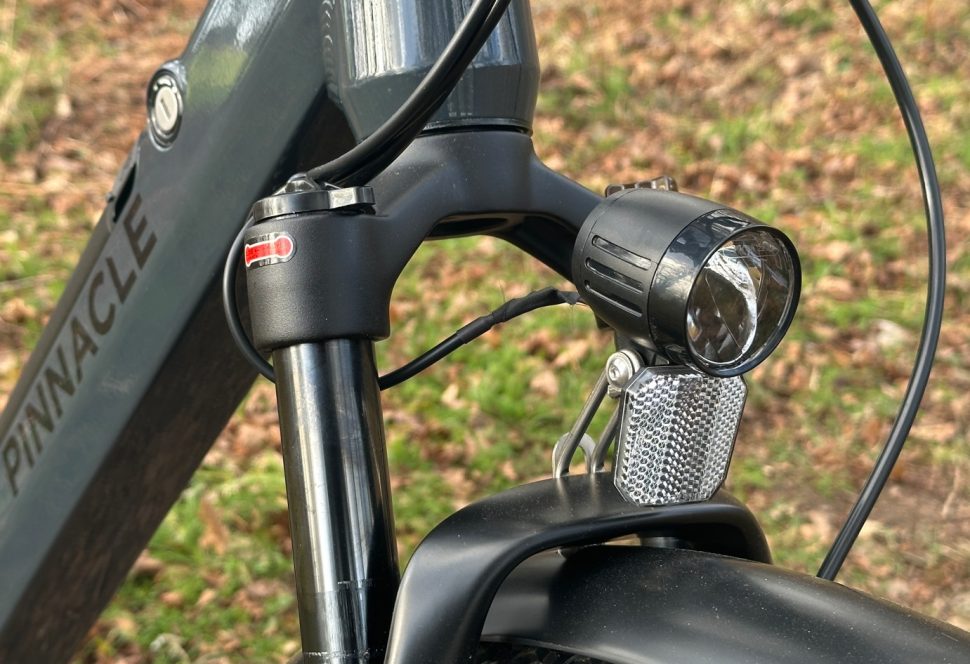
The full range of accessories – mudguards, rack, lights, fat tyres and kickstand – add up to a very useful bike capable of tackling pretty much whatever you ask of it. There’s no chainguard to protect flapping trouser legs from getting snagged – but that would be an easy, low-cost addition. At this price point you can’t expect a dropper post – but I’d recommend considering one to make getting on or off the bike easier. I’d love to see Pinnacle do a step-through frame version of the Momentum – I believe that would be a huge seller with people looking for an easy-access frame.
I had the Pinnacle Momentum for review alongside a Merida eFloat CC 400 EQ – a £3,250 Bosch CX-powered hardtail. When I needed to pop to the shops, it was hard to pick between the two. Both can carry a pannier, both have integrated lights, full mudguards, fat tyres to navigate our growing collection of potholes, and decent mid-drive motors to ease things along. At point of use, there’s not much in it – only the built-in wheel lock on the Merida, but that’s a circa £50 aftermarket add-on should you want one on the Momentum. There’s certainly not an extra £2,000 of utility between them. I asked a few friends to try the Pinnacle Momentum and tell me what they thought it cost – no-one suggested less than £2,100.
Any downsides?
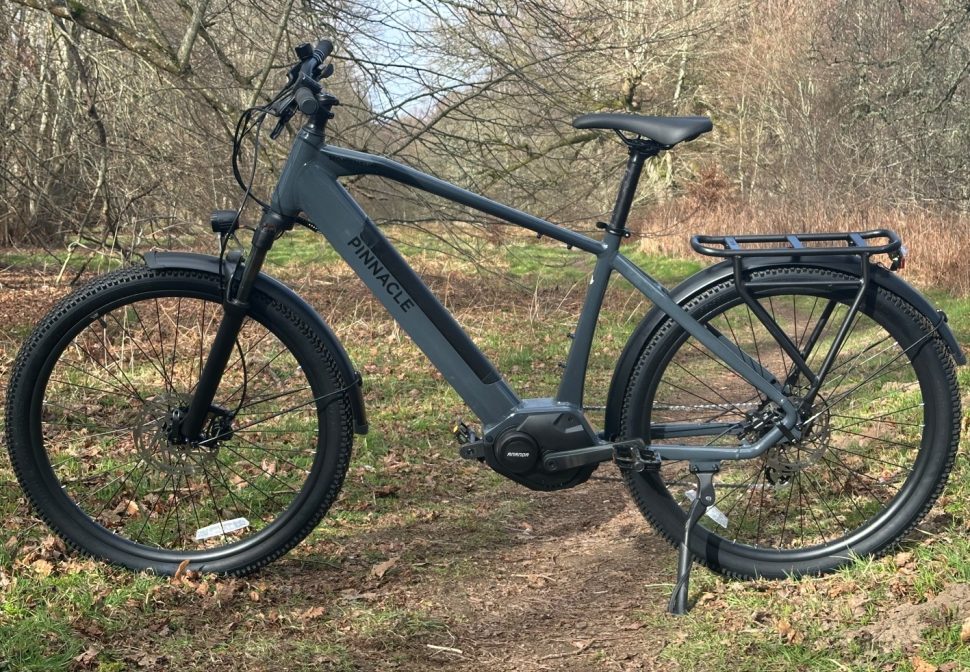
The most immediately noticeable compromise of the Momentum is the fork. It’s clearly built to a low price point, and you can hear the difference every time you ride over a short, sharp impact, such as a small treeroot – there’s a solid metal-on-metal thunk as the fork rebounds. After a short while I came to prefer the fork locked out – to keep it quiet. The large tyres set to the right pressure (likely around 25PSI) do a great job of filtering out small bumps and road irregularities that even a mid-priced fork will struggle to tame. To be honest, Pinnacle would do well to remove the fork altogether, and put the saving into upgrading the drivetrain to Shimano CUES 4000.
Which brings me to the second negative – the Shimano Altus drivetrain. 70Nm is quite a bit of torque, and I’d say Momentum owners will eat through a drivetrain in short order if ridden briskly and often. That’s not the fault of the Altus gear, which has been around for many years as a staple of quality budget bike range componentry. Rather it is that Shimano Altus gearing was never designed to handle the power of a 70Nm mid-drive e-bike motor. Once it’s knackered, upgrade to 9-speed ebike-ready Shimano CUES 4000 (likely about £250 all up) and you’ll be laughing, with a much lower gear range to boot for improved hillclimbing.
Conclusions and competition
When I received the Pinnacle Momentum I was expecting to be writing a review like many before, where I would point out multiple shortcomings from no-name accessories – and most importantly that the motor lost power going up any incline more than a gentle slope. That’s been my consistent experience at this pricepoint.
At its core, the Momentum is a really useful bike that delivers an enabling and enjoyable ride experience. Yes, the fork isn’t up to much – but you can just lock it out if the noise gets annoying. The decrease in power at low charge levels isn’t a Pinnacle problem – it’s inherent to lower-priced batteries, and if you know it’s coming, you can plan for it.
With the Momentum driven by the Ananda M60 motor, Pinnacle have redefined what a budget ebike can be and do. As a mechanic I’ve worked on hundreds of different budget bikes and ebikes – the Momentum stands out as a genuine game-changer in quality and performance for the price.
Finished reading our Pinnacle Momentum review and want to benchmark it against some well-priced competition? Here are three of our tried and tested picks:
Falcon Turbine – £999
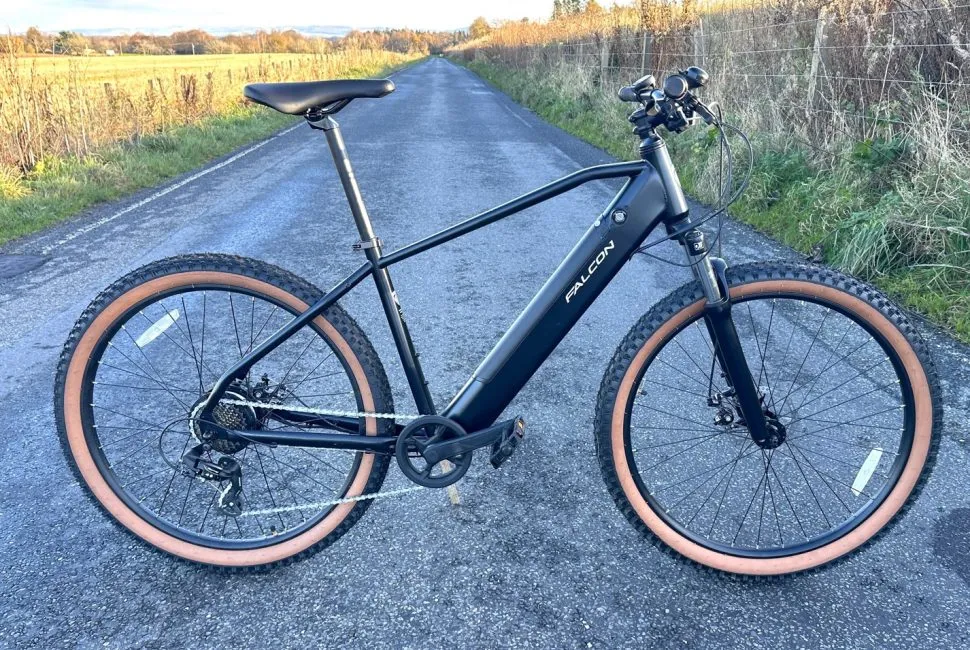
Read our Falcon Turbine review.
Pinnacle Energy – £999
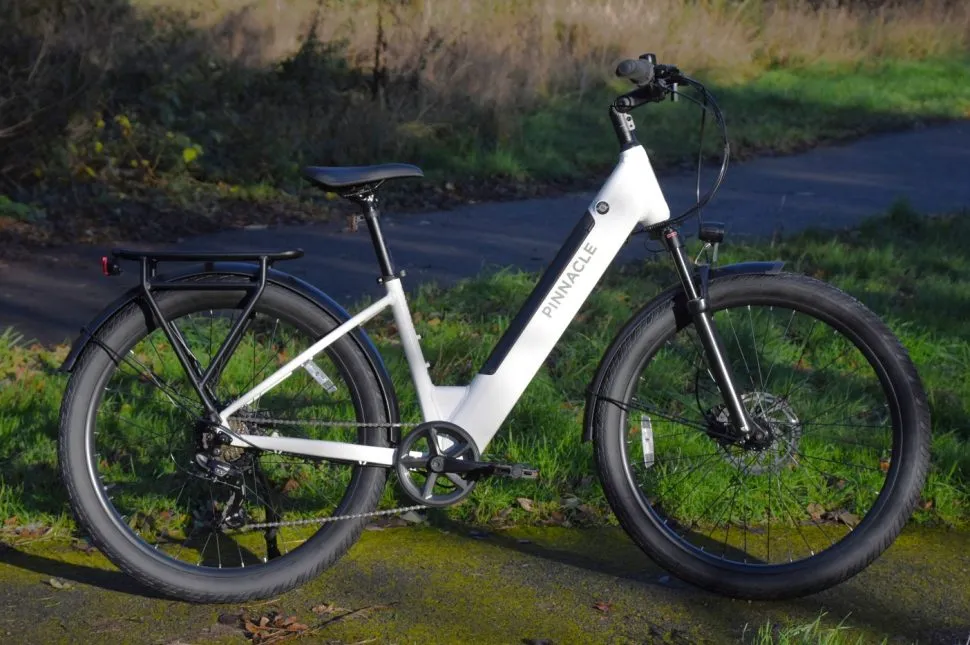
Read our Pinnacle Energy e-bike review.
Reid e20 – £1,299
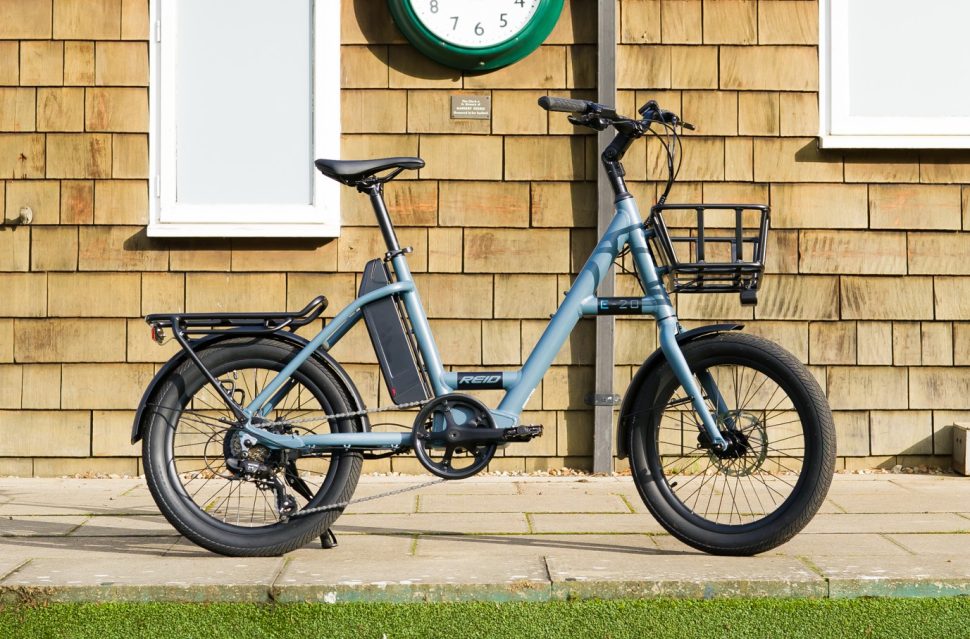 Geoff Waugh
Read our Reid e20 review.
Frequently asked questions
Can I upgrade the drivetrain?
Yes – once worn out, it would be easy to upgrade the Altus components with a swap to Shimano CUES 4000
Can I remove the battery for charging, storage or transport?
Yes, the battery is locked to the frame and removes with a key
Can I carry luggage on the Momentum?
Yes – the rack is capable of holding 25Kg, and can fit panniers or trunk-top bags.