Last updated:
01 Apr. 2026
With conflict in Iran driving up the price British families are having to pay at the pump, new analysis from the ECIU reveals that drivers could be saving over £1350 a year by leasing one of the UK’s best-selling EVs rather than an equivalent petrol car, analysis finds.
The research – which factored in the monthly cost of leasing a vehicle as well as the costs associated with running it, such as fuelling/charging, insurance and servicing – found that the ten best-selling EVs of 2025 could, on average, save their owners £4070 over a 3-year leasing term – over £1350 a year. [1] Examples of individual model comparisons include:
The Volvo EX30 – £1875 a year cheaper to lease and run than a petrol BMW X1
The Skoda Enyaq – £893 a year cheaper to lease and run than a petrol Skoda Kodiaq
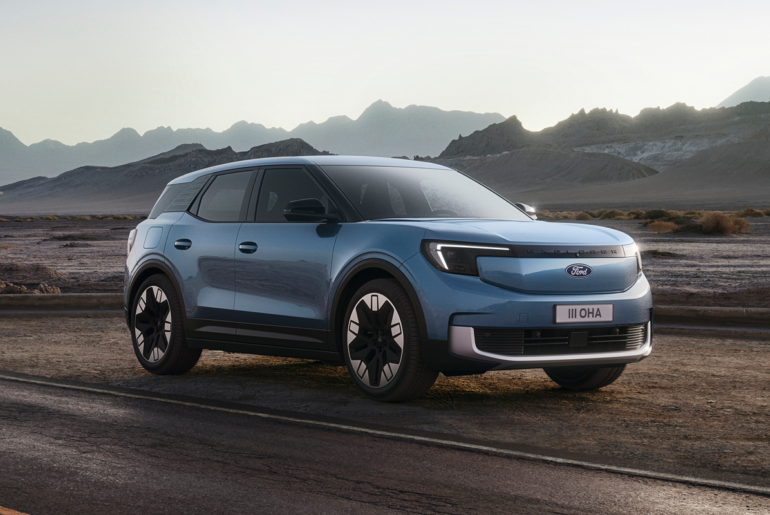
The Ford Explorer – £1390 a year cheaper to lease and run than a petrol Ford Kuga
The Tesla 3 – £4744 a year cheaper to lease and run than a petrol BMW 320.
Colin Walker, Head of Transport at the Energy and Climate Intelligence Unit (ECIU), said:
“The war in Iran is once again highlighting the consequences of our dependence on volatile oil markets over which we have no control – petrol prices are rising, which will result in millions of British drivers having to pay hundreds of pounds a year more to run their cars.
“It is no surprise that interest in EVs has risen significantly since the war started, [2] since they offer drivers a way to shield themselves from the shocks we are seeing in global energy markets. Leasing is an increasingly popular means by which drivers can make the switch, delivering average driving cost savings of over £1350 a year”.
“The Government’s ZEV mandate policy is increasing competition between manufacturers, driving down prices and, as new cars are sold on, ultimately widening the pool of second-hand EVs on sale. If not leasing, many of us buy on the second-hand market where EVs offer huge savings over their petrol equivalents’. [3]
Vehicle depreciation is not a consideration for drivers when leasing a new car, as it can simply be handed back to the leasing company once the leasing term has come to an end.
Many analyses that compare the costs of owning and running an EV with a petrol car do not take into account the fact that leasing a vehicle, rather than purchasing it up front, is an increasingly popular means by which people are accessing new vehicles. This research, from the Energy and Climate Intelligence Unit (ECIU), addresses that gap by comparing the total costs of leasing and running an EV with those of an equivalent petrol car.
Recent analysis by the ECIU has found that oil trading at $100 a barrel could see petrol rising from £1.32 per litre before the war started, to £1.50 [4] – increasing the cost of fuelling a petrol car from £1220 a year before the war started, to £1390. [5] Were the predictions we have seen in some quarters that oil could hit $150 a barrel become a reality, [6] the price of petrol could jump to £1.90 a litre. [7] This would see the cost of fuelling a petrol car jump to £1760 a year. [8]
The International Energy Agency has said the ZEV mandate policy is playing a key role in driving a ‘surge’ in EV sales in the UK since its introduction by the former Conservative government.
Commenting, Colin Walker said: “The Government’s ZEV Mandate is incentivising manufacturers to reduce the prices of their new EVs as they compete to hit their EV sales targets. This is clearly good news for the consumer, with more and more finding they are able to afford to make the move to cheaper and cleaner electric driving.
“Any U-turn on the mandate could weaken this dynamic in the midst of an energy crisis, slowing the UK’s transition to the electric vehicles that will reduce its dependence on oil, and better protect its drivers from shocks in global energy markets over which we have no control. It could also undermine the UK’s position as a front runner in the global EV transition, and introduce regulatory uncertainty at a crucial time in the UK car industry’s transition to building the vehicles upon which its future depends”.
A report by CBI Economics for the ECIU revealed that a failure by the car industry to make the transition to manufacturing EVs could see its contributions to the UK economy fall by as much as 73%, or £34.1bn, and over 400,000 jobs could be lost. [9]
Conversely, economic output could increase by over £16bn, and 167,000 new jobs could be created, if a rapid and successful transition takes place. Government support is critical in avoiding such an outcome, and this includes the provision of a stable and supportive regulatory environment through keeping measures like the ZEV Mandate and the UK’s ban on new petrol and diesel car sales in place.
Notes to editors:
[1] The analysis looked at the leasing deals (based on a three-year term, for 8,000 miles a year, and with a three-month upfront payment) available on www.leasing.com (or, in the case of Tesla, on www.tesla.com/en_gb) in March 2026 for the top 10 selling electric cars of 2025, and those available for their petrol equivalents. The total costs of leasing and running these vehicles were then calculated for the duration of the three-year term – consisting of the following costs:
Initial upfront leasing paymentAdmin feeMonthly leasing paymentsFuelling/chargingInsurance (Cheapest available quote taken from Money Supermarket)Servicing (Quotes taken from the relevant manufacturer website)Tax (where these weren’t including in the monthly leasing payments).
Some future variations in future costs were factored in, including: the introduction of a 3p per mile tax on EVs as of 2028; a gradual increase in petrol prices in line with the increase in petrol prices we have seen over the past 20 years (UK Government), and the staggered ending of the temporary 5p cut to fuel duty (OBR). For the EVs, it was assumed that 80% of the vehicles’ charging was done at home on cheap night-time charging tariffs, and 20% on rapid public chargers (in line with Zapmap’s John and Rosa charging profile).
The analysis incorporates the recent increase in the cost of petrol as a result of the current conflict in the Middle East, but assumes that prices return to their historical trend from next year onwards. It assumes that an EV driver uses Octopus Energy’s current Intelligent Go EV charging tariff for night charging. This tariff is fixed for 12 months, and it is assumed that electricity prices, which are due to rise this summer due to higher gas prices, will fall thereafter, such that EV charging rates will be at similar levels next year to currently.
These total costs of ownership were then divided by 3 to give an annual figure for the cost of leasing and running these vehicles over the three-year leasing term. The differences between the petrol and electric cars were then calculated, providing a figure for the difference in costs that come from leasing and running an EV over a petrol vehicle for every year of the leasing term. An average figure across the 10 model comparisons was then calculated – giving us the overall savings figure of £1357.
The final model comparisons were as follows:
Tesla Y vs Audi Q5 – EV saves £2943 a yearTesla 3 vs BMW 320 – EV saves £4744 a yearAudi Q4 e-tron vs Audi Q5 – EV saves £1551 a yearAudi Q6 e-tron vs Audi Q5 – EV costs £125 a yearSkoda Enyaq vs Skoda Kodiaq – EV saves £893 a yearBMW i4 vs BMW 4 series grand coupe – EV saves £685 yearFord Explorer vs Ford Kuga – EV saves £1390 a yearKia EV3 vs VW T-Cross – EV costs £668 a yearVolvo EX30 vs BMW X1 – EV saves £1875 a yearSkoda Elroq vs Skoda vs Karoq – EV saves £278 a year
2.Autotrader – https://plc.autotrader.co.uk/news-views/press-releases/sharp-rise-in-ev-interest-on-autotrader-following-middle-east-bombing/
Octopus Energy – https://octopus.energy/press/interest-in-ev-leasing-jumps-36-as-drivers-seek-relief-from-soaring-fuel-costs/
Independent – https://www.independent.co.uk/cars/electric-vehicles/car-fuel-price-rise-petrol-diesel-evs-b2946897.html
3. ECIU – https://eciu.net/media/press-releases/2025/popular-second-hand-evs-can-save-their-drivers-1-450-a-year-despite-new-3p-per-mile-tax-on-evs
4. ECIU – https://eciu.net/media/press-releases/snap-analysis-iran-crisis-fuels-petrol-shock-fears
5. ECIU – https://eciu.net/media/press-releases/ev-charging-costs-coming-down-as-petrol-prices-go-up
6. Financial Times – https://www.ft.com/content/be122b17-e667-478d-be19-89d605e978ea?syn-25a6b1a6=1
7. ECIU – https://eciu.net/media/press-releases/price-of-a-barrel-of-oil-could-surge-to-150-comment
8. ECIU – https://eciu.net/media/press-releases/ev-charging-costs-coming-down-as-petrol-prices-go-up
9. CBI – https://www.cbi.org.uk/media/qoxp3pn4/cbi-economics-eciu-ev-sector-report-2024.pdf
For more information or for interview requests:
George Smeeton, Head of Communications, ECIU, t: 020 8156 5305, m: 07894 571 153, email: george.smeeton@eciu.net