With the ability to charge at home, it’s already been the case for years that electric car are significantly cheaper to run than a petrol or diesel-powered equivalent.Now, with fuel prices in the UK hitting their highest levels in over three years, the potential cost savings associated with EV ownership look even more attractive.This is a guide into considering all the factors that can make EV ownership work for you, affordably.How to save money with an electric car in 2026Initial Purchase cost
Only a few years ago, new electric cars would cost significantly more than a similarly-sized petrol or diesel model. However, thanks to reduced costs of production, that gap is narrowing fast. An increasing number of manufacturers are selling their EV and internal combustion engine (ICE) models for similar or identical prices. Take the latest Vauxhall Astra, for example, with a starting price for the fully-electric model of £29,995 – exactly the same starting price as if you were to buy the same model with a hybrid or plug-in hybrid powertrain.
In addition, there are an increasing number of cheap electric cars available to order in the UK. Even more models are set to arrive throughout 2026, with some prices regularly starting below £20,000. On a monthly PCP deal, this can translate to an EV for as little as £169 per month, as is the case with the Leapmotor T03. Some new EVs below £37,000 also qualify for the government’s Electric Car Grant, offering additional savings of up to £3,750.
The upfront premium for electric cars over ICE equivalents is still a reality for some models – but these models still have the potential to save owners much more in the long term.
2026 oil crisis
The near complete closure of the Strait of Hormuz, a key shipping lane for crude oil, has caused significant rises to crude oil prices across the world – and this is most evident at fuel pumps across the UK. According to the RAC, average petrol and diesel prices at UK pumps currently stand at 152.8p per litre for petrol, and 182.7p per litre for diesel – with the RAC forecasting these prices will rise further in the coming weeks.
Whilst petrol and diesel prices remain vulnerable to global events, electricity does not work in exactly the same way. While energy prices have fluctuated in recent years, EV drivers in the UK can benefit from fixed tariffs, off-peak rates, and smart charging options that allow for far more predictable costs. You can choose when and how you charge, in a way simply not possible with refuelling a combustion car.
So, whilst petrol drivers are exposed to global instability, EV drivers are, to a large extent, insulated from it. In 2026, after recent events, that advantage is more apparent and important than ever.
How much is it to charge an electric car at home?
If you have the ability to charge at home, EV ownership becomes a no-brainer. Even on a standard energy tariff, running an EV is already much cheaper per mile than a petrol car, with the standard variable tariff for electricity currently standing at 24.67p per kWh.
As a comparison, a Tesla Model 3 can manage around 4 miles per kWh, working out at an energy cost of 6p per mile. An equivalent combustion car, the BMW 320i, can travel around 8.7 miles per litre. Take current petrol prices, and that works out at a larger cost for the BMW of around 17p per mile.
By switching to an EV-specific energy tariff, these cost savings can be increased even further. Firms such as Octopus Energy and E.ON Next offer tariffs with overnight charging rates as low as 8p per kWh.
Technologies such as vehicle-to-grid, where the car moves energy back from its battery into the grid at times of high demand, are also becoming a reality in the UK. This format is set to save drivers even more on not just their EV charging, but their home energy bills as a whole.
Public charging cost in UK
The various prices for public charging make the equation more complex. According to Zapmap, the average price for rapid chargers (above 50kW) is 76p per kWh, while slow chargers (49kW and below) is 54p per kWh. Even when only charged on public charging at this price, some of the most efficient EVs will still be cheaper than the fuel required per mile for an ICE car.
However, most EV owners aren’t using rapid chargers every day. Instead, they combine much cheaper home or workplace charging with the occasional use of the public charging network on longer journeys. In that scenario, the overall running costs remain firmly in EV territory.
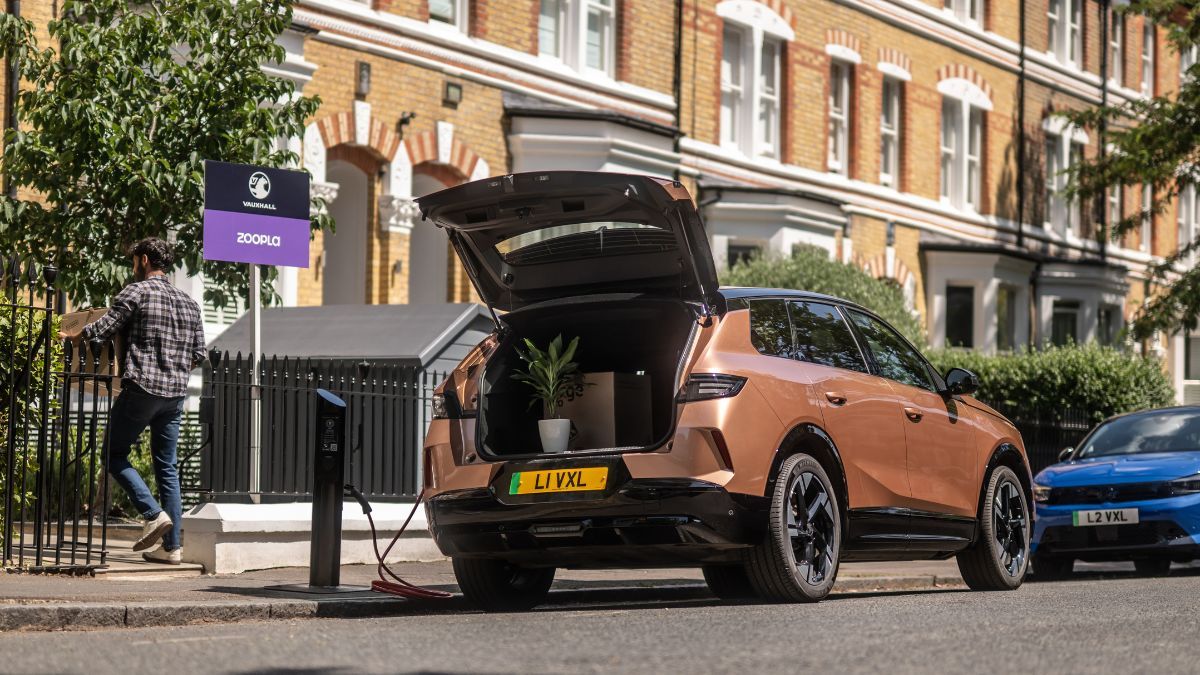
Even for drivers who can’t yet take advantage of cheaper home charging, that barrier is starting to come down. Companies like Kerbo Charge are now working with UK councils to roll out approved solutions that let homeowners safely run a charging cable beneath the pavement to a street-parked EV – opening up home energy tariffs to those without a driveway.
Taxes and charges
If you’re switching from an older combustion car, electric cars can also help you skirt some of the charges imposed on cars in various towns and cities across the UK. While London recently scrapped the congestion charge exemption for EVs, electric cars can still enter London’s wider ULEZ area free of charge, along with Clean Air Zones in places such as Birmingham, Bradford, Bristol, Portsmouth, and Sheffield.
If you’re buying a new EV in 2026, vehicle excise duty (road tax) is no longer free – but still competitive, set at £10 for the first year, and £200 for every year following. However, for EVs with a list price above £50,000, the Expensive Car Supplement is applied, adding £425 per year for the first five years of ownership.
Looking further ahead, there is ongoing discussion about the government implementing a pay-per-mile scheme for EVs later this decade, but this is yet to be fully confirmed.