Four years ago, Dodge CEO Tim Kuniskis saw the compact SUV market booming and wanted in. The result was the Dodge Hornet, a sporty, attitude-packed SUV meant to bring Dodge’s performance vibe to a new segment.
The Hornet aimed to stand out with style, handling, and power—basically a “Dodge for enthusiasts” in the compact SUV world.
Things didn’t quite go as planned, and after just three model years, the Hornet was discontinued. That makes leftover models a rare chance to score a fun, discontinued SUV at a bargain if you’re willing to take a chance.
In order to give you the most up-to-date and accurate information possible, the data used to compile this article was sourced from Stellantis and other authoritative sources, including CarBuzz, iSeeCars, and NHTSA.
The Hornet aimed for enthusiasts but never caught onPacked with style and performance, it just didn’t find its crowd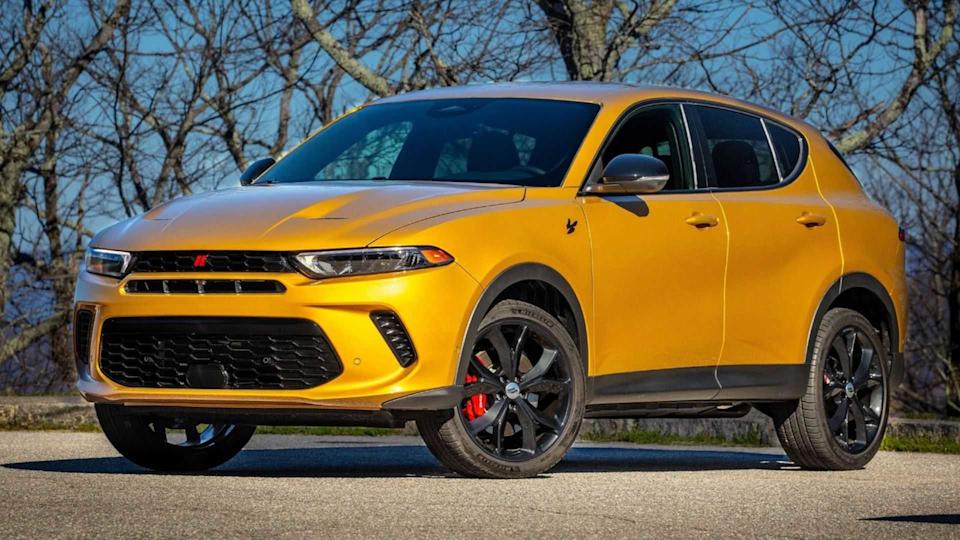
As the 2023 Hornet prepared to hit showrooms, marketing data showed a surprising trend: Dodge buyers cared a lot about power and acceleration, ranking it third in purchase importance. In the broader compact SUV market, that same factor barely registered, coming in 38th.
To appeal to those enthusiast-minded shoppers who were also intrigued by electrification, the top Hornet R/T came as an AWD plug-in hybrid. Built in Italy, the Hornet packed plenty of Dodge DNA into the Alfa Romeo Tonale’s platform.
Sporty options for compact SUV fans
Dodge Hornet GT (2023–2026) – 268 hp of sporty fun
Dodge Hornet R/T PHEV (2024–2026) – 288 hp with hybrid twist
Mazda CX-30 Turbo (2021–Present) – 250 hp, agile and responsive
Toyota RAV4 Prime (2021–Present) – 302 hp, plug-in hybrid power
Hyundai Kona N (2022–2023) – 276 hp, small but mighty
Volkswagen Tiguan SEL R-Line (2022–Present) – stylish and capable
Alfa Romeo Tonale (2023–Present) – Italian flair with performance
According to internal data shared by Kuniskis in 2022, roughly 40 percent of Dodge shoppers fall into a group called “All In & Active.” These buyers love their Chargers and Durangos, but more than that, they’re drawn to how driving a Dodge makes them feel.
That’s about double the typical rate for the compact SUV segment, meaning Dodge naturally pulls enthusiast drivers into showrooms more often than most brands.
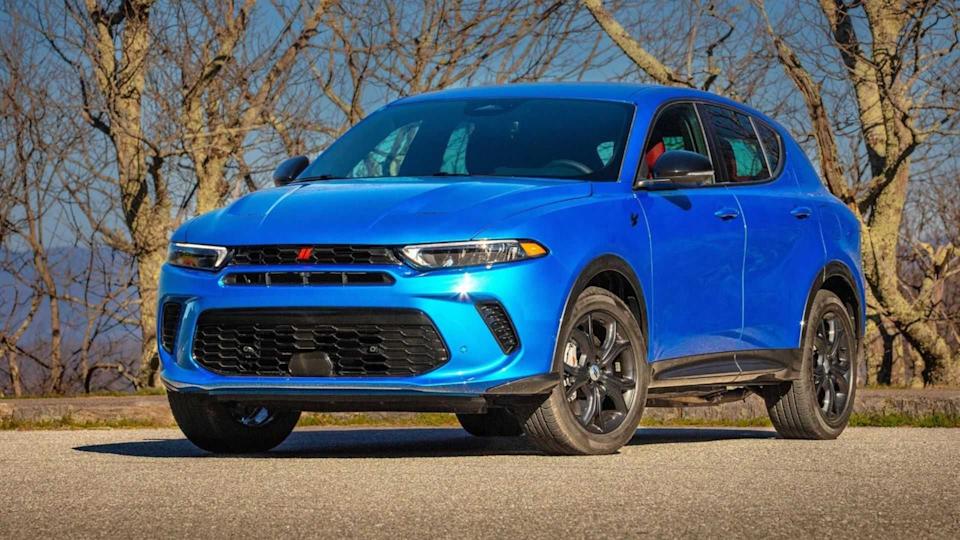
NetCarShow
The problem was that most compact SUV buyers cared more about familiarity, brand trust, and cargo space than thrill or style. The Hornet was built for Dodge’s “All In & Active” crowd, but those buyers weren’t into compact SUVs, and the ones who were mostly weren’t Dodge fans.
Sadly, this marketing mismatch wasn’t the Hornet’s only hurdle.
High price limited the Hornet’s appealCostly for its segment, it struggled to attract the buyers it was built for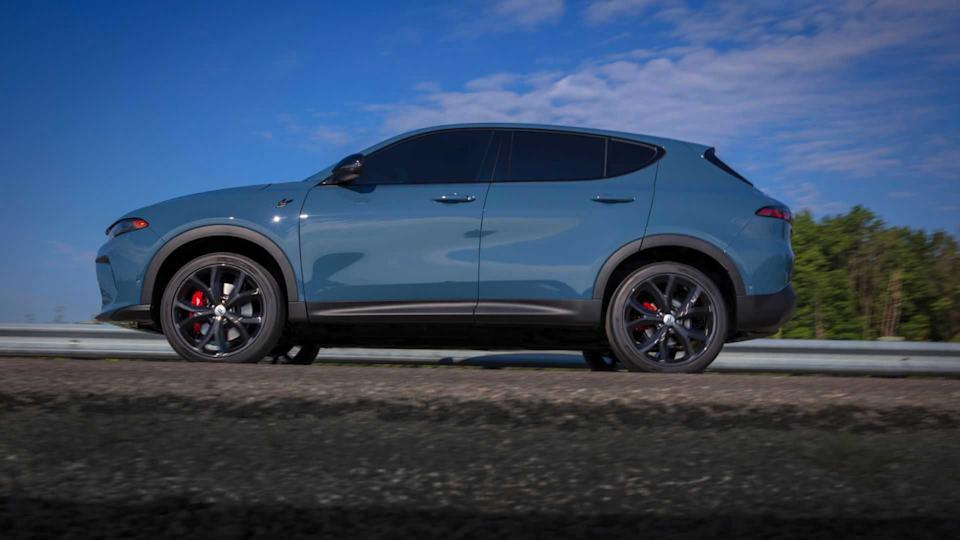
Stellantis
In 2023, the entry-level Hornet GT AWD started around $31,000, while the top R/T PHEV AWD hit $45,000—definitely on the pricey side. Prices nudged up a bit in 2024.
The high sticker wasn’t the only issue. Dealer markups and limited stock of the affordable, low-option base models meant finding a Hornet near $31,000 was tough, and upgrades quickly pushed the price even higher.
The result? The Hornet ended up costing more than established competitors, even as it quickly earned a shaky reputation for reliability. More on that shortly.
The Hornet R/T PHEV was up against rivals like the RAV4 Prime, Tucson PHEV, and Escape PHEV, all of which offered longer EV ranges and stronger reputations in the hybrid market.
Its link to the Alfa Romeo Tonale didn’t help either: Dodge shoppers felt it was too pricey for a Dodge, and Tonale buyers balked at how much Dodge hardware it shared. The platform tie-in was meant to be a perk, but high pricing ended up undermining the value on both sides.
“Production of the Dodge Hornet, built in Italy, has ended due to shifts in the policy environment. Dodge is committed to ensuring Dodge Hornet owners continue to receive customer support, service, warranty coverage and sustained parts supply. All Dodge Hornet models carry a 3-year/36,000-mile bumper-to-bumper and 5-year/60,000-mile powertrain warranty.
“Dodge Hornet R/T PHEV upgrades to 8-year/80,000-mile warranty on hybrid components and 8-year/100,000-mile warranty for battery. “
– Dodge spokesperson
Discounts, incentives, and lease deals showed up to try to boost sales, but it was too little, too late. The Hornet’s growing reputation for major glitches, combined with a shifting economy and new tariffs, sealed its fate.
The Hornet hit the market with issuesEarly reliability problems and glitches set a rough tone for the model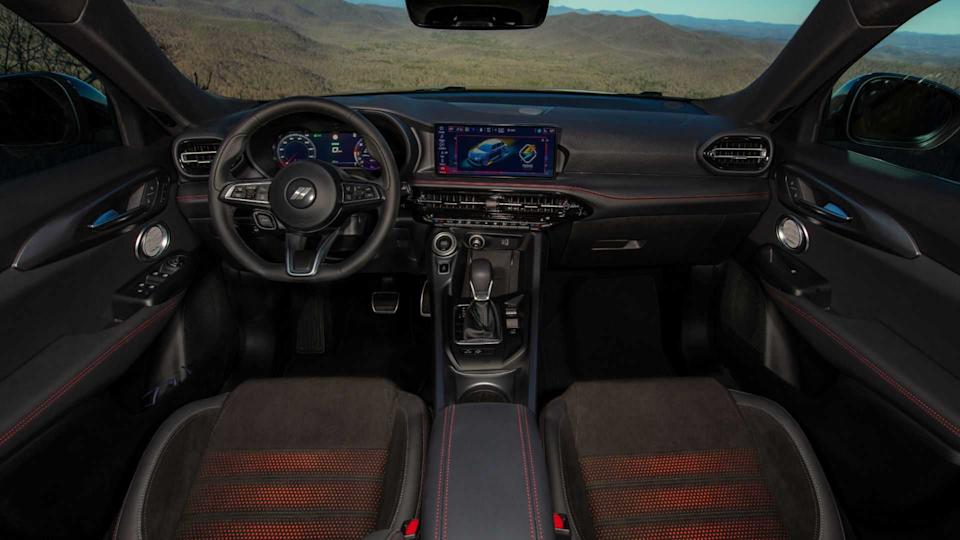
The Hornet’s launch fell short of Dodge’s expectations. Many buyers were still cautious after the Covid pandemic, opting for familiar, proven models instead of taking a chance on a new compact SUV.
Electronics issues didn’t help, either—owners often needed multiple software updates to get the infotainment, driver-assist systems, and other features working reliably.
Owners reported a slew of issues, from driver-assist systems that wouldn’t start and random car alarms, to infotainment crashes, hybrid system glitches, and dead 12-volt batteries that couldn’t be jump-started. Multiple dealership visits were often needed, with some problems lingering even after several software updates.
The high-performance PHEV R/T model faced a serious recall for a defective brake pedal that could collapse while driving, risking a crash. Some affected vehicles were even stuck in dealership inventory until the fix was applied.
Is the Hornet worth the risk at this price?Big savings meet potential headaches—know what you’re getting into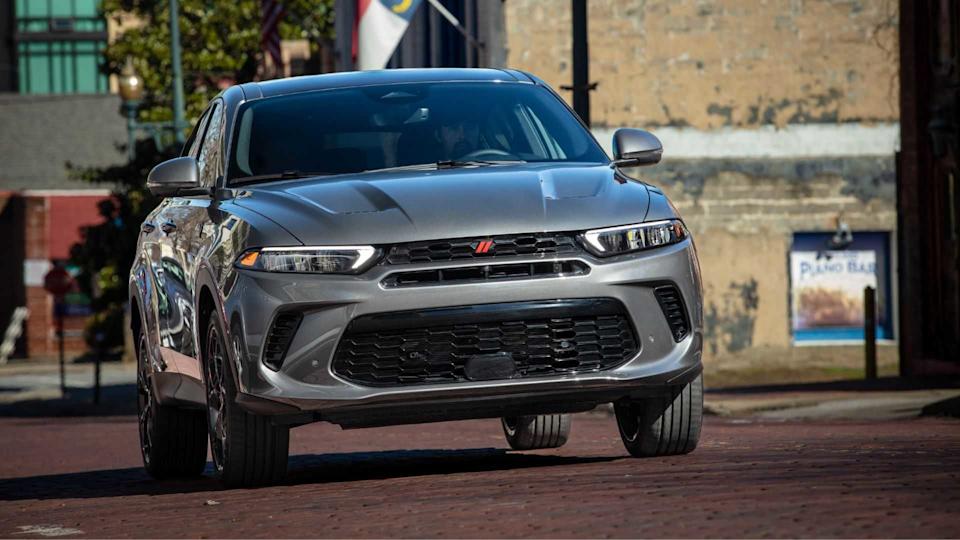
Stellantis
Today, the Hornet is an abandoned model with a poor reputation—but that also means bargains are out there. If you’re hunting for a new one, call around to Dodge dealers and ask about leftover Hornets they might be willing to discount.
When negotiating, it helps to mention that the Hornet is part of a discontinued line with a spotty reputation. According to iSeeCars analyst Karl Brauer, leftover 2024 or 2025 models can be a rare chance to get new-car peace of mind and warranty coverage at a reduced price.
In late 2025, iSeeCars reported which vehicles made up the biggest chunk of unsold new inventory. The December data showed that over 82 percent of unsold 2024 models sitting on dealer lots were Dodge Hornet Plug-In Hybrids—compared to a 0.4 percent industry average—showing just how far supply had outpaced demand for this compact SUV.
Current used Hornet prices are surprisingly lowHigh supply and low demand make this a potential bargain for buyers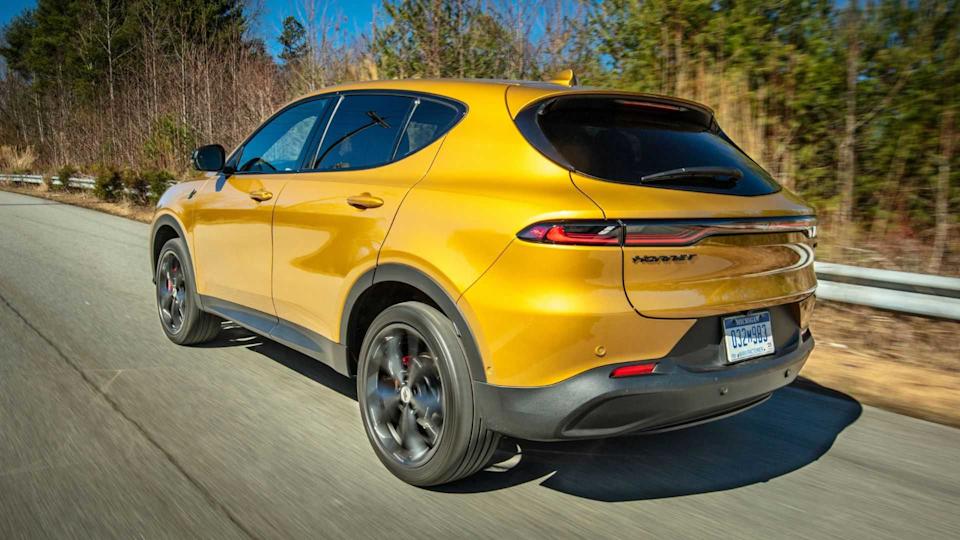
Stellantis
As of now, Dodge still lists 2025 Hornet models for sale, with the GT starting at $29,995, the GT Plus at $35,985, the R/T at $41,645, and the R/T Plus at $47,485. Incentives like the $6,250 bonus cash on the R/T AWD PHEV drop the price to $35,395 plus freight—but that’s still a hefty tag.
If you’re looking to save big, used 2024 Hornet GTs with fewer than 20 miles can be had for around $24,000—a $6,000 discount versus new, with no freight fees. Similarly, nearly-new 2023 GT Plus or R/T models can be picked up for thousands less than their brand-new 2026 counterparts, offering plug-in hybrid fun at a bargain price.
Buying a used Hornet can be smart if you want a high-tech, fun-to-drive PHEV while saving money. With all recalls and software updates handled, plus eight years of hybrid warranty coverage, you get most of the perks of a new Hornet—but consider resale value and your proximity to a dealership in case any issues pop up.