Geopolitical tensions and their anticipated effect on local fuel prices have given fresh impetus to new energy vehicle (NEV) lobbyists.
The prospect of soaring petrol and diesel costs is expected to catalyse an uptake in hybrid electric vehicle (HEV) and pure electric vehicle (EV) models.
We live in uncertain times. Not long ago, erratic power supply from our national energy parastatal was an impediment to electrified models’ popularity, in addition to their higher pricing versus internal combustion engine (ICE) counterparts. For now, loadshedding is less of an issue (a good number of households have solar these days too), and vehicles with either partially or fully electric powertrains are within easier grasp.
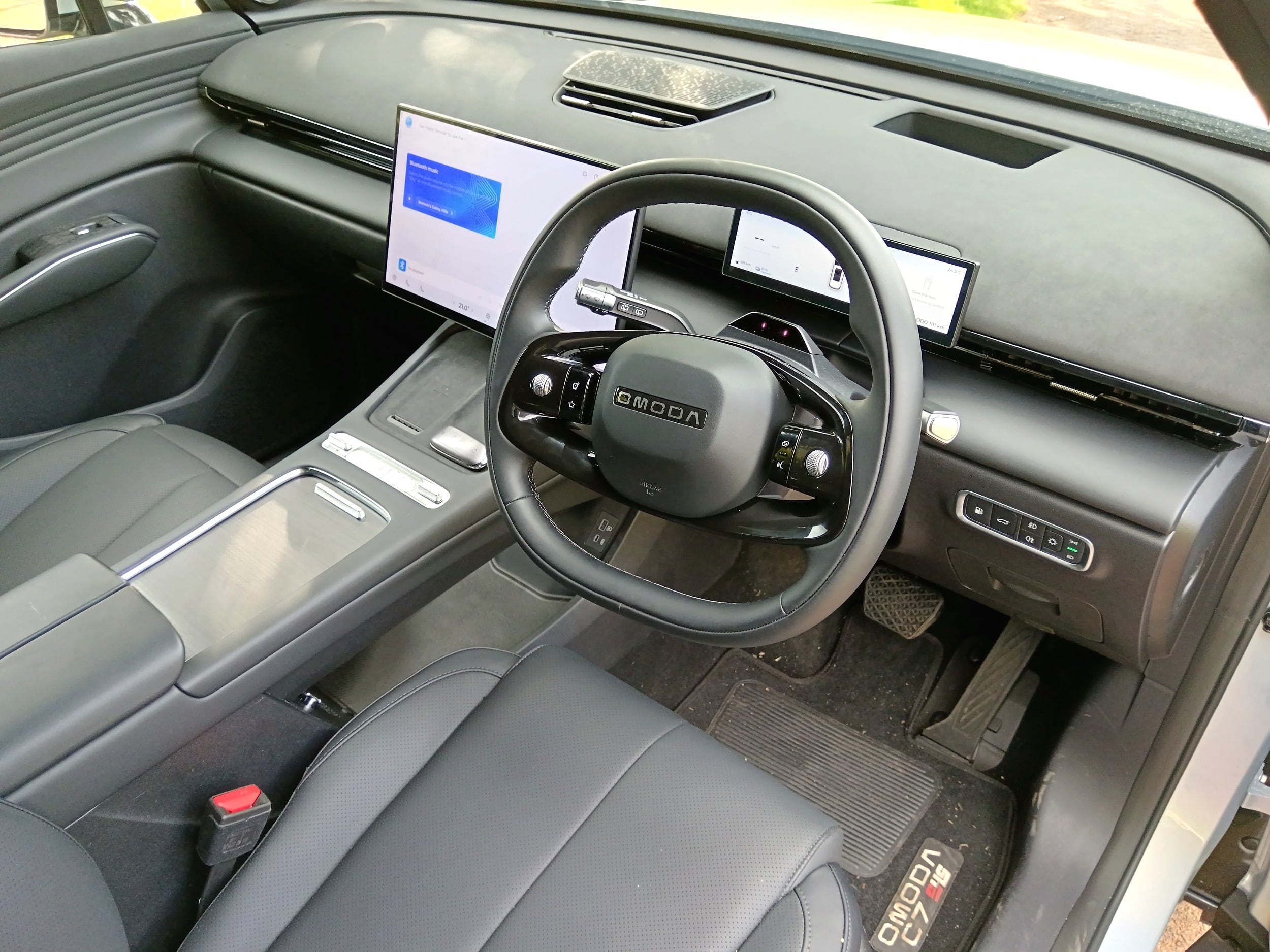 The cabin aims for German levels of perceived quality. (Brenwin Naidu)
Take the BYD Dolphin Surf, for instance, the country’s least expensive EV. It comes in at a competitive R341,900, just a bit more than a Volkswagen Polo Vivo Life.
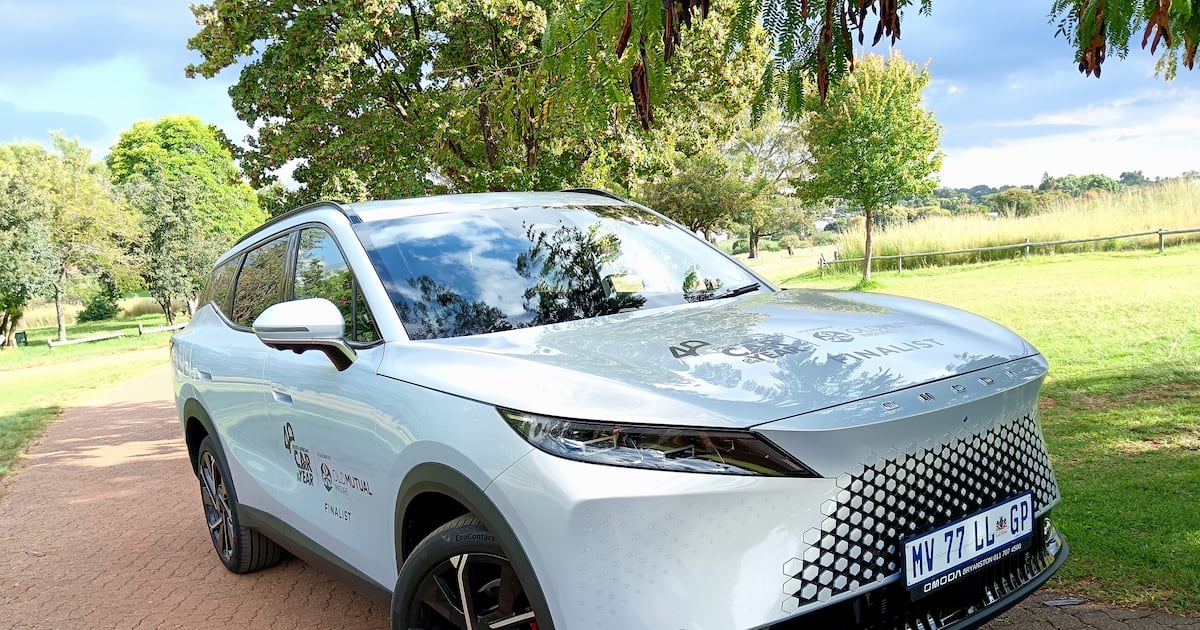
The plug-in hybrid electric vehicle (PHEV) market has seen a raft of new entrants. Among them is the subject of our evaluation here, the Omoda C7 J7 SHS. The acronym stands for Super Hybrid System.
It is worth noting that this vehicle is closely related to the Chery Tiggo 7 CSH (Chery Super Hybrid). We reported on the Chery in December, and it made for a compelling prospect, torque steer aside. But the Omoda appeals to fashion-conscious types and has a more flamboyant design.
At R689,900 it is the priciest in the C7 range, which starts at R539,900 for the non-hybrid 1.6T Luxury version.
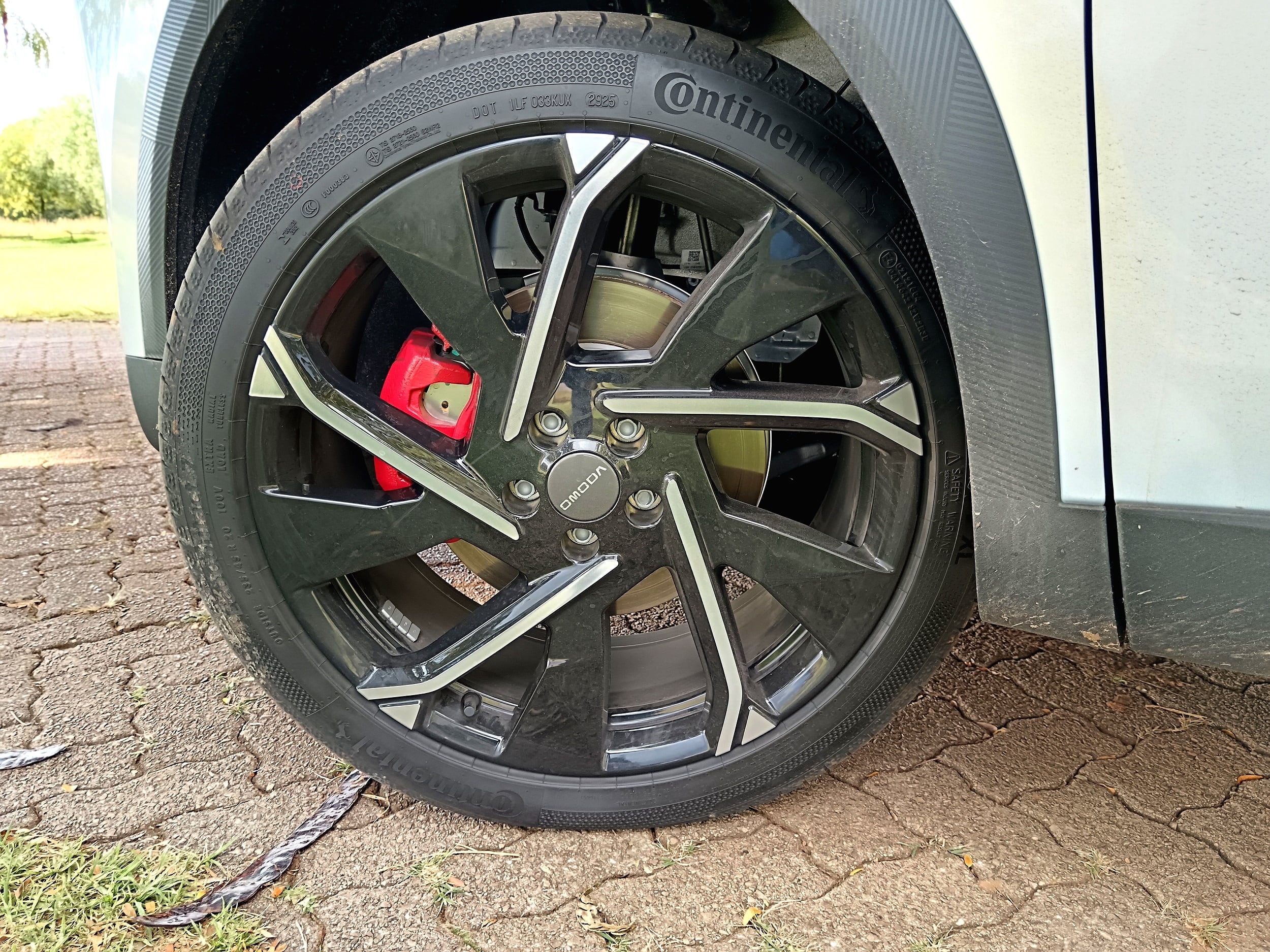 Stylish alloys and red callipers give the SHS a sporting flavour. (Brenwin Naidu)
The standard warranty is seven years and 200,000km in duration, with a separate 10-year/200,000km warranty for the hybrid system components. The first owner gets the brand’s much-publicised million-kilometre warranty, with terms and conditions of course.
Partly due to its striking appearance and partly because observers are always intrigued to see yet another new Chinese vehicle on the road, the C7 turns heads.
Its dimensions reflect its middle-child position in the Omoda range between the C5 and C9, with an overall length of 4,660mm, height of 1,670mm and width of 1,875mm.
Unlock the C7 SHS and the intensive illumination of the front-end (even the grille is backlit) grabs attention. Inside, contemporary Mercedes-Benz owners may notice familiarity in certain switchgear. The electric window controls and indicator stalks are nigh-on identical to those found in modern cars bearing the three-pointed star. And frankly, you would not describe the perceived quality of materials and surfaces as being worse than they are in the German counterpart.
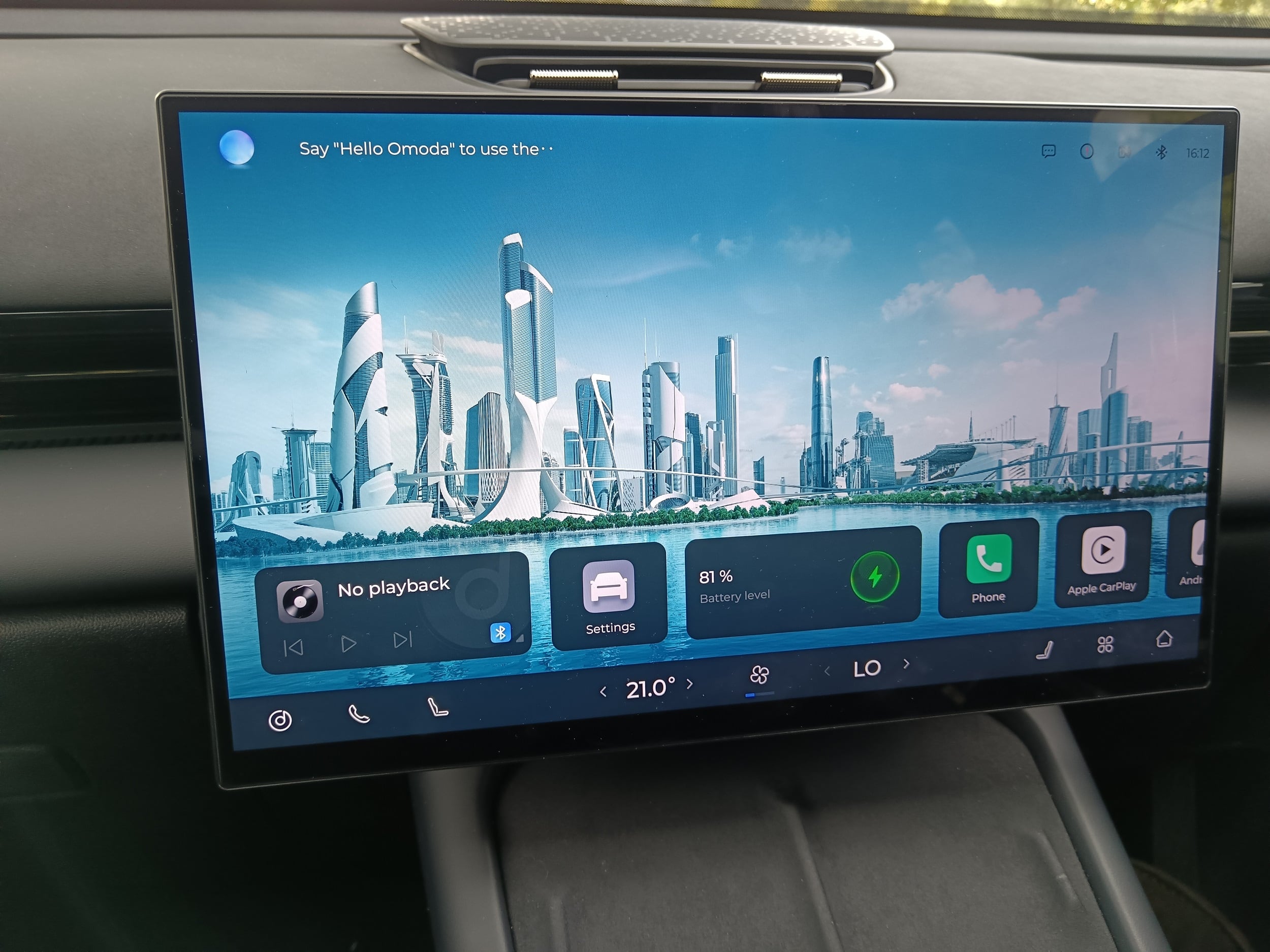 The large, high-resolution screen is typical of contemporary Chinese models. (Brenwin Naidu)
But there are quirks. Following the lead of Volvo, Omoda has integrated side mirror controls into the infotainment screen. Some might counter by asserting owners will get used to it. Sure, but it can be mighty inconvenient when parallel parking, should you want to make adjustments to keep tabs on a low kerb, for instance.
It is also annoying that the vehicle will not engage drive or reverse unless your seatbelt is fastened. Obviously — and let me be clear here — we are not advocating for driving sans safety belt. But if one were, say, needing to make off from a dangerous situation in haste, you could see how this would be problematic.
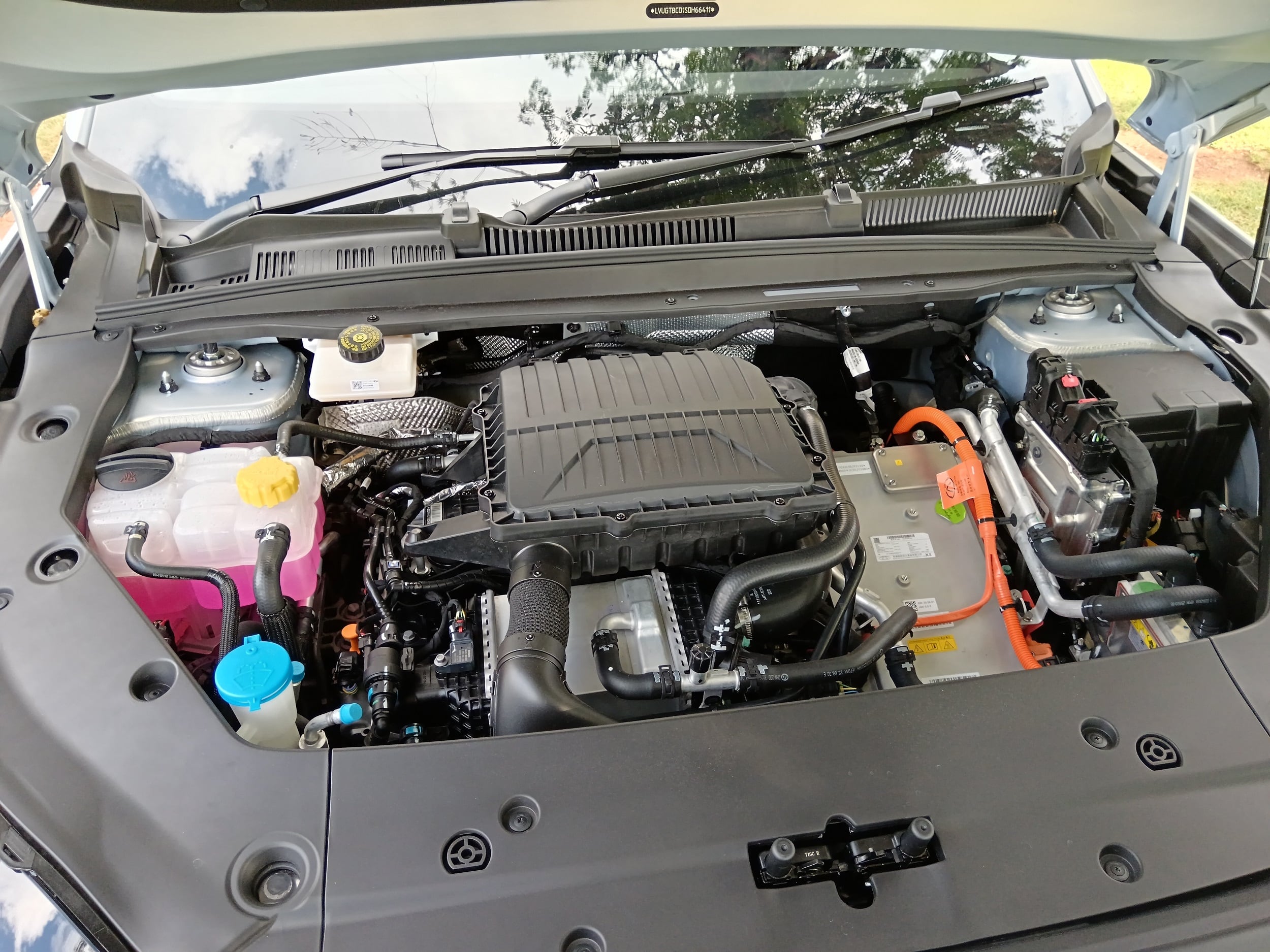 The 1.5l turbocharged petrol engine is paired with a powerful electric motor. (Brenwin Naidu)
My next gripe related to the toggle between hybrid and electric driving modes. Tipping the switch towards the full-EV setting always yielded the same error message on the screen. “Unable to switch modes, preconditions not met,” was the note shown. And that was with the battery pack being close to full.
Head of marketing for the brand Shannon Gahagan offered an explanation for this after we reached out. She said it was likely that the previous driver had changed the HEV/EV hold setting in the infotainment system.
The solution: “There is a setting which allows you to select ‘force charge’ that then forces the vehicle to remain in an HEV state and conserve the battery. Under the ‘New Energy’ section in the settings, there will be three settings, and ‘Smart Mode’ is the one you want: 1) Initial 2) Smart Mode 3) Forced.”
Specs
The powertrain of the C7 uses a 1.5l turbocharged petrol, four-cylinder unit with an electric motor powered by an 18.4kWh battery. The fuel tank capacity is 60l. With the electric motor and ICE in tandem, Omoda claims drivers can expect a range as high as 1,200km, should they match the claimed 4.9l/100km consumption figure. Our test unit’s combined average economy was 5.3l/100km. Allow me to add that the vehicle was driven in a regular manner, without particular effort to hypermile.
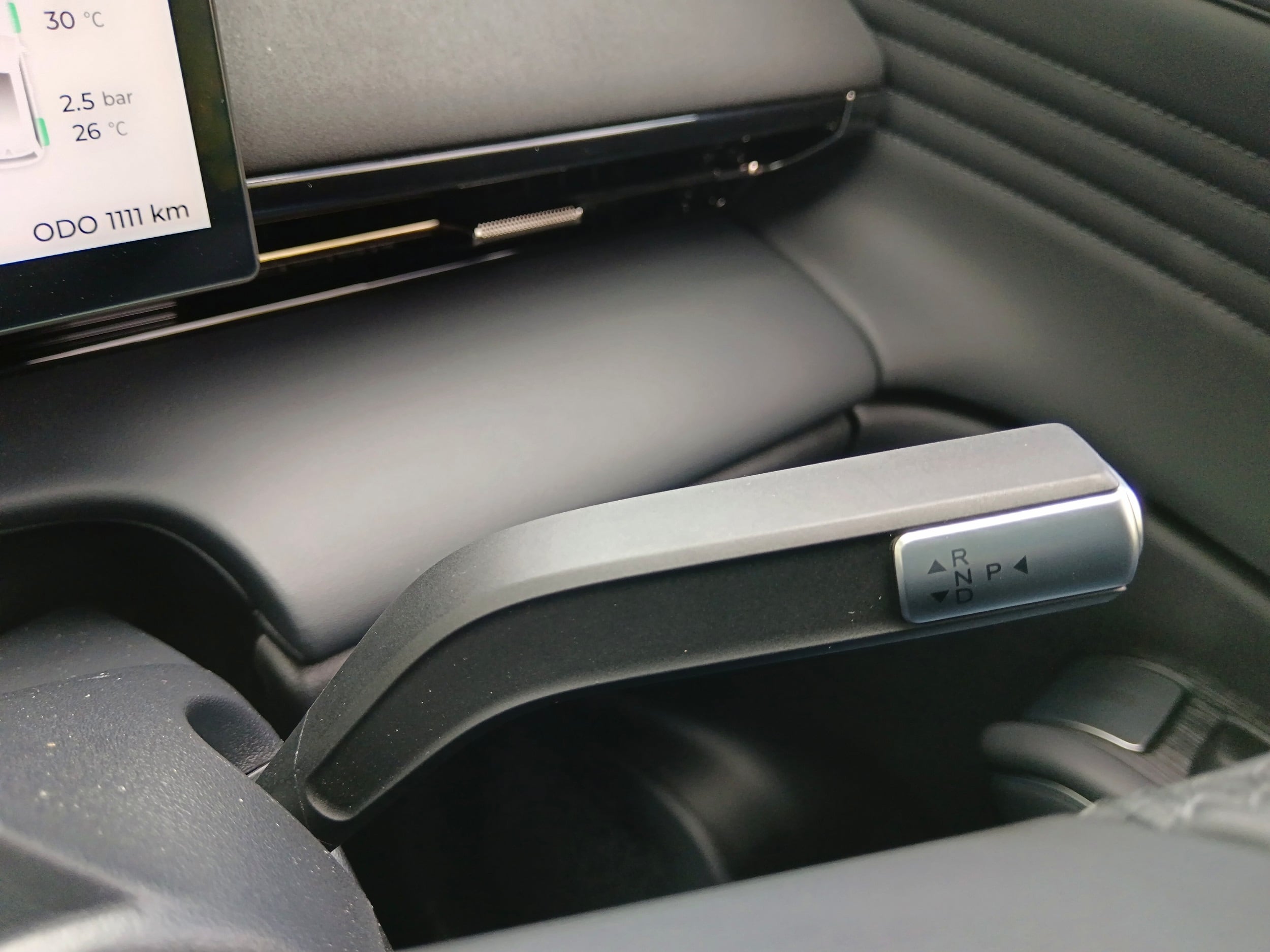 The gear selector and other fixtures are clearly inspired by the Mercedes-Benz way. (Brenwin Naidu)
As noted with the Chery Tiggo 7 CSH, the Omoda 7 SHS is prone to struggling for traction, its front wheels overwhelmed by the considerable power and torque outputs of the electric motor and engine paired (255kW/525Nm).
In isolation, the engine makes 105kW/215Nm and the electric motor 150kW/310Nm. Omoda claims a 0-100km/h time of 8.4 seconds.
Overtaking punch on the freeway is in plentiful supply, and around town the C7 makes progress in a near-silent fashion that can be quite serene. Electric-only range is quoted at 105km — if you can navigate those “preconditions”, of course.
Its ground clearance is 157mm, more car-like than that of a typical sport-utility vehicle. That means the C7 feels fairly dynamic, with a light, precise steering.
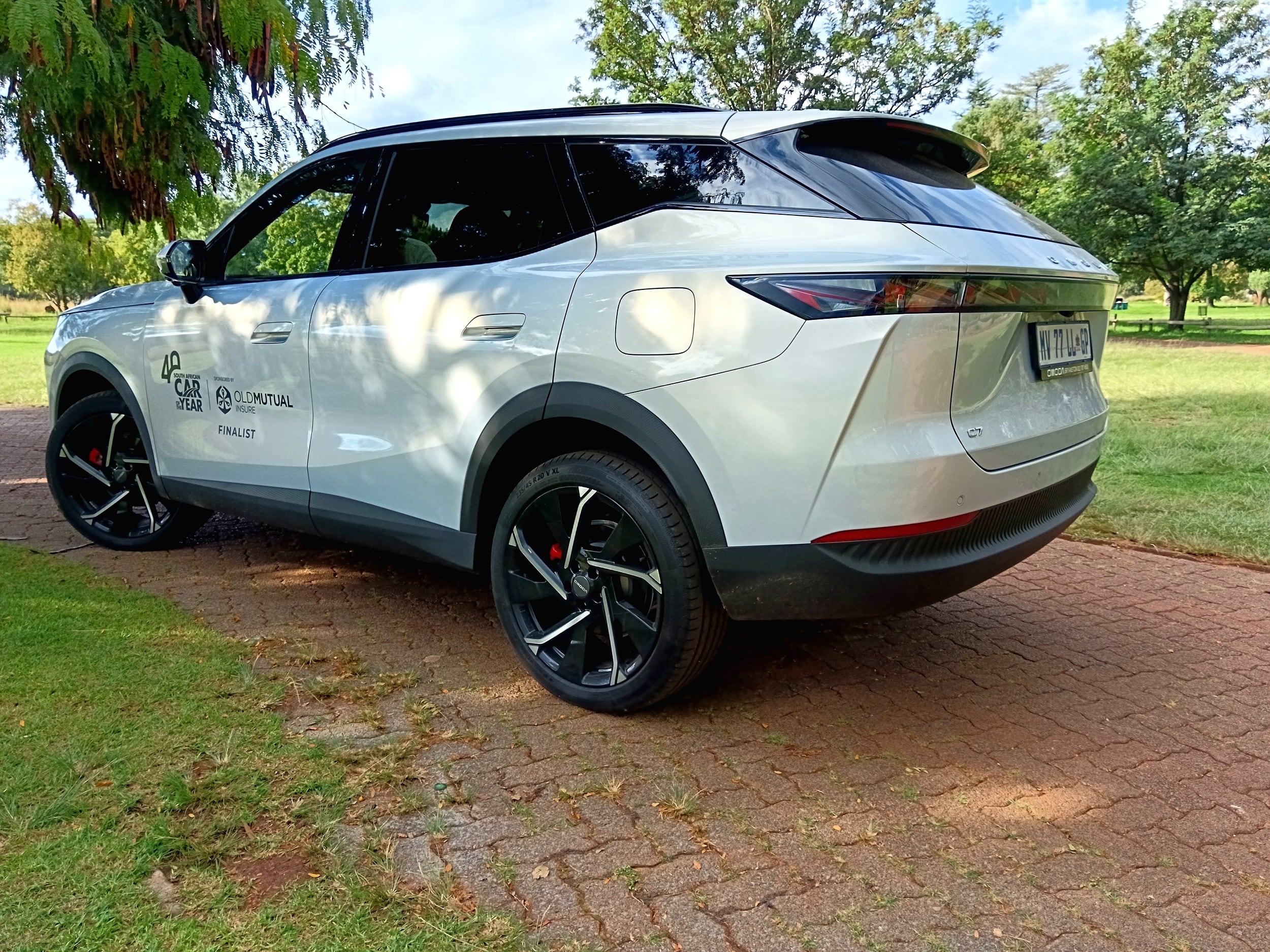 Overall, the C7’s expressive design is cohesive. (Brenwin Naidu)
There are no stark compromises where packaging is concerned, as is the case with some PHEV models. Not many will notice the slightly smaller luggage compartment, which is 614l in the standard car and 537l here.
Aside from the lack of a spare wheel, the C7 is packed to the rafters with amenities, everything from a panoramic roof to adaptive cruise control, an airbag count of eight, a sizeable infotainment screen, and plenty more details to keep the average salesperson busy making content for Instagram. No denying that the Chinese have given their rivals sleepless nights where specification sheet contests are concerned.
It is also telling that when it comes to PHEV models around this price range, there are only Chinese options in the mix. Not a single Japanese, Korean or German player to be seen.
As consumers brace for the hit of fuel price increases, the availability and competitive pricing of Chinese PHEV picks like the C7 may widen the sales gap between legacy rivals.