(Yicai) March 30 — The heads of more than 100 foreign multinationals gathered in Beijing last week for the China Development Forum, and many used the occasion to visit local advanced manufacturers, including those in electric vehicles, smart appliances, and humanoid robotics, with a view to future partnerships.
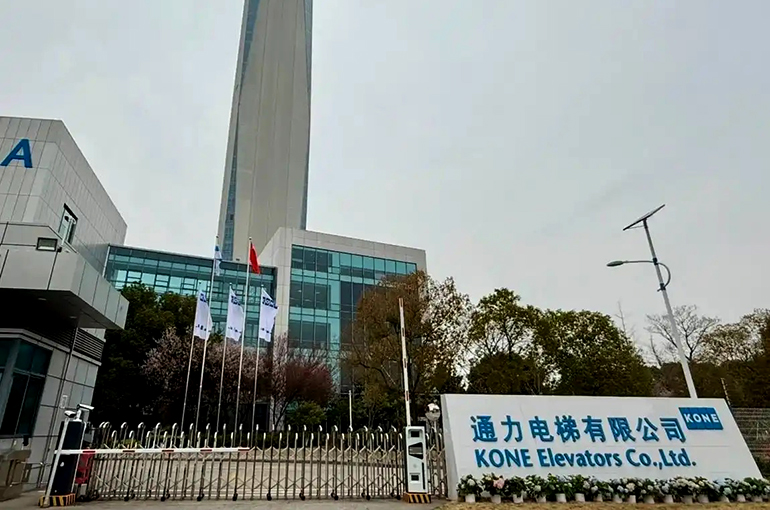
Digitalization, EVs, and robotics are the three areas of China’s ecosystem that interest Kone, Philippe Delorme, president and chief executive officer of the Finnish elevator giant, told Yicai. Speaking at a recent event celebrating Kone’s 30th anniversary in China, he said the firm’s digital solutions in China will be entirely based on the local technologies and ecosystems.
Kone is stepping up investment in smart manufacturing in China. Its latest next-generation smart elevator platform, launched globally in China, increases computing power by 22 times. By integrating into various digital ecosystems through various open application programming interfaces, it can use artificial intelligence to shift maintenance services from “reactive repair” to “proactive prevention.”
Delorme said the robotics ecosystem is also one of Kone’s key future development directions. The company sees broad application potential for robots in the elevator industry, he said, especially in key links such as installation, service, and maintenance, where they could significantly improve efficiency.
China has more than 140 companies researching, developing, and producing humanoid robots as of last year, according to the Ministry of Industry and Information Technology. Leaders in the field, such as AgiBot and Unitree Robotics, have attracted the attention of multinationals.
Some are reportedly building large factories to collect the data needed for developing AI that can independently control robots and machinery, which also presents opportunities for cooperation with multinational industrial giants.
Over the past week, Siemens’ global head of data and AI visited several different types of companies in China, including humanoid robot manufacturers. Xiao Song, chairman, president, and CEO of Siemens China, told Yicai that the country’s innovation potential has been accelerating in recent years, with industries such as embodied intelligence leading the world.
Siemens recently announced a deep collaboration with Alibaba Cloud, which will integrate Siemens’ simulation product portfolio with the Chinese tech firm’s computing power and infrastructure to provide computer-aided engineering services for clients in the Chinese market. These services could potentially attract interest from humanoid robot companies.
Siemens announced an in-depth tie-up with Alibaba Cloud at its first tech conference recently held in China. They will integrate Siemens’ simulation product portfolio with the Chinese internet titan’s computing power and infrastructure to offer computer-aided engineering as an infrastructure-as-a-service to clients in the market. These services may be of interest to the likes of Unitree.
Xiao said embodied intelligence, as an emerging technology, still suffers from a data shortage. “Our data covers a very wide range of industries, and that is of great value to emerging fields such as embodied intelligence,” he noted. “We’re also actively discussing with all parties in the industry how to share this data in a compliant manner, but breaking down data silos remains a considerable challenge.”
Editor: Tom Litting