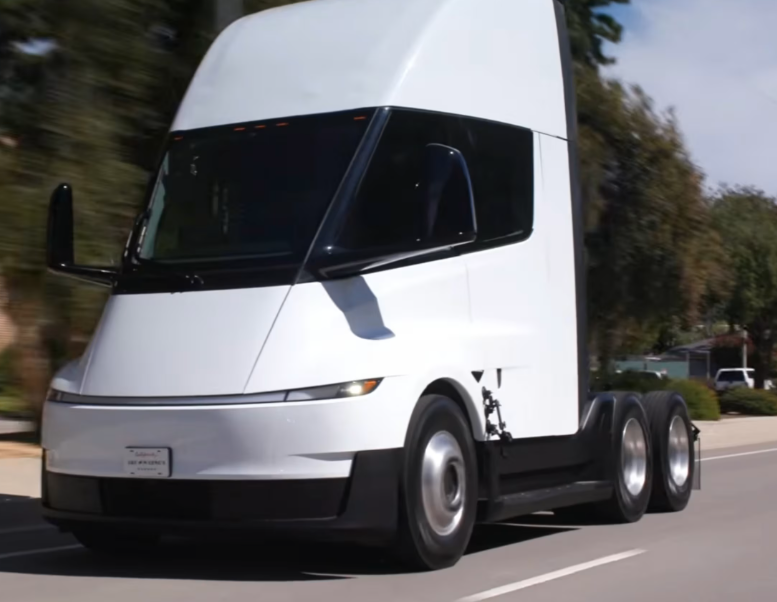
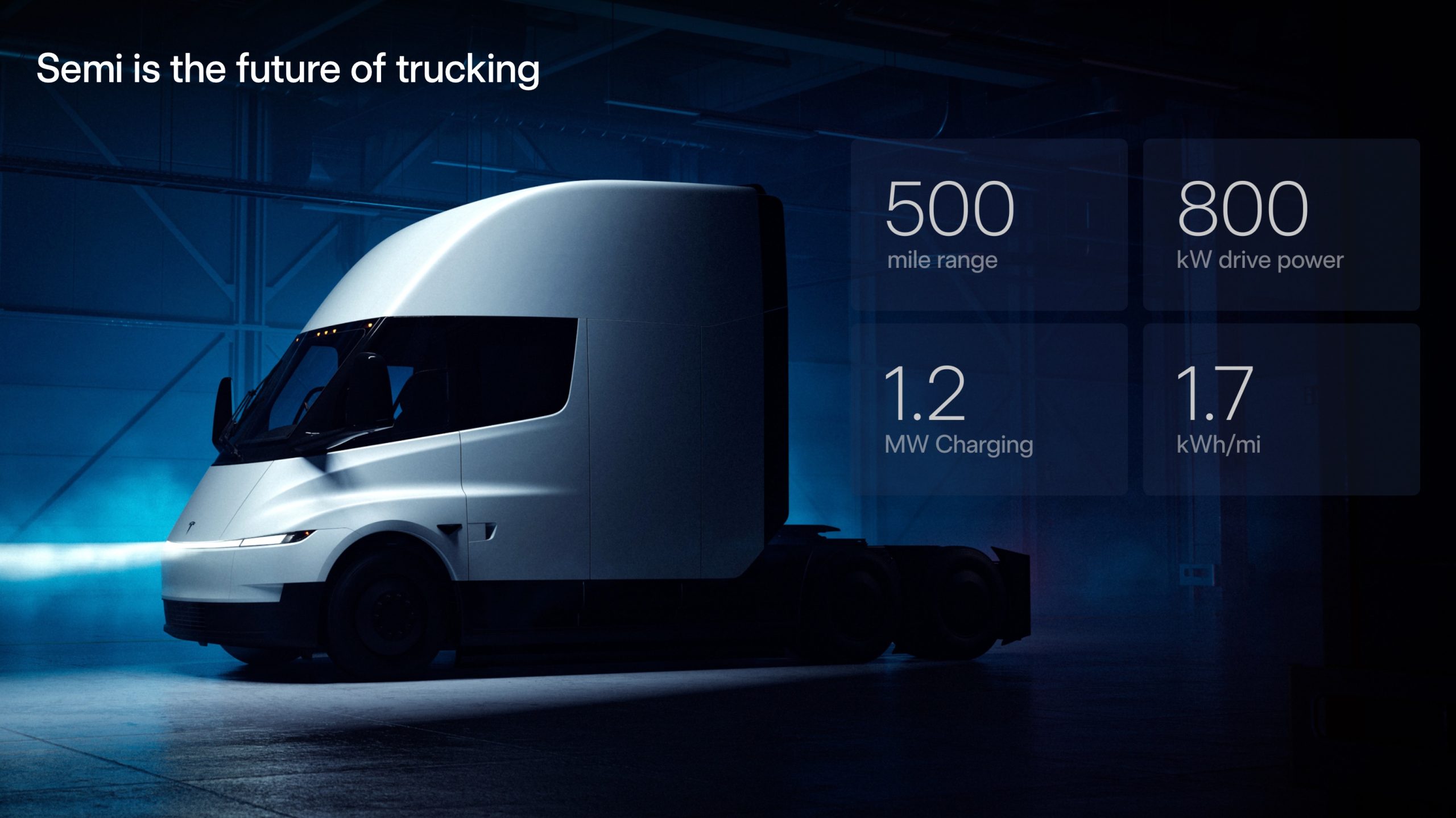
 A Tesla Semi, an all-electric freight truck
When the US-Israel-Iran war rattles oil routes and sends stocks linked to oil prices in chaos, we remember how vulnerable freight really is. From Houthis blowing up shipping containers in the Red Sea to the IRGC regime stopping traffic in the Strait of Hormuz.
The latest instability tied to Iran and the Strait of Hormuz has again exposed a truth that should have been obvious years ago: moving fuel, food, medicine and industrial goods with diesel trucks from source points around the world is not only dirty and expensive, it is strategically brittle.
A single chokepoint can raise costs across continents. A single delay can ripple through ports, warehouses and supermarket shelves. If there is a serious transportation lesson from this latest era of conflict, but also from the COVID era and the beginning of the Ukraine-Russia war, it is that freight has to become more electric, more automated, more distributed and much safer.
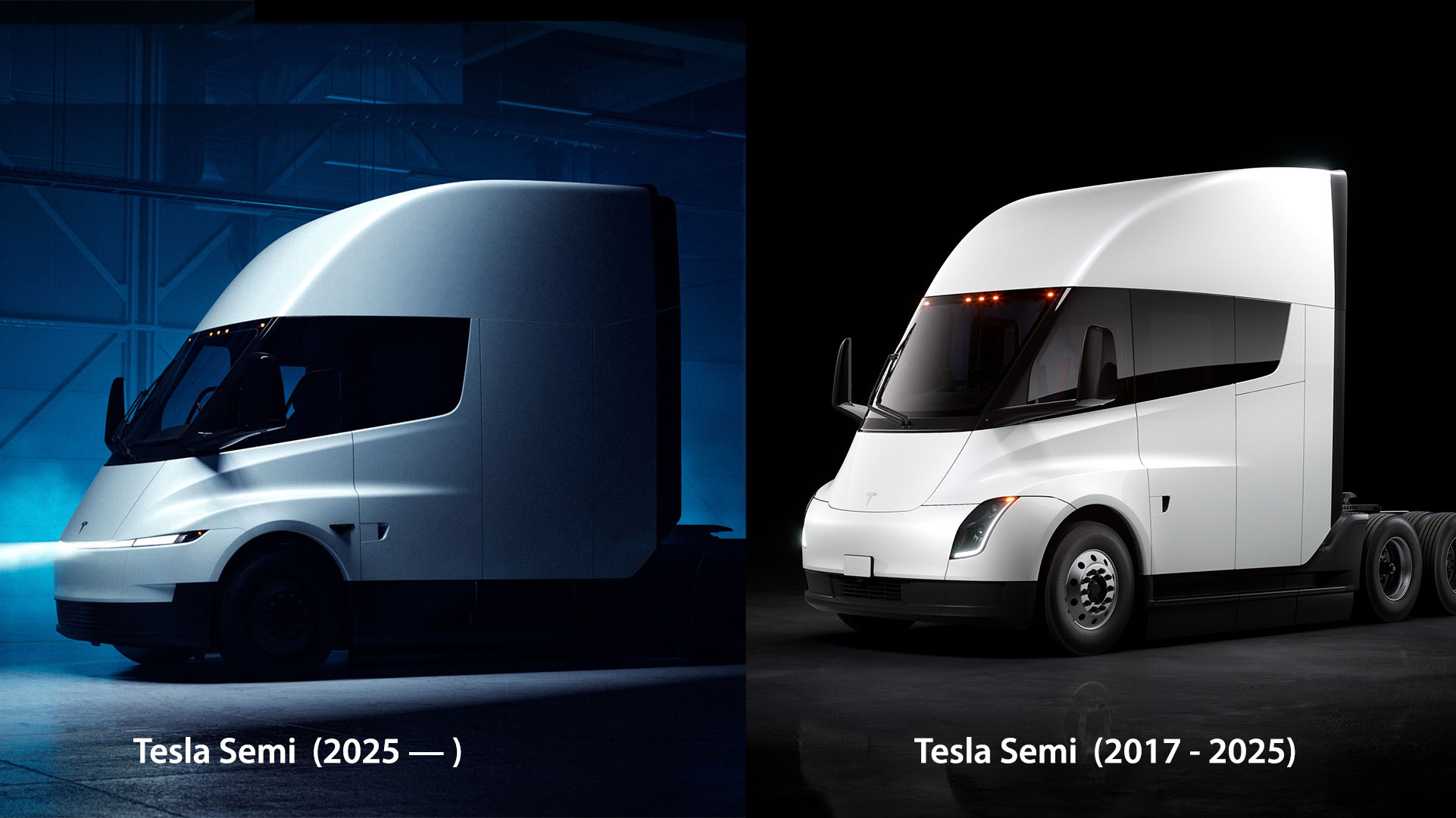
The most visible symbol of that future is the Tesla Semi, but it is only one part of a wider shift that includes platooning, electric road trains, tunnel logistics (the Boring Company) and autonomous overnight freight. Tesla says their new Semi can travel up to 500 miles on a single charge, potentially charge itself, use just 1.7 kWh per mile, and recover up to 60% of range in 30 minutes using Tesla’s dedicated Semi chargers. These are no longer vague promises from a concept vehicle. They are operational logistics numbers, and they matter because freight does not need novelty. It needs reliability, lower costs, cleaner energy and fewer funerals on the road.
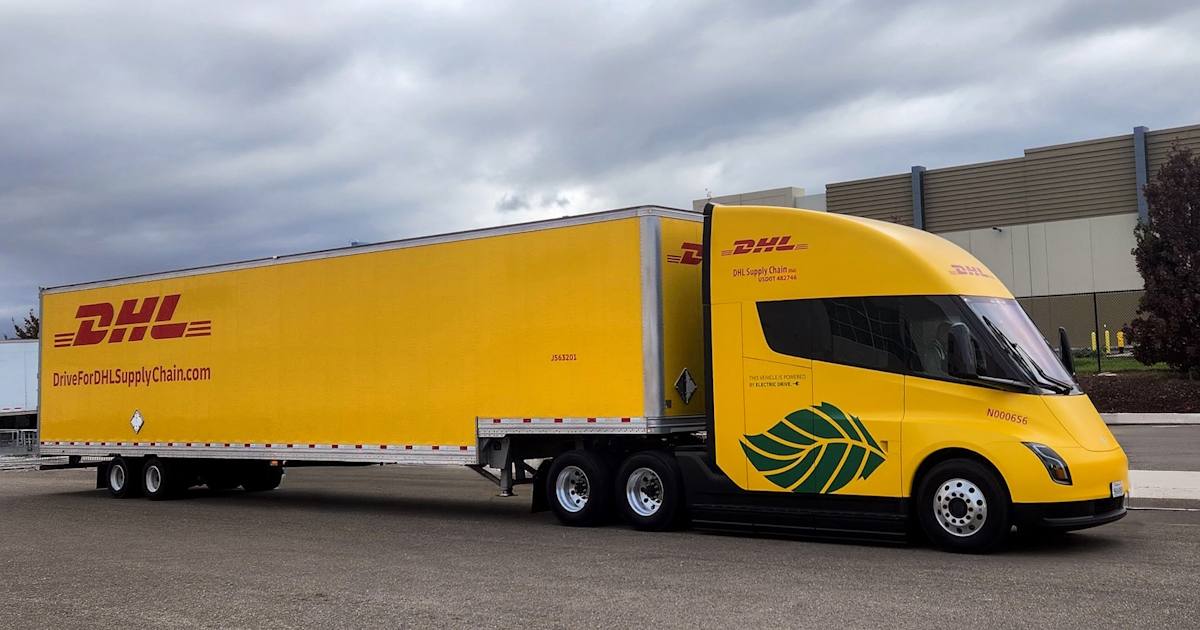 DHL tests a Tesla Semi on the road
The real story is not just battery range. It is what electric trucks can do to the geometry of freight itself. Electric heavy vehicles are better suited to repeatable, software-managed routes than diesel trucks, especially on corridors between ports, warehouses, data centers, industrial parks and distribution hubs. They can charge during planned dwell time, brake regeneratively in traffic, and eventually move in synchronized convoys. That is where an old Green Prophet idea suddenly feels new again.
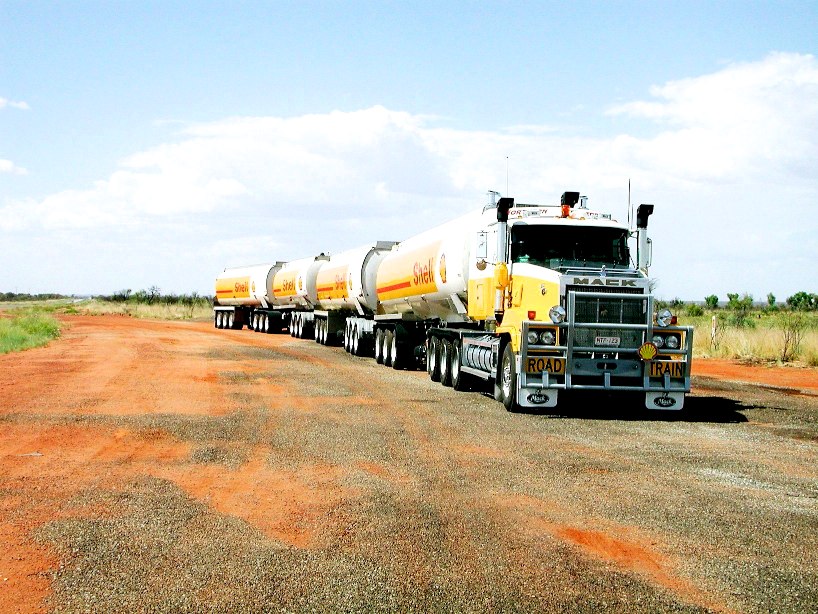 A road train in Australia. Long-distance hauling on flat surfaces can hook multiple loads together like a train.
Years ago Green Prophet wrote about road trains as a way to reduce energy use and pollution on major corridors. Back then it sounded slightly utopian. Today it looks practical. Road trains are already used in places like Australia for long-haul freight, where multiple trailers are linked in controlled formation. The next version is more sophisticated: platooned electric trucks using software, automation and vehicle-to-vehicle coordination to move with less drag, better braking and tighter control. If war has reminded us how fragile fuel supply can be, then electrified road trains offer a direct answer. They move goods using power that can increasingly come from domestic grids rather than imported oil.
“Well said,” says Mark Russell, from Eco Trilogy, “Unfortunately, every new idea introduced in the West right now seems to be met with “that’ll never work” instead of “we can make this happen.” Somewhere along the way we’ve shifted from practical, solutions-focused thinking to a culture that resists improvement.
“Healthy debate is one thing—I can respect that. What’s harder to accept is the deliberate misinformation and outright falsehoods that cloud real progress. Take electric motors for example—they’re vastly more efficient than diesel, and that’s only the beginning of what’s possible when we choose to move forward instead of hold back.”
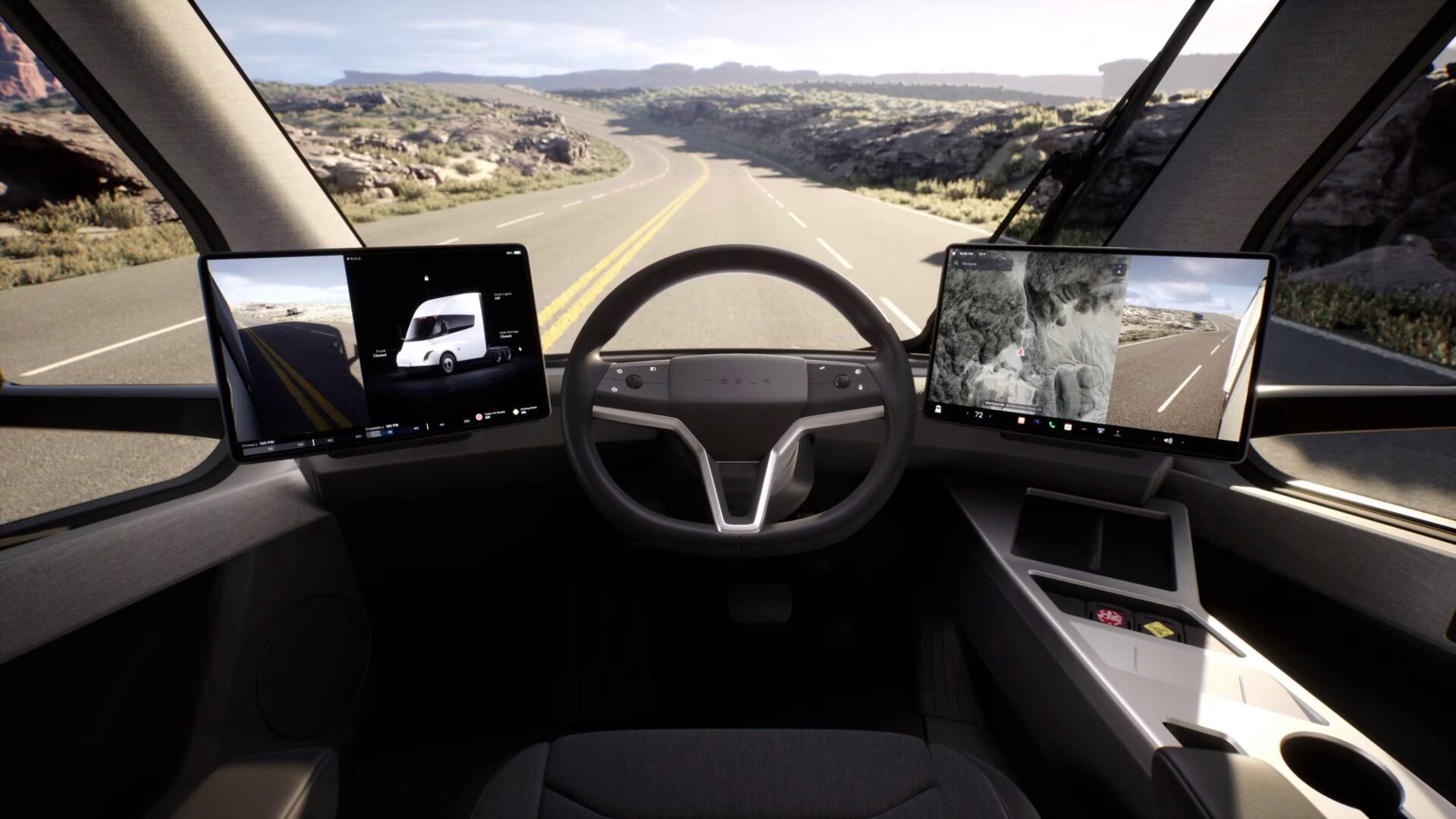 The Tesla Semi interior
This is not just a climate story. It is also a safety story, and trucking badly needs one. According to the Federal Motor Carrier Safety Administration, 6,050 large trucks and buses were involved in fatal crashes in 2022. The Insurance Institute for Highway Safety notes that most deaths in large truck crashes are not truck occupants but people in smaller vehicles. Canadians have experienced this too well. A recent high-profile case is about an Indian truck driver with dozens of traffic offenses who wiped out an entire hockey team. Truckers themselves, though happy for the jobs that require unskilled labor, lead to back problems, opiode use and addiction. My brother-in-law got addicted to crack on this path. But in society, the danger comes from mass, height, visibility problems and human error. Trucks are essential to modern life, but the diesel freight system we tolerate is still one of the most physically unforgiving machines in daily public use. If you live in rural areas in Canada for instance, it’s fairly common to hear stories of people who have been hit by logging trucks out on old lonely logging roads.
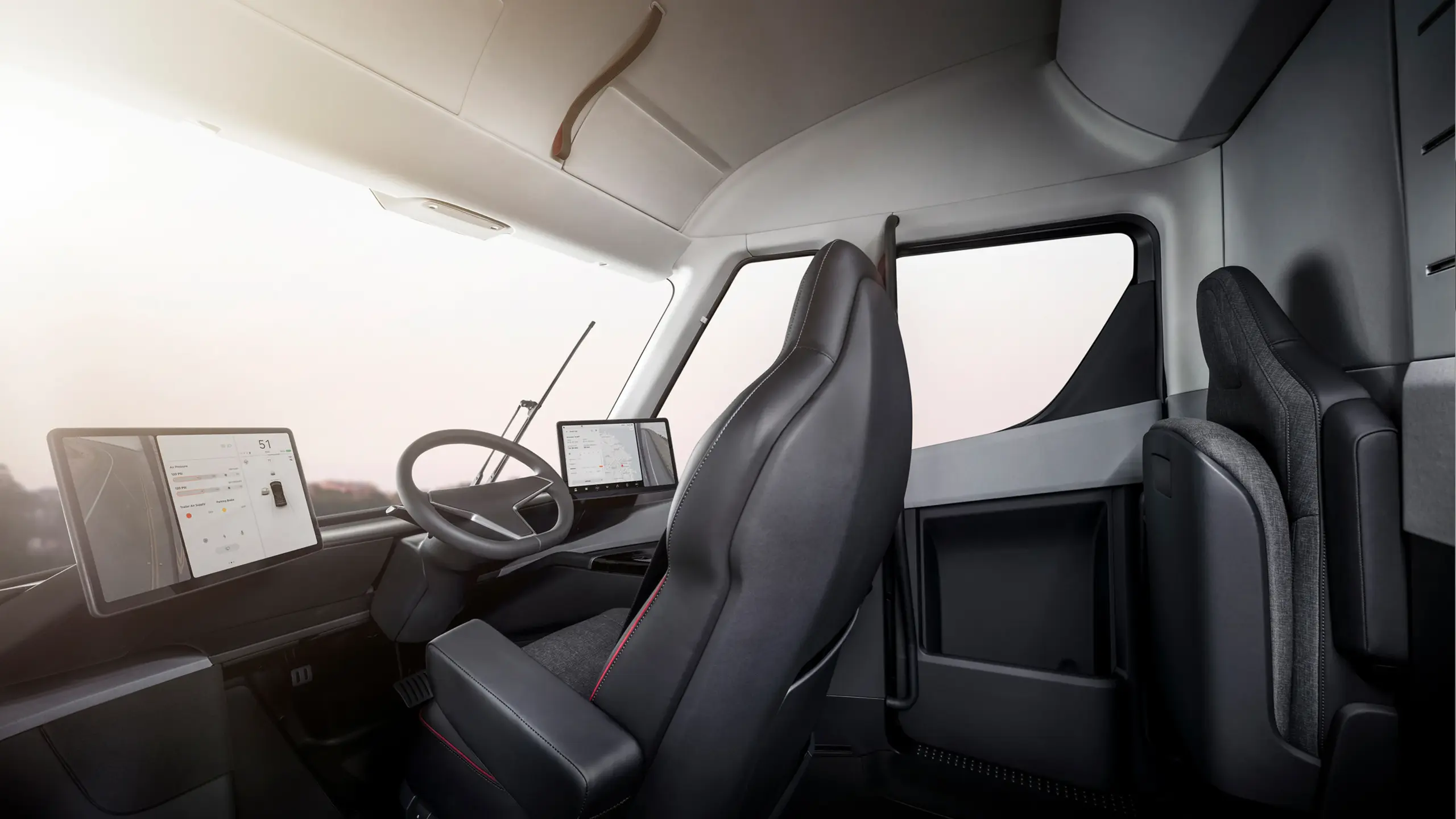
That context matters when people dismiss autonomous or semi-autonomous freight as “experimental.” The current system is experimental too. It is just old enough that we stopped calling it that. Human fatigue, poor training, distracted driving, mechanical neglect and congested road conditions are still doing terrible work every day. The case for electric freight is not that software is magic. It is that electric and digitally managed fleets can reduce some of the oldest failure points in trucking if they are deployed honestly and regulated properly.
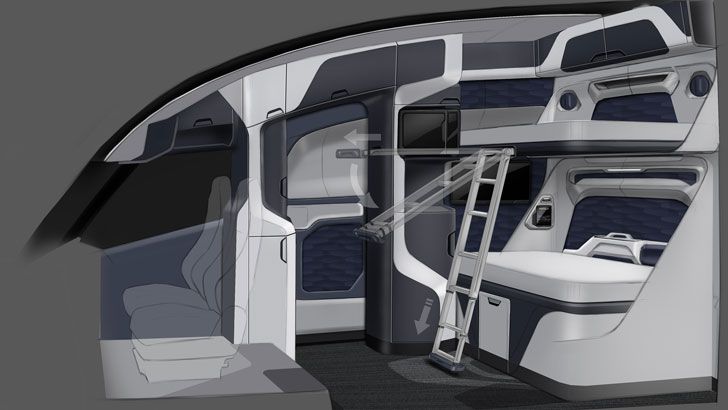 Mercedes-Benz NextGenH2 (coming 2026) and Nikola Tre FCEV, feature dedicated sleeper cabins designed for driver comfort and safety with advanced hydrogen monitoring systems. They aren’t electric, but run on green hydrogen fuel. Remember electric cars are ony as “green” as the power stations charging them.
There is strong evidence that advanced safety systems already help. A study highlighted by the IIHS found that forward collision warning and automatic emergency braking greatly reduce crash risk for large trucks. Another transportation safety summary reported that forward collision warning reduced rear-end crash rates for large trucks by 44% and automatic emergency braking cut them by 41%. These are not futuristic gains. They are available gains, and electric trucks are especially well positioned to integrate them deeply because they are software-first vehicles from the start.
This is where the Tesla Semi has real promise beyond the brand mythology. A truck that is built around sensors, cameras, digital controls, active safety systems and fleet-level telemetry is not just a cleaner truck. It is a more governable truck. That matters because freight safety is often less about one great driver and more about whether the entire system is designed to reduce bad decisions. Electric fleets can be routed to avoid dangerous congestion, scheduled for lower-risk windows and monitored continuously for maintenance, speed, route adherence and braking behavior.
Canada has already shown what happens when freight systems become too loose and too dependent on low-cost labor with weak oversight. Ontario authorities suspended truckers’ licences after uncovering dishonest testing and training practices in the commercial driving pipeline, mainly through Indian and Pakistani new immigrants, a scandal that has raised concerns about how unqualified drivers can end up operating very large vehicles on public roads. The report in TruckNews made clear that the issue was not theoretical.
There have also been wider crackdowns in western Canada. In Alberta, regulators shut down unsafe truck driver training schools and targeted carriers linked to poor safety practices, according to another TruckNews report. This is where the so-called Indian trucker scam story belongs: not in xenophobic shorthand, but in a larger, documented failure of training quality, licensing integrity and freight oversight. The public safety issue is real and the solution is better standards, better enforcement and eventually fewer opportunities for dangerous human error in the first place.
Electric and autonomous freight systems can help close that gap. A truck that is digitally supervised from depot to destination is much harder to fake than a paper credential. Its route, braking profile, charging pattern, maintenance logs and safety events are all visible. Its blind spots can be monitored more effectively. Its lane keeping can be assisted. Its speed can be constrained. Its night operation can be managed more intelligently than traditional diesel trucking, where too much depends on exhausted people trying to survive punishing schedules.
Night freight, in particular, deserves more attention. Most people think of night driving as inherently more dangerous, and for tired human drivers that is often true. But electric freight paired with high-grade sensors, automatic braking, lane support and controlled corridors changes that equation. Roads are less congested at night. Temperatures are lower and delivery windows are easier to manage. A future fleet of electric trucks moving through dedicated logistics lanes or semi-autonomous convoy corridors after midnight may actually be one of the safest ways to move goods through and between cities of Boston and New York. As my design prof friend Tom Klinkowstein said while driving through Soho on his electric BMW, “wheeeeee.”
That is especially important in hot countries and regions vulnerable to fuel disruption. In the Gulf, for instance, the logic is already visible. Green Prophet recently covered how Etihad Rail is using solar power at a freight terminal, which points to a larger truth: logistics is beginning to decouple from diesel. Rail, electric trucking and distributed renewable power can work together to make freight less exposed to global oil shocks. If you can move a growing share of cargo using electricity generated at home, then conflict in a shipping chokepoint matters a little less.
And then there is the tunnel idea. Elon Musk’s Boring Company is usually treated as either a curiosity or a vanity project, but its freight implications are worth taking seriously. The company explicitly positions itself around transportation, utility and freight tunnels, and Green Prophet recently looked at its proposed Dubai Loop. Most public discussion focuses on moving people, but the more consequential long game may be underground logistics around ports, airports, industrial districts and city delivery corridors.
Imagine what that means in practical terms. Instead of forcing every container, parcel or pallet through surface congestion, cities could build dedicated electric freight arteries below grade. Not for everything, but for enough high-frequency, high-value freight to change the economics of last-mile logistics. Tunnels are expensive, but so are collisions, delays, diesel pollution, road wear and lost time. If electrified trucking is the first phase of cleaner freight, then freight tunneling may become the second.
There is also a strategic military and civil defense logic to all this. When surface infrastructure is exposed, tunnel logistics and electrified transport corridors become more than just sustainability projects. They become resilience infrastructure. A society that can move food, medicine, construction materials and even emergency fuel with less dependence on imported diesel is not only cleaner: it is harder to destabilize.
There will be labor consequences and they should not be brushed aside. Better electric logistics will almost certainly mean fewer traditional long-haul driving jobs over time, especially on repetitive corridor freight. Some of those jobs will be replaced by fleet management, remote operations, charging infrastructure, maintenance, software supervision and tunnel logistics, but not all of them. That is a real social cost and governments should be planning for it now. But it should not be used as an excuse to defend a freight model that is dangerous, polluting and geopolitically fragile.
The bigger truth is simple. If the world wants safer freight after the Iran war, it should stop talking only about oil supply and start talking about transport design around renewable energy nodes and battery storage stations. Electric trucks like the Tesla Semi, road-train logic, managed night freight, autonomous convoying and freight tunnels are not fringe ideas anymore. They are pieces of a practical, lower-risk logistics future.
The old diesel model gave us pollution, dependency, fatigue and too many deaths on the road. The next freight era should be quieter, cleaner and much less lethal. That would be a technological upgrade worth taking seriously.
The big question I have is if the first versions will include sleeper cabins. Can a trucker just put the vehicle on automatic mode and write poetry from his cabin behind the wheel?