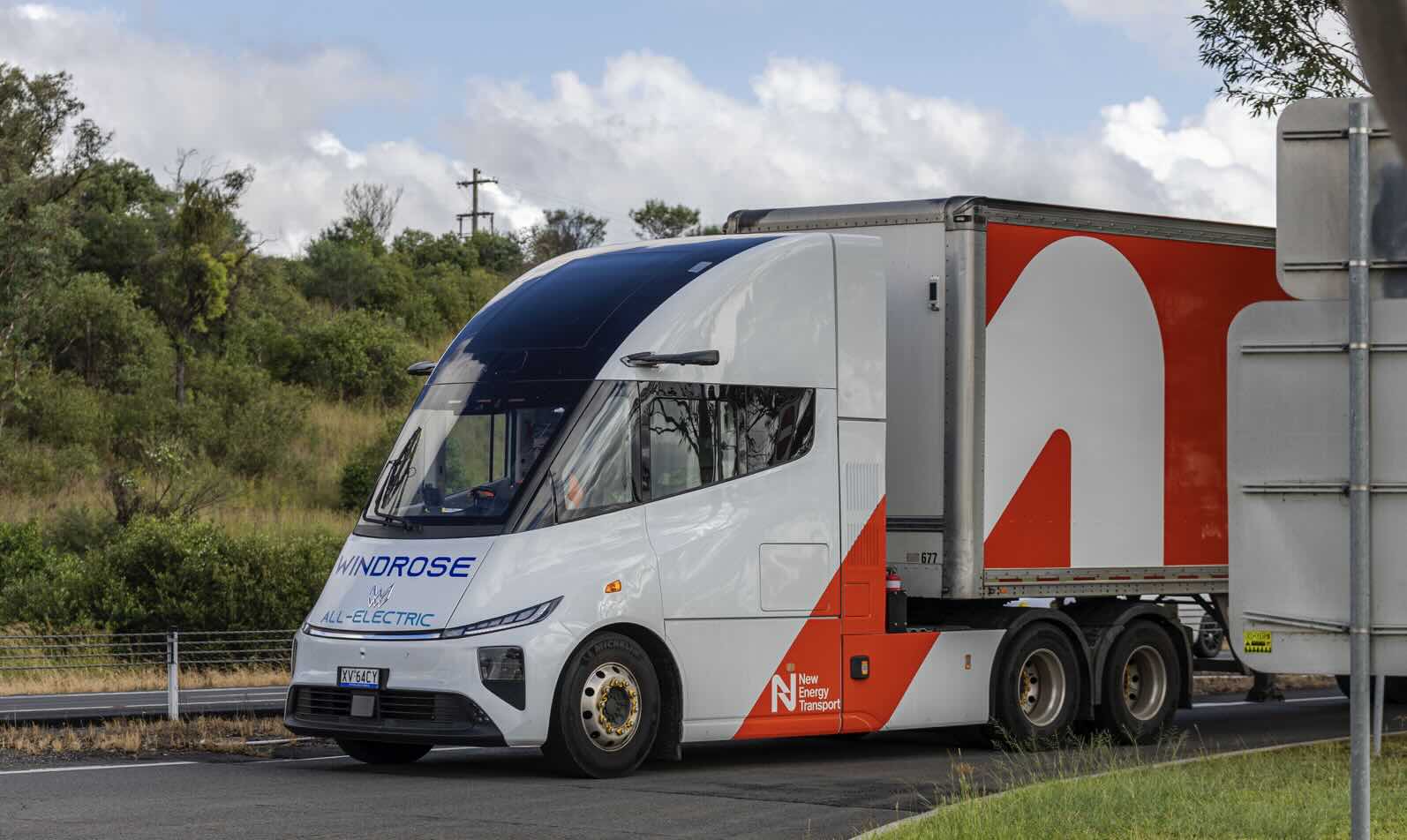
A new era of all-electric trucking is being hailed after Australia’s first inter-city delivery from warehouse to customers was completed at a much lower cost, and even faster than traditional diesel trucks.
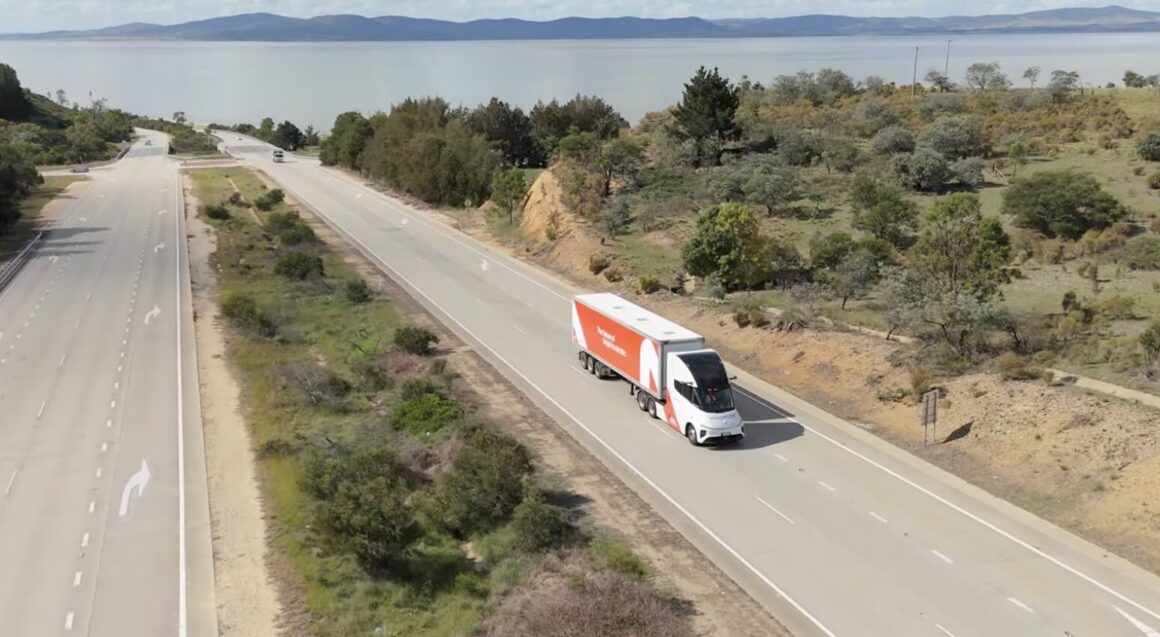
The electric trucking company New Energy Transport is claiming the Australian first after organising the delivery of a bulk load of Who Gives A Crap toilet paper from Sydney to Canberra, using an electric prime mover and then a fleet of electric last mile delivery trucks to get the merchandise to the final destination.
According to NET’s Daniel Bleakley the energy costs from the 460 kilometres covered by the Chinese-made Windrose prime mover and the last mile delivery vehicles supplied by logistics group ANC last week were 85 per cent below the cost of a diesel truck.
And it was faster, too. The Windrose electric prime mover (which has a 700 kWh battery) covered the trip from Sydney to Canberra in a single charge. And because it can maintain speed up steep hills – unlike diesel trucks – it completed the trip 25 minutes faster than a diesel truck.
The timing is, of course, significant, given the Middle East conflict, the soaring cost of diesel, and the damage that is doing to the trucking industry in Australia, with many smaller operators simple not operating because of the cost of driving their vehicles.
“This delivery ushers in a new era for Australian road freight where electric heavy trucks are not just cheaper and faster, they unshackle Australia from volatile global oil markets, dramatically strengthening our supply chain resilience,” Bleakley says.
“Australia must act now and seize this moment to decouple from diesel. Australia’s major transport buyers, including our supermarket chains who depend on diesel-based trucking to deliver food to millions, have a responsibility to accelerate the transition to resilient road freight.”
The issue for many current operators, particularly the smaller ones, is managing the upfront capital cost of electric trucks, which remain significantly more expensive than diesel rigs, even if the total cost of ownership now favours electric.
According to Bleakley, the traditional diesel trucking business is low capex, high open, with the upfront cost of a diesel prime mover around $250,000, with another $2 million in fuel costs over the next 10 years.
The electric truck business model flips this on its head. The upfront cost is higher, around $500,000 (although the Windrose used in last week’s trial seems to be available at around $450,000), but the fuel cost is considerably less.
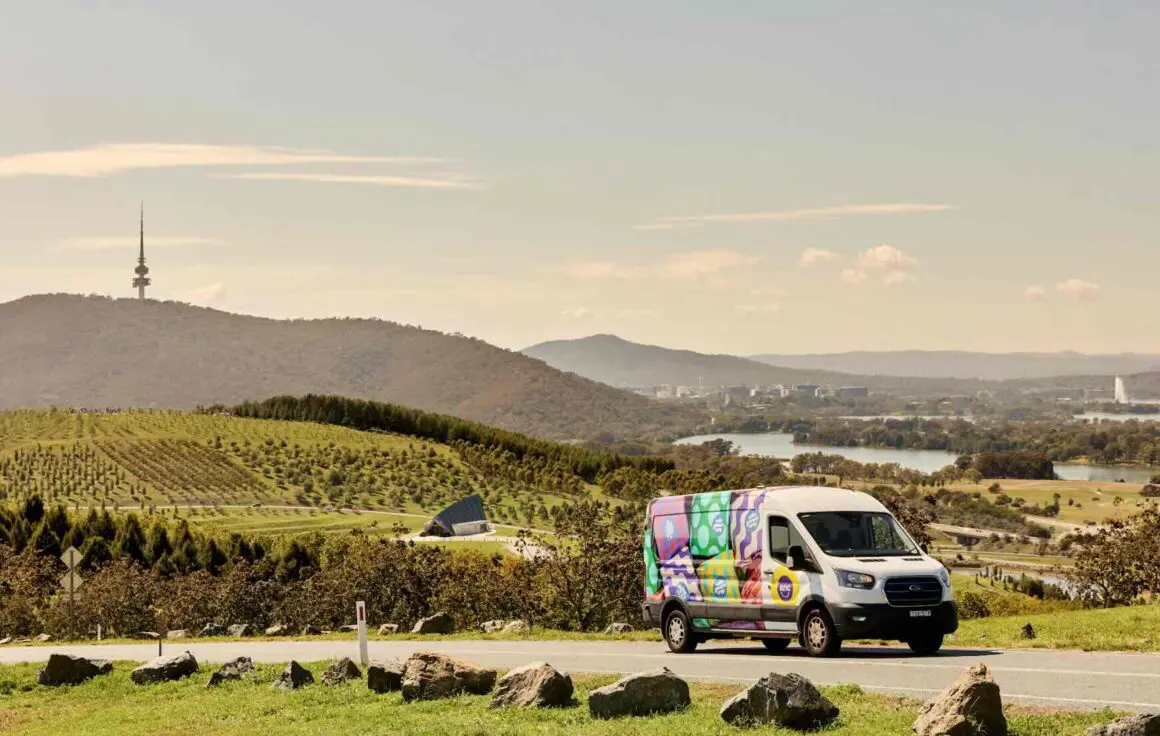
 ANC electric van.
The difficulty is helping the operators find the means to make the capex up front, and then enjoy the benefits of lower fuel costs – as well as a fast trip, and a quieter, less stressful one for the driver.
There are some 140 electric trucks of various sizes operating in Australia, mostly though in local logistics and intra-city routes. Bleakley believes the economics are actually better on long haul routes.
“You are burning a lot of diesel when you are moving 60 tonnes of freight over 1,000 kms,” he says. “We believe the economics are much better with electric trucks for long haul rather than last mile operations.”
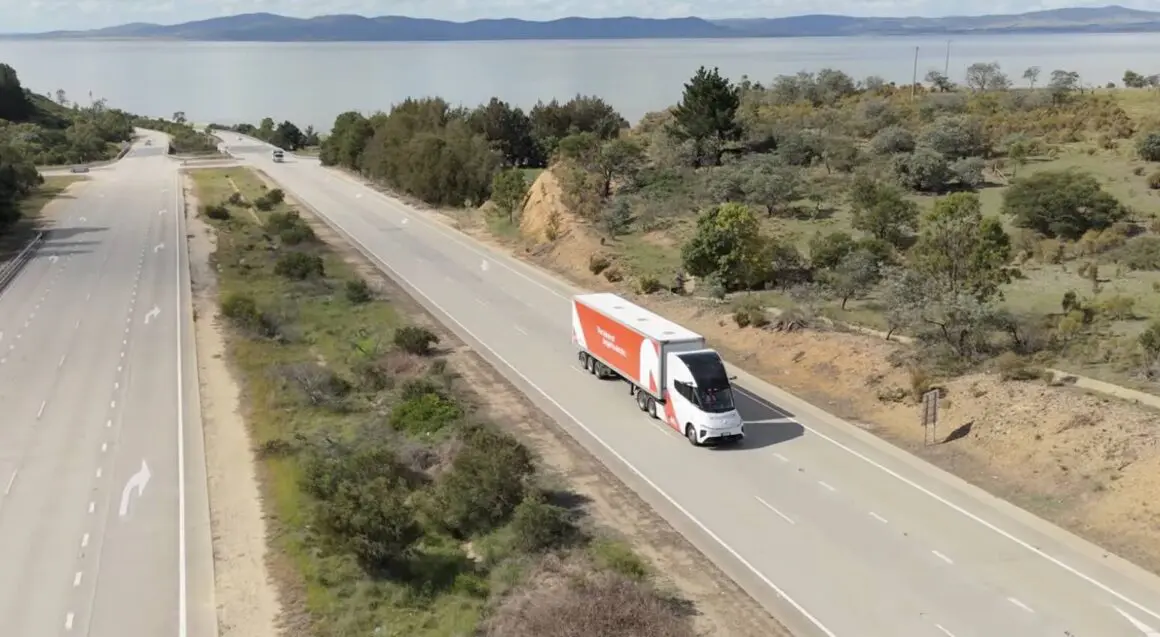
 Screenshot
James Walmsley, the director of business development at Windrose says the Windrose truck has a range of up to 670km at 49 tonnes combined mass, and can recharge in one-hour. The Windrose next-generation electric long-haul trucks can match diesel routes at much lower cost,” he says.
However, Bleakley says investment is needed in charging infrastructures, and government support is required to help the industry make the transition.
“Governments at all levels also have a major role to play,” he says. “By co-investing in charging infrastructure and making electric prime movers more affordable through targeted subsidies and incentives, they can catalyse industry adoption and unlock long-term economic, productivity, and energy security benefits for Australia.”
Simon Griffiths, the co-founder and CEO of Who Gives A Crap said decarbonising supply chains is one of the most impactful steps any business can take for the planet.
“We are proving that the transition to electric vehicle fleets isn’t just a future goal – it’s possible right now,” he said in a statement. “By integrating EV freight into our own operations, we’re demonstrating that the solutions are ready and effective for Australian commerce.
“We know that as more businesses make the switch to electric, we create the collective momentum needed to transform our national logistics network.”


Giles Parkinson is founder and editor of The Driven, and also edits and founded the Renew Economy and One Step Off The Grid web sites. He has been a journalist for nearly 40 years, is a former business and deputy editor of the Australian Financial Review, and owns a Tesla Model 3.