Waatti also cheered the Detroit-based automaker for having a “a slew of EVs that nobody else can really touch, though that makes it difficult, too, because as EV demand is lowering they need to figure out what to do with all this manufacturing space.” The company has about a dozen current or soon-to-be available all-electric offerings.
Ford, which had 6.6% of the U.S. market share for EV sales last year, “just went back and forth too much” on its electrification plans over the past several years, Waatti said.
“They were at the finish line with their Next-Gen EV platform, which was supposed to, come out of Oakville, (Ontario). And then it was supposed to come out of Mexico. And then they scrapped that whole thing. And they said they were going to start over. And then halfway through that process, they said, ‘OK, nope. We’re not going to do that either,” the analyst said.
The company’s current EV plan, it announced last year, is a $2 billion effort to “radically” overhaul the way it makes electric vehicles at its Louisville Assembly Plant. For now, it makes only one consumer BEV: the Mustang Mach-E SUV.
Stellantis, which sells a trio of consumer BEVs in the United States and sat at 1.5% market last year, has had the weakest strategy of the Detroit Three, according to Waatti.
“Even though they talked about (EVs) a lot, they were still behind. If they would have had a couple of EVs already in play that were doing well, their electrification strategy would have looked much stronger,” he said. “Now they’re going to be behind the eight ball. They’re going back. They’re like, ‘Hey, now it’s V-8 (engines) for everybody.”
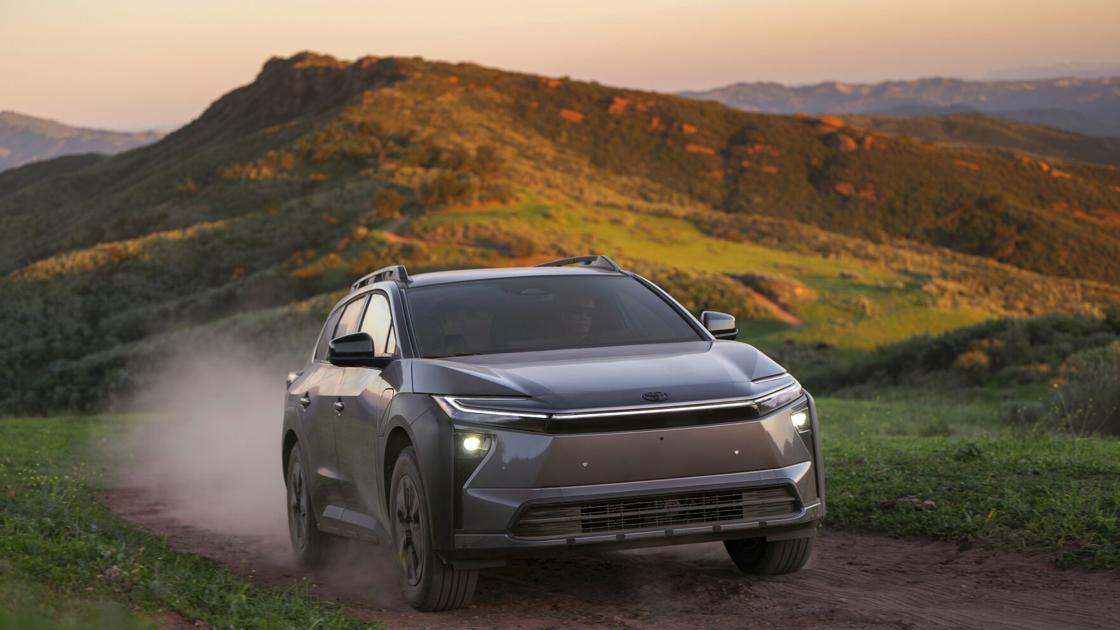
Toyota’s 1.7% is only marginally better than Stellantis, but Waatti said he is far more optimistic about the Japanese automaker’s EV plans. “A fair criticism used to be that Toyota talked about electrification broadly, but offered very little substance in the EV space. That’s definitely harder to say now,” the analyst said.