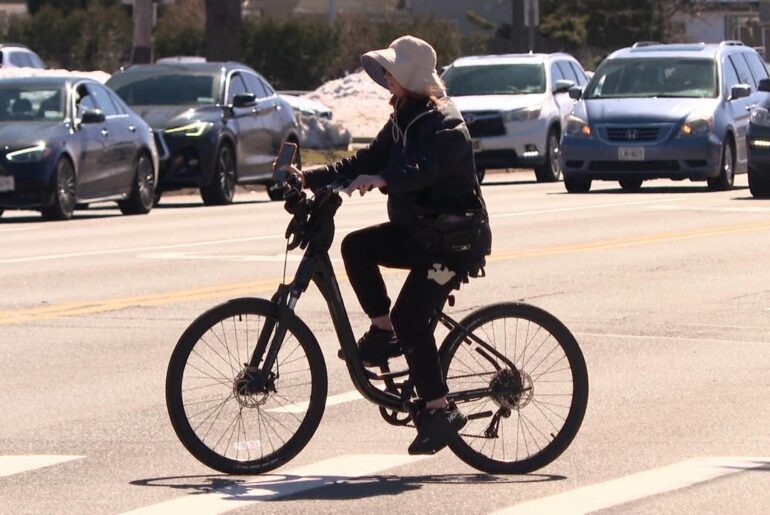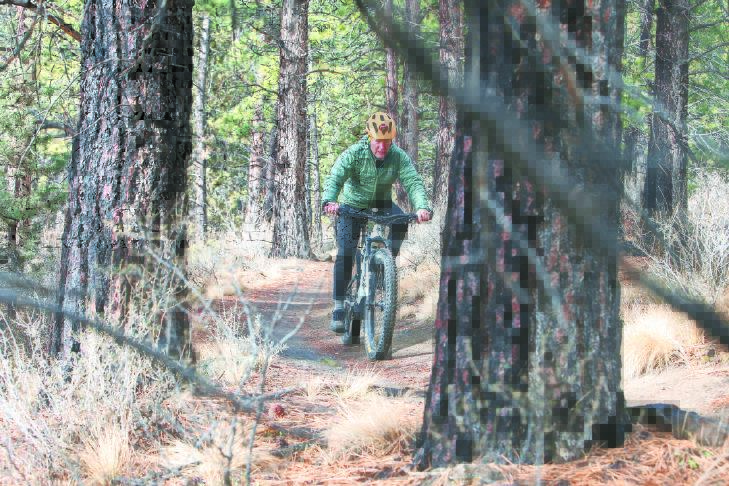
The most significant rule change in the history of Central Oregon mountain biking officially takes effect on Wednesday.
Starting in April, Class 1 pedal-assist e-bikes will be allowed on 161 miles of the 320 miles of singletrack trails on the Deschutes National Forest west of Bend.
Essentially the entire Phil’s Trail network and the entire Wanoga network west of Bend will be open to Class 1 e-bikes. Most trails in the Sunriver and Sisters areas will also be open to e-bikes. The only trailheads that remain closed to them are higher-elevation areas: trails out of Skyliners Trailhead, Swampy Lakes Sno-park and Dutchman Sno-park, as well as the Mt. Bachelor and Cultus Lake areas. The Deschutes River Trail and Mrazek will also remain closed to e-bikes.
The U.S. Forest Service, with the support of the Central Oregon Trail Alliance, announced the decision this past December “after years of analysis, community input, and research on this specific topic,” according to cotamtb.com.
The rule goes into effect Wednesday because Forest Service rules that ban motorized vehicles each winter from Dec. 1 to March 31 on Central Oregon trails — to protect mule deer and elk — applies to Class 1 e-bikes.
“Class 1 pedal-assist e-bike access can make the difference between enjoying mountain biking with friends and family or sitting out entirely,” said Bill Lynch, board president for COTA, the nonprofit organization that maintains 600 miles of singletrack trails throughout Central Oregon.
Class 1 e-bikes are intended to assist humans, but “within the bounds of normal human performance,” according to COTA. The pedal-assist only operates when the human pedals, and by keeping the power assistance to a “reasonable level.” Class 1 e-bikes allow riders to go somewhat faster on flat or uphill terrain. Other classes of e-bikes or e-devices (with the exception of adaptive bikes) remain explicitly disallowed, according to COTA.
COTA has upgraded signage and launched a rider-education program.
The Tahoe National Forest, which did an extensive study of these bikes, cited an uphill range of 5-8 mph for regular bikes and 8-13 mph for Class 1 e-bikes.
Other singletrack trail areas in Oregon where Class 1 e-bikes have already been allowed for some time include Post Canyon in Hood River, Spence Mountain near Klamath Falls, and the Black Rock Mountain Bike Area east of Salem. In Central Oregon, Madras East Hills and Redmond Radlands have been open to Class 1 e-bikes for several years.
“Recognizing the growing interest in e-bikes on public lands, the Deschutes National Forest assessed how these bikes fit into existing recreational activities. The Forest Service gave thoughtful consideration of the ecological and social impacts of this decision balanced with providing increased access for Class 1 e-bike users,” the Forest Service said in a statement last December.
COTA contacted other trail alliances that have transitioned to allowing Class 1 pedal-assist e-bikes to learn from their experiences.
“We learned that other areas allowing Class 1 e-bikes have not experienced noticeable extra trail wear or increased rider conflicts,” notes cotamtb.com. “This has also been our experience locally at Madras East Hills and the Redmond Radlands. We have found that maintenance needs are similar to other systems and no rider conflicts have been reported.”
COTA engaged with the Central Oregon mountain biking community through a series of meetings and listening sessions in 2022 and 2023. It found many mountain bikers of all ages for whom Class 1 e-bike access will make the difference between riding or not riding.
“Two of COTA’s top priorities have long been sharing the joy of mountain biking with anyone who wants to try it and offering a diversity of riding experiences,” the COTA website notes. “These priorities, combined with research and community engagement, have led us to support allowing Class 1 pedal-assist e-bikes on select trails.”
Paul Thomasberg, 63, is a legend in Central Oregon mountain biking. He is a co-founder of COTA, a Mountain Bike Bike Hall of Famer and has worked for years designing and building trails in the region. He was the main architect of the highly popular Wanoga network.
Thomasberg said the Forest Service acted responsibly in recognizing the increased popularity of e-bikes and taking action.
“This came to be because the community clearly has a need for a certain kind of recreation that wasn’t being represented, and that’s the Forest Service’s job,” Thomasberg said. “I think they were responsible.”
Woody Keen, 66, is a longtime Bend resident who formerly served on the COTA board of directors and was the COTA trails program coordinator. He does not agree with the Forest Service’s decision, and he was one of many Central Oregon mountain bikers who sent letters to the Forest Service during the comment period to relay their concerns.
User-conflict, damage to trails and threats to wildlife are among Keen’s and others’ chief worries.
“I have always supported the use of Class 1 e-bikes if it was truly an enabling device which allowed people with certain disabilities to access the trails,” Keen said. “There’s a lot of people riding e-bikes who are much younger than me, fully able-bodied, and the e-bike is not an enabling device for them. They just want to be able to go farther. I still have a significant amount of concerns about a wholesale opening of trails to e-bikes.”
Keen made the point that a mountain biker’s impact on the trails could increase anywhere from 25% to double, because they will be able to ride farther on an e-bike.
“That’s simple math,” he said. “The impact is only going to increase as our ability to travel longer distances increases.”