March 28, 2026
By Nehal Malik
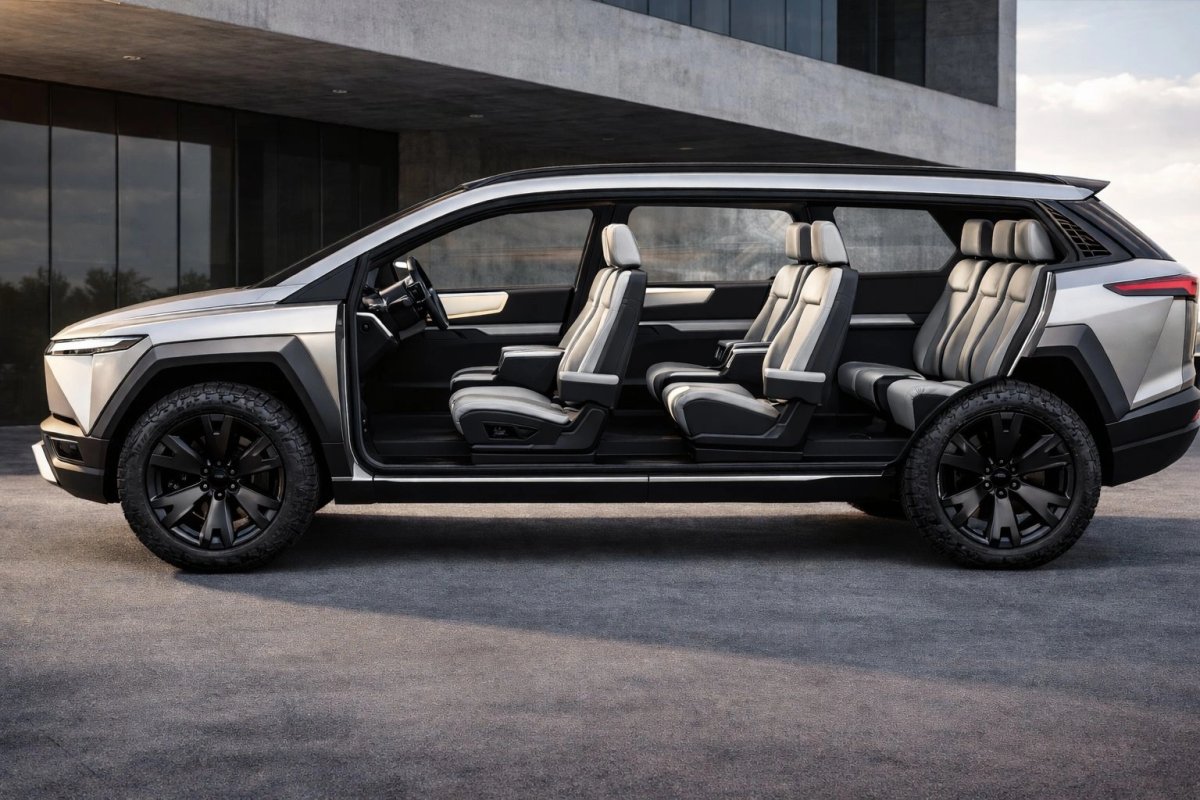
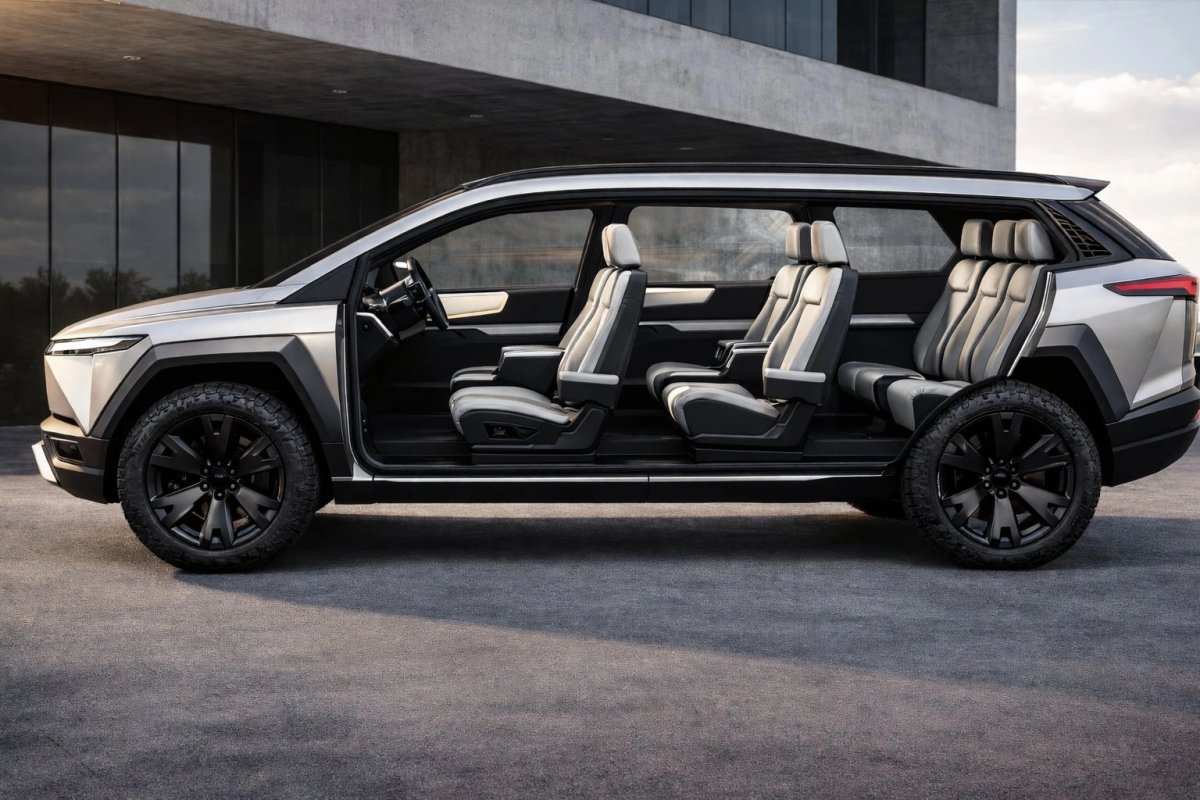
Elon Musk is leaning into the idea that Tesla’s next big vehicle won’t just move people — it might actually help grow families. Following his cryptic promise earlier this week that something “way cooler than a minivan” is coming, the CEO has dropped even more hints suggesting a radical, three-row SUV is officially on the drawing board.
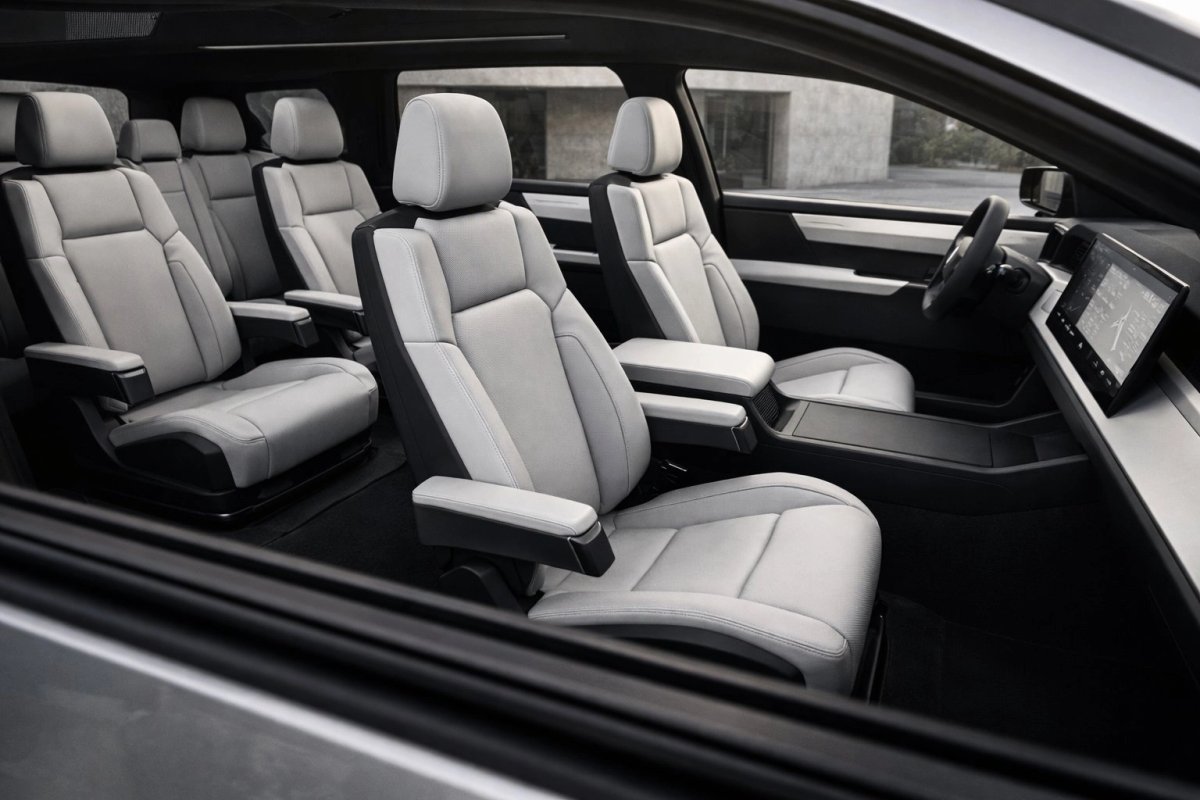
The conversation on X took a scientific turn when users pointed Musk toward a study titled “Car Seats as Contraception.” The research suggests that because most standard cars can’t fit three child seats in the back, many families stop at two children. When a user noted that a true three-row Tesla could trigger a baby boom, Musk responded: “Well, I guess we should solve this.”
 A Door for Every Row?
One of the most intriguing hints came when a follower suggested that a three-row vehicle should have a dedicated pair of doors for each row, ensuring occupants don’t have to play a game of human Jenga to get to their seats. Musk replied with a simple, “Noted.”
While a six-door car sounds unlikely for mass production, it hints at a specialized entry system — perhaps a very large, minivan-like sliding door or a refined version of the Model X’s falcon wings. Fans have already begun creating concept videos and 3D renders of a “CyberSUV,” a vehicle that trades the Cybertruck’s open bed for a fully enclosed, three-row cabin while keeping the rugged, stainless-steel aesthetic.
Introducing Tesla model W pic.twitter.com/w0HD0Qko4j
— Jesse Richards (@iamjesserichard) March 26, 2026 Why the CyberSUV is the Likely Path
Tesla is currently winding down production of the Model S and Model X to make room for its robotics future. However, this leaves a massive gap in North America for a premium, large-scale family hauler. While the Model Y L is starting to make its way to international markets after being a China-exclusive offering for months, Musk has remained firm that it won’t arrive in the U.S. until late 2026, if ever.
The delay of the Model Y L makes a lot of sense if Tesla is planning a dedicated “CyberSUV” based on the Cybertruck platform. A vehicle built on this foundation would feature a 48-volt architecture, steer-by-wire, and enough width to fit three child seats in the second row comfortably — something the narrower Model Y struggles with. It would also leverage the existing Cybertruck assembly line at Giga Texas, which has plenty of headroom to support a new high-volume SUV alongside the truck.
The Ultimate “Business Dad” Hauler
Musk also recently reposted a post about “businessdads” needing three rows to fit their families, further signaling that Tesla is looking at the luxury SUV market currently dominated by the Cadillac Escalade IQ and the Rivian R1S. Tesla’s chief designer, Franz von Holzhausen, has previously told fans to “wait and see” about a potential CyberSUV, and with models of a larger SUV having been spotted in the background of recent Cybercab videos, the pieces are falling into place.
With the Cybercab robotaxi starting mass production next month, it looks like Tesla’s focus is shifting toward specialized vehicles. A stainless-steel, 7-seater “CyberSUV” that acts as a mobile fortress for large families would be a logical — and very “Musk” — next step.
Subscribe to our newsletter to stay up to date on the latest Tesla news, upcoming features and software updates.
March 27, 2026
By Nehal Malik
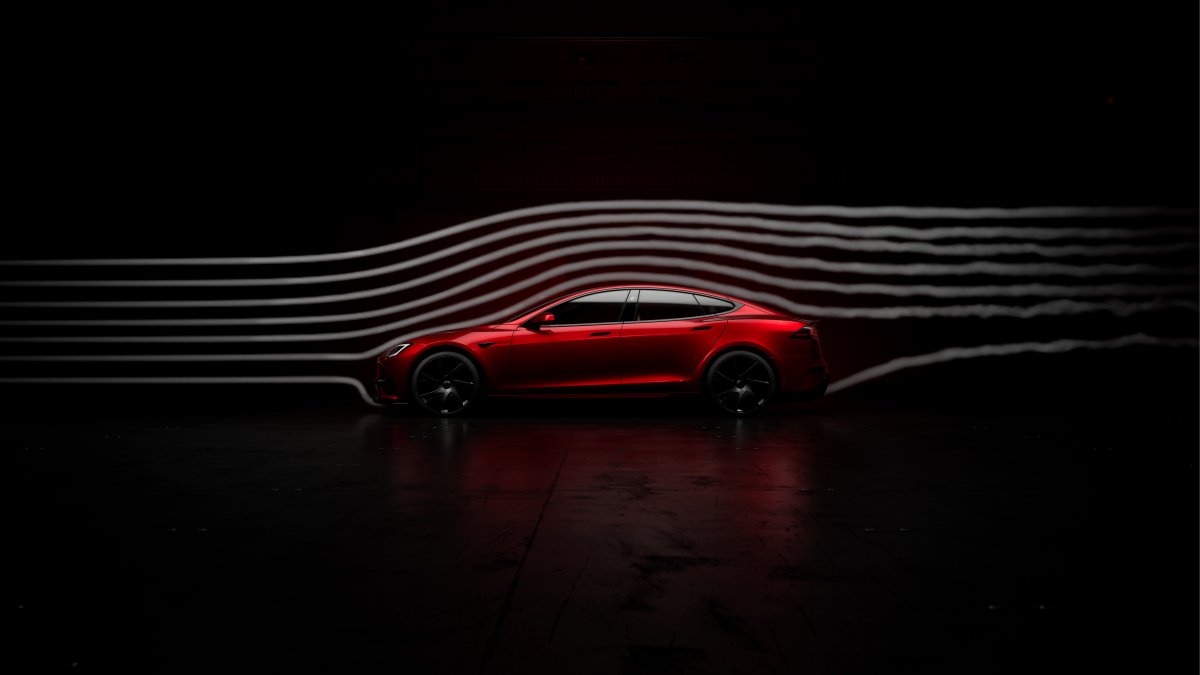
The Tesla Model S is officially blowing out 17 candles this week, but the celebration is bittersweet. As the car that single-handedly proved electric vehicles could be sexy, fast, and practical reaches this milestone, Tesla is preparing to pull the plug. With production scheduled to end in the second quarter of 2026, the automotive world is saying goodbye to a legitimate legend.
Unveiled by Elon Musk 17 years ago on March 26, 2009, in Hawthorne, California, the Model S was a radical departure from the small, hobbyist EVs of the time. Even Arnold Schwarzenegger, the Governor of California at the time, was in attendance to witness what would become the blueprint for the modern car.
Elon Musk unveiling the Tesla Model S 17 years ago.
Arnold Schwarzenegger was in attendance as he was the Governor of California at the time. https://t.co/fhmMawVIbw pic.twitter.com/sVe4qR6tsR
— Nic Cruz Patane (@niccruzpatane) March 26, 2026 The Car That Shattered Every Myth
When the Model S first hit the streets in 2012, it didn’t just compete with other EVs — it embarrassed luxury gas cars. In 2013, the Model S was named MotorTrend’s Car of the Year by a unanimous vote, the first time in the award’s 64-year history that a non-combustion engine car took the top prize.
The accolades didn’t stop there. Consumer Reports famously gave the 2012 Model S a 99 out of 100 score, the highest they had ever awarded a vehicle at the time. Testing specialists were floored by its “invigorating performance” and “world-class” handling. TIME Magazine even listed the 2012 Model S among the top inventions of the past 25 years, cementing its place in history alongside the iPhone and the Mars Rover.
Evolution Over 17 Years
The craziest thing about the Model S is how little its “face” has changed. While most cars go through four or five total body redesigns over 17 years, the Model S has kept its original 2012 silhouette, save for a few bumper and headlight tweaks. Tesla’s strategy was always to iterate on the inside; they constantly updated the motors, battery chemistry, and computer hardware while keeping the exterior timeless.
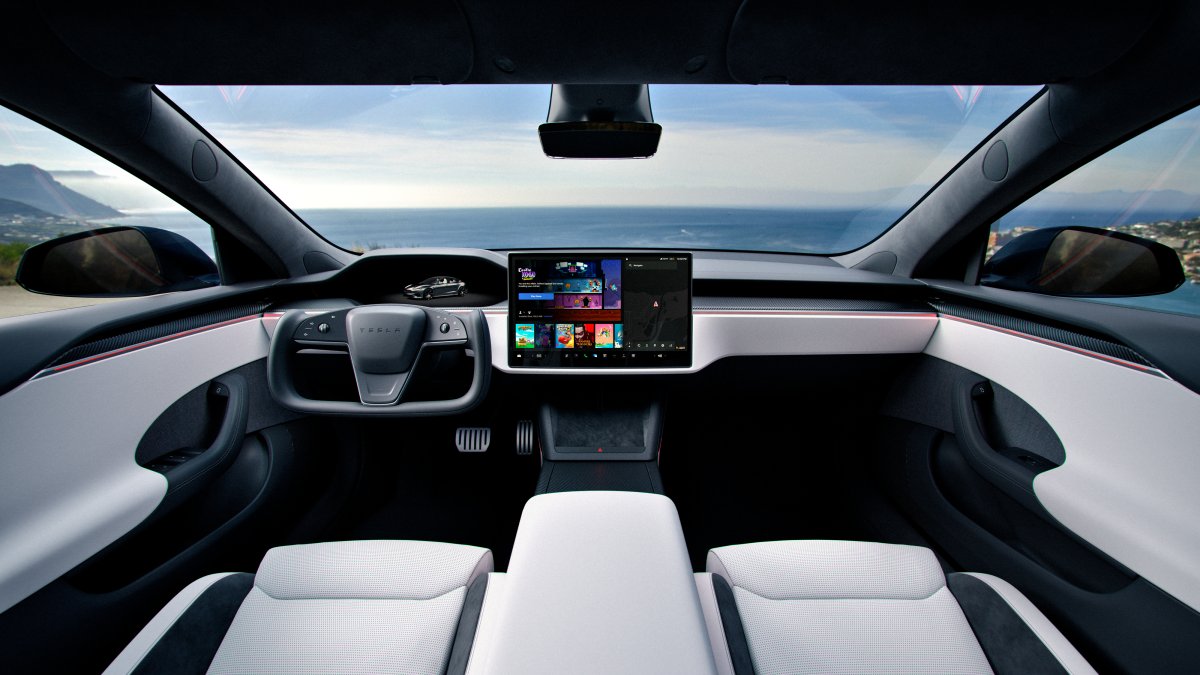
The earliest units were definitely “beta” products, often criticized for panel gaps and interior quality as Tesla figured out how to be a real car company. However, the 2021 Plaid refresh turned it into a hypercar killer, breaking performance records with a sub-2-second 0–60 mph time and even attempting to become a “gaming console on wheels” with its own dedicated GPU.
Moving From the Past to the Future
So, why is it being discontinued? Tesla is shifting its focus from luxury sedans to AI and robotics. The production lines at the Fremont factory that currently build the Model S will be retooled this summer to produce the Optimus humanoid robot.
With Musk recently teasing a completely new model — likely an SUV for customers with larger families — and the next-gen Roadster likely taking over as the high-end performance halo, the Model S simply doesn’t have a seat at the table anymore. It’s an “honorable discharge” for the car that changed the world, leaving a legacy that every modern EV on the road today owes a debt to.
March 27, 2026
By Nehal Malik
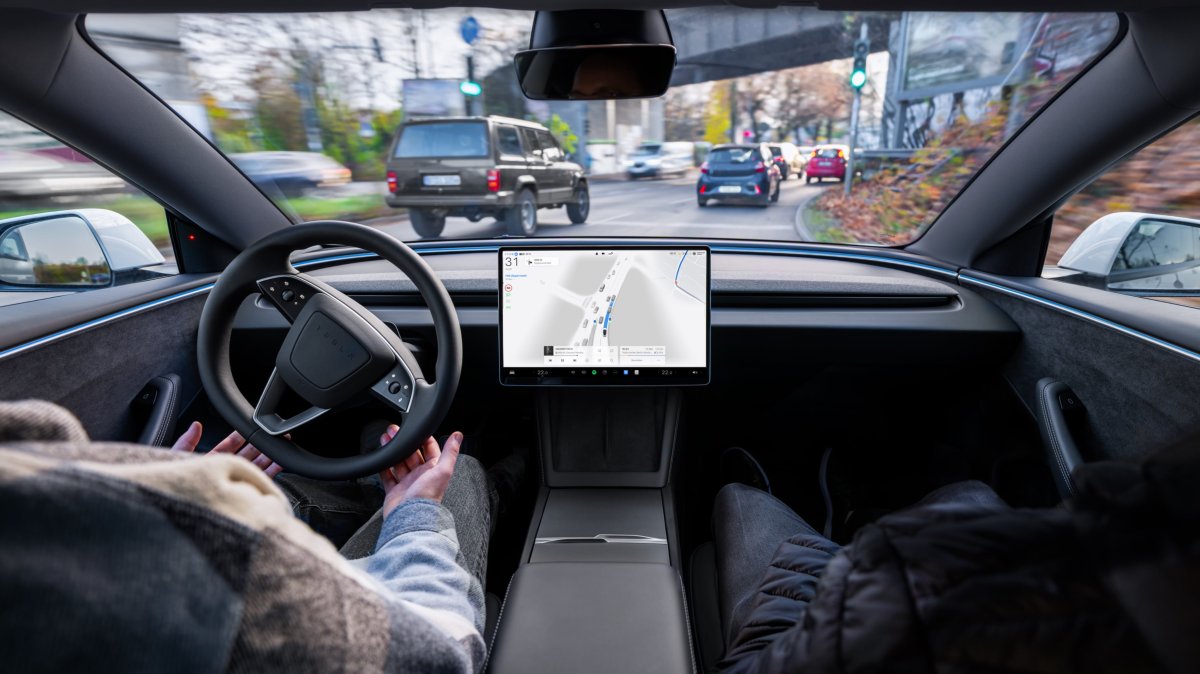
Tesla’s Full Self-Driving (FSD) software is on the verge of a major Middle Eastern expansion. After months of regulatory reviews and mounting pressure from local owners, Israel’s Minister of Transport, Miri Regev, has all but confirmed that the technology is finally crossing the finish line.
The confirmation came in a brief but powerful response on X. After Elon Musk shared a video of FSD expertly navigating a cramped street with a parked truck and oncoming traffic in the next lane, encouraging users to try the software, Minister Regev replied with two simple words: “Coming soon…”
Just squeezing through pic.twitter.com/RmxoKsSCwk
— Tesla (@Tesla) March 25, 2026 The Petition That Sparked a Movement
This development is a massive win for the local Tesla community. Israeli owners have been vying for FSD approval for some time, even launching a petition that amassed over 1,000 verified signatures. The group argued that the software, which is already live in the U.S., Canada, Mexico, China, Australia, New Zealand, and South Korea, could significantly improve road safety in a country known for high traffic density.
Minister Regev’s proactive stance suggests that the Israeli government sees the potential for autonomous tech to reduce accidents. Tesla already has a strong footprint in the “startup nation,” having officially entered the market in 2021 and adding Hebrew language support in 2023. Because many Teslas in Israel are newer models equipped with AI4 (Hardware 4), most vehicles on the road are already physically capable of running the latest FSD versions.
A Race for International Expansion
Israel is now locked in a friendly race with Europe to see who joins the FSD club next. While the Netherlands is set for a landmark approval next month — which would open the doors for the rest of the EU — Israel’s small, tech-forward market could potentially beat them to a wide rollout.
Tesla is currently moving toward unsupervised FSD, and adding Israel to the map provides the company with vital data on unique Middle Eastern driving scenarios. This regional data is crucial for training the neural networks to handle local infrastructure and driving habits, much like the company did for Australia’s unique “hook turns.”
What to Expect at Launch
Based on how Tesla handled the rollout in other international markets, we expect the software to cost roughly 25,000 ILS (~$8,000 USD) as a one-time purchase, or approximately 300 ILS (~$99 USD) as a monthly subscription. That said, with Tesla already discontinuing one-time FSD purchases in North America, there’s a chance the company will leave that option out entirely and instead launch FSD as a subscription-only software service in Israel. The rollout will likely be staggered, with Hardware 4 owners getting access first to ensure the system is tuned perfectly for Israeli roads.
With Elon Musk recently confirming that FSD v14.3 is in testing, Israeli owners might even get to skip straight to the latest and greatest version of the software. As the Minister’s “Coming soon” tease suggests, the “flick of the switch” for Israeli autonomy is likely just weeks away.