Windrose Tech has begun selling its R700 heavy-duty electric truck in the United States, positioning the China-manufactured model as a direct competitor to the Tesla Semi while targeting profitability despite import tariffs of up to 70%. The company’s entry comes as fleet operators reassess fuel economics, regulatory incentives, and total operating costs in the electric freight sector.
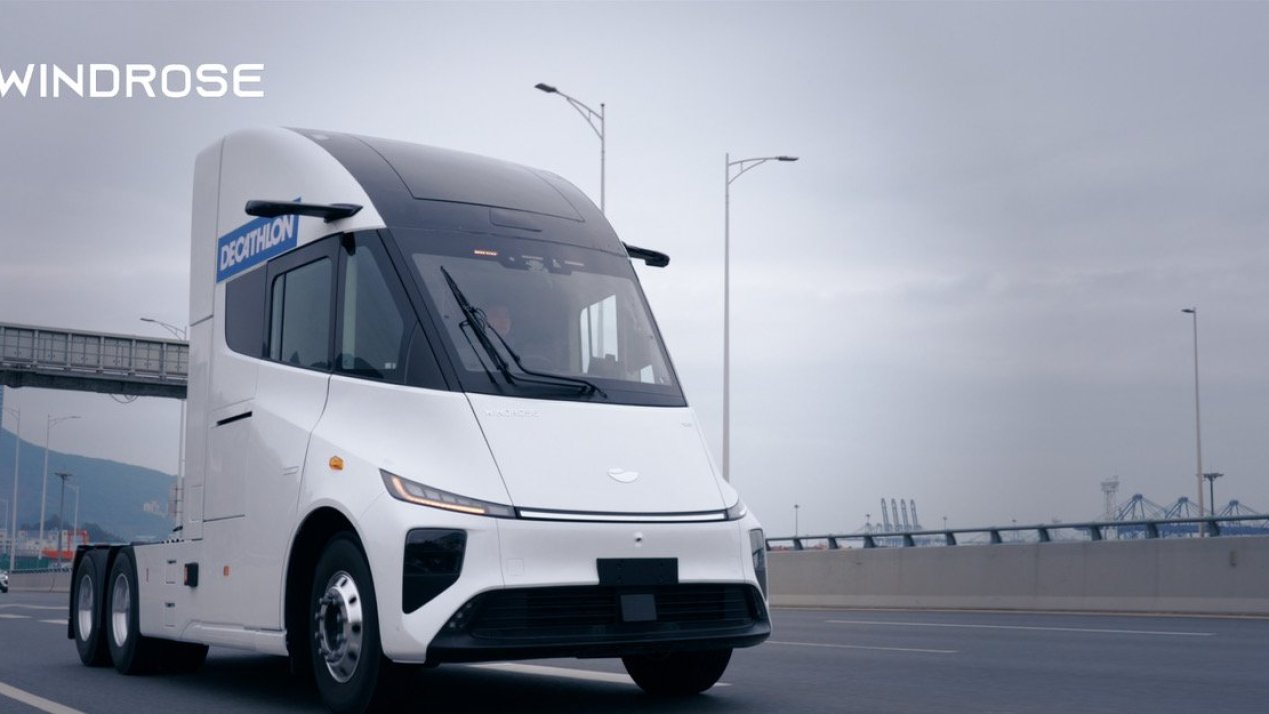
The startup, founded in 2022 and led by CEO Wen Han, launched initial deliveries in California and Texas. The R700 is priced at US$300,000, offers approximately 640 kilometers of range per charge and delivers 1,400 horsepower. The vehicle weighs slightly more than 10,000 kilograms and can transport up to 27,200 kilograms of cargo in the United States.
“Our truck looks very similar to Tesla because aerodynamics dictates the design,” Han said during a video call from Antwerp, Belgium, speaking to Forbes, where Windrose relocated its headquarters from Hefei, China. “To our surprise, we obtained US patents for both the cabin design and the chassis.”
Han emphasized that operational economics, rather than branding, drive fleet adoption. “Fuel costs are much higher for fleets than driver costs, and much higher than the cost of the truck,” he said. “The biggest expense to eliminate is fuel.”
The company includes three months of free charging through Greenlane Infrastructure, which is building high-power charging corridors across Southern California, Nevada, and Arizona. Windrose has also signed a European charging agreement with ENGIE Vianeo, where the truck is priced at €250,000 (US$270,000).
Electric trucks continue to carry purchase prices at least US$100,000 higher than diesel models. However, state incentives in California, combined with local pollution-control programs and utility subsidies, can offset much of the acquisition cost. In Texas, expanded wind, solar, and battery storage capacity has reduced electricity costs for freight operators compared with diesel fuel.
Windrose plans to manufacture up to 2,000 trucks in 2026, with several hundred units allocated to the US market, while expanding sales into Europe, Latin America, and Asia. By 2027, the company aims to reach annual production of at least 10,000 units through contract manufacturing in China and Europe, and potentially localized production in the United States.
“The United States will be one of our most important markets,” Han said. Even under elevated tariffs, he added, “we will make a profit.”
Current production relies on manufacturing partners Anhui Jianghuai Automobile Group and Higer Bus in China. Distribution in California is handled by Los Angeles-based electric truck manufacturer Xos. Windrose is evaluating construction of a US assembly facility, potentially in Arizona, to reduce tariff exposure and improve margins. “In the meantime, we would also like to collaborate with Xos at its Tennessee plant for manufacturing,” Han said.
The company has raised approximately US$400 million, primarily from Chinese investors, to enter the US heavy-duty electric truck market. Industry data shows annual US demand has averaged roughly 1,000 electric heavy trucks in recent years, reflecting slow adoption despite regulatory pressure to decarbonize freight transport.
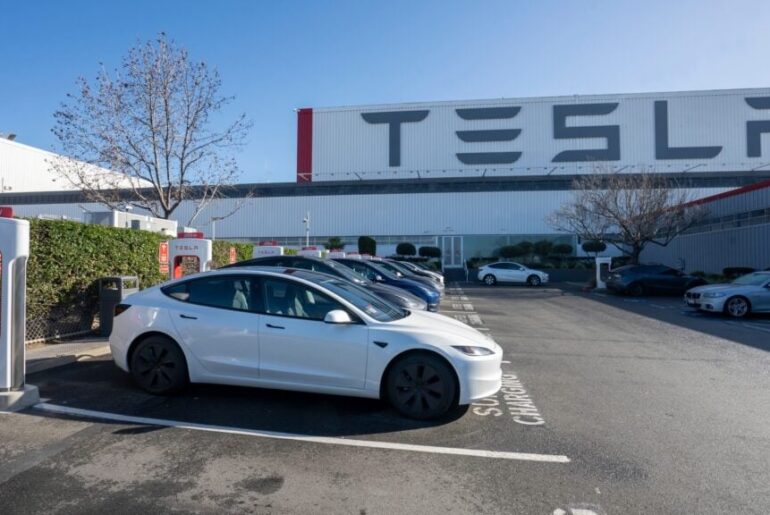
Tesla previously outlined plans to produce up to 50,000 Semis annually at its Nevada Gigafactory, though recent earnings reports have removed references to production capacity targets. Market uncertainty has increased following federal regulatory changes and adjustments to clean truck incentives under President Donald Trump’s administration.
Fuel economics remain a central factor influencing fleet decisions. Electricity prices have risen over the past year, increasing charging costs for large electric trucks. At the same time, diesel prices climbed 40% to a national average of US$5.16 per gallon following geopolitical tensions involving Iran, according to the American Automobile Association.
Han argued that rising diesel prices could shift purchasing decisions away from environmental considerations toward operational savings. “People care about money,” he said. “Electricity is cheaper than diesel for a truck.”
Technologically, the R700 uses lithium-iron-phosphate battery cells supplied by Chinese manufacturer CALB. This chemistry delivers lower energy density than Tesla’s lithium-ion configuration, resulting in approximately 160 kilometers less range per charge. Windrose states that the trade-off improves thermal stability and battery durability.
The company plans to introduce an upgraded E960 model in 2027 featuring lithium-manganese-iron battery technology projected to deliver 965 kilometers of range per charge. Han said pricing “will not be much higher” than the current model.
“True autonomy cannot simply be added to a diesel truck. It is almost impossible,” he said, citing the need for hardware redesigns such as steering systems optimized for automated driving.
The R700 is not fully autonomous but includes adaptive cruise control, lane centering, and automatic emergency braking. The vehicle features a sleeper cab configuration with foldable rear seating and a centered driver position supported by digital display screens.
With US sales underway, Windrose plans to raise an additional US$100 million in financing. Han said reduced federal support for clean trucks does not materially change the company’s strategy. “It does not matter,” he said. “Electric trucks will succeed because operating economics favor them.”