Support CleanTechnica’s work through a Substack subscription or on Stripe.
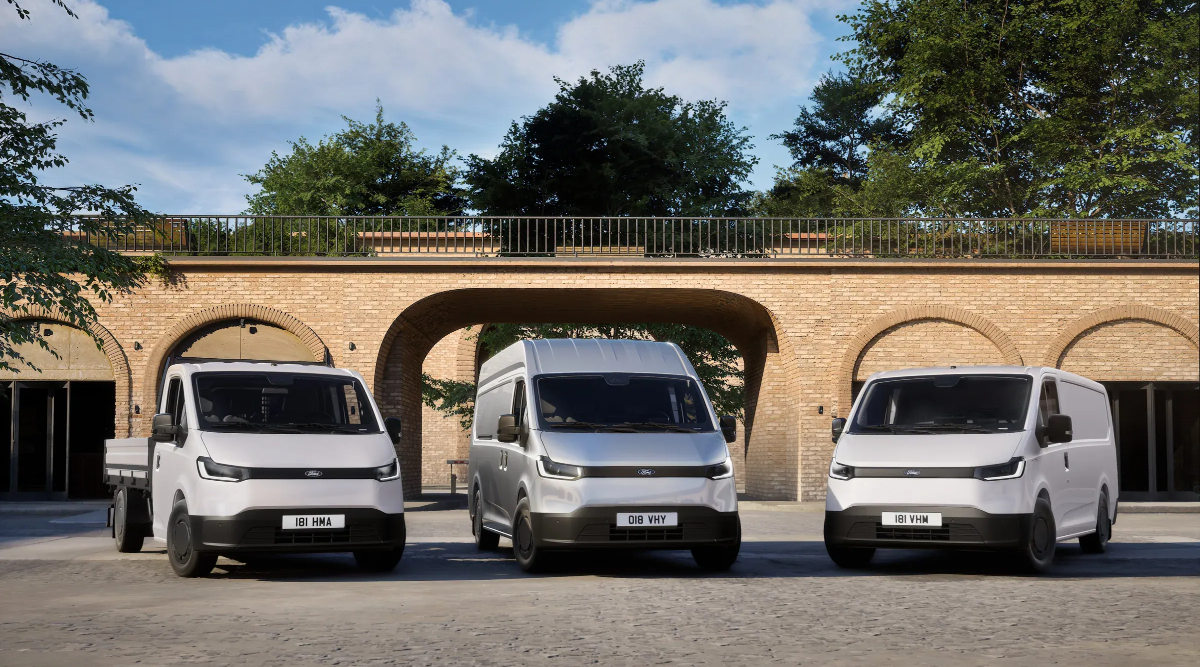
The Ford Transit has been serving commercial customers in Europe for decades. This week, Ford Pro announced the Transit City, a battery electric truck designed to meet the needs of those customers who have depended on the Transit series of trucks but need a vehicle that can be operated within the zero emissions zones that are becoming increasingly popular in European cities.
In a press statement, Simon Robinson, chief program engineer for the Transit City, says, “Since we launched the first Transit in 1965, the lineup of our now-legendary van family has continually evolved to help customers deal with all the challenges work throws at them.
“Today though, those challenges aren’t just about carrying larger and heavier loads. Van operators in cities — part of the van-powered sector worth over €1 trillion to Europe’s GDP — also need to consider factors such as clean air zones, rising costs, and operating restrictions while still delivering for their customers.”
The Right Tool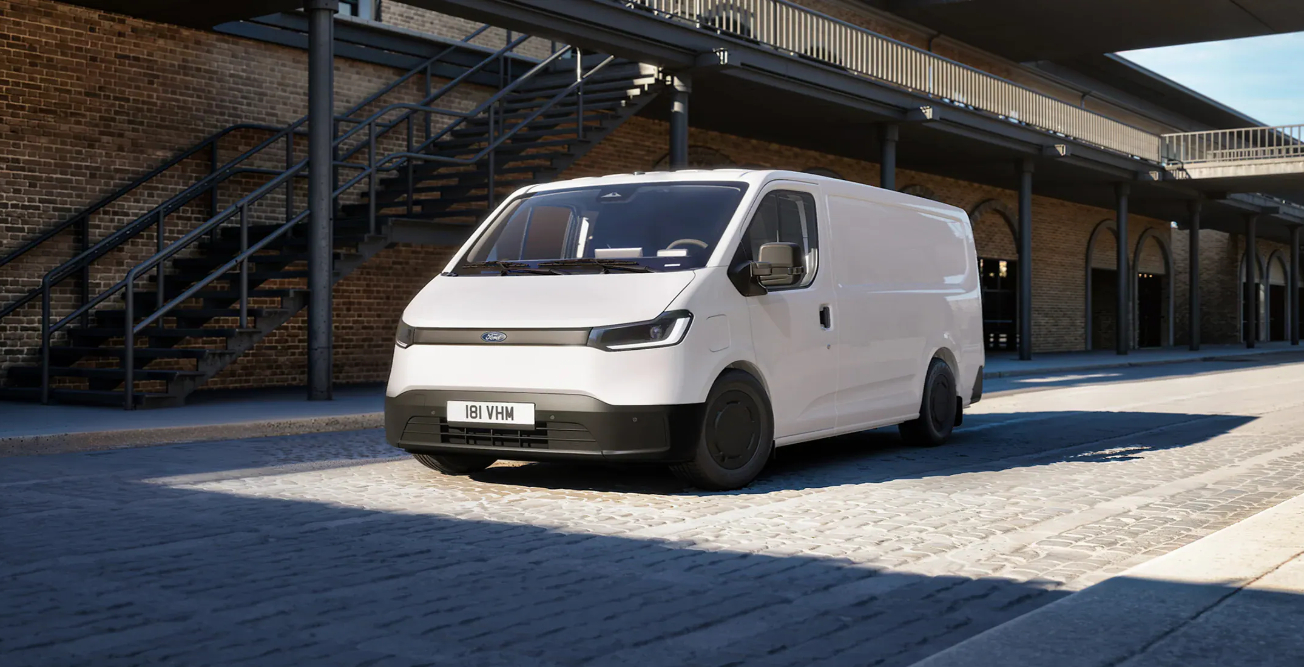 Transit City L1H1. Credit: Ford
Put all those factors together and you get the Transit City, which Robinson calls “the right tool for work in increasingly electric-only cities. With the right battery, load area, and equipment levels, we [are offering] a super-simple vehicle that still ticks every box — to the point that you wouldn’t need a single optional extra.” He says the team that developed the new vehicles was focused on maximizing efficiency and minimizing cost. “So I’m excited to reveal the all-new Transit City — the answer that those hard pressed, hard working urban firms have been waiting for.”
The Transit City will be available in three configurations — a standard cargo van known as L1Hi, a high roof van known as L2H2, and a cab-only platform. Both vans are capable of transporting three standard Euro-size pallets with the rear doors closed.
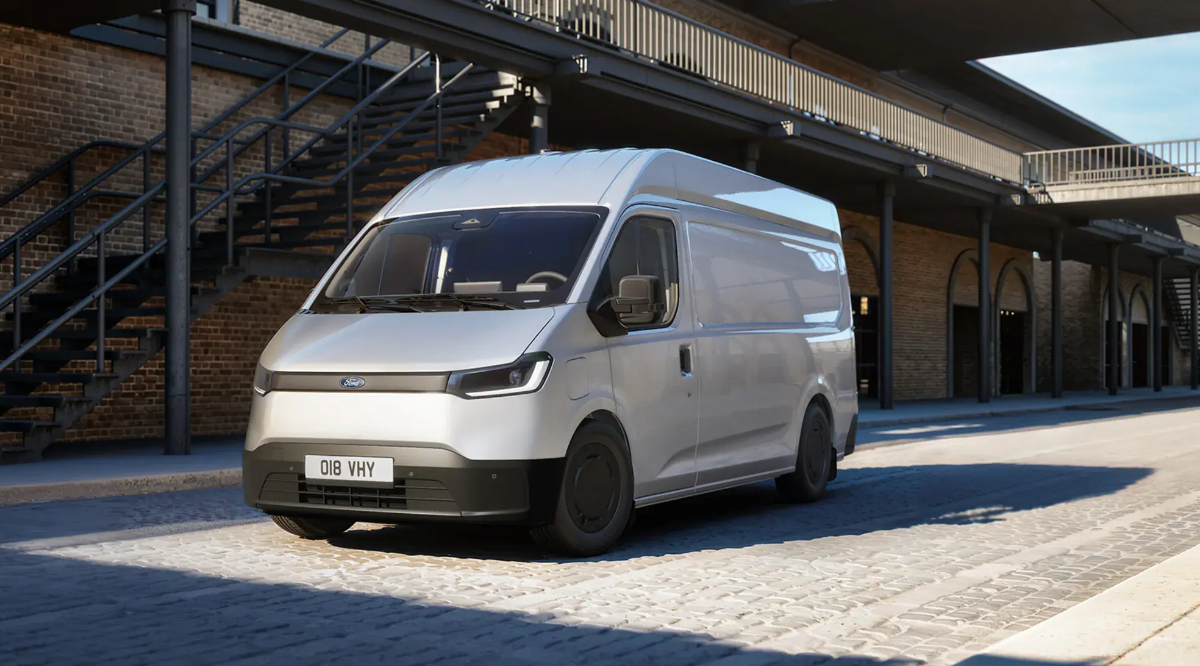 Transit City L2H2. Credit: Ford
The smaller van is 4.99 meters (16.4 feet) long with a cargo volume of 6 cubic meters (212 cu. ft.). It can carry up to a 1085 kg (2400 lb) load. The larger L2H2 van is 5.29 meters (17.4 feet) long, with an interior volume of 8.5 cubic meters (300 cu. ft.) and a carrying capacity of 1275 kg (2811 lb). Neither of the vans is designed for towing. For that, customers will need to look to other vehicles in the Transit lineup.
 Credit: Ford
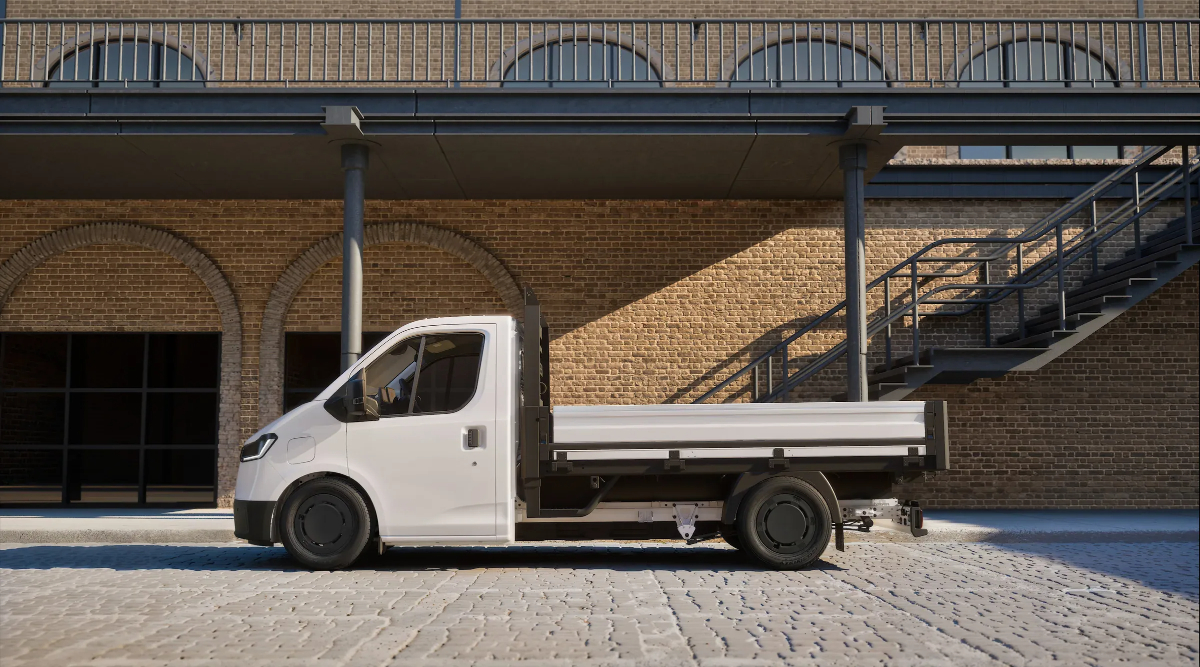
The cab-only vehicle can be configured for a number of special purposes, from pickup truck to specialized box truck. With that in mind, it has frame rails that are optimized for simpler body building and easier access. Lessons learned from the E-Transit chassis cab helped to optimize bolt patterns, standardize electrical connections, and define no-drill zones to make conversion as efficient as possible.
“Regardless of body style, we will offer a single, comprehensive specification to help keep costs and complexity down,” Robinson says. “As just one example, every van model comes with a durable load liner, half-height interior trim and lashing points as standard.”
Give Us The Specs!
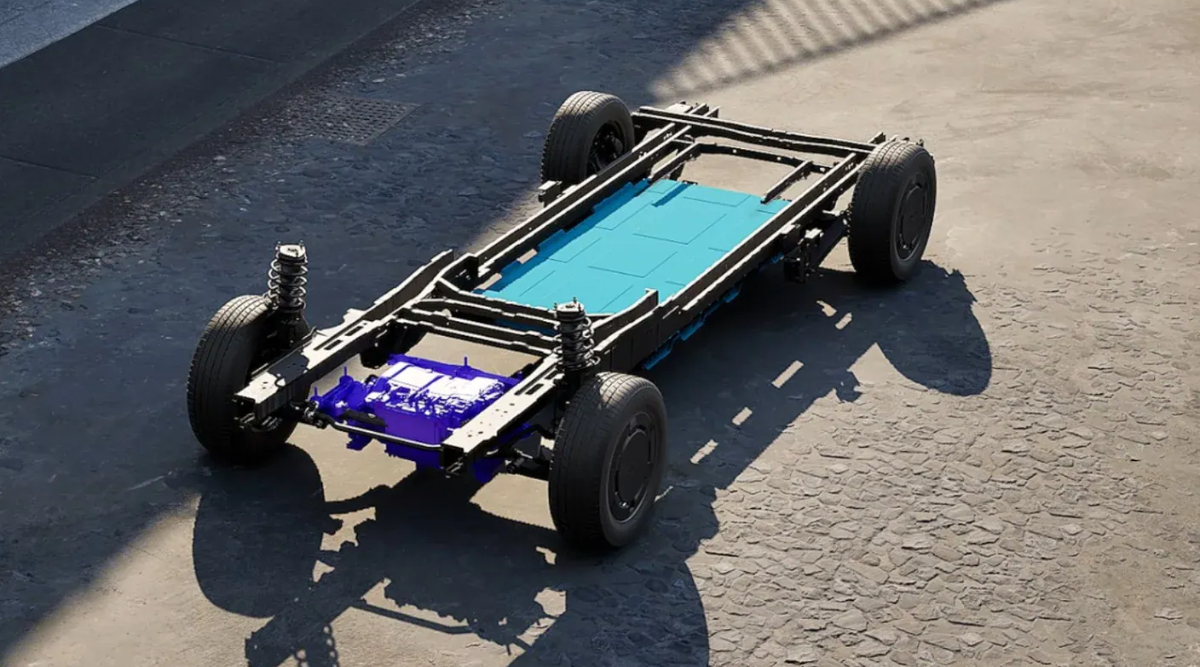
Robinson says, “In an electric vehicle, the battery is what determines your cost, weight, and range. Transit City delivers a competitive payload and enough range to comfortably cover a day’s work — all at an attractive price point. Data from thousands of connected Ford Pro electric vehicles revealed 90 per cent of vans in Transit City’s segment drive under 110 km on a typical day. The 56 kWh LFP battery can provide up to 254 km of range, which is double that average daily usage.
“I’m confident that diesel van drivers will love the shift to electric. A front-wheel drive setup and 110 kW e-motor mean Transit City is smooth, quiet, and offers instant torque to get heavy loads moving. We also took feedback from existing Ford Pro electric van drivers to refine the one-pedal driving calibration, improving efficiency and reducing driver fatigue during stop-and-go driving,” Robinson says.
Okay, it’s time to talk about charging, an area where the Transit City does not shine. The onboard 11 kW AC charger can bring the battery from 10 to 100 SOC in 5.2 hours. [Note: Most wall outlets in Europe provide electricity at 240 volts — double the norm in North America.] A 67 kW DC charger can bring the battery from to to 80 percent in about a half hour and add 50 km of range in 10 minutes.
None of those numbers are impressive, but when you consider the intended use case — driving about 100 km a day — they are adequate. Is “adequate” good enough for a vehicle projected to cost around €47,000? Ford has not released pricing details as of yet, but Electrive says it expects the Transit City to slot in between the E-Transit Custom (€58,000) and the E-Transit Courier (€38,500)
Developed In China
What is most surprising, Electrive says, is that the Transit City is not a stripped down version of the e-Transit Custom with an LFP battery and simpler equipment. Instead, it is an entirely distinct model that was not developed in-house by Ford. According to Auto, Motor und Sport, it comes from “a Chinese partner” — specifically Jiangling Motors, in which Ford holds a 32 percent stake.
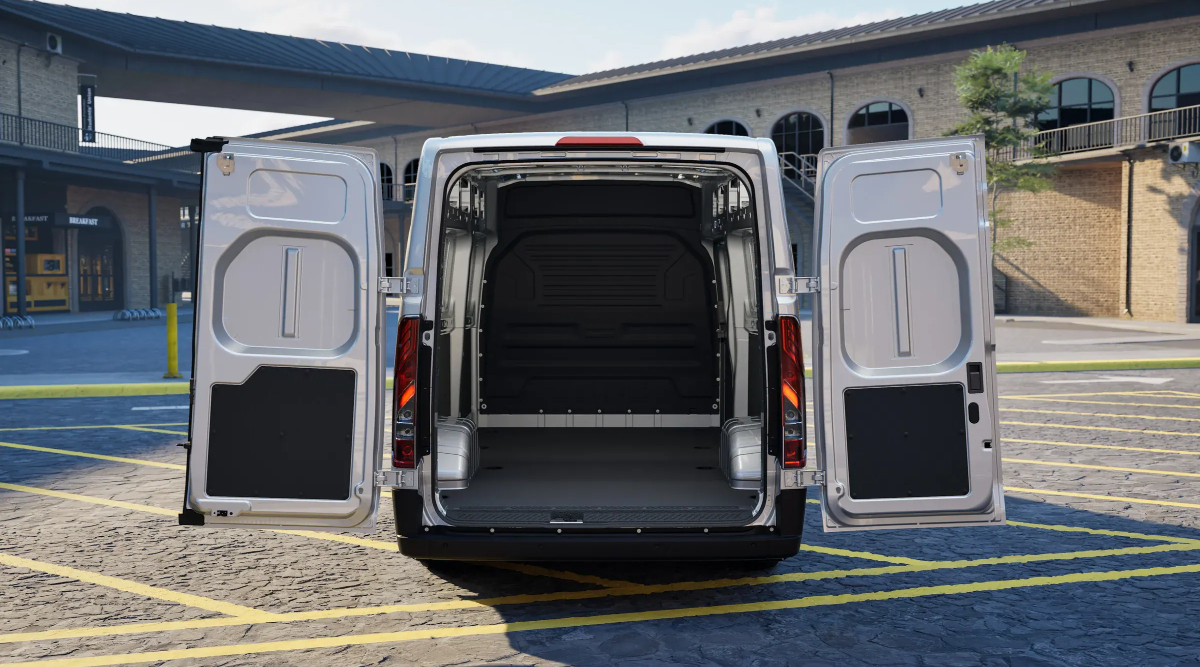
To keep costs low, both panel van versions of the Transit City come with a universal specification — no optional extras will be available. This standardized configuration reduces complexity but does not compromise on essential features. It includes a durable cargo floor, half-height side panel linings, and strategically placed lashing rings.
The van also features heated seats as standard, with Ford Pro finding these to be “more effective than cabin heating in cold conditions during urban stop and go traffic.” Entering and exiting the vehicles has been made as simple and comfortable as possible, given that a courier or delivery driver may do so up to 200 times a day. The cabin also includes a 12 inch touchscreen with Apple CarPlay and Android Auto.
Standardized design does not mean a lack of safety features, however. Every Transit City comes equipped with:
Automatic Emergency Braking
Front and rear parking sensors
Rear-View Camera
Adaptive Cruise Control
Lane Departure Warning
“Going electric can also yield financial benefits beyond saving on energy,” Robinson says. “Fewer moving parts and service items mean we expect maintenance costs to be reduced by around 40 per cent compared to an equivalent diesel vehicle; our service interval on Transit City is two years or 40,000 km.”
 Credit: Ford
Owners may also take advantage of Ford Pro Telematics 7 or other systems to help fleet managers optimize productivity. Those systems give real-time access to essential vehicle data, including location, speed, and charge level. The vehicles are covered by an 8 year, 160,000 km warranty on the battery and electrical components.
Different Thinking
Robinson says, “I loved how we could think so differently in bringing Transit City to market. We know the customers and their needs inside out, so we could be single-minded and find an answer that leads the rest of the industry with an affordable, fit-for-purpose tool. Transit City is the perfect partner to E-Transit Custom in our product portfolio. Together they give Ford Pro a class-leading offering for customers in the segment.”
Ford will begin taking orders for the Transit City in Q2 and deliveries are expected to begin before the end of this year. “I can’t wait to see Transit City out where it belongs, working hard as the go-to vehicle for the armies of operators who are the hidden heart of our cities,” Robinson says.
Is the Transit City a compelling electric vehicle for people in the trades and fleets? Why or why not? Please share your views with us in the comments.
Sign up for CleanTechnica’s Weekly Substack for Zach and Scott’s in-depth analyses and high level summaries, sign up for our daily newsletter, and follow us on Google News!
Advertisement
Have a tip for CleanTechnica? Want to advertise? Want to suggest a guest for our CleanTech Talk podcast? Contact us here.
Sign up for our daily newsletter for 15 new cleantech stories a day. Or sign up for our weekly one on top stories of the week if daily is too frequent.
CleanTechnica uses affiliate links. See our policy here.
CleanTechnica’s Comment Policy