As spring arrives, many Purdue students have been finding the pace of the semester accelerating — both in their classes and on the streets. This transition is marked in part by the return of VEO scooters and bicycles, electric mobility options through a partnership between Purdue and the company that launched in March 2023. The agreement established a shared fleet designed to increase accessible transportation across the West Lafayette campus. For many students, the return of VEO is met with excitement, as the scooters and bikes offer both a practical and thrilling way to navigate campus. Sophomore in hospitality and tourism management student Max Siemers, a frequent rider, utilizes the fleet both after class and on weekends. When asked about what he likes most about the vehicles, he stated that the accessibility and cost-effectiveness make them a convenient choice.

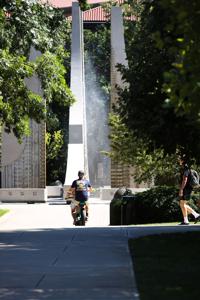
Two Veo riders ride around campus and toward the Engineering Fountain.
Hugh Kennedy | Staff Photographer
“I think it’s nice just to have that transportation here, where it’s kind of sitting around campus, and it’s not expensive at all either,” Siemers said. “It’s $2 for a decent ride. I like that it’s just kind of easy to move around campus.” Many students have meanwhile expressed concerns regarding their personal safety as pedestrians. While some students prioritize convenience, others find that the presence of motorized transit on campus complicates their daily commute. Chloe Bright, a first-year Pharm.D. student, expressed concern over the lack of consistent traffic etiquette among riders, particularly when navigating high-traffic areas. “They typically do not stop for pedestrians, or sometimes they act like they’re a car, and they’ll just drive through intersections without stopping,” Bright said. “They don’t all follow the same rules, and it feels like it’s very dangerous on campus walking to class.” Angie Lozano, a first-year Pharm.D. student, also expressed similar concerns, mentioning that the safety of the VEOs often depends on who is driving. “I think it just depends on who’s driving. Some people are fine. They stop, and then some people just look like they want to run you over,” Lozano said. There are some features that the VEO app has to keep both pedestrians and riders safe. This includes requiring users to take a short quiz before renting and operating a vehicle for the first time each semester. Additionally, the vehicles automatically slow down in areas of campus that tend to get more traffic. Bright said she believes VEO vehicles should have more regulations during the busier periods on campus. “During the passing hour, like in between classes, there’s a lot of students, and I don’t feel like it’s appropriate to have them driving through central campus, because you just can’t drive through a big crowd of students, especially in front of WALC,” Bright said. Janellyn Fisher, a freshman in animal science, said that she believes that the Veos do not pose any danger if riders simply follow the rules. “If they just stay in the bike lanes and not on the sidewalks, then I think it is fine. I haven’t ever felt unsafe,” Fisher said. Siemers said the convenience of the vehicles outweighs the risk they pose when riders are following the rules. “I think they are mostly safe, and they can cause some caution,” Siemers said. “But I think they’re more safe than an inconvenience.”


As spring arrives, many Purdue students have been finding the pace of the semester accelerating — both in their classes and on the streets.
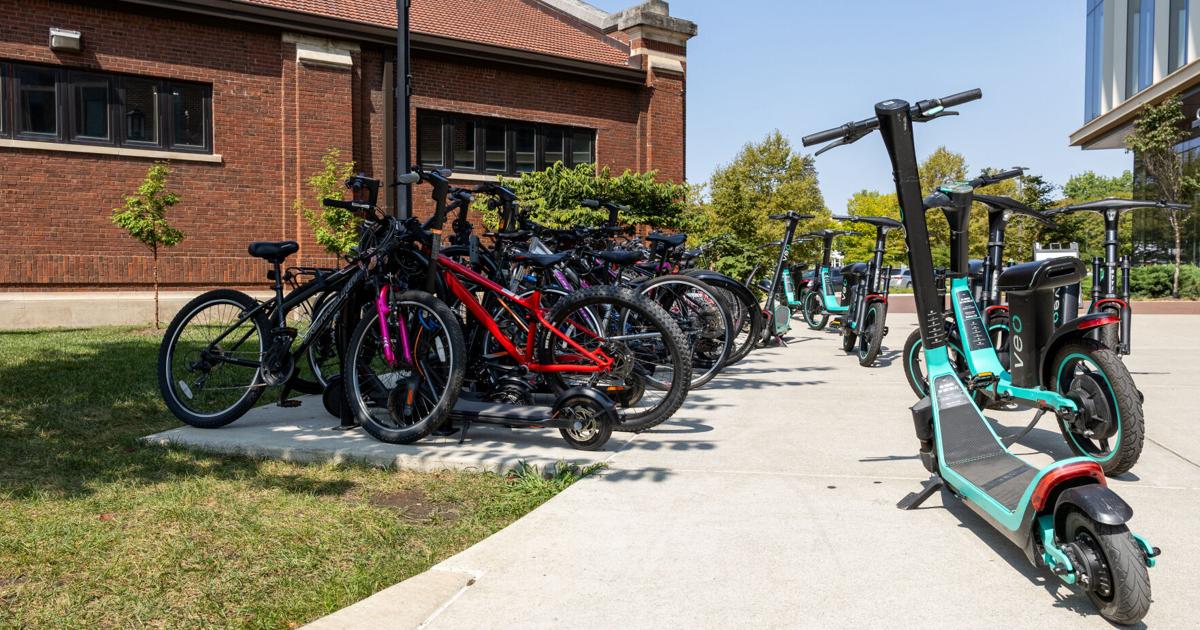
This transition is marked in part by the return of VEO scooters and bicycles, electric mobility options through a partnership between Purdue and the company that launched in March 2023. The agreement established a shared fleet designed to increase accessible transportation across the West Lafayette campus.
For many students, the return of VEO is met with excitement, as the scooters and bikes offer both a practical and thrilling way to navigate campus.
Sophomore in hospitality and tourism management student Max Siemers, a frequent rider, utilizes the fleet both after class and on weekends. When asked about what he likes most about the vehicles, he stated that the accessibility and cost-effectiveness make them a convenient choice.
Two Veo riders ride around campus and toward the Engineering Fountain.
Hugh Kennedy | Staff Photographer
“I think it’s nice just to have that transportation here, where it’s kind of sitting around campus, and it’s not expensive at all either,” Siemers said. “It’s $2 for a decent ride. I like that it’s just kind of easy to move around campus.”
Many students have meanwhile expressed concerns regarding their personal safety as pedestrians.
While some students prioritize convenience, others find that the presence of motorized transit on campus complicates their daily commute.
Chloe Bright, a first-year PharmD student, expressed concern over the lack of consistent traffic etiquette among riders, particularly when navigating high-traffic areas.
“They typically do not stop for pedestrians, or sometimes they act like they’re a car, and they’ll just drive through intersections without stopping,” Bright said. “They don’t all follow the same rules, and it feels like it’s very dangerous on campus walking to class.”
Angie Lozano, a first-year PharmD student, also expressed similar concerns, mentioning that the safety of the VEOs often depends on who is driving.
“I think it just depends on who’s driving. Some people are fine. They stop, and then some people just look like they want to run you over,” Lozano said.
There are some features that the VEO app has to keep both pedestrians and riders safe. This includes requiring users to take a short quiz before renting and operating a vehicle for the first time each semester. Additionally, the vehicles automatically slow down in areas of campus that tend to get more traffic.
Bright said she believes VEO vehicles should have more regulations during the busier periods on campus.
“During the passing hour, like in between classes, there’s a lot of students, and I don’t feel like it’s appropriate to have them driving through central campus, because you just can’t drive through a big crowd of students, especially in front of WALC,” Bright said.
Janellyn Fisher, a freshman in animal science, said that she believes that the Veos do not pose any danger if riders simply follow the rules.
“If they just stay in the bike lanes and not on the sidewalks, then I think it is fine. I haven’t ever felt unsafe,” Fisher said.
Siemers said the convenience of the vehicles outweighs the risk they pose when riders are following the rules.
“I think they are mostly safe, and they can cause some caution,” Siemers said. “But I think they’re more safe than an inconvenience.”
Every Exponent article goes through checks for accuracy before publication. If you have a concern or questions about this article, please email editor@purdueexponent.org.