The Skoda marketing director tells Tim Healey how the brand is tackling EV hesitation, why electric buyers are more open-minded than expected and why brand and performance marketing are false opposites.
You have risen through the ranks at Volkswagen Group and are now marketing director at Skoda. Tell us about that journey.
I joined Volkswagen Group UK straight out of university. I didn’t particularly have a dream to work in automotive. It just happened to catch my eye. There was an advertisement that said: ‘you don’t have to know what’s under the bonnet to work in automotive’, which I thought was lucky as that definitely applied to me. I’ve stayed within the group for 27 years.
I started out with Skoda at a really exciting time. It was the early 2000s and Skoda was running the ‘It’s a Skoda. Honest’ campaign and keen to change perceptions of the brand. It was a real turning point. I witnessed how marketing had the power to completely change the direction and the success of the brand.
After journeying around the Volkswagen Group, my first head of marketing position was heading up the team for Volkswagen Commercial Vehicles. It was there that I honed my skills and learned what was required to be a good marketing director. I then came full circle and have ended up back at Skoda. I’ve always loved the brand and now head up the marketing team.
The way we are structured, I look after digital, brand and performance communications as well as customer experience.
 Inside The Skoda HQ.
What’s the offer at Skoda?
We’ve been around for over 130 years. Skoda started out making bikes and since 1905 we’ve been making cars. We’re based in the Czech Republic. We offer smart, spacious, and stylish cars. Smart in the sense that they’re well thought out: customer-centric with clever and helpful features like the umbrella in the door so you never get caught out on a rainy day. We were always known for being value for money, but now we are also known for quality as well.
When I joined, we were selling small cars for under £10,000. Now our range goes up to the Enyaq Coupe, starting at around £46,000 for our top-of-the-range electric car. The brand has been through a huge transformation. In the last eight years, we’ve doubled our turnover. We’ve been growing sensibly, sustainably and consistently.
We used to be what we referred to in marketing as ‘a proud outsider’. Choosing a Skoda was an alternative choice. Now we think of ourselves as being ‘an interesting insider’. Still a more interesting choice, but on par with the leading brands in the volume segment.
We have seen a massive change in the profile of the customers who are coming to the brand. 25 years ago, our customers were typically older and more likely to be male. These days we have many more young professional families buying Skodas.
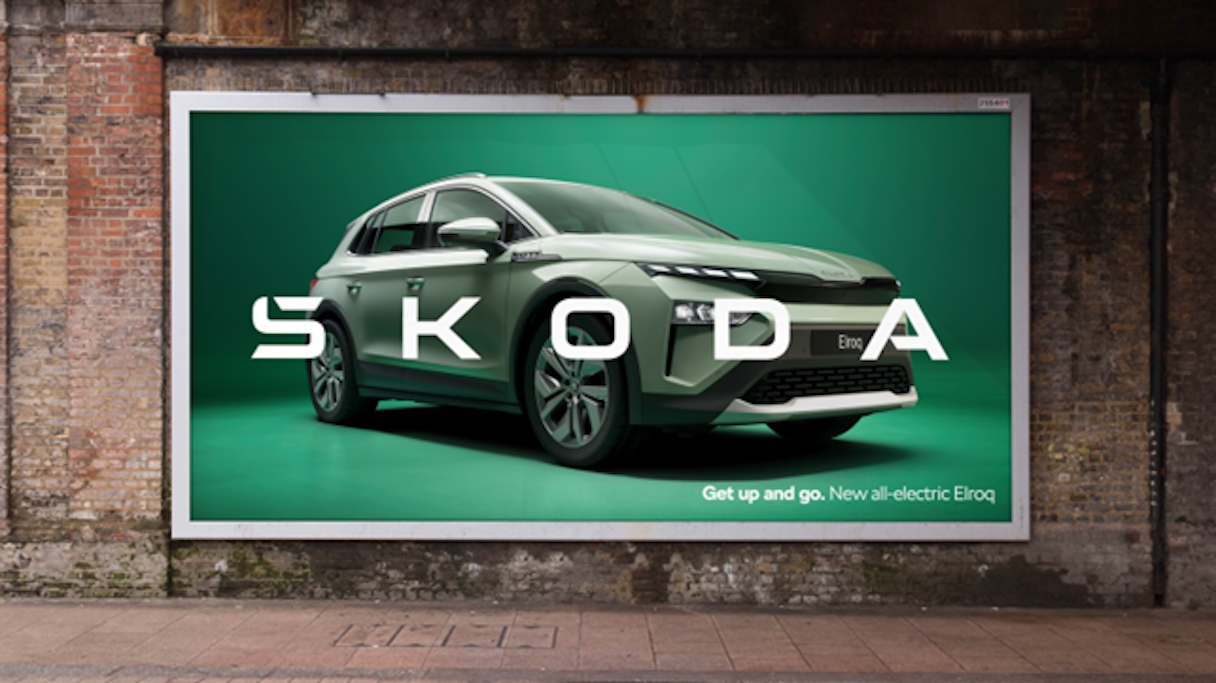 The all-electric Skoda Elroq.
In 2025, Skoda had a strong 1st half year: a 10.4% increase in revenue. Operating profits are on the rise. What initiatives or challenges are coming up for you in 2026?
The big challenge for us and all of the automotive industry is the transition to electric vehicles. All car manufacturers must meet government-mandated targets for electric vehicle sales: for example, 28% this year, with the percentage increasing each year until reaching 100% by 2035.
The marketing challenge is considerable. Typically, you have your early adopters who have been very quick to jump to electric and are very excited. When we first launched the Enyaq, we had a huge waiting list. And they’re still very much in demand. Now we find ourselves at the typical point in the adoption curve, waiting for the early majority to decide that now’s the time to move to electric.
A lot of people are still thinking: “I will get an electric car, but maybe as my next one, not this one.” And that’s a very understandable place to be. They’re waiting to see the charging infrastructure develop and the battery range improve. However, we have found that a lot of the concerns car buyers have are myths that need busting. So, the next phase for us is about convincing those customers who are sitting on the fence that now is the time to move into electric cars.
We have three electric cars in our range. The Enyaq Coupé, The Enyaq SUV and the Elroq. By 2026/27, this will expand to five. It’s critically important for us to ensure that when people are considering electric cars that they’re considering Skoda.
The good news, from a marketing perspective, is that EV customers appear to be more open when it comes to choosing their electric cars. We know that on the Enyaq, for example, three-quarters of our customers are completely new to the Skoda brand. We know that historic brand perceptions are less important when it comes to choosing an electric vehicle.
From a customer experienc
e perspective, this year we will be using a platform called Reputation that scrapes all the reviews across the internet – wherever people might be leaving comments about the experience in your retailers. All the data is presented in an easy-to-use dashboard for retailers that goes through the customer journey. You can see where you’re doing a great job and where you need to improve. It then uses AI to give you practical examples of how you can improve the experience for customers.
Want to go deeper? Ask The Drum
We’re rolling that out across our network. We’re especially excited as with this approach we capture the data – not just from our customers but from anyone who shares a view on the experience that they’ve had with us. In other words, we capture this data from the customers we have won – and just as important, the customers we have lost.
In digital, we’ve been innovating with new ways to reach our customers. For example: this year we teamed up with Amazon to create the first European car showroom on Amazon where you can browse live stock.
How do you surf the tidal wave of marketing technology?
We’re part of a big corporate organization, so we have really tried to leverage the benefit of having all of the brands together. We are very independent in terms of brand strategy and creative marketing output, but we pool resources and experiences in marketing technology.
For us, it’s about making sure that we get that balance between testing and learning with new platforms, while also thinking about the bigger picture and making sure that it fits into a wider infrastructure. With the Reputation platform, we’ve been piloting that on behalf of the group.
In terms of how we’re using technology in our day-to-day life, I encourage the team to be curious, to see what’s out there and think about how we can use it. We’ve just got the advanced Copilot licenses for the team and we are experimenting there.
Using technology to speed up processes is essential, and we’re just scratching the surface at the moment. If technology gives us more time to be creative, that’s a win. But when it comes to generating exceptional and insightful creative work, I can’t imagine how we would turn to AI for this. We would only ever want the best creative minds working on our account.
In the UK market, we hold just over 4% share. It’s a crowded space. Between 4% and 8.5% share, there are around 12 car brands, making the market extremely congested. We have to stand out by doing things differently – things that truly connect. To maintain our human, down-to-earth brand with a confident and playful tone of voice, that’s where the human touch comes in.
The pressure is on creative agencies now to bring back the value of fresh thinking, super insightful, creative, because otherwise, if what they’re coming up with is suitably generic, then that p
robably could be generated by AI.
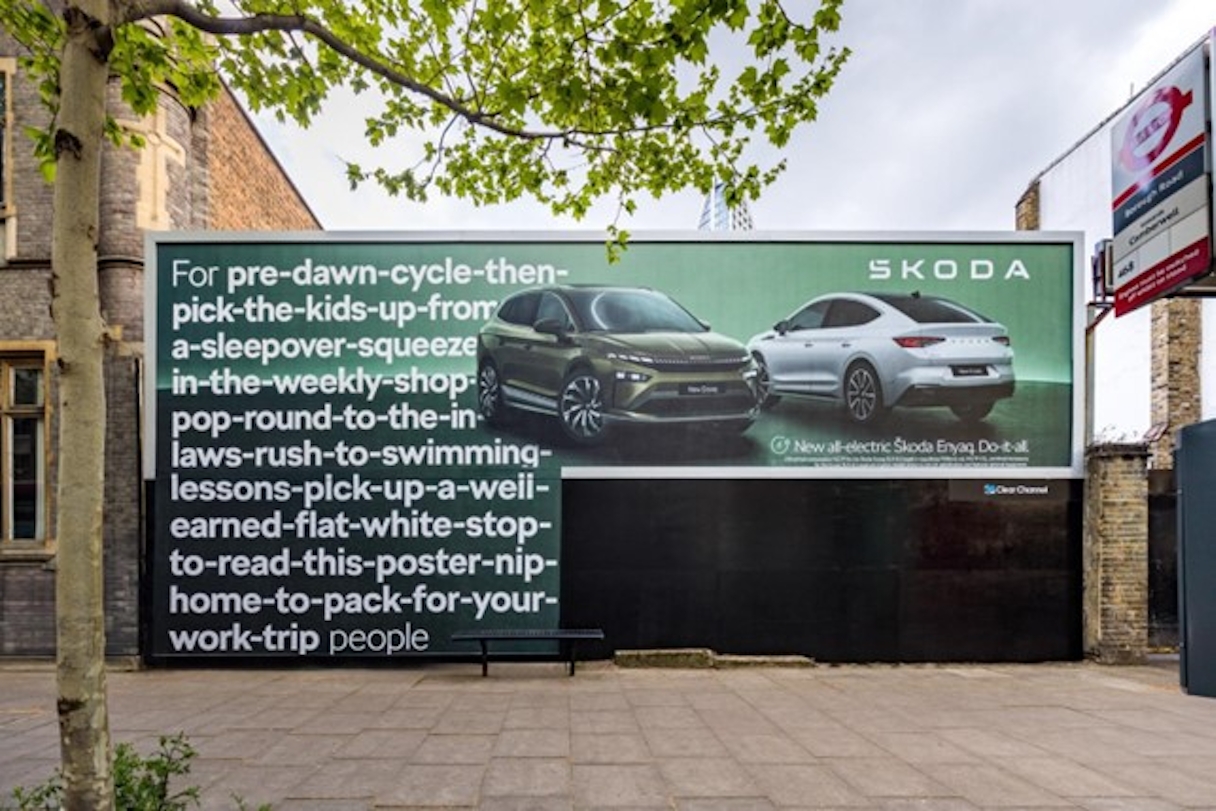 Bold out-of-home campaigns have turned heads for Skoda.
Could you tell us about a customer research discovery you have made that surprised you?
We did a lot of listening to what customers were saying about electric cars: what they were concerned about. You would be surprised at some of the questions that people had. Can you drive your electric car through a car wash? Can you charge your electric car when it’s raining? There were myths around the electric range. People thought that they were really complicated to drive and of course, they’re actually much easier to drive.
Those insights led to us collaborating with electrifying.com, one of the big EV auto websites. We made a content series around how you can do all of these things. You can drive them in the rain, use a car wash, and many EV owners only charge their car once a week – when they’re at home and they’re asleep and their car is charging overnight on their driveway.
What myth about marketing would you most like to bust?
This whole thing about performance marketing versus brand marketing. We are a little bit guilty because at VW group, we have a role which is called ‘performance marketing manager’. We also have a role which is called ‘brand communications manager’. This suggests the disciplines are different and even that your brand communications don’t need to perform. And of course they do.
They might be doing different jobs and you obviously have to measure them accordingly. But they are absolutely both performing and delivering for the business. There’s this belief that brand communications don’t help you deliver your sales results. And it is not true.
There are differences in the skill set that you would prioritize if you were looking to fill these different roles in your team. I would always prioritize hiring people with good numerical and analytical skills for performance marketing. And for brand, obviously, you need to be able think strategically and creatively.
I do think there’s a need for upskilling on both sides. Creative and emotive, hard-working, tactical advertising will deliver better results than cookie-cutter stuff. And similarly, it’s important for the team members who are working on the brand side to be held accountable and be clear about what they are achieving with their brand campaigns. They must then honestly evaluate their success and, if there’s need for improvement, make the necessary changes.
If you could go back in time, what advice might you give your younger self?
I would worry less about what other people think. My natural personality type prefers it when everybody is in agreement with each other. I prefer collaboration to conflict. But everybody thinks they’re a marketing expert, even if they really aren’t.
I would make sure that I listen to what everyone’s got to say but not always attach so much value to the opinions of others.
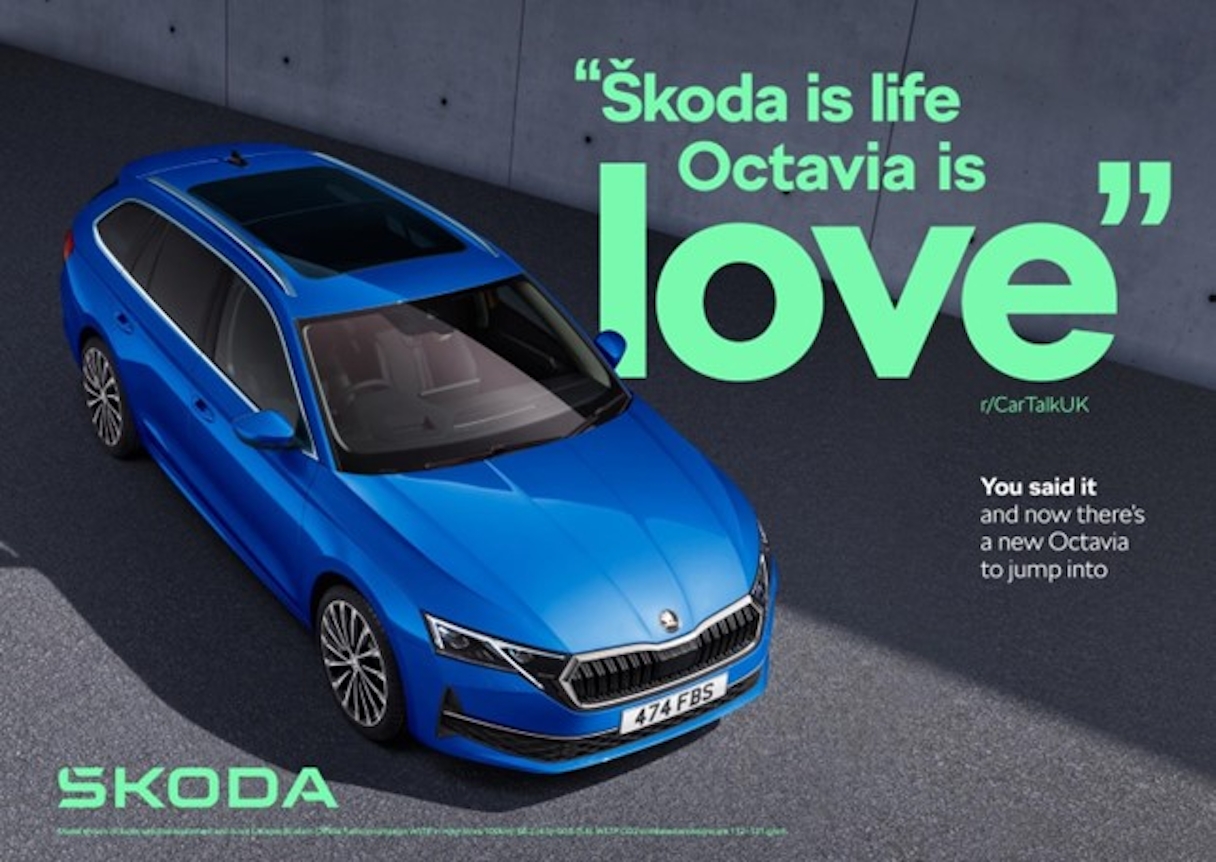 The Skoda Octavia has enjoyed rave reviews
What question would you like me to ask the next senior marketer that I interview?
What is your ‘guilty pleasure’ campaign? What is the campaign that you are slightly embarrassed to admit that you like – perhaps because everyone else hates it?
Your question from the last senior marketer that I interviewed: other than AI, name one big innovation in marketing at the moment.
Of course, to answer this, I firstly asked Co-Pilot to answer it for me, but I didn’t really like the answers! Something that we feel passionately about at Skoda is authentically engaging with our fans, customers and communities rather than just defaulting to paid influencers. Both have value, but arguably content from your community can often tell a more powerful and authentic story. We had great success with this with our recent campaign ‘The Octavia Redditor Edit’.
If there’s one thing you know about marketing, it is…
Consumers aren’t sitting around on their sofa, waiting for your next marketing campaign. We shouldn’t flatter ourselves. As marketers, we have to work really hard to understand our customers and then do something interesting, engaging and entertaining that warrants their attention.
Tim Healey listens, learns, and synthesizes real-world best practices from hundreds of marketing professionals and serves them up in his weekly interviews for The Drum.Tim’s Little Grey Cells Club is a trusted, no-sales, peer-driven network where senior-level marketing directors unite to exchange authentic insights, confront challenges, and drive leadership forward.