Casablanca – Africa’s mobility sector is moving fast, and not always in the way the rest of the world expected.
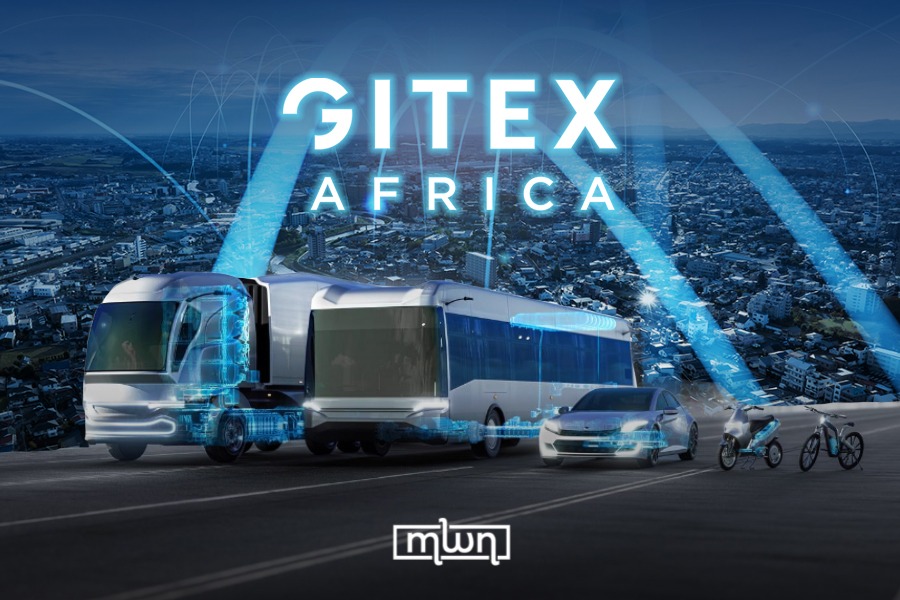
As Marrakech gets ready to host GITEX Africa 2026, the conversation is shifting a bit. It’s no longer just about cars or transport in the traditional sense. It’s about data, energy, infrastructure, and who actually gets access to all of it.
The future of mobility is not yet at the sci-fi level of flying cars or teleporting, but shaped by integrated digital systems using sustainable electric energy.
Across the continent, mobility is being rebuilt almost from scratch. Not as a copy of Europe or the US, but as something shaped by local realities, with high population growth, heavy reliance on shared transport, low car ownership, and a digital layer that is expanding quickly.
Mobile technologies alone contributed around $220 billion to Africa’s economy in 2024, about 7.7% of total GDP. That number is expected to reach $270 billion by 2030. That digital growth is already changing how people and goods move.
The market is growing just as quickly. Africa’s mobility sector is projected to rise from $17.4 billion in 2025 to $28 billion by 2030. At the same time, the electric vehicle market is expanding alongside it, estimated at $15.80 billion in 2024 and expected to reach $25.40 billion by 2029.
But, the more interesting changes are happening underneath those numbers.
A different kind of electric transition
Electric mobility in Africa isn’t following the same script as in Western countries.
Here, it’s not private cars leading the shift. It’s commercial vehicles, motorcycles, buses, and delivery fleets. The ones that are used all day, every day.
By May 2025, more than 30,000 electric vehicles were already in use across the continent. Growth is strongest in two-and three-wheelers, up 38% year-on-year, while electric buses have grown by 44%.
In some markets, the financial logic is simple. Electric motorcycles can reduce operating costs by up to 83%, making them competitive almost immediately.
East Africa is ahead in this space with motorcycle taxis dominating urban transport. In Kenya, up to 80% of city trips are made using shared or moto-taxis. Battery-swapping and battery-as-a-service models are helping drivers avoid high upfront costs, making the transition more practical.
In West Africa, Nigeria is getting close to a turning point. By the end of 2025, there were around 20,000 electric vehicles on the road, supported by local assembly and new policies pushing adoption.
Rising fuel prices and policy changes are accelerating the shift. At the same time, companies are building local supply chains, including battery production and mineral processing.
Morocco is taking a different, but equally strategic approach.
The country is positioning itself as a manufacturing hub, with a $5.6 billion battery gigafactory in Kenitra at the center of that strategy. The plant is expected to reach an initial capacity of 20 gigawatt-hours by 2026, with plans to scale much further.
Government incentives are also playing a role with VAT exemptions, reduced import duties, and subsidies for electric vehicles. At the same time, Morocco is aiming to generate 52% of its electricity from renewable sources by 2030.
The goal is not just to adopt electric mobility, but to power it sustainably.
Smart systems, logistics, and the rise of AI
Mobility in Africa is becoming increasingly tied to digital infrastructure, as smart cities emerge as testing grounds for new systems. The market for smart urban solutions was projected to reach $1.5 billion by 2025 driven by rapid urbanization and a 12% annual growth rate through 2029, growing steadily in the following years.
Cities like Kigali are already using AI to manage traffic and reduce emissions, called ITMS, while projects such as Konza Technopolis in Kenya are building fully connected urban environments from the ground up.
At the same time, logistics is becoming one of the most important parts of the mobility ecosystem. E-commerce growth is pushing demand for faster and more efficient delivery systems. In Nigeria alone, online commerce generated around $6.7 billion in revenue in 2023.
Startups are responding with new models. Fez Delivery, for example, has integrated electric motorcycles into its operations after completing 200,000 trips in 2022.
These companies are combining mobility with fintech. Rent-to-own or “rent-to-earn” models are allowing drivers to access vehicles without large upfront payments, opening the sector to a wider workforce.
This convergence is visible in the lineup of companies expected at GITEX Africa 2026. The exhibitor list includes firms working across electric vehicles, logistics, AI and infrastructure.
Startups like Ascendance EV are developing affordable electric vehicles designed for urban use, while DriveMe is building financing models that connect drivers to electric fleets.
Other companies are focusing on data. Geo4Net is deploying AI-powered telematics systems for fleet management, and Pixii Motors is building connected electric scooters with integrated digital ecosystems.
Voltwise Solutions is working on smart infrastructure, including automated charging systems for urban environments.
The common thread is clear: mobility is no longer just about moving from one place to another. It is about systems that connect vehicles, energy, data, and finance.
Infrastructure gaps and what comes next
Despite the momentum, challenges remain as the charging infrastructure is still limited. Morocco and Nigeria each have around 1,000 public charging points as of 2024, far below what will be needed in the coming years.
Some companies are working around this by integrating solar energy into charging stations, reducing reliance on unstable power grids. Others are designing vehicles that can charge using generators or decentralized systems.
There is also a broader issue of connectivity. While 416 million people are now using mobile internet in Africa, 64% of the population remains offline, even in areas with coverage. This “usage gap” could limit access to app-based mobility services if it is not addressed.
Still, investment is returning. After a slowdown, Africa’s startup ecosystem stabilized in 2025, with funding reaching over $3 billion. A growing share of that funding is now coming in the form of debt rather than equity, particularly for capital-intensive mobility projects.
As GITEX Africa 2026 approaches, Marrakech is set to become a focal point for these discussions. The event will bring together companies working across transport, energy, AI and finance. Not as separate industries, but as parts of the same system.
What is emerging is not just a mobility market, but a new framework for how movement works across the continent — being built in real time.
Morocco World News is also on X — check out our latest posts now! Get MWN on iOS and Android for instant access to breaking news.