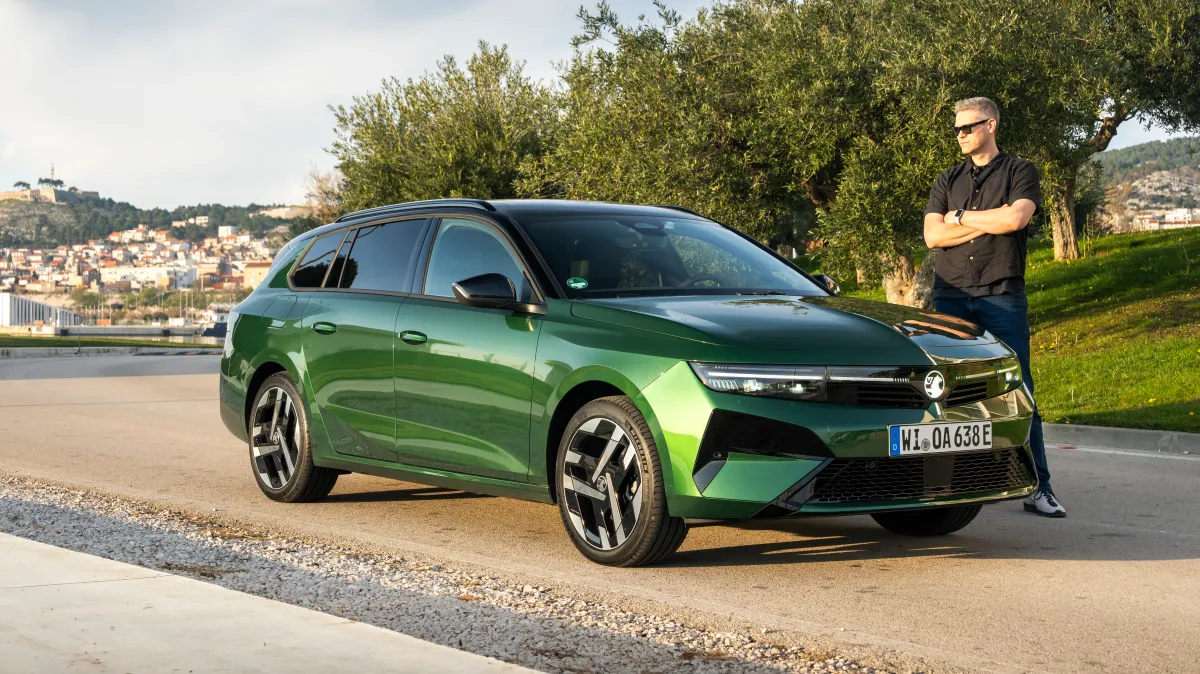
If you’re fed up with the UK’s average speed cameras and 20mph zones, may I suggest a trip to Croatia? At the roadsides around Split there are speed signs, but they are nothing more than garnish, judging by the driving of the locals. Adhere to the 50km/h (31mph) speed limit and you’ll find elderly farmers storming up to your rear bumper in beyond-tired pick-ups, and within seconds they will fly past with an equally tired-looking dog hanging out of the window. Your only choice is to speed up as well, for fear someone will drive into the back of you as if you were stationary. Driving in Croatia is quite the thrill.
I was there to try out the refreshed Vauxhall Astra, which you’d imagine isn’t the most exciting car to throw around quiet Croatian carriageways, but actually it proved to be far from unpleasant.
This humble family car, I was shocked to discover, has been with us for more than 45 years. Launched in the UK in 1980, the Astra has gone through eight generations, all retaining a confidently “car of the people” appeal. You might think a Vauxhall badge isn’t what most little boys and girls dream of, but there’s something reassuring about the fact that the Astra is still going strong after all this time.
Its ability to keep up with the times is key and the Mk 8, which arrived in 2022, was made available with a choice of petrol, hybrid, plug-in hybrid (Phev) or pure-electric power, keeping it relevant to a wide range of folk.
Former rivals have given up. The Renault Megane name has been given to a new pure-electric crossover, and the Ford Focus has been killed off (production ended last November 2025), its maker concluding that everyone these days wants an SUV. Well, perhaps not everyone, reckons Vauxhall… the Astra remains available as either a traditional hatchback or estate, which it grandly dubs the “Sports Tourer”.
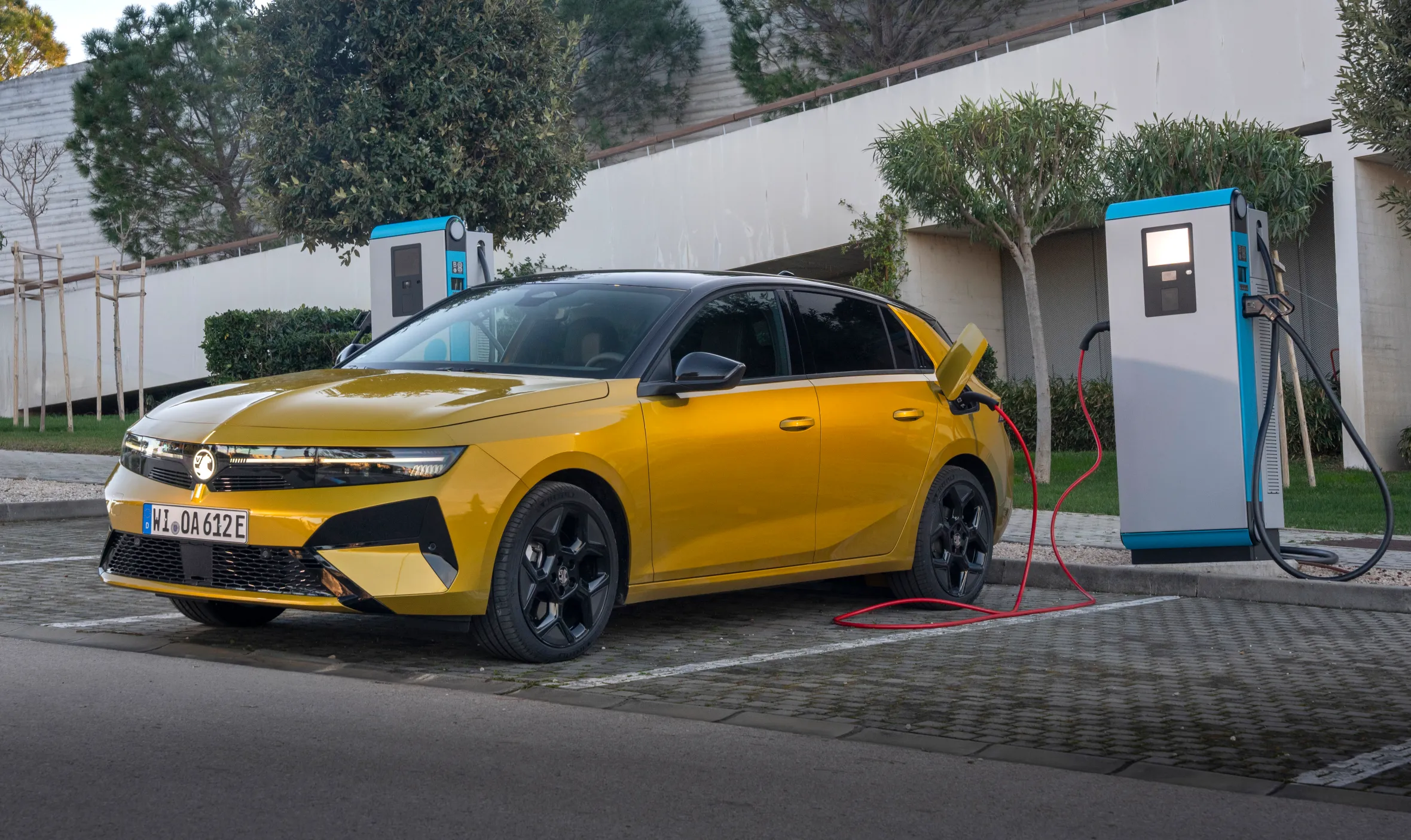 The Astra is available as a hatchback or estate and with a range of powertrainsVauxhall
And now we have a midlife refresh to keep both versions relevant. The powertrain line-up remains the same but the electric model gets a more efficient and larger battery, with a capacity of 58.3kWh (55.4kWh usable), boosting the official range by 22 miles to a claimed 281 miles for the hatch, or 276 miles for the Sports Tourer, which isn’t class-leading but for the price is competitive — more on that below.
As usual, take those range figures with a pinch of salt as the official WLTP figure is always optimistic. During our test drive I saw 3.9 miles per kWh, which is decent — and no doubt helped by having a heat pump fitted as standard along with new three-stage energy recuperation — but would equate to a real-world 216 miles on a charge. When you need to charge, you can go from 20 to 80 per cent in 32 minutes on a DC rapid charger, and also of note is that vehicle-to-load is now standard, which means you can plug in most appliances and use the car as a powerbank.
The shine has been taken off fully electric cars of late and the government has not helped by introducing pay-per-mile tax from 2028, so many will feel more comfortable having a combustion engine under the bonnet — particularly if you can’t charge at home. Roll forward the hybrid and the Phev versions.
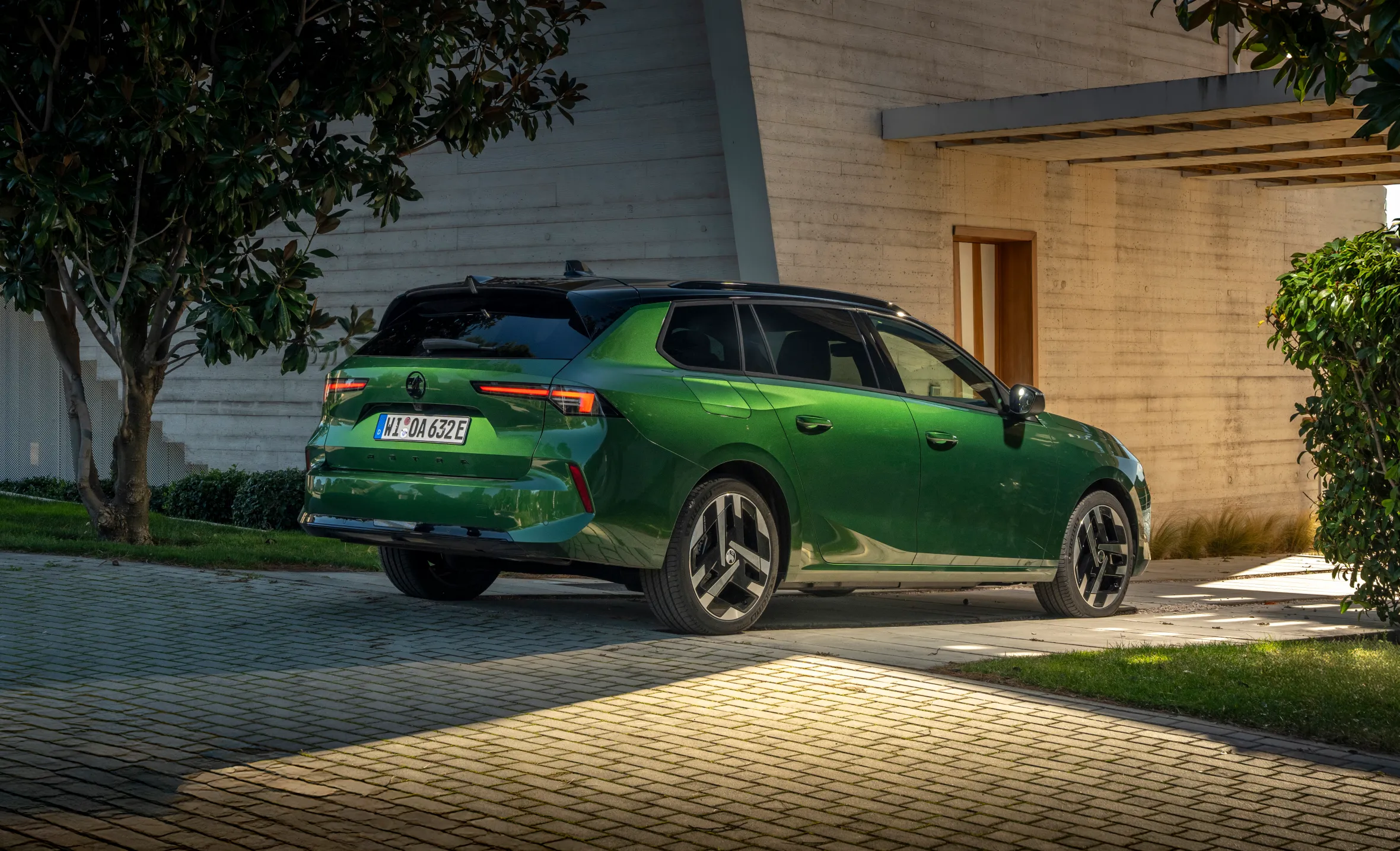 The Astra Sport Tourer offers 1,634 litres of luggage space with the rear seats foldedVauxhall
The former uses a small battery and an electric motor to assist the 136hp engine for a total output of 145hp, with the 21hp e-motor able to propel the car at low speeds around town. Vauxhall reckons that in those conditions up to 50 per cent of the motoring happens under electric power, contributing to its claimed fuel efficiency in the 56.5-58.9mpg region.
Then there’s the plug-in hybrid (Phev) Astra, which can manage up to 52 miles on electric power (up from 32 miles before) and has a 1.6-litre petrol engine that can be deployed for long journeys. The claimed efficiency is as wild as ever — up to 125mpg — but in fairness, if you plug in every day and commute less than 50 miles, visits to the petrol station could be vanishingly rare. The government’s pay-per-mile tax will apply but only at 1.5p per mile rather than 3p per mile for the full EV, which means you’ll need to get out your calculator to work out which one will cost you more to run today and after April 2028.
To make things a little easier for the mathematically challenged, Vauxhall is offering all three versions for the same price, so you can get the electric hatchback, Phev or hybrid in entry-level Griffin trim for £29,995. And the equivalent estate version? Also £29,995, meaning there’s no price premium for choosing the bigger boot. All you have to do then is decide whether you want a few more luxuries and tech for the GS (£31,495) or Ultimate (£33,995) versions.
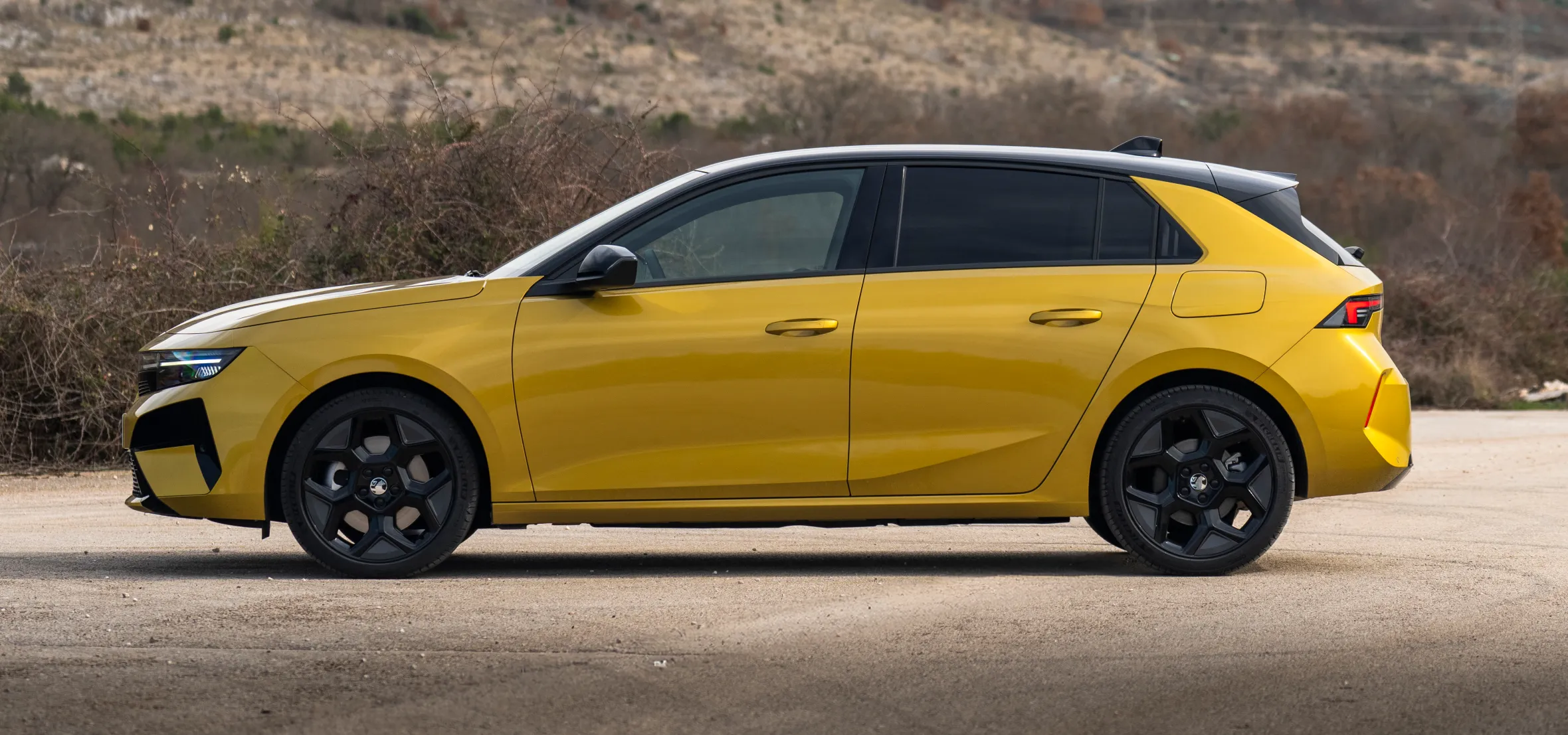 The estate and hatchback versions have price parity, as do the different powertrain choicesVAUXHALL
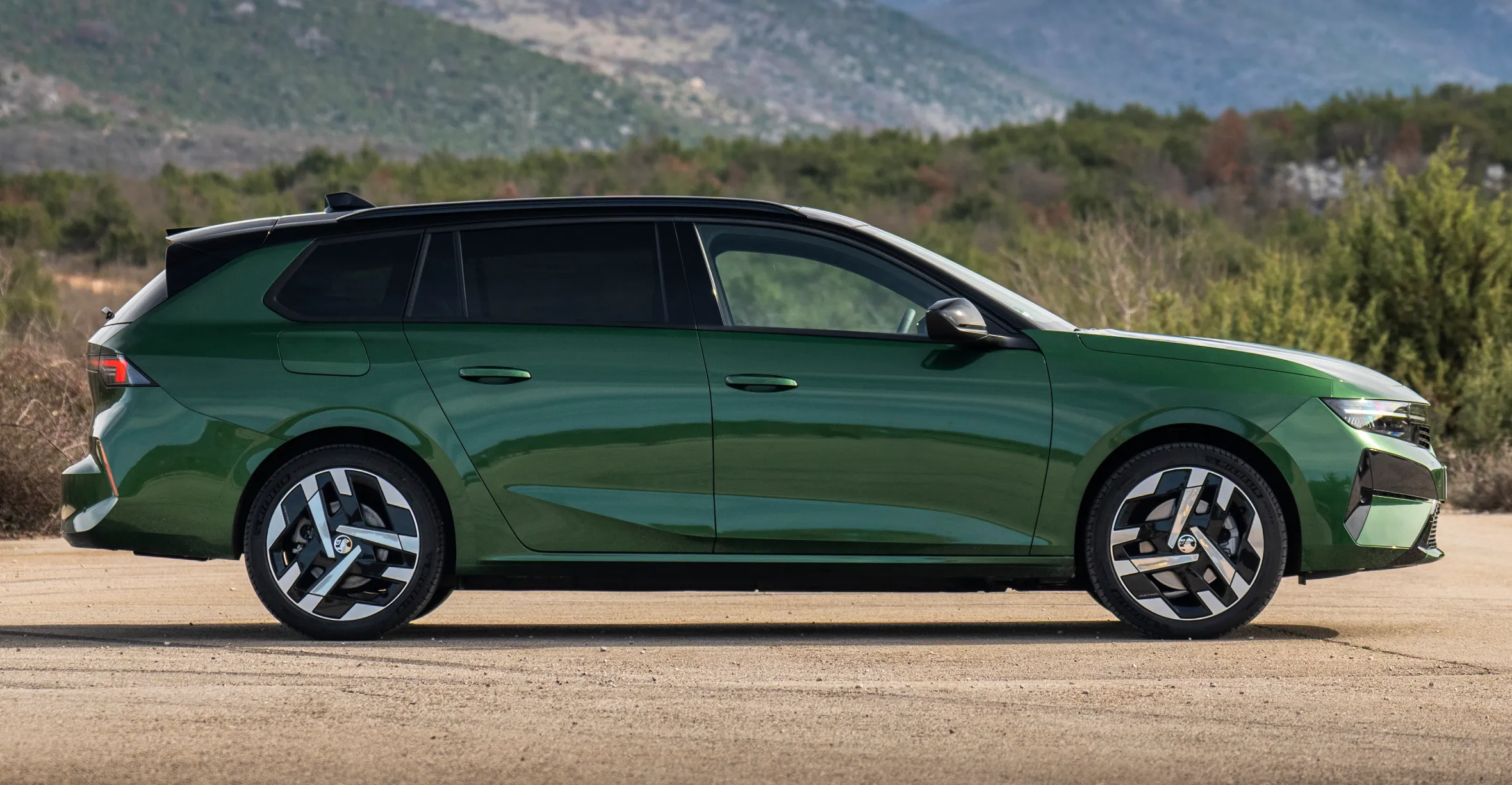
That’s all simple and it sounds reasonable until you notice mild hybrid versions of the Audi A3, Mercedes A-class and BMW 1 Series cost from £30,880, £31,850 and £32,625 respectively. And while the facelifted Astra looks attractive and its griffin badge is now illuminated within what Vauxhall calls the compass design — vertical LEDs above and below the illuminated griffin badge, as well as horizontal ones — what would you rather have on your driveway?
Still, the Astra is more keenly priced than before: the electric and Phev versions are £5,000 cheaper, despite some decent tech upgrades, plus Vauxhall has some attractive home-charger and roadside-assistance offers to sweeten the deal.
A traditional petrol Vauxhall will be coming later in the year, which no doubt will be the cheapest of the Astras, but the price is still TBC and it won’t be the cheapest on tax.
So which is best? That depends on individual circumstances — I wouldn’t recommend the EV if you spend a lot of time on the motorway, for example. But for driving pleasure I do have a clear favourite. The plug-in hybrid has more power (and torque) than the hybrid and EV: 193bhp versus 143bhp and 154bhp, so while the latter two take about nine seconds to reach 62mph from standstill, the Phev can manage the same sprint in 7.6 seconds. It even feels more sprightly during low-speed acceleration than the electric version.
In terms of handling, each feels distinct. The EV is the heaviest at 1,733kg, but only by about 50kg over the Phev, and that makes both feel less lively through corners than the hybrid, which is the most fun to steer and has the most engaging power delivery in Sport mode. I found a series of hairpins and was surprised to find myself enjoying throwing the Astra Hatch Phev around the switchbacks, and that it accelerated out of the low-speed turns with gusto.
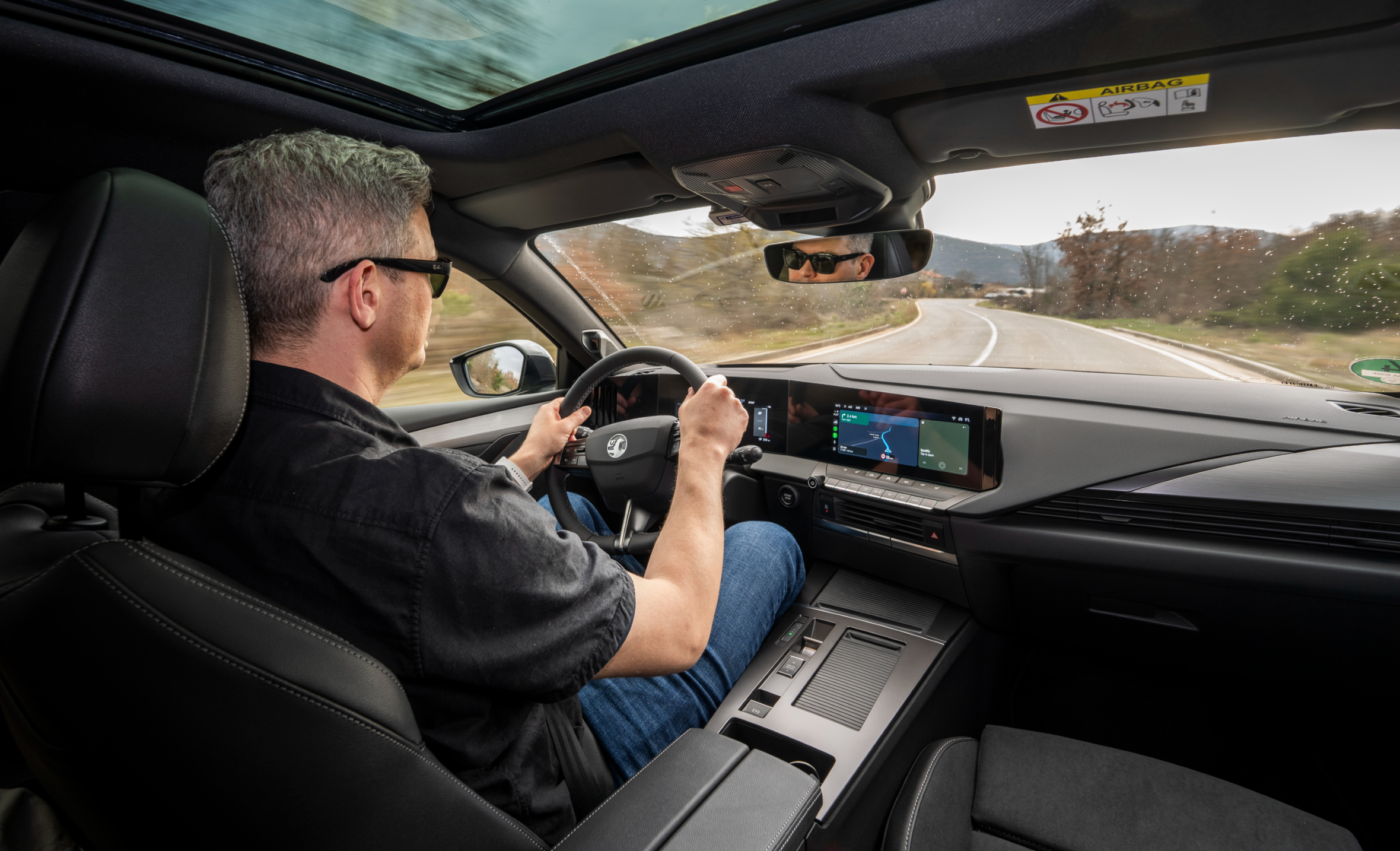 The driving experience varies depending on the version and the road, but the plug-in hybrid hatchback is Dron’s pickVauxhall
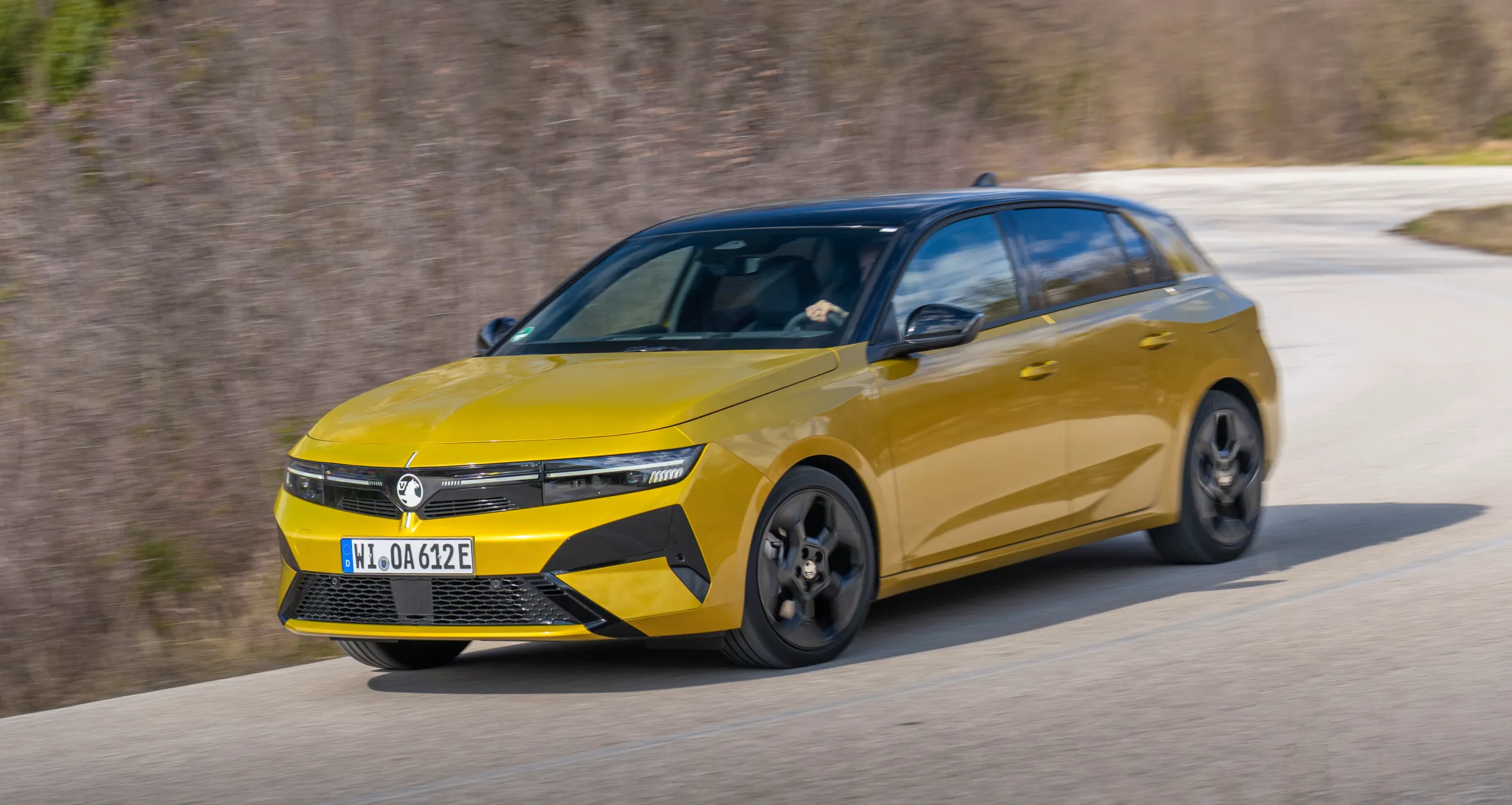
The ride is a little odd, though. The new Astra’s suspension — unchanged from before — feels floaty and soft at high speeds and while cornering, but it picks up initial shocks and feels too firm at low speeds. It’s not as dynamically well tuned over a breadth of scenarios as a 1 Series, or even something from Kia, but on a broken road surface it’s a decent compromise and the Phev can be enjoyably playful. Curious.
Inside is spacious and the headroom is more than acceptable, though larger adults will find the rear a little tight on legroom. Also note that the Phev compromises on boot space compared to the others, though with the estate version you can get up to 1,634 litres of luggage space with the seats folded — which is a lot — and the opening is a metre wide, so Vauxhall proudly told us you could transport a washing machine, no bother.
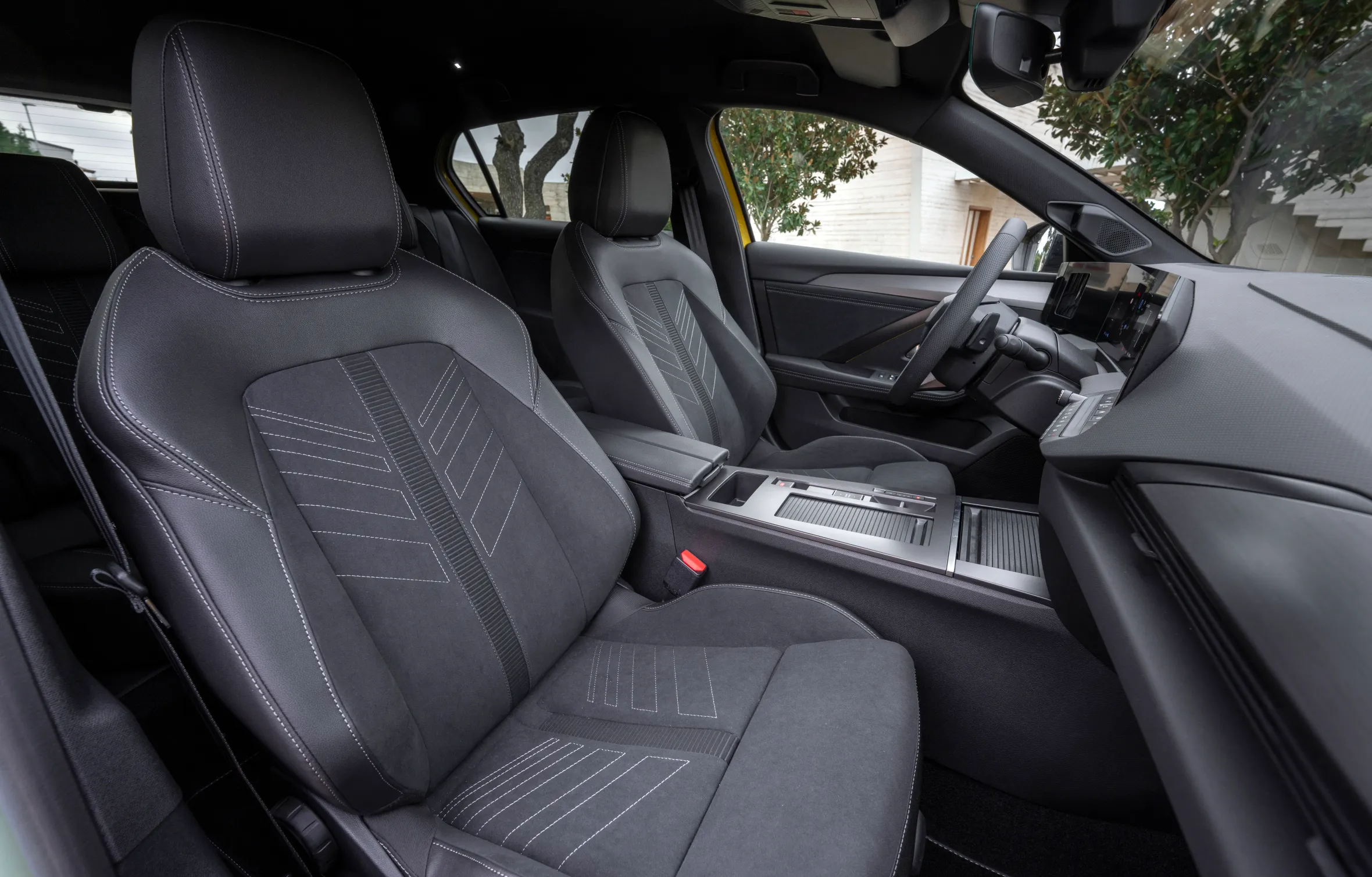
Perhaps more important, all the cars have had their seats approved by the German back specialists Aktion Gesunder Rücken (Campaign for Healthier Backs), who no doubt take spinal comfort seriously, and the results are good, even for ludicrously tall drivers like me. Vauxhall has even cut out a small section for your coccyx, which they say relieves pressure and means long runs aren’t a chore. Select the upgraded seats and they even have a massage function — in an Astra!
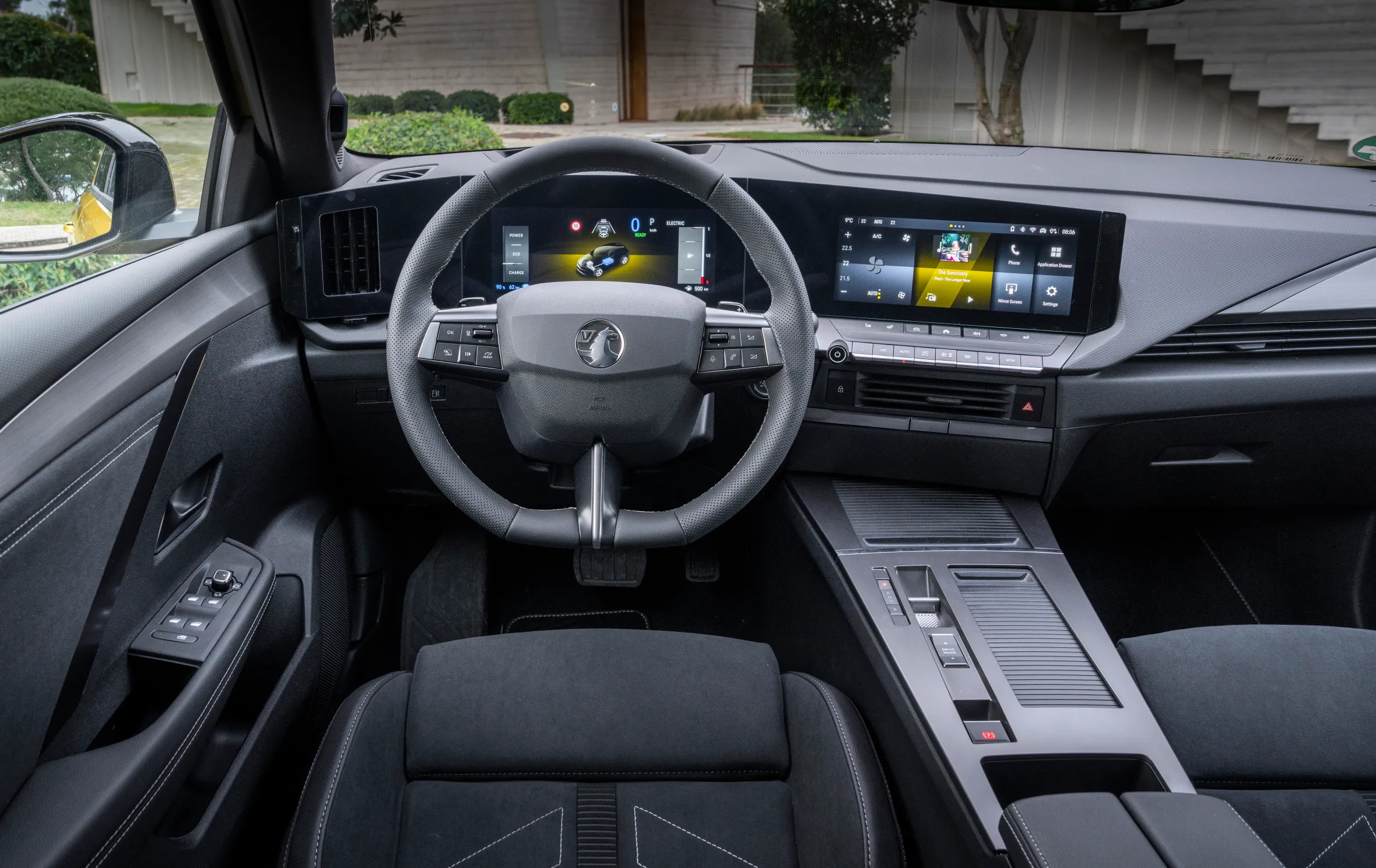 The interior is dull but Vauxhall has retained switches, replaced the gloss-black surfaces and the seats are excellentVauxhall
There’s acoustic glass and sound insulation, so the cabin is more hushed than you’d expect from a Vauxhall. In terms of refinement, this is not bargain basement stuff. And Vauxhall brought in its head of lighting to talk to us about its upgraded matrix LED headlights, which have gone from 168 to 51,200 main beam elements, and from 1,700 to about 2,000 lumens of brightness. That may alarm those concerned about glare at night, but in theory the headlights dip for oncoming objects and are even clever enough to dim slightly around road signs to prevent glare from them. Vauxhall says there are safety benefits: at 50mph objects are detectable 30-40m earlier.
If that’s a bright point of the car, the interior has less of a shine. If you like black plastic then this is your wonderland, but compared to almost anything else in its class the Astra’s cabin is dull. Vauxhall has introduced some grey satin materials to replace the gloss-black surfaces, at least, probably because people have realised that gloss-black plastics have no business being anywhere near fingers as they need frequent wiping clean and then show up scratches.
Common sense is also in evidence with the continuation of switches for the climate control, the heated seats and the heated steering wheel (hoorah!), while the graphics of driver display and the infotainment system on the twin 10in screens have been refreshed and are decent to look at, if far from class leading in design or function.
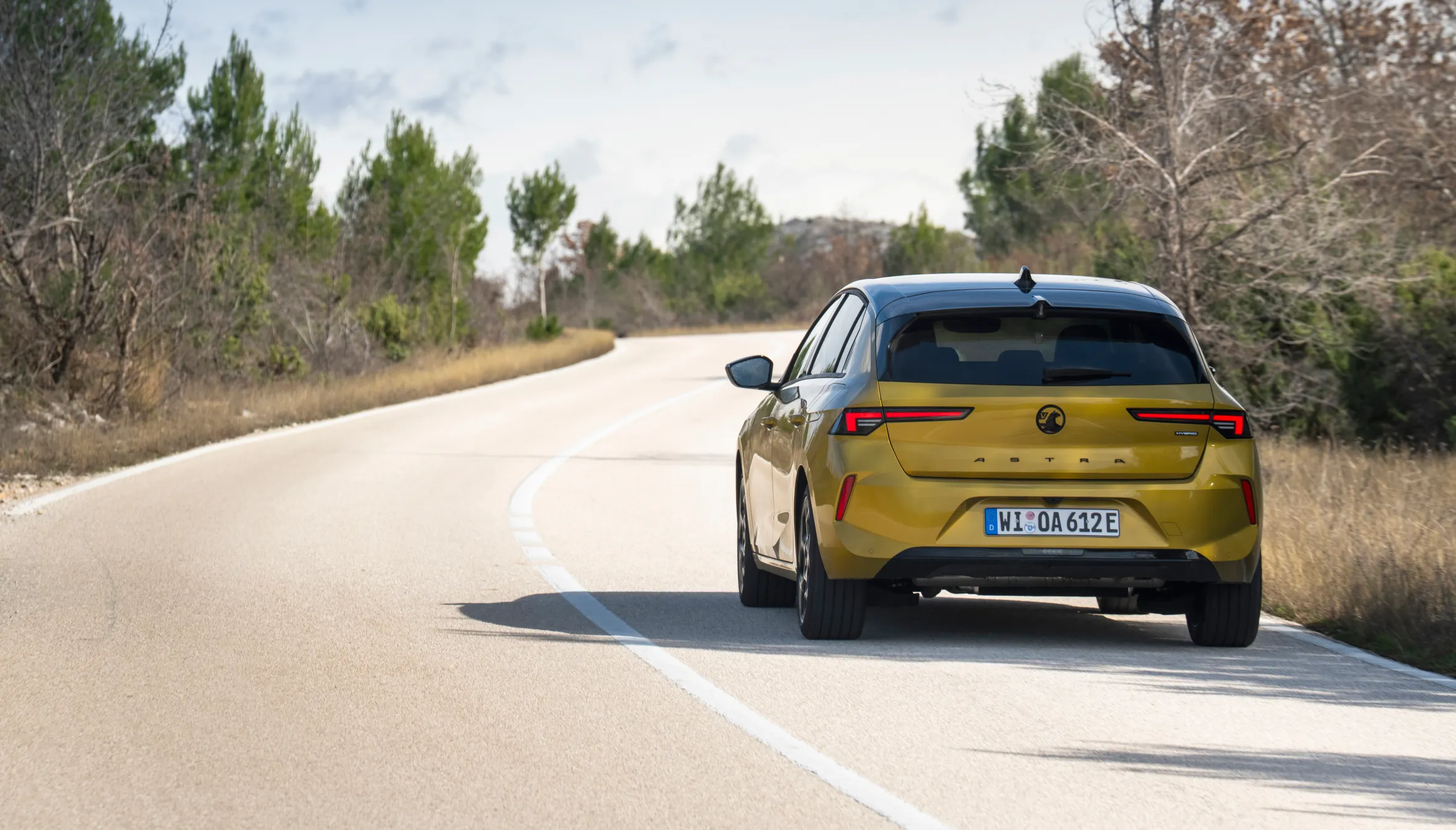 On a road near Spilt — a moment later a Croatian farmer sped pastVauxhall
It’s reassuring to have a bit of common sense in a car these days, what with the world having seemingly gone mad on just about every front. And that’s what the new Astra is — not especially exciting but a calm, steady, likeable companion in a world that is increasingly difficult to understand. And when Croats are flying past you at 100mph on a country road, that’s just what you want.