The Best Bike Racks
Full results from testing 24 top products are in our Product Comparison Table and Analysis & Test Results sections.
Best Hitch Rack
Kuat Piston Pro
PROS
99% metal construction
Stellar security features
Compatibility with fat bike tires
No interference between bikes
Easy load and unload
CONS
Ratchets can ice up in winter conditions
Heavy to move
Costly
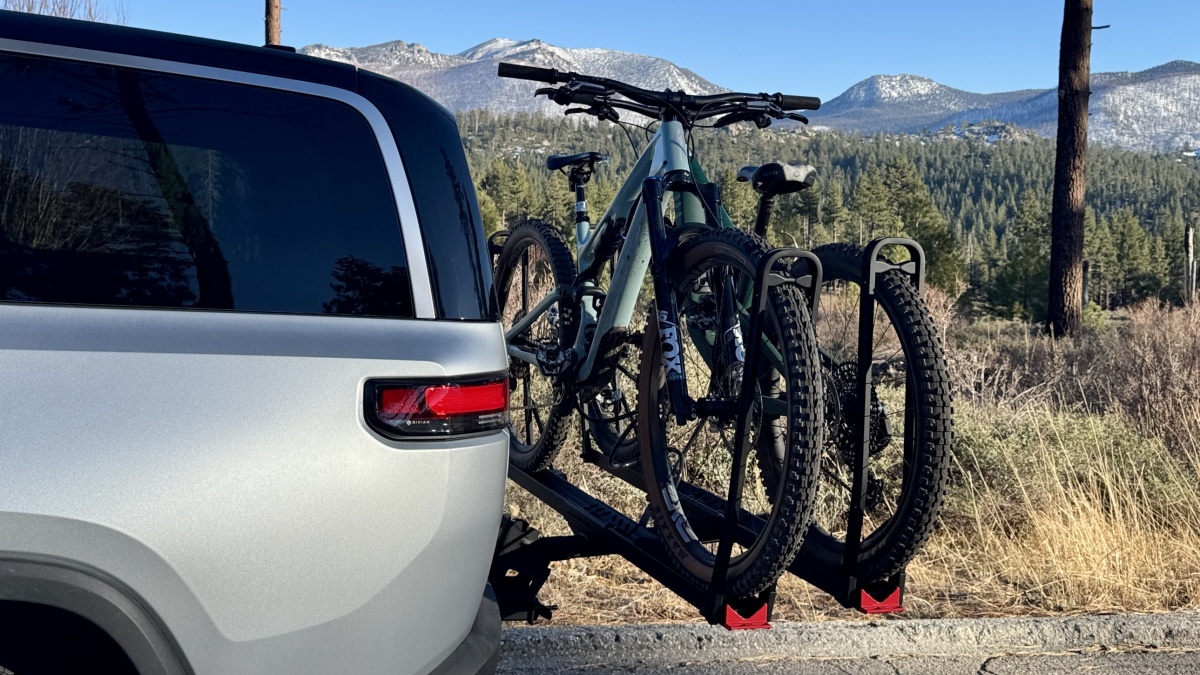
The Kuat Piston Pro and Piston Pro X are undoubtedly the premier hitch racks available in 2026, combining a nearly effortless loading process with a rock-solid hold that never touches your bike’s frame. By gripping only the tires, these racks eliminate the risk of abrasions on delicate paint or structural damage to carbon rims, while the hydro-pneumatic arms can be deployed with a single hand or a quick tap of the integrated foot pedal. Adjusting the wheel chocks for different sizes is entirely tool-free and takes only seconds, allowing you to stagger bikes in either direction to prevent handlebar interference.
The Piston Pro X stands as the ultimate luxury choice, featuring a signature Galaxy Gray finish, genuine Kashima-coated struts, and magnetic LED brake lights that sync with your vehicle. However, the standard Piston Pro earns our Editor’s Choice award by offering the same mechanical utility in a sleek Sandy Black finish for roughly $300 less. Both racks support up to 67 pounds per tray and fit wheelbases up to 53 inches, making them compatible with almost any electric fat bike or long-slung enduro rig. For those needing even more versatility, the system can be expanded with an add-on to hold up to four bikes, and a dedicated ramp is available to help roll heavy e-bikes into position without any heavy lifting.
SPECIFICATIONS
Style Hitch (tray) Bike Capacity 2 (Up to 4 with add-on) Lock? Locking hitch pin, security key, and 12mm security cable Rack Weight 62 lbs 11 oz Max Weight Per Bike 67 lbs (42 lbs RV) – dedicated 2″ receiver version only, 60 lbs per bike – 1.25″ receiver version The Kuat Piston Pro series justifies its high price through elite security and durability, outperforming the Thule T2 Pro XTR in both loading speed and rim protection. While the Piston Pro X’s integrated LEDs offer a significant safety advantage if your bikes obscure your taillights, its smooth finish also sheds road grime more effectively than the standard Piston Pro’s bead-blasted surface. Winter travelers should carry a deicer for the Piston Pro, as its ratchet arms are more prone to freezing in icy conditions than the Pro X. Despite these minor distinctions, both racks earn our full recommendation for their superior engineering and effortless operation.
Read more: Kuat Piston Pro review
Exceptionally easy to use with unrivaled versatility, the Piston Pro sets a new standard for hitch racks. Credit: Matt Lighthart
Most Durable Hitch Rack
1Up Super Duty
PROS
All metal construction
Can accommodate a 58″ wheelbase
100 pounds per tray
Expandable and repairable
CONS
Less User-friendly than the Kuat Piston racks
Not the most Secure
The 1Up Super Duty is a specialized dual-tire hold rack featuring a rock-solid, all-metal construction that never touches your bike’s frame. By gripping only the tires with its signature bent wheel arms, this rack eliminates the risk of abrasions on delicate paint or structural damage to carbon rims. The updated Super Duty design includes a “Domino” lever that disengages the ratchet mechanism with a single hand, enabling the arms to glide freely for faster loading. Adjusting the wheel bars for different tire sizes is a bit more involved and requires tools, but bikes can freely move fore or aft to prevent handlebar and saddle interference.
The Super Duty stands as the ultimate choice for heavy-duty hauling, featuring a rugged, industrial aesthetic available in either a classic Silver anodized or a stealthy Black powder-coat finish. Unlike luxury racks that rely on integrated electronics and struts, the 1Up prioritizes pure mechanical durability with no plastic parts and a whopping 100-pound weight capacity per tray. This allows it to easily support the heaviest electric fat bikes or long-slung enduro rigs with wheelbases up to 58 inches. For those needing more versatility, the system can be expanded with add-ons to hold up to four bikes, and a specialized V-Style Ramp is available to roll heavy e-bikes into position without any heavy lifting.
SPECIFICATIONS
Style Hitch (tray) Bike Capacity 2 (Up to 4 with add-on) Lock? Locking hitch pin Rack Weight 65 lbs Max Weight Per Bike 100 lbs The 1Up USA Super Duty justifies its premium price through “bombproof” industrial durability and a class-leading weight capacity, outperforming the Kuat PIston Pro in structural rigidity and off-road survivability. Available with an industrial-looking, silver anodized finish, which is legendary for its ability to hide trail scuffs and resist road salt, or a black anodized finish that looks a bit more like a polished product. Unlike racks that rely on complex internal ratchets or hydraulic struts that can seize in sub-zero temps, the Super Duty’s simple friction-based glide bars are virtually immune to freezing, making it the superior choice for winter fat-biking. Despite its utilitarian look, the rack earns our highest recommendation for its mechanical simplicity, high weight limit, and “forever-rack” repairability.
Read more: 1Up Super Duty review
Once you get the hang of the “dominoes”, the loading process is fairly simple. Credit: Matt Lighthart
Best Mid-level Hitch Rack
Thule T2 Pro XTR
PROS
User-friendly tilt mechanism
Heavy-duty build
Fits tires up to five inches wide
Ample space between trays
Tool-free attachment and removal
3″ of tray adjustment laterally
The Thule T2 Pro XTR remains a perennial favorite in 2026, prized for its ergonomic design and 60 pounds per tray capacity, which handles most mountain and gravel bikes with ease. Its wide trays natively support tires up to five inches, while the intuitive one-handed ratcheting arm makes loading a breeze. One of its most underrated features is the integrated wheels on the base, which let you roll the 52-pound unit across your garage floor instead of lugging it.
Thule recently introduced the Thule Verse as a successor, offering a longer 53-inch wheelbase limit and sliding trays to prevent handlebar-to-saddle interference. However, the Verse relies more heavily on plastic components, lacks the built-in transport wheels (they are now a $50 accessory), and carries a higher price tag. Unless you specifically need the extra wheelbase for a long-slung enduro rig, the T2 Pro XTR continues to offer better value and superior out-of-the-box convenience.
SPECIFICATIONS
Style Hitch (tray) Bike Capacity 2 (Up to 4 with add-on) Lock? Yes Rack Weight 51 lbs Max Weight Per Bike 60 lbs The Thule T2 Pro XTR features a convenient tilt-release lever at the end of the main support arm, allowing you to easily access your vehicle’s hatch even when bikes are loaded. For those needing to haul a group, the T2 remains our favorite platform for carrying four bikes when paired with the XT 2-Bike Add-On. A standout benefit of the XTR model is the integrated transport wheels on the base, which make maneuvering this 52-pound rack around your garage much easier. Interestingly, the newer Thule Verse lacks a four-bike expansion option and requires you to purchase transport wheels separately.
While no high-quality hitch rack is truly “cheap,” the T2 has transitioned from a flagship model to a solid mid-level offering as newer, ultra-premium racks enter the market. It remains a heavy and somewhat bulky unit to store, but its overall performance is hard to beat for the money. As one tester noted, the T2 delivers the quality and performance you can get at this price point. If the T2 is still outside your budget, the RockyMounts MonoRail is our top value-oriented recommendation, while the lightweight Allen Deluxe 2-Bike is the best choice for those on an absolute shoestring budget.
Read more: Thule T2 Pro XTR review
The Thule T2 has a long been a favorite bike rack of ours, while some more expensive racks have bested it recently we still think it is one of the best bike racks. Credit: Natalie Kafader
Best Bang for the Buck Hitch Rack
RockyMounts MonoRail
PROS
Reasonably priced
Highly versatile
Solid construction
User-friendly tilt release
Includes locks
CONS
Requires some assembly
Tight clearance to the vehicle
The RockyMounts MonoRail remains our top value pick for 2026, offering features and performance that rival racks twice its price. Securing bikes solely by the wheels keeps your frame untouched and pristine. Its versatility is a standout, featuring adjustable trays and strap extenders that accommodate everything from narrow road tires to 5-inch fat bike treads. At just 39 pounds, it is significantly lighter and easier to store than heavyweights like the Thule Verse, yet it still includes premium features such as a one-handed tilt release, a 6-foot cable lock, and a locking hitch pin. As tester Pat Donahue noted, the design is impressively user-friendly without being over-engineered, making it a perfect choice for riders who want reliable security and ease of use on a budget.
SPECIFICATIONS
Style Hitch (tray) Bike Capacity 2 Lock? Yes Rack Weight 44 lbs 2 oz Max Weight Per Bike 60 lbs The MonoRail feels relatively sturdy, with a solid metal receiver arm, support arm, and trays. However, a bit of plastic—especially in the wheel trays—may prove to be less durable when used year-round. While functional, the rack uses a standard bolt to attach to your vehicle’s hitch, making it less convenient and secure than the tool-free, locking systems on some competing racks. Still, the MonoRail delivers excellent performance for the price. If you want a plastic-free alternative, the 1Up Quik Rack is a highly durable choice. Another strong option is the Yakima StageTwo, which features an ergonomic tilt handle and is especially easy to use.
Read more: RockyMounts MonoRail review
The MonoRail is one of our favorite platform bike racks; this one has spent years in service and proved durable. Credit: Abriah Wofford
Best Roof Rack
Thule UpRide
PROS
Extremely secure hold on your bicycle
No frame or fork contact
Very little chance of failure
Easy installation
CONS
Functions best on vehicles with lower roofs
Lock cores sold separately
Need to lift the bike to load
The Thule UpRide is a high-quality rack packed with useful features. For those accustomed to more traditional fork-mount roof racks, the UpRide may seem like an odd design. Removing your front wheel isn’t necessary, and the bike is secured by two counteracting cradles, or hoops, that squeeze the front wheel from both directions. This wheel-holding design ensures no contact with the frame or the bicycle’s fork, providing an exceptionally secure hold. Perhaps more importantly, the absence of frame or fork contact makes this an excellent choice for riders with fancy carbon frames or those who take pride in the cleanliness or appearance of their bike. While other designs can lead to scuffing on the fork or top tube, your beloved bike will be safe and pristine on the UpRide.
SPECIFICATIONS
Style Roof Bike Capacity 1 Lock? Available but not included Rack Weight 17 lbs Max Weight Per Bike 44 lbs While we appreciate the secure hold provided by this rack, it may require adjusting for the appropriate wheel size if you frequently switch between bikes. “During testing, I felt this like the inconvenience slightly detracted from its user-friendliness,” remarked one tester. As the rack is located on the roof, you must lift your bike to roof height to load it, making it more suitable for lower vehicles and lighter-weight bikes. Lock cores are not included but can be purchased separately. If you’d rather skip the heavy lifting and load your bike more easily, the Yakima StageTwo bike rack fits practically any tire size and is one of the more user-friendly models for everyday use.
Read more: Thule UpRide review
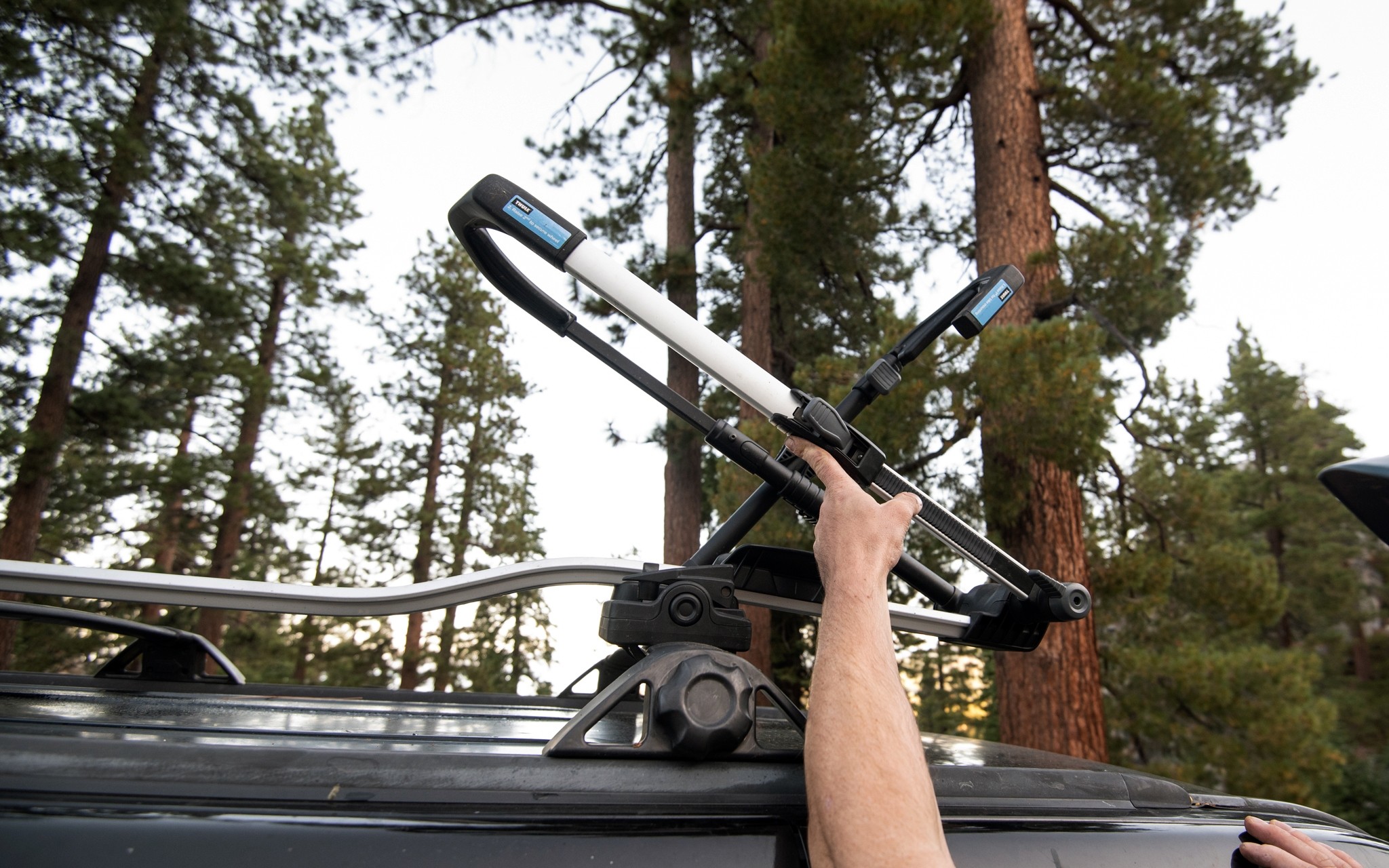
Despite the complex looks, this rack comes completely assembled. You just need to attach it to your roof bars. Credit: Jenna Ammerman
Best Trunk Rack
Thule Outway Hanging 2
PROS
Lightweight
Folds small for transport or storage
More stable than other trunk racks
More security features than other trunk racks
CONS
Frame contact
Assembly more involved
33 lbs per bike weight limit
May not work with all frame styles and designs
Thanks to smart design features that solve common trunk rack issues, I was impressed by the Thule Outway Hanging 2 in testing. Weighing 18.3 lbs, it’s lightweight and folds down small for easy transport or storage. After the initial setup, I found it quick to install and remove thanks to its unique attachment system. “For a hanging rack, this is the most stable and secure trunk rack I’ve ever used,” said tester Jeremy Benson. It holds up to 33 lbs per bike, with adjustable horizontal arms for better fit. Ratcheting straps and anti-sway stabilizers keep bikes secure and steady during transport. Instead of nylon webbing, the Outway uses locking steel cables to attach to your vehicle, plus a built-in lock to protect your bikes and the rack. A 3-bike version is also available.
SPECIFICATIONS
Style Trunk Bike Capacity 2 Lock? Yes Rack Weight 17 lbs 1oz Max Weight Per Bike 33 lbs While I loved the Outway Hanging 2, it shares the same limitations as most trunk racks. Its lower weight limit and design work best with lighter bikes with horizontal top tubes (unless you add the Thule Frame Adapter). It fits many vehicles, but not all—check compatibility using Thule’s Fit My Car tool. Some bike-on-bike contact may be unavoidable depending on your bikes’ sizes and shapes. Still, if it fits your setup, this is the best trunk rack we’ve tested. For heavier e-bikes, we recommend a more robust option like the Yakima StageTwo, which supports up to 70 lbs per tray.
Read more: Thule Outway Hanging 2 review
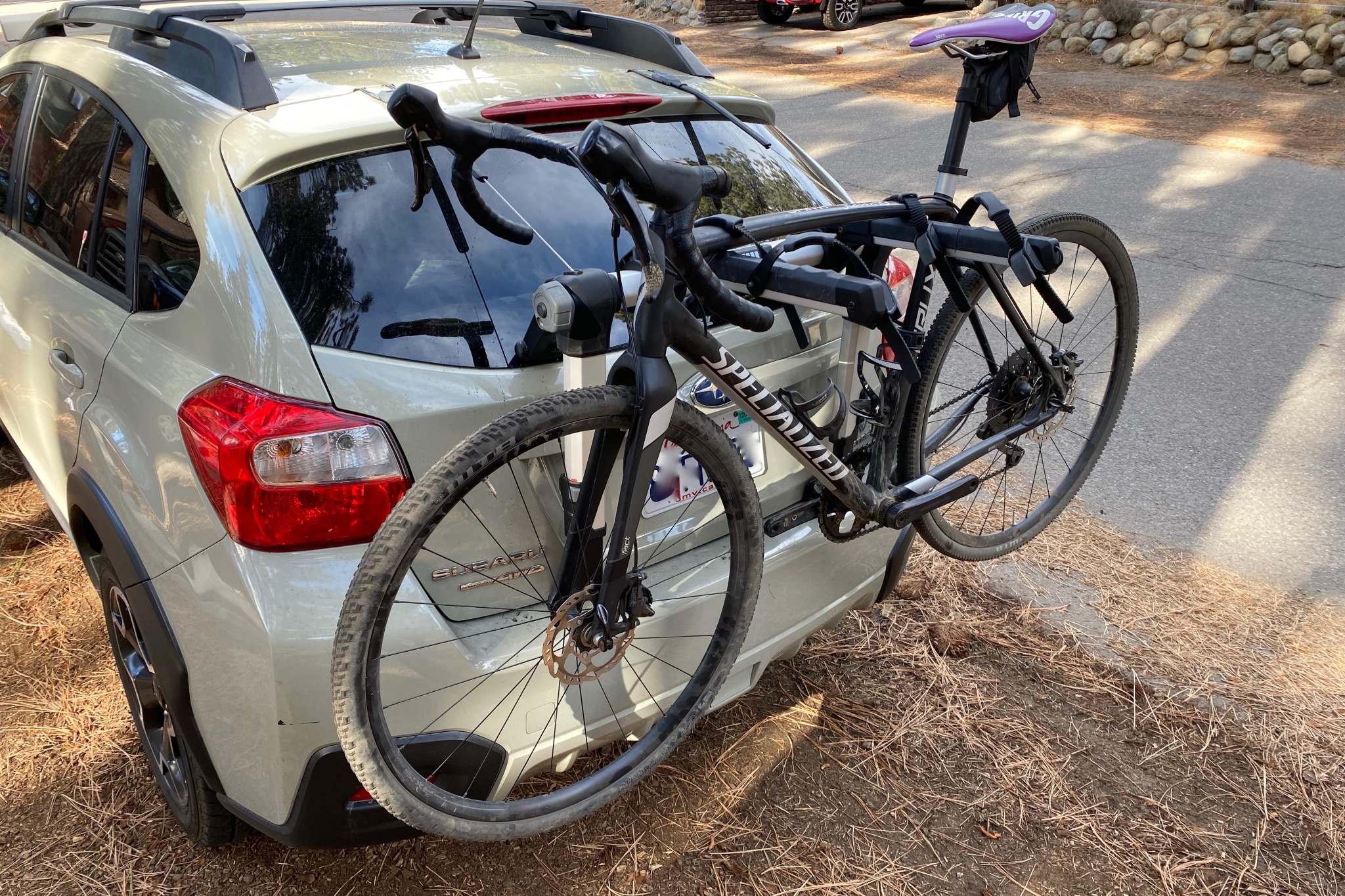
Trunk mount bike racks have inherent limitations, but we feel the Thule Outway is the best we’ve tested. Credit: Jeremy Benson
Best Trunk Rack on a Tight Budget
Allen Deluxe 2-Bike Trunk Carrier
PROS
Very inexpensive
Lightweight
Collapses small for storage
No assembly required
CONS
No security features
Lacks adjustability
Bike frame contact
The Allen Deluxe 2-Bike is an affordable, basic trunk-mount rack that fits many cars and SUVs. It holds two bikes with a total weight of up to 70 lbs. When fully assembled, it takes just one step to get ready. Five straps with rubber-coated hooks secure it to the trunk’s top, sides, and bottom. Rubber frame cradles hold bikes by the frame, fastened with nylon straps and plastic buckles. Its design works best with traditional bike frames. Weighing only 7 lbs 9 oz, it folds compactly for easy storage.
SPECIFICATIONS
Style Trunk Bike Capacity 2 Lock? No Rack Weight 7 lbs 9 oz Max Weight Per Bike 35 lbs Given its very low price, the Allen Deluxe 2-Bike is understandably basic. The rack and bike support arms are fixed, offering little to no adjustability for different vehicles or bike frames. This design may not fit all bike styles, especially some full-suspension mountain bikes. It also lacks security features—locking the rack or bikes isn’t possible. One tester noted, “All told, I feel this is a good option for the infrequent user searching for a simple and affordable trunk-mount rack.” The Outway Hanging 2 is a better choice if you want a trunk rack with more adjustability and security.
Read more: Allen Deluxe 2-Bike Trunk Carrier review
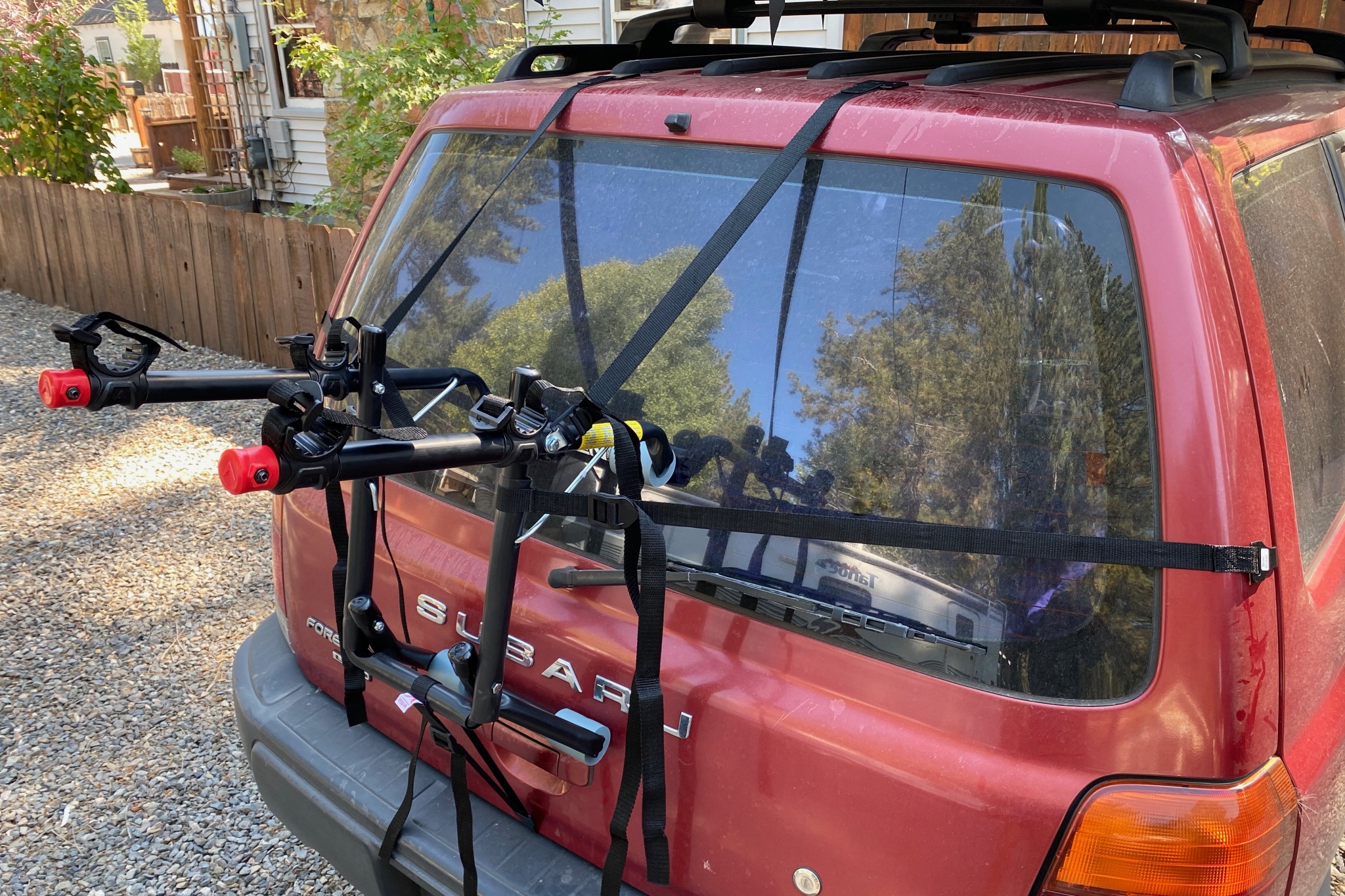
This rack is quite easy to attach to and remove from the vehicle with 5 straps that hook into the top, sides, and bottom of the trunk or rear hatch of the vehicle. Credit: Jeremy Benson
Best for Mountain Bike Shuttles
North Shore NSR-6
PROS
Huge carrying capacity
Ample ground clearance
Bikes sit relatively close to the bumper
No seatpost/handlebar interference
CONS
Only compatible with bikes with suspension forks
Somewhat pricey
Heavy and large
Lacks security features
Fork cradles can damage the paint over time
If you need to haul a lot of mountain bikes, the North Shore NSR-6 is an obvious choice. It can carry six (yes, six) bikes using a vertical/hanging orientation. This is a slick rack best suited for pickups or large SUVs. North Shore did an excellent job designing this product to eliminate virtually all interference between bikes. Even on super bumpy roads, there is no need to worry about handlebars bumping into saddles or a dropper seat post. Ground clearance is also excellent, making it a prime option for shuttle laps or when you’ll be on rougher roads. It can carry up to a whopping 360 pounds, so you can load this thing up with downhill or electric mountain bikes with little worry about overloading. The sturdy construction is all metal and feels built to last. It also comes in a 2-bike or 4-bike configuration, cheaper than the 6-bike version tested here.
SPECIFICATIONS
Style Hitch (hanging) Bike Capacity 6 Lock? No Rack Weight 68 lbs Max Weight Per Bike 60 lbs This rack is not without its eccentricities. The NSR-6 has a much narrower variety of applications than other racks. It’s specifically designed for mountain bikers. DH and Enduro riders will be pleased, but roadies and hybrid bikers won’t be able to load their bikes on the suspension fork crown mounts. BMX, road, gravel, and rigid hybrid cycles are not supported either. Furthermore, shorter cyclists may have difficulty loading this rack. “Loved the rack but found it quite heavy and cumbersome, with a bulky and awkward shape that’s difficult to move and store,” said tester Pat Donahue. For a shuttle rack that is easier to load, check out the Velocirax 6X, we felt the 6 bike model was a bit too cramped but they have 4 and 5 bike models with sufficient space between bikes and a clever loading system.
Read more: North Shore NSR-6 review
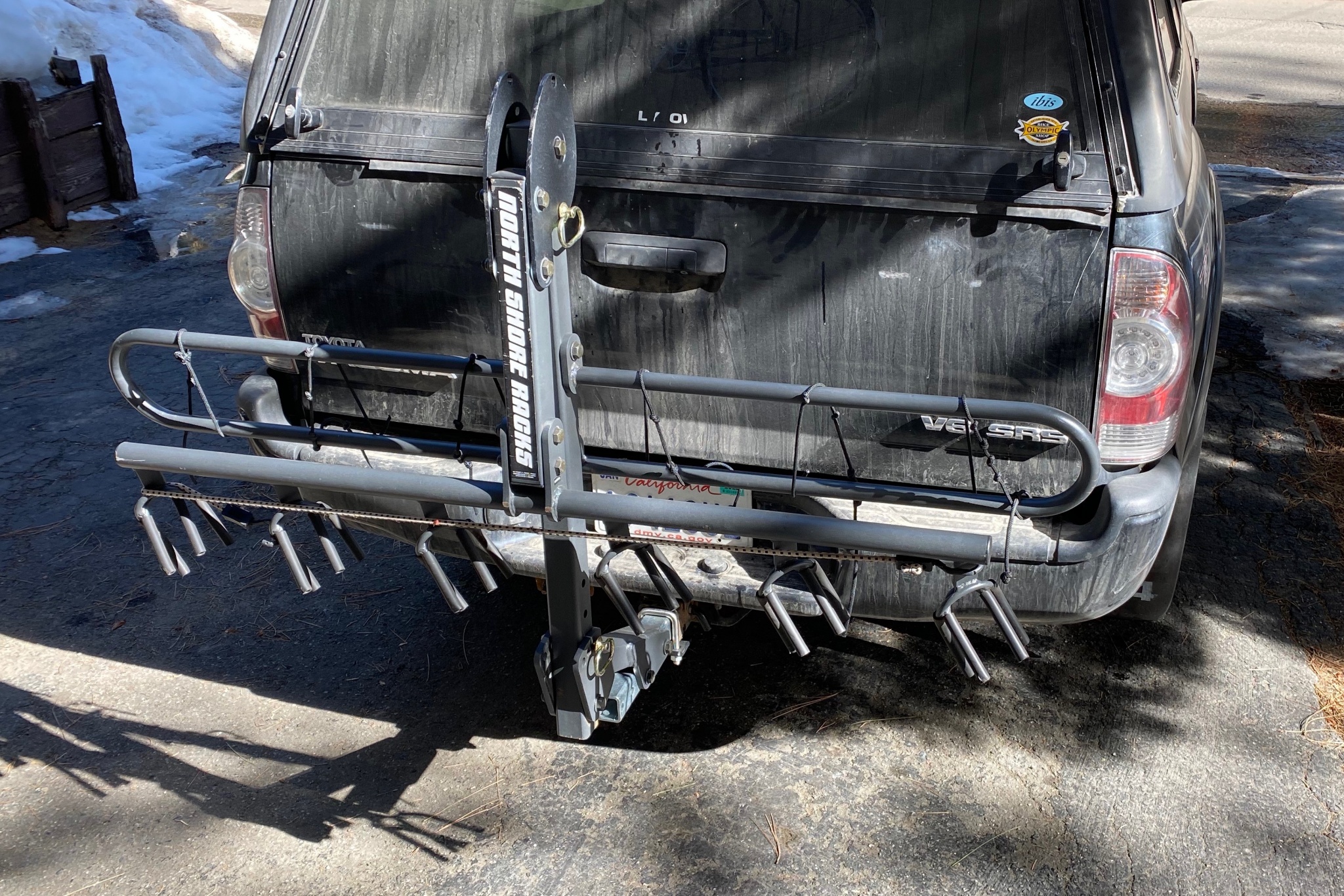
When not in use, the NSR-6 folds down roughly in half at the hinge in the main mast. Credit: Jeremy Benson
Best Swing-Away Rack
RockyMounts BackStage Swing Away Platform
PROS
Swing-away design
One-handed tilt mechanism at the rear of the rack
3″ of lateral tray adjustment
Locks included
CONS
Heavy
Expensive
Requires tools for installation and removal
Limited tray/vehicle clearance
Suppose you’ve been bitten by the travel bug or drawn into the “van life” scene to chase endless biking adventures. In that case, you’re probably already aware of the possible difficulties of transporting bikes on your travel rig. RockyMounts has you covered with the BackStage platform bike rack, which can swing out of the way and is designed to meet the specific requirements of the contemporary van-dwelling nomad or anyone who wants easier access to the back of their vehicle. All of the other hitch-mounted racks we tested interfered with using the back doors of a van, even when tilted down. The BackStage has an impressive tilt mechanism that can be reached at the back of the rack, but the show’s star is the arm.
SPECIFICATIONS
Style Hitch (tray) Bike Capacity 2 Lock? Yes Rack Weight 60 lbs 3 oz Max Weight Per Bike 60 lbs We still have some gripes with the BackStage, though. The tray clearance from the vehicle is somewhat cramped, so bikes with very wide handlebars need to be placed in the outside tray, and the rack itself can be cumbersome due to its weight and size. Despite its imperfections, I still think this is a great option for those needing easier access to the back of their vehicle. I also feel it is a good value, as other brands sell pivoting swing-away accessories that can add several hundred dollars to the price of an already expensive rack system. The Thule UpRide may be a better route for those with low vehicle clearance and roofs. The roof rack design means you have unobstructed access to your trunk, and it will leave some money in your pocket for gas to get to the trailhead.
Read more: RockyMounts BackStage review
The Backstage’s pivoting feature makes accessing the rear of your SUV, truck, or campervan quick and easy. Credit: Abriah Wofford
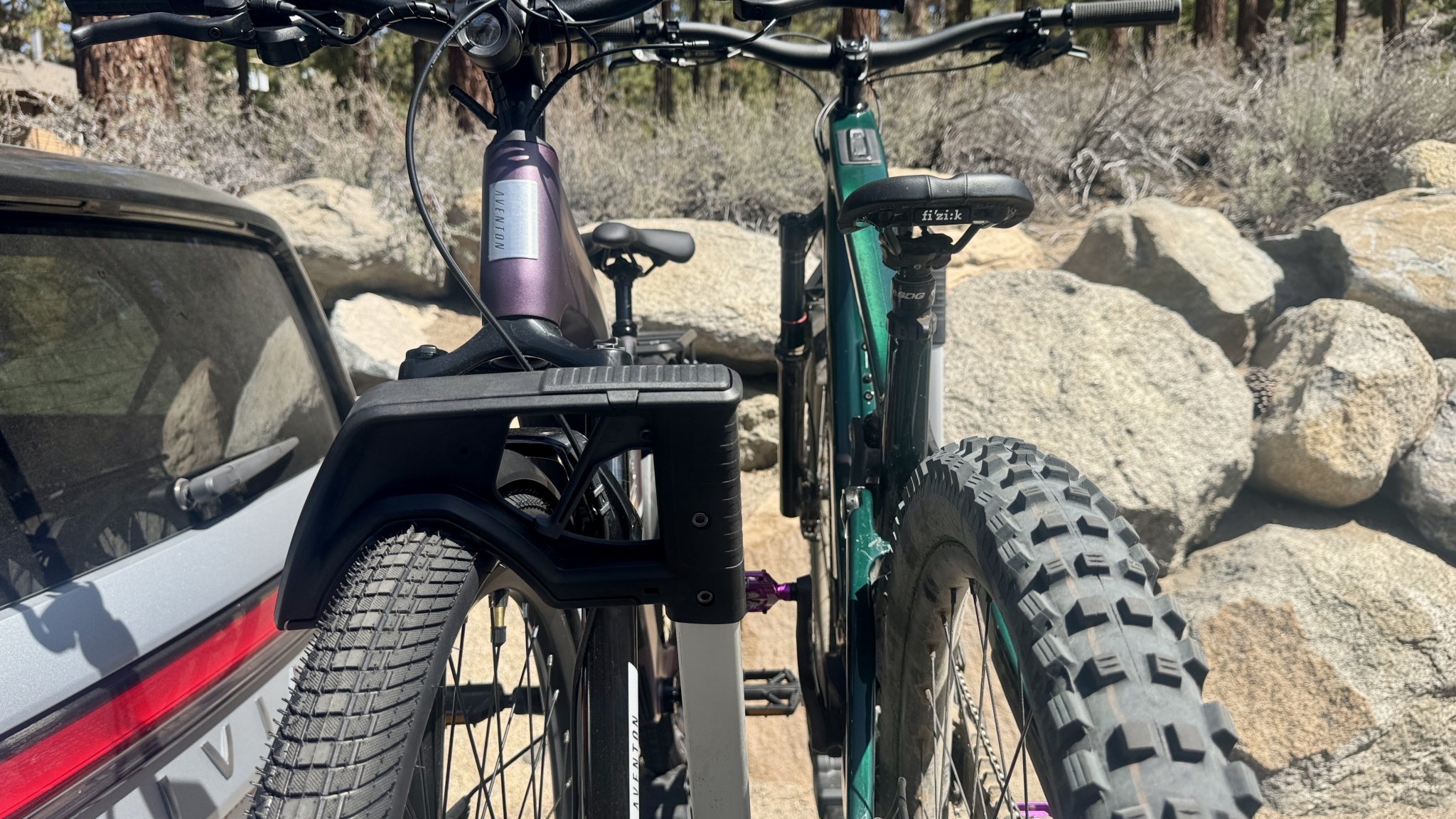
Generous spacing between bikes makes the Verse a good option for bigger mountain bikes. Credit: Joshua Hutchens
I led our team of bike gurus through extensive research before purchasing and testing this fleet of racks, in addition to keeping an ear to the ground on what’s new in the cycling world. We loaded and unloaded as many bicycles as feasible. We tested each rack on drop bar road cycles, hardtail mountain bikes, full-suspension bikes, and e-bikes to see how it worked with each style. Following that, we drove around… a lot. We drove on various roads, from fast and straight freeways to bumpy mountain roads leading to trailheads and distant gravel excursions. We thoroughly evaluated each rack based on performance metrics, such as ease of use and removal.
I then took notes from all our testers and compiled the full assessment on each metric below.
See our full How We Test article for more detailed information on how we tested.
Why Trust GearLab
This review is led by senior bike editor Joshua Hutchens and multi-disciplinary bike racer Curtis Smith. Joshua is a lifelong cyclist and long-time Lake Tahoe resident with experience in almost every cycling discipline and the bike industry. He’s traveled the world guiding cycling trips, owned and operated retail bicycle shops and an indoor bicycle park, and works as a professional mountain bike coach. He’s passionate about sharing his love for two-wheeled exploration with the world and grateful for the opportunity to share his observations and testing results.
Our testers have deep knowledge of racks and how they’ve evolved. Pat Donahue also provides his expertise to this review. He is a mountain bike fiend with experience with all types of bike racks, from trunk racks to full-size racks, over his cycling career. He is also skilled in the art of breaking stuff, so he’s particularly adept at evaluating durability.
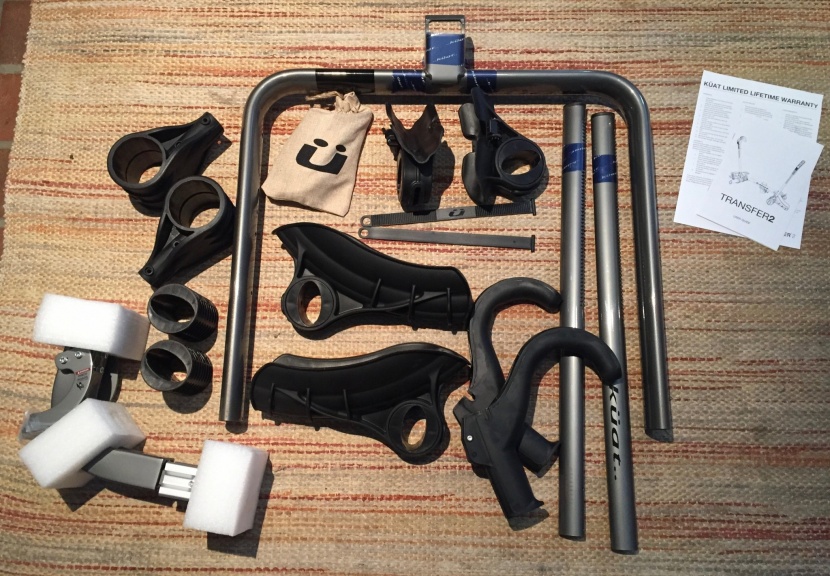
We assemble each rack ourselves at the start of our testing process. Credit: Jeremy Benson
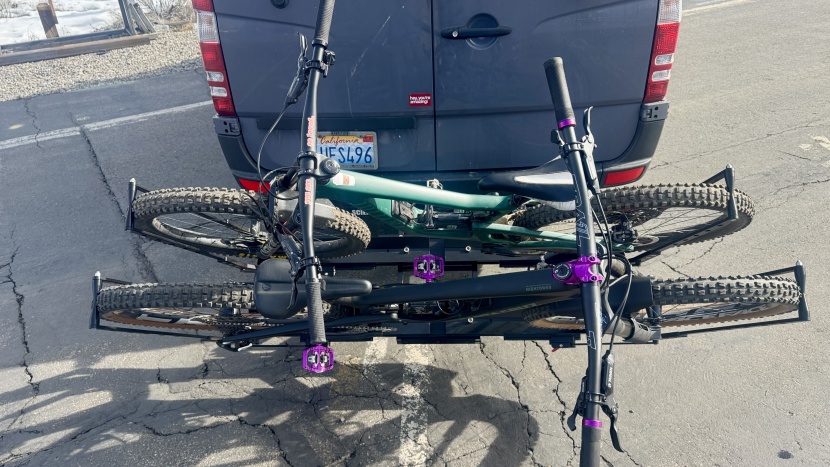
Tilt-to-access is a convenience feature we wouldn’t want to go without, but even a deep drop doesn’t provide access to the bike in a dual-door van. This type of vehicle is better served by a rack with a swing-away platform. Credit: Joshua Hutchens
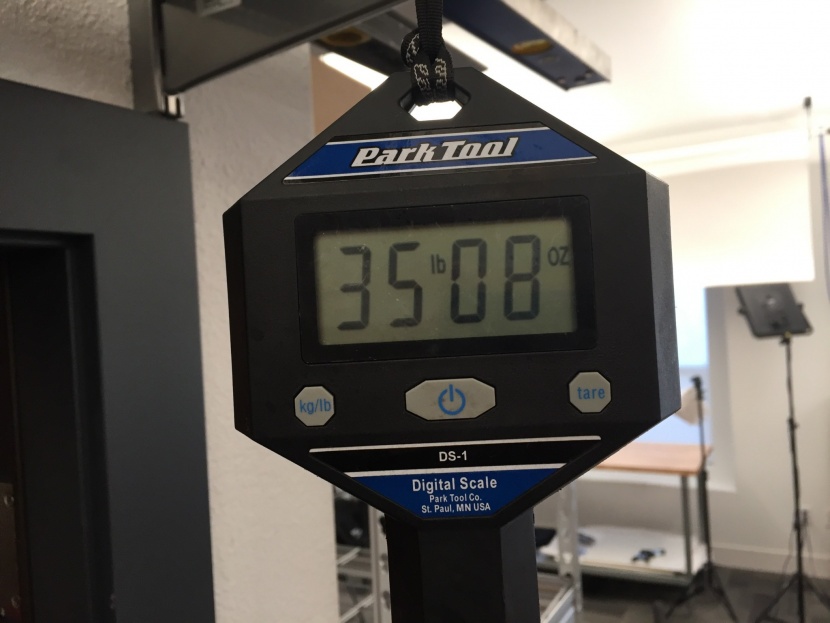
Weight is determined by weighing each rack using our hanging bike scale. Credit: Jeremy Benson
Previous Next
Analysis and Test Results
To ensure our recommendations work for everyone, we tested this lineup across a broad spectrum of vehicle styles. Whether you’re driving a nimble hatchback or a heavy-duty van, we’ve accounted for the wild variations in fit and stability that different vehicles present. We’ve distilled hundreds of hours of testing into specific metrics to guide your decision—here is how each rack performed when the rubber met the road.
A bike rack is a vital investment in your cycling life, acting as the bridge that gets your machine safely to the trailhead. With high-end models often rivaling the cost of a new bike, we recognize that while price doesn’t dictate our performance scores, real-world value is a primary concern for every rider. Whether you are buying in-person at a local shop or ordering online, you deserve to know that your hard-earned money is being traded for a product that offers genuine, long-term “bang for your buck.”
If you’re looking for the sweet spot where performance meets price, the RockyMounts MonoRail remains the undisputed value champion among hitch racks. While it demands a bit more elbow grease during initial assembly, the payoff is a rock-solid, tray-style system that rivals the stability of racks twice its price. With a 2026 retail price holding steady around $550, it’s one of the few “budget” options that safely accommodates heavy e-bikes (up to 60 lbs per tray) while offering a frame-free contact design and integrated locking security.
For those without a hitch or on a shoestring budget, the Allen Deluxe 2-Bike is a nearly unbeatable trunk-mount alternative. Though its design is decidedly bare-bones and lacks the anti-theft tech of premium models, it costs a mere fraction of its competitors—often landing under $65. It is the ideal “occasional use” solution for riders who need reliable transport without committing to a permanent vehicle modification.
Hitch mount tray-style racks like the RockyMounts MonoRail and BackStage make life easy with a low loading height and front wheel clamps that are quick and easy to adjust. Credit: Abriah Wofford
The core philosophy of any good gear is simple: the easier it is to use, the more you’ll actually use it. In the world of bike racks, a user-friendly design means less time wrestling with hardware and more time on the saddle. We evaluate “Ease of Use” through two primary lenses: loading efficiency and vehicle accessibility.
When it comes to loading, we analyze the physical lifting height required and the intuitiveness of the attachment method—whether it’s a modern one-handed ratcheting arm or a more involved manual strap system. For vehicle access, we look at how effectively a rack mitigates the inherent “blockade” of a rear-mounted system. The best 2026 models now feature foot-actuated tilt levers or swing-away hinges that allow you to open a tailgate or hatch without needing to unload your bikes, a feature that separates premium daily drivers from budget alternatives.
At the top of our 2026 leaderboard for effortless operation is the Kuat Piston Pro X. Loading bikes on this rack is essentially a “zero-friction” experience; the platform can be deployed via a foot pedal, and the tire-hold arms snap open with a single button press. It remains the most automated, user-friendly option on the market today.
In contrast, models like the 1Up Super Duty Double require a “choreographed” loading style. Without the automated assist found on the Kuat, you’ll need to balance the bike while manually ratcheting the arms—a process that can feel a bit like a juggling act until you’ve mastered the technique.
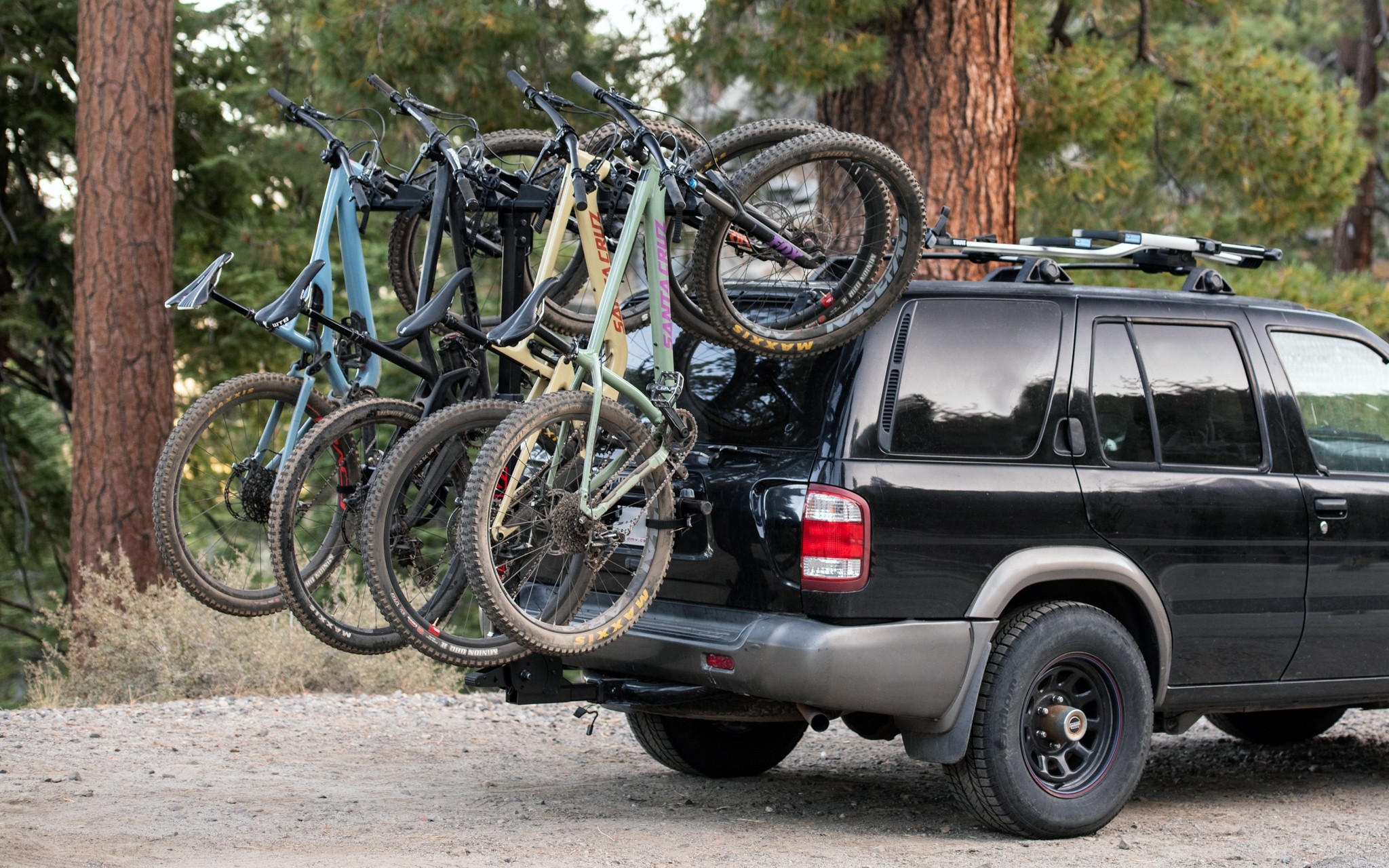
Vertical hitch racks are relatively easy to load and can carry up to 6 mountain bikes. Credit: Jenna Ammerman
The NSR-6 is specifically engineered for the gravity and enduro community. Because of its unique crown-cradle design, there is one non-negotiable requirement: it only works with bikes equipped with suspension forks. This makes it a specialized tool rather than a general-purpose rack, but for mountain bike shuttles, it is arguably the most user-friendly vertical option on the market.
As we move through 2026, e-bikes have transitioned from a growing trend to a dominant force in the cycling world. However, their increased range and power come with a literal heavy price: weight. Hoisting a 50-to-90-pound machine onto a rack isn’t just an inconvenience; it’s a potential back injury waiting to happen, especially after an exhausting ride. Fortunately, rack manufacturers are finally treating weight capacity as a primary feature rather than an afterthought.
The Heavy-Duty Leaders
The Yakima StageTwo is a top-tier choice for the e-bike crowd, boasting a 70 lb weight limit per tray. To save your back, Yakima offers the optional RampUp ($99), which lets you roll the bike directly into the tray rather than lifting it.
The 1Up Super Duty Double rack can hold 100 pounds per tray and includes an optional loading ramp and wheel chock, making loading big bikes a cinch.
The Kuat Piston racks are known for their sleek designs and user-friendly features. Kuat has addressed the e-bike revolution by offering aftermarket ramps compatible with almost their entire catalog.
Value Strategy: If you already own a high-quality rack from one of these brands, adding a ramp is the most cost-effective way to modernize your setup without the expense of a brand-new rack.
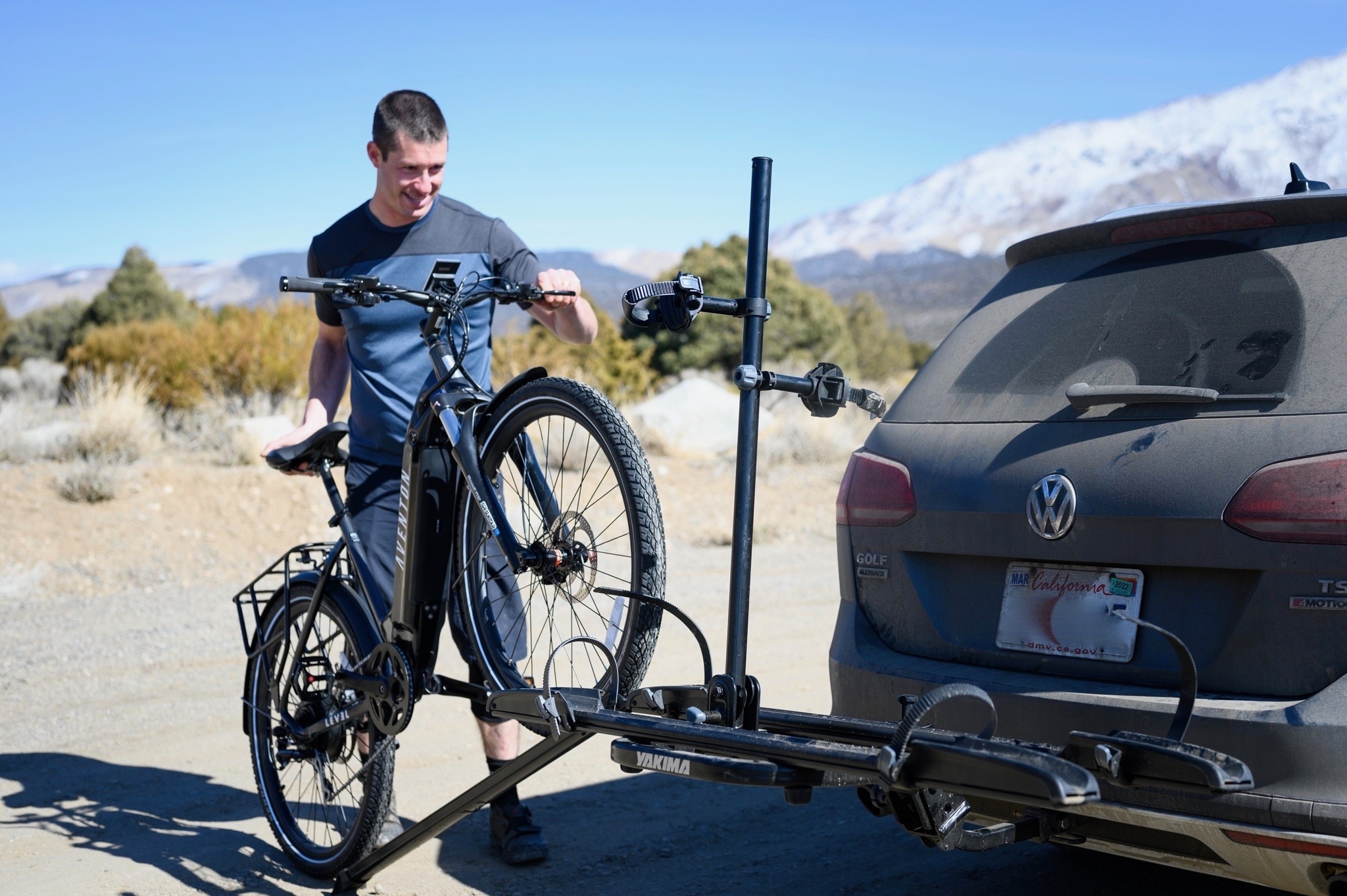
Loading ramps like this one can help with the loading of bikes, especially heavy electric bikes. Credit: Laura Casner
Because roof racks are mounted on the top of a vehicle, the elevated loading height inherently makes them less convenient than hitch-mounted options, which sit much closer to the ground. Despite this hurdle, roof models can still offer a user-friendly experience, particularly with fork-mount designs that reduce the required lifting height by requiring the front wheel to be removed. In contrast, wheel-mount systems like the Yakima FrontLoader let you keep the wheel on but require a more substantial vertical lift to clear the rack’s hardware.
The Thule UpRide stands out as a premium choice in this category, offering a specialized solution for riders who prioritize maximum security and frame protection. By utilizing two cradles that apply counteracting forces to the front wheel, it creates an exceptionally stable hold that virtually eliminates the risk of a bike shifting or falling at highway speeds. Since the system never touches the frame or fork, it is an ideal match for high-end carbon builds. However, because it requires lifting the entire bike to roof height without removing a wheel, the UpRide is most practical when paired with lower-profile vehicles or lightweight bicycles.
Trunk-mount racks generally occupy the lower end of our usability spectrum, largely because they demand a more meticulous attachment process and almost always result in some level of bike-on-bike interference. While the actual lifting height is manageable, the ease of loading depends on your bike’s frame shape, which often forces owners of modern mountain or step-through bikes to use additional adapter bars to keep the wheels level. Despite these category-wide hurdles, the Yakima FullBack and Thule OutWay Hanging distinguished themselves as the top performers in our 2026 testing, offering the most intuitive setups and the most secure cradles available in a strap-based system.
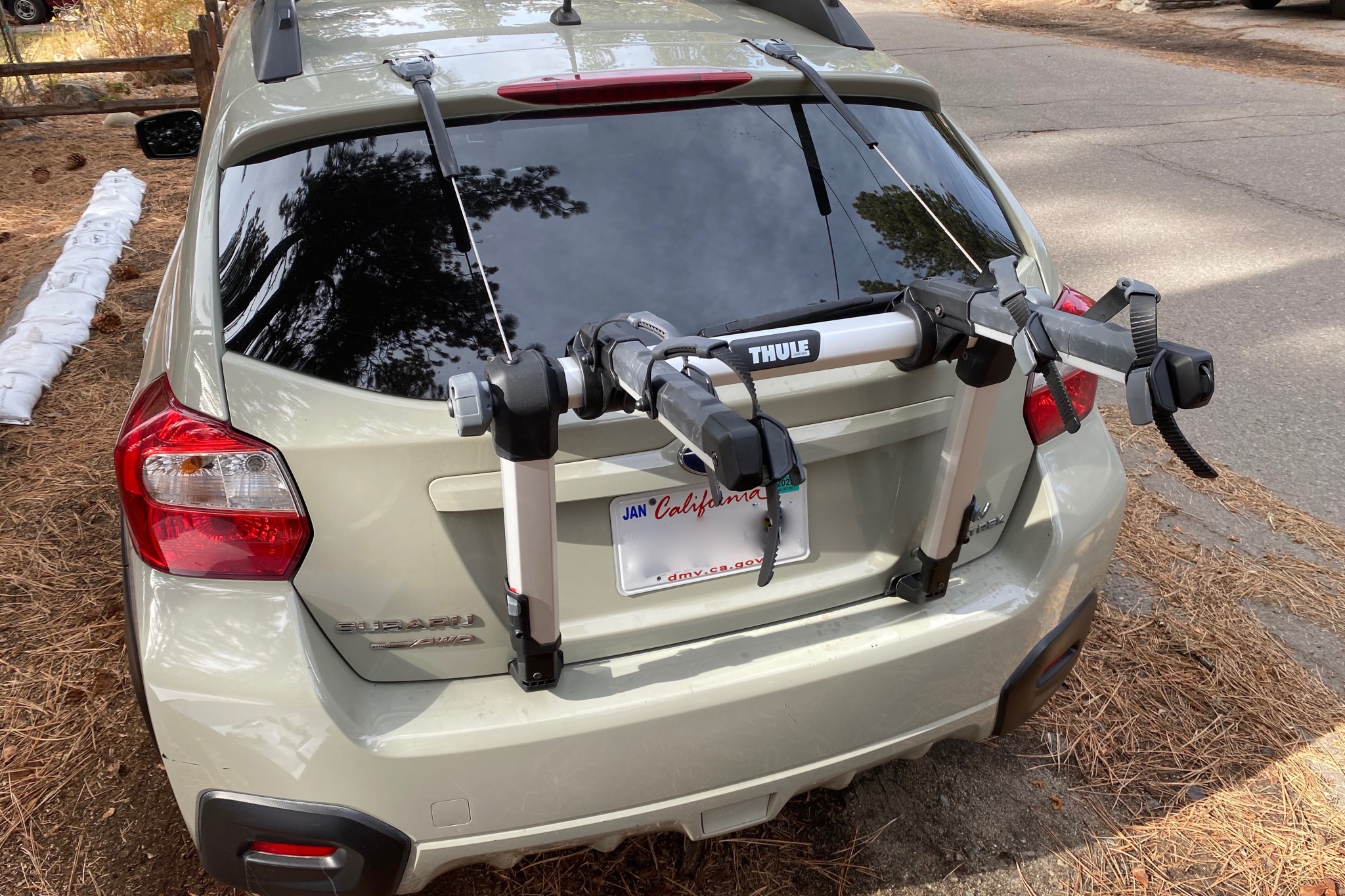
Trunk racks like the Outway Hanging 2 have a fairly low load height, but attaching bikes takes several steps, and they don’t work with all styles of bikes. Credit: Jeremy Benson
While many of us would love to treat our bike racks as permanent vehicle fixtures, the reality of work, errands, and changing seasons means these racks are frequently mounted and removed. This transition can range from a quick, painless task to a grueling chore, depending heavily on the rack’s physical footprint, total weight, and how it secures to your vehicle. In our 2026 testing, we paid close attention to which models allowed for a solo, tool-free installation and which ones required a second set of hands and a dedicated wrench set to get road-ready.
In the world of roof-mounted racks, manufacturers typically design for a “set-it-and-forget-it” user experience, assuming the hardware will remain on the vehicle for long stretches. However, the Yakima HighRoad breaks this mold with an impressively intuitive, tool-free installation and removal process that can be managed entirely by hand. By simply flipping three levers to expose the tightening dials, you can wrap the heavy-duty rubber straps around your crossbars and secure them in seconds. This accessibility makes it a standout choice for those who only want the rack on their roof when they are actually heading to the trailhead.
Once unmounted, the HighRoad’s 18-pound frame is exceptionally easy to handle and store. Its slim, low-profile design allows it to be tucked away on a high garage shelf or stood upright in a tight corner without occupying significant floor space. While other roof models in our 2026 test selection may require a set of hex keys for installation, they generally share the same long, slender footprint that simplifies off-season storage. This ease of removal ensures that you aren’t forced to choose between permanent roof hardware and a fuel-efficient, aerodynamic commute when the bikes stay home.
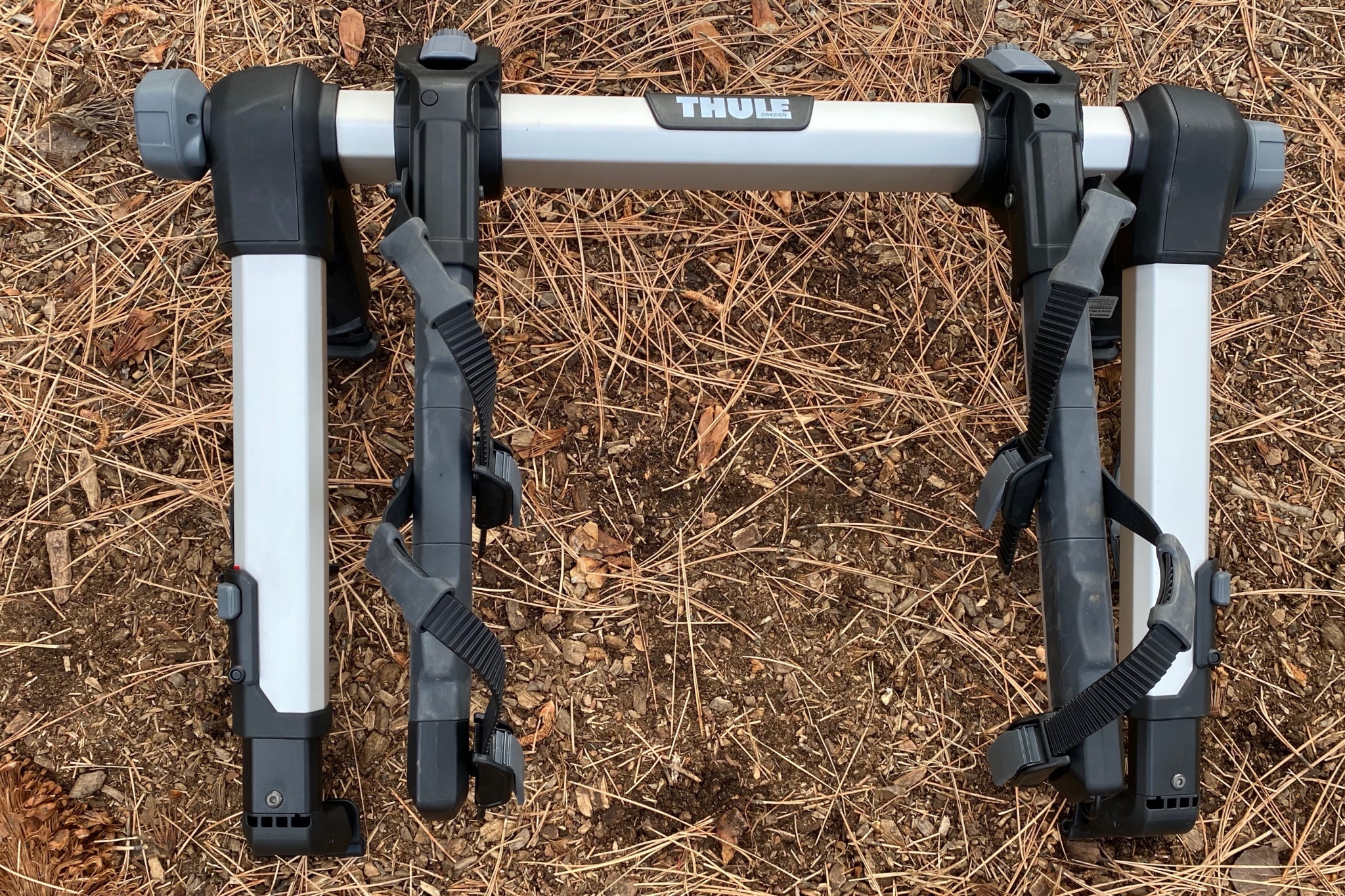
Trunk racks are a good option for many users due to their ease of removal and storability. Credit: Jeremy Benson
Despite their inherent limitations in bike fit and weight capacity, trunk-mount racks remain a favorite among infrequent users due to their lightweight construction and compact storage footprint. The Thule OutWay Hanging 2 stands out with a sophisticated attachment system that utilizes steel cables and torque-limiting knobs, ensuring a secure fit while making the mounting process remarkably fast. Weighing only 18.3 pounds and featuring a highly collapsible design, it is small enough to be stowed in your trunk when not in use or tucked away in a crowded garage without claiming much real estate.
Similarly, once the initial learning curve of the strap configuration is mastered, the Yakima FullBack offers a quick on-and-off experience and convenient portability. While strap-based racks may lack the refined aesthetics of premium hitch systems, their portability and minimal weight make them an incredibly practical solution for riders who only need to transport their bikes occasionally.
The BackStage features a locking adjustment knob to assist in installing and and removing the rack. Credit: Abriah Wofford
Due to their substantial weight and larger physical footprint, hitch-mounted racks are inherently more cumbersome to install, remove, and store than their roof or trunk-mounted counterparts. The 1Up Quik Rack is a notable exception to this rule, offering a clever design where the wheel trays fold in half to significantly reduce its overall size when off the vehicle. This folding mechanism makes it one of the few heavy-duty hitch racks that can be easily managed by a single person and tucked away in a corner of the garage without becoming a major storage obstacle.
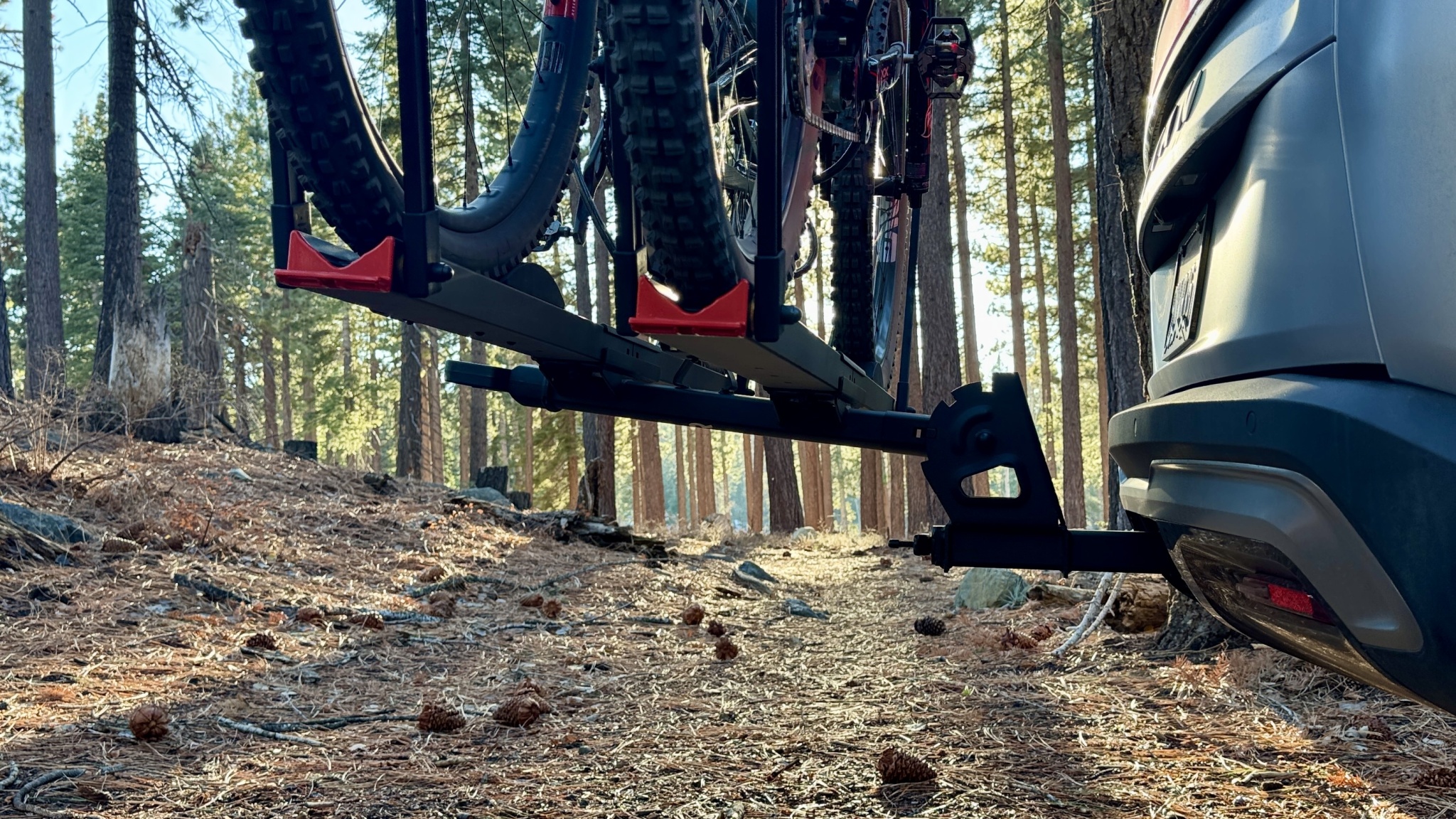
Though not our favorite model overall, the Hollywood CrossTrack 2 is easier to install than some other hitch-style racks, which typically aren’t as convenient to take on and off your vehicle. Credit: Joshua Hutchens
Vertical bike racks occupy the bottom tier of our storage and removal metric for one simple reason: they are absolute units. Because these racks are engineered to haul an entire shuttle crew’s worth of gear, they are inherently gigantic, exceptionally heavy, and incredibly awkward to handle once they are disconnected from your hitch. Navigating a six-bike vertical rack through a standard garage door or down a narrow alleyway feels like a high-stakes game of Tetris where the “prize” is avoiding a collision with your siding or your shins.
Their cumbersome shape makes them nearly impossible for a single person to lug around without risking a mid-back catastrophe. Unless you have a dedicated, wide-open storage area and a willing partner to help with the heavy lifting, these racks are best treated as semi-permanent fixtures. If you plan to perform seasonal removal, we strongly recommend coordinating a team effort to protect your vehicle’s paint and your spinal health. Some manufacturers are now offering a rolling storage stand for these racks, allowing them to serve as a garage bike rack when not mounted to your vehicle.
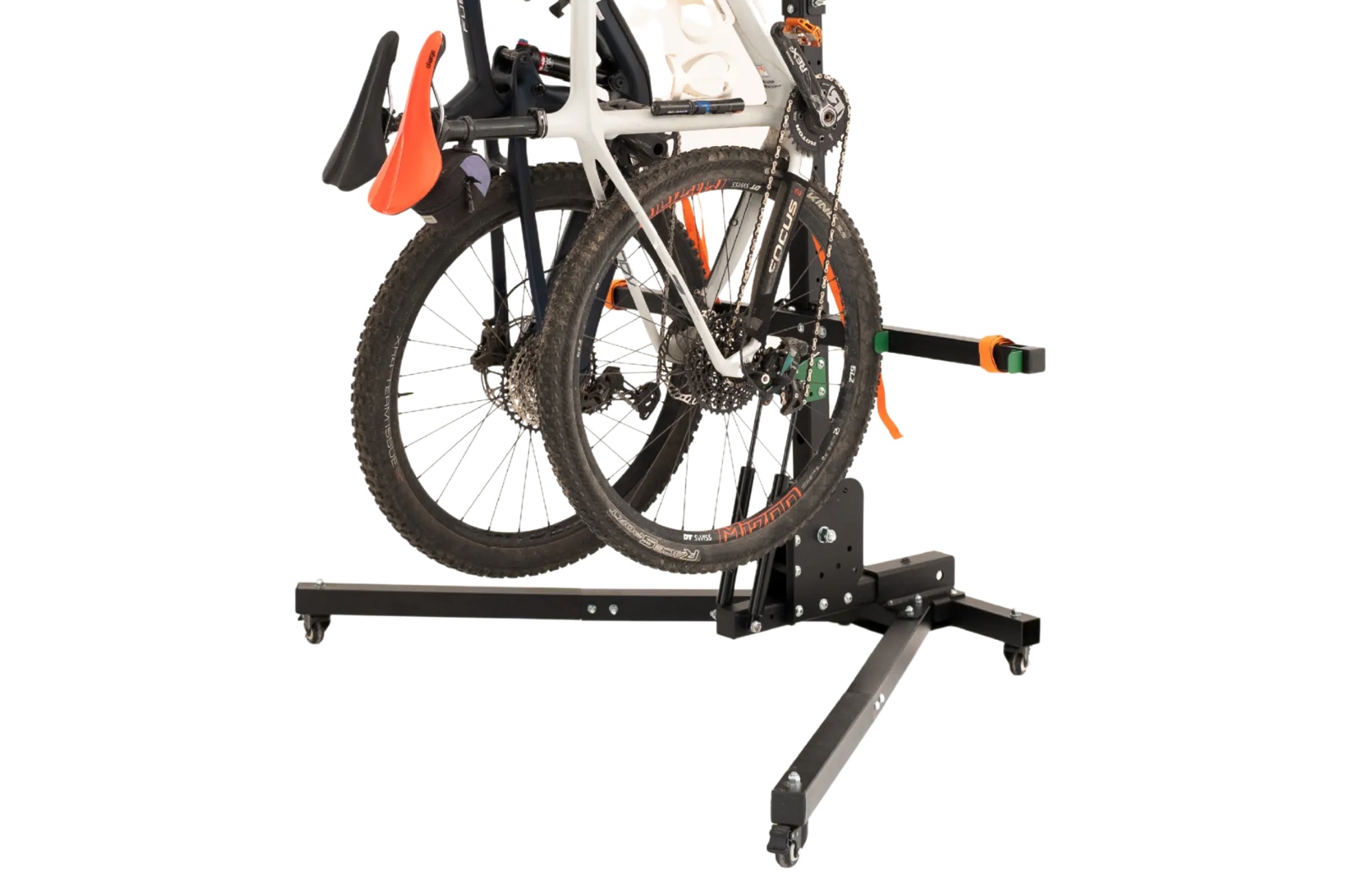
Garage rack holders like this give you a spot to store your bikes while also allowing for easy, rolling movement of your heavy rack. Credit: JBRacks.com
We assess a rack’s versatility by its ability to transport a wide variety of bicycles, as frame shapes, wheel sizes, and tire widths can often create compatibility hurdles. Racks that rely on the frame as the primary contact point typically struggle in this metric because the sheer diversity of modern bike designs—from step-through cruisers to complex full-suspension mountain bikes—frequently makes a secure fit difficult. In contrast, tray-style racks that secure the bike via the wheels offer significantly more adjustability and can natively accommodate a much broader range of tire volumes and wheelbases without ever touching the paint or carbon. The Kuat Piston Pro X is a standout in this category, earning high marks for its adaptable tray configurations and its ability to securely hold tires up to five inches wide.
The Thule T2 Pro XTR, RockyMounts MonoRail, and Yakima StageTwo all excel in versatility, accommodating tire widths up to 5 inches natively. Most of the hitch-mounted tray-style racks in our 2026 test group employ ratcheting arms that secure the front wheel, effectively eliminating frame contact and making unique frame geometry a non-issue. These designs typically feature a sliding rear-wheel strap that adjusts to different wheelbases, ensuring a stable fit regardless of the bike’s size or shape. While these models generally come with a standard two-bike capacity, their modular designs often allow you to purchase rack extensions, providing the flexibility to carry three or four bikes as your needs evolve.
Maximum vehicle capacity is often achieved with a roof-mount configuration, which allows installing several individual units across a single set of crossbars. While each roof-mount rack has a one-bike capacity, the modular nature of the system enables you to scale your total carrying capacity based on the width of your roof. Certain models, such as the Yakima FrontLoader, offer exceptional versatility within this category by utilizing a front-tire clamp rather than an axle-based attachment. This design allows the rack to natively support a wide range of axle standards and wheel sizes without requiring the removal of the front wheel or specialized adapters.
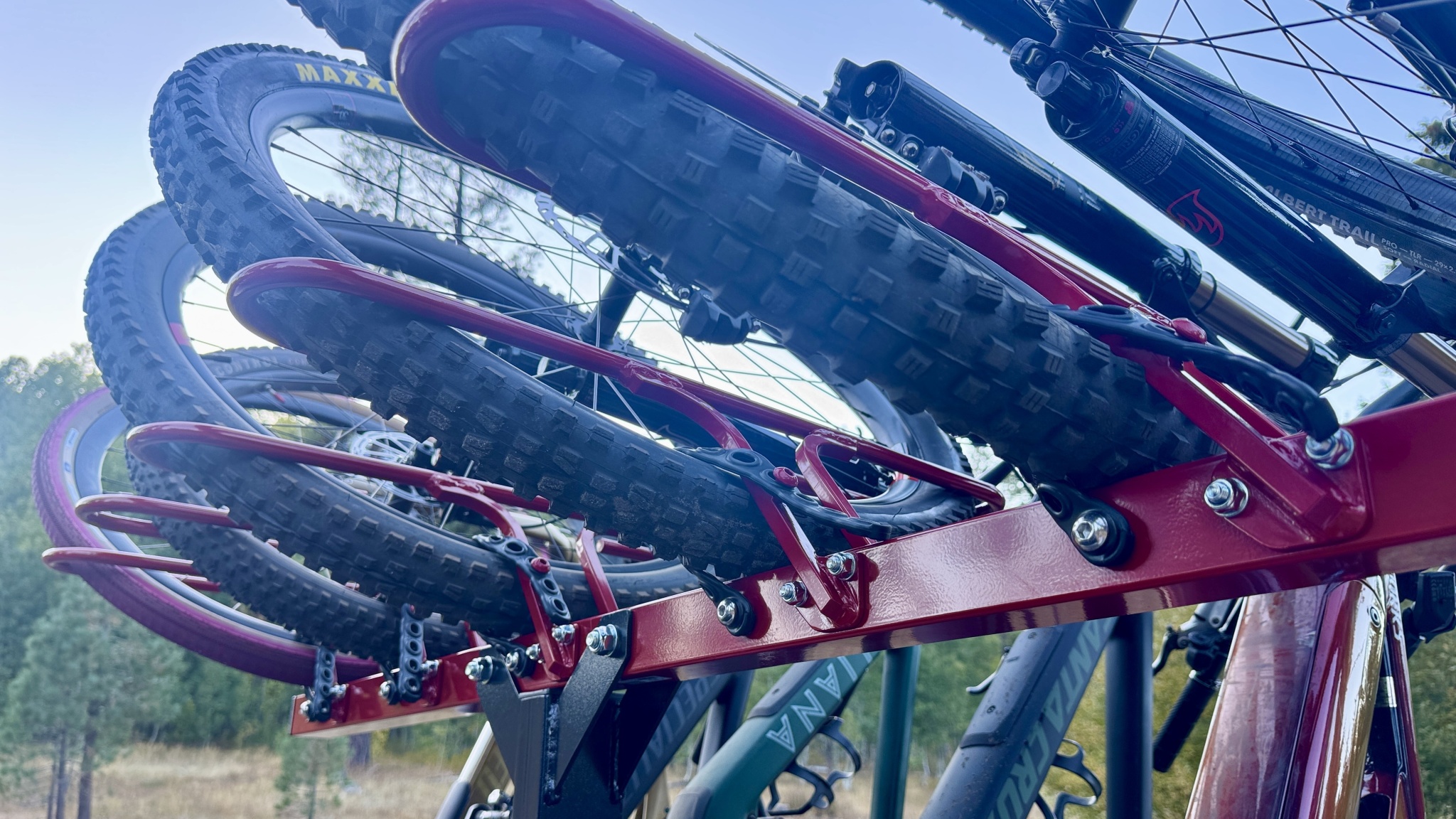
The cradles on the Velocirax give you a fair bit of flexibilitty. Credit: Joshua Hutchens
The North Shore NSR-6 and similar vertical-style racks have become a staple for mountain bike shuttles, yet they offer very narrow versatility. Because they rely on a crown-cradle system, they are strictly compatible with bikes equipped with suspension forks, meaning road, gravel, and BMX bikes are physically unable to fit.
Trunk-mount racks also face significant limitations in versatility due to their reliance on horizontal support arms. These systems are optimized for traditional frames with straight top tubes and often struggle to secure modern mountain bikes or step-through frames without additional hardware. Among those we tested, the Thule Outway Hanging proved the most adaptable in its class, with support arms that can be adjusted laterally to accommodate a broader range of frame geometries. While both the Thule and the Yakima FullBack can transport non-traditional frames with aftermarket frame adapters, they are limited by relatively low weight capacities of 33 and 35 pounds per bike, respectively.
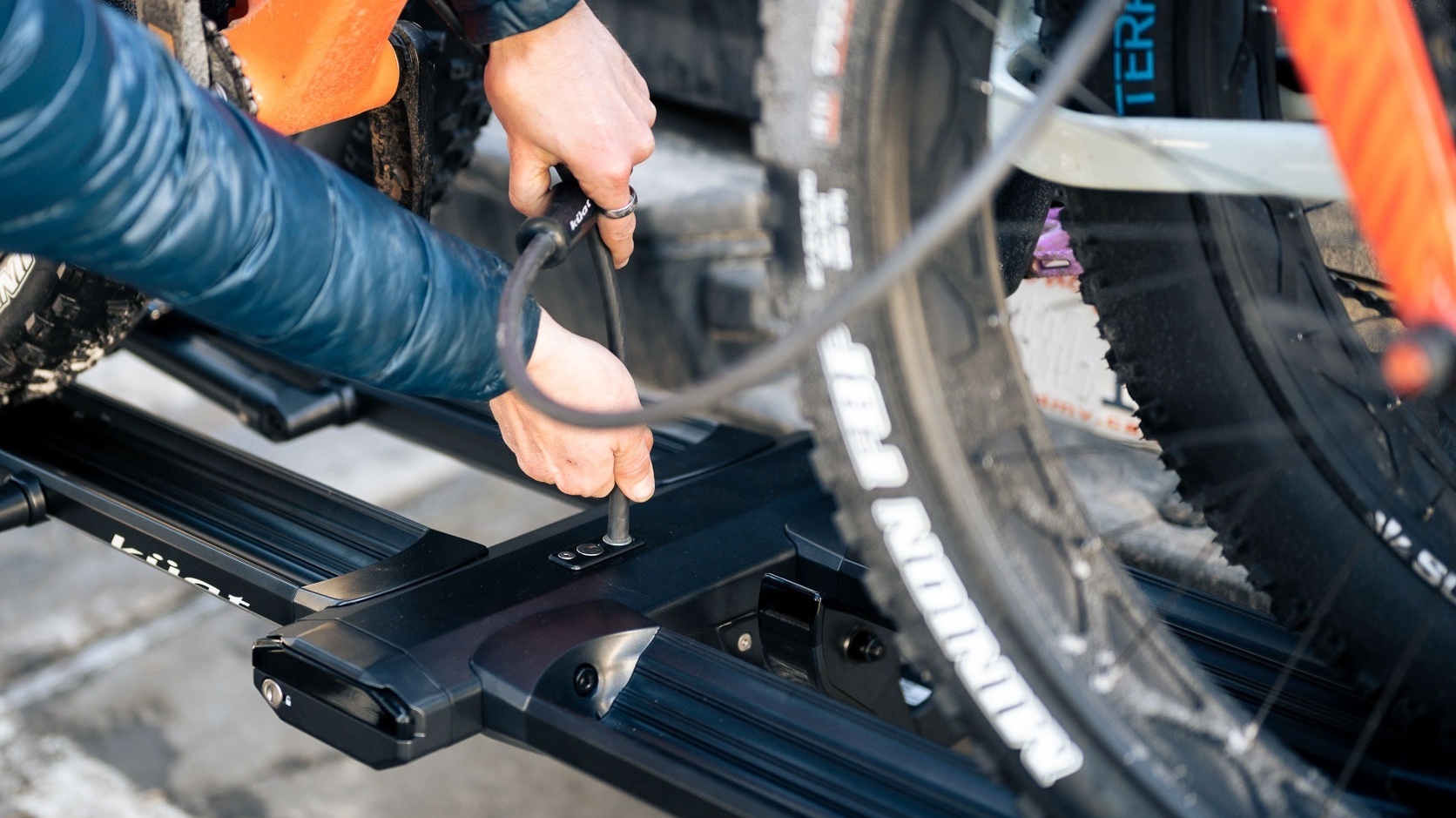
Some of the Kuat racks feature semi-integrated noose style cable lock that can be looped through frames and wheels. Credit: Abriah Wofford
Bike theft remains a persistent threat, and high-end bicycles left on a vehicle are often high-priority targets for thieves. Security features on modern racks vary significantly, ranging from basic strap systems with no theft deterrents to integrated locking mechanisms that anchor the rack to the vehicle and the bikes to the rack. It is important to remember that no system is truly impenetrable; with the right tools and sufficient time, a determined thief can bypass almost any integrated lock. To mitigate this risk, we strongly recommend supplementing your rack’s built-in security with a high-quality aftermarket cable or U-lock to provide an essential secondary layer of defense.
In our testing, the most secure hitch racks are those that utilize integrated cable locks, with the Kuat Piston leading the pack. Its long, rubber-coated steel cable anchors directly into the rack and provides enough length to loop through both wheels and the frame, creating a significant deterrent. A similar strategy is found on the RockyMounts BackStage and MonoRail, which also prioritize a longer cable reach.
Other top-tier models, such as the Thule T2 Pro XTR and Yakima StageTwo, use shorter integrated cables that typically have only enough slack to secure a single frame or fork. To compensate for this, the StageTwo includes a welded metal loop between the bike trays, which serves as a robust anchor point for a heavy-duty aftermarket chain or cable lock. To prevent the theft of the rack itself, most of these models feature either a locking hitch pin or a lockable anti-wobble knob that secures the entire unit to the vehicle’s receiver.
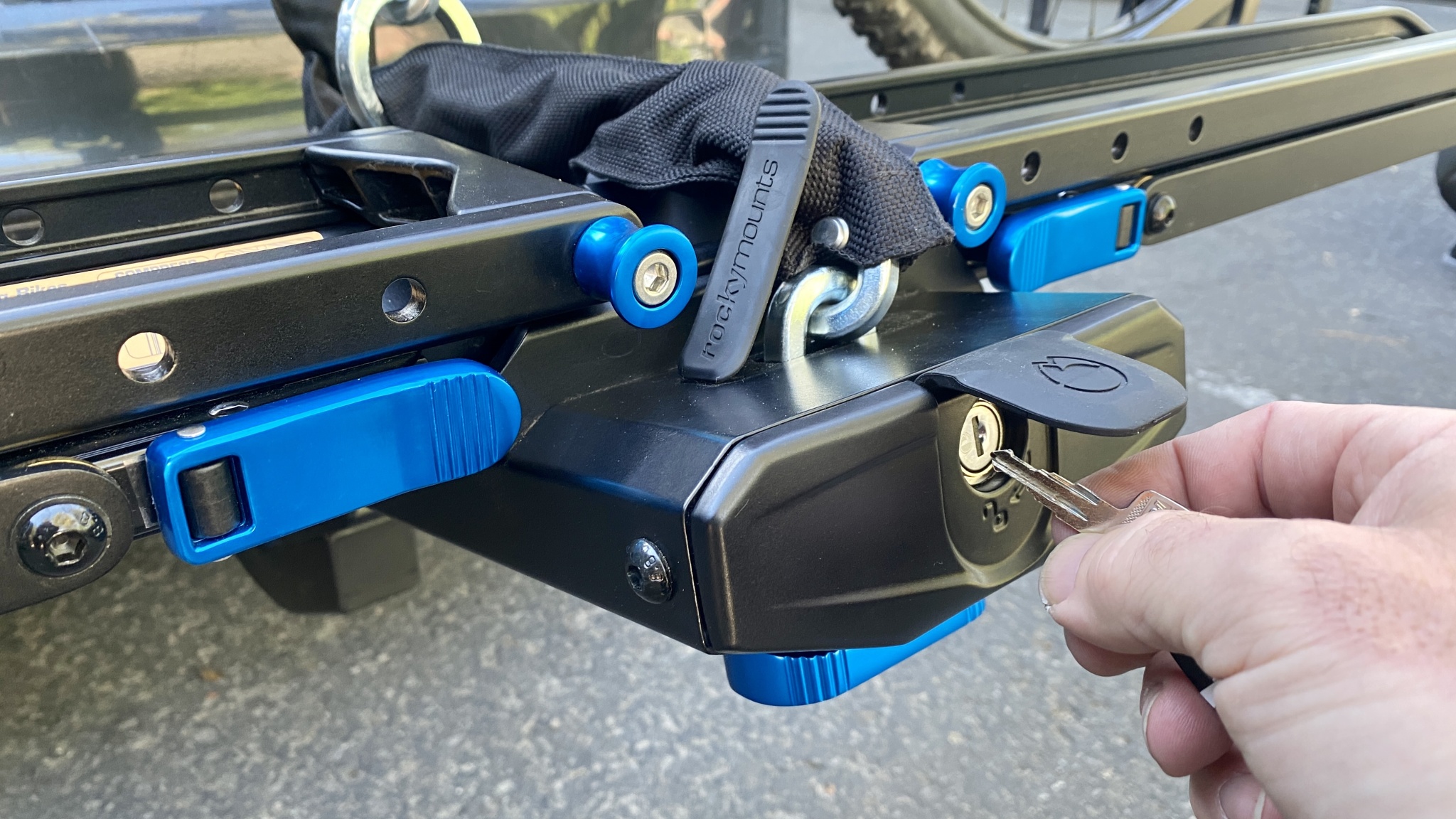
We appreciate the effort at security offered by the RockyMounts GuideRail. The chain is quite substantial, borderline overkill, but better safe than sorry. Credit: Joshua Hutchens
Despite their ability to transport half a dozen bicycles, vertically mounted racks generally perform poorly in our security metrics. The North Shore NSR-6, while including a lockable anti-rattle hitch pin to secure the rack to your vehicle, lacks an integrated mechanism to secure the bikes themselves. For this setup, we strongly recommend purchasing a high-quality padlock for the hitch pin and a secondary system, such as a 10-foot braided cable or a heavy-duty chain, to loop through all six frames and anchor them to the vehicle’s safety chain loops.
Hitch Racks
In contrast, the Kuat Piston Pro X represents the gold standard for integrated protection. It features a robust locking hitch receiver and a semi-integrated 12mm high-strand cable that provides a clean, highly secure way to tether both the bikes and the rack. While no system is entirely thief-proof, the Piston’s streamlined security hardware offers the best balance of convenience and deterrence for riders who frequently leave their vehicles unattended at trailheads or restaurants.
Roof Mount Racks
The most secure roof-mounted racks in our 2026 testing are those that offer multi-point protection, typically combining a locking mechanism for the front attachment with an integrated cable for the rear. The Thule UpRide sets the standard in this category, featuring a stowable cable lock that is long enough to thread through both the rear wheel and the bike’s rear triangle. This dual-zone security is a significant upgrade over lower-scoring models that only lock the front fork or wheel, which often leaves the rear wheel completely unsecured and vulnerable to a quick-release theft. While these integrated systems provide a strong baseline of defense, we still recommend them primarily as a short-term deterrent, as the thin cables on roof racks are generally less robust than the heavy-duty chains on premium hitch-mount units.
Trunk Mount Racks
Trunk-mount racks are the most vulnerable category to theft because they rely primarily on nylon webbing straps that can be easily severed with basic household tools. While most budget models offer zero security, premium options like the Yakima FullBack include a small integrated cable lock to tether the bikes to the rack’s frame. To prevent the rack itself from being stolen, the FullBack also utilizes a steel-reinforced security strap that anchors inside the trunk or hatch, making it impossible to remove without opening the vehicle.
The Thule Outway Hanging takes security a step further by replacing standard nylon straps with high-tension steel cables that are much harder to cut. These cables are tightened with locking torque-limited knobs that secure the rack to the vehicle’s chassis. Additionally, an integrated cable lock is included to secure the bikes to the rack. However, as with most trunk-mount systems, these cables are relatively thin and should be considered deterrents rather than absolute protection; for any extended stops, we still recommend using a heavy-duty secondary lock.
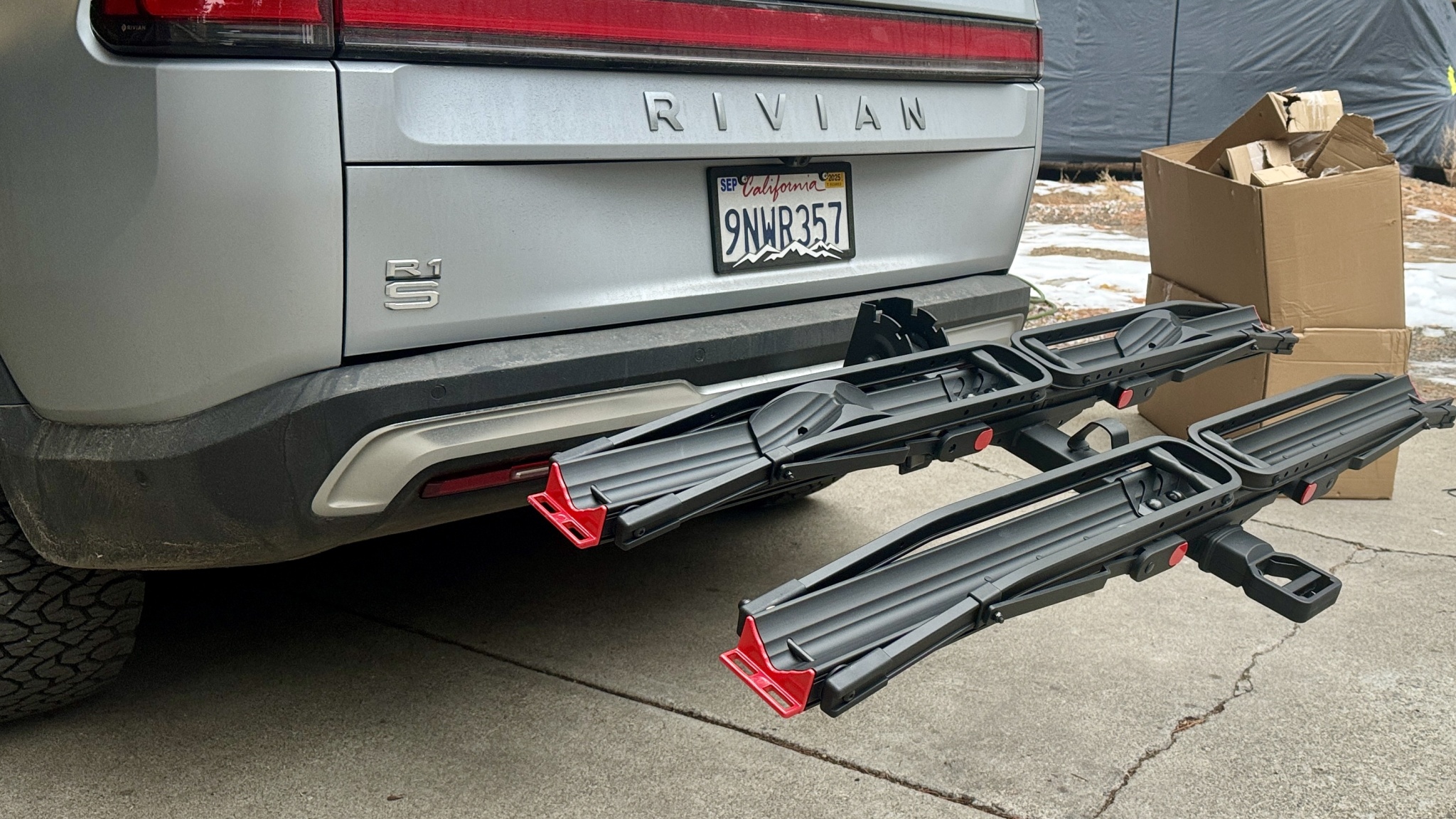
Fully assembled and ready to go. The Hollywood CrossTrack 2 is a relatively easy rack to put together out of the box. Credit: Joshua Hutchens
While assembling and setting up a bike rack is typically a one-time endeavor, the process can vary widely, from a seamless twenty-minute task to a multi-hour source of frustration. Because this is a singular hurdle rather than a daily interaction, we assign it only 10 percent of our overall score, yet it remains a crucial indicator of a manufacturer’s attention to detail and craftsmanship. Some models arrive nearly ready to go or offer exceptionally clear, intuitive instructions that make the initial build straightforward. Conversely, other racks can leave even seasoned mechanics confused by vague diagrams, poorly labeled hardware, or high-weight components that practically require a second set of hands to align.
In our 2026 evaluations, we found that premium options like the Kuat Piston Pro X offer a high-quality assembly experience with well-organized parts, even if integrating features like brake lights adds a few extra steps. On the other end of the spectrum, brands like Thule set the bar for simplicity by shipping the Epos entirely assembled, allowing you to move from the box to the hitch in mere minutes. The Epos, Verse, and T2 Pro XTR features an “Auto Attach” system that simplifies the rack-to-vehicle connection. Choosing a rack with a high assembly score doesn’t just save time; it also ensures the unit is assembled correctly, the first step toward long-term safety and performance.
Hitch Racks
The Thule Epos sets the gold standard for out-of-the-box readiness, earning our highest score in the assembly metric. Because the rack features a clever folding tray design, it can be shipped fully assembled; once it arrives, you simply remove it from the packaging, unfold the trays to their open position, and mount it directly to your vehicle. The 1Up Super Duty is nearly as impressive, requiring only a minimal six-minute setup to secure 12 bolts before it is ready for the road. This streamlined approach across their heavy-duty lineup ensures that your time is spent on the trails rather than deciphering complex instruction manuals.
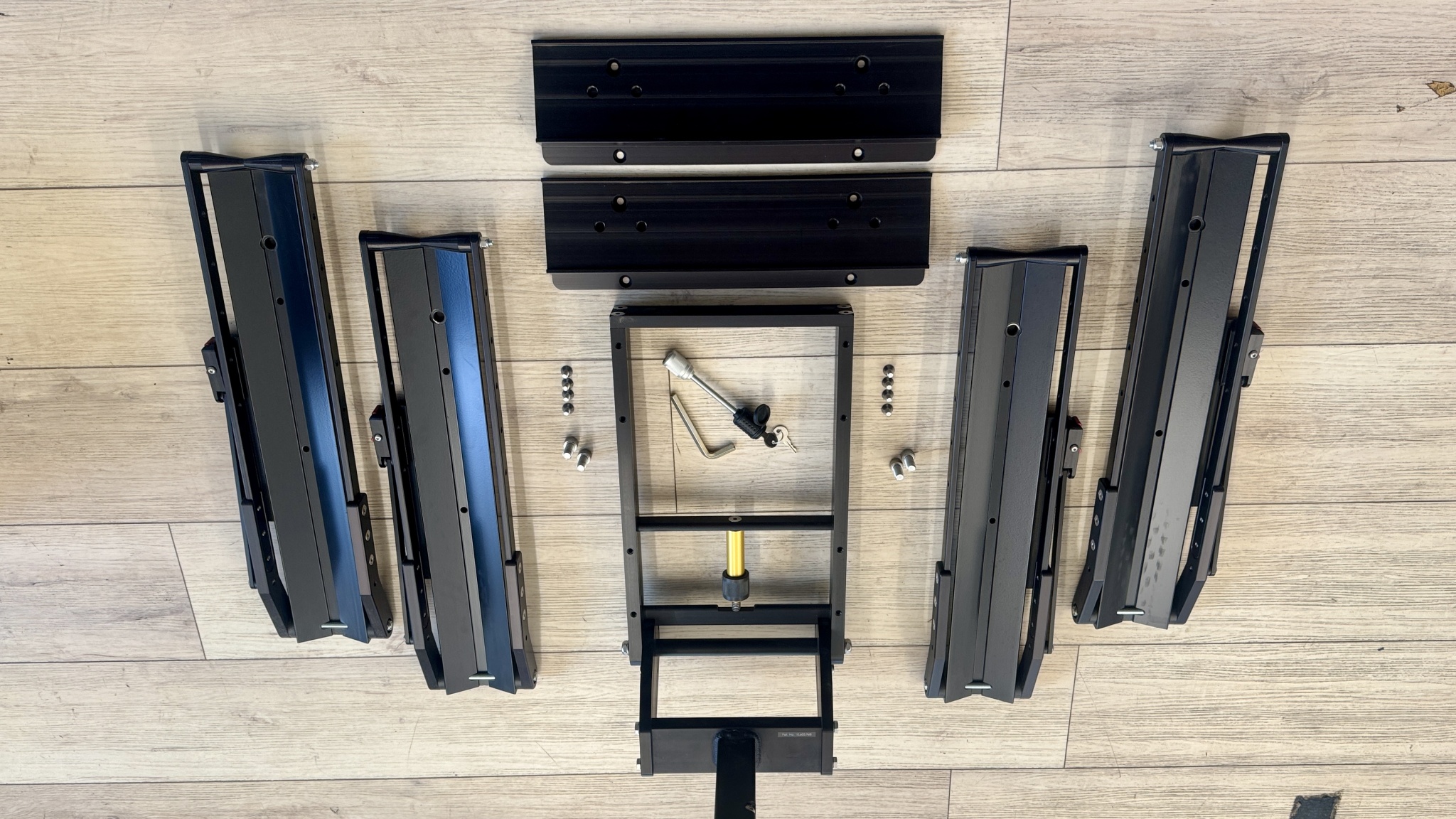
The 1Up USA, with the packaging removed, is a very straightforward product. Credit: Joshua Hutchens
The Yakima StageTwo demands a bit more commitment during its initial setup, often requiring 30 to 45 minutes of focused effort to get it trail-ready. While the instructions are clear, the tray assembly can be a bit of a juggling act; because the trays consist of two separate pieces that must be joined at the main support beam, you’ll need some patience to align the bolt holes perfectly.
On the other hand, the Kuat Piston Pro offers a significantly more streamlined experience. Kuat includes all the necessary tools in the box and provides a highly intuitive manual, along with a QR code that links directly to a helpful assembly video. To make the process even more ergonomic, Kuat suggests installing the center beam into your vehicle’s hitch receiver first, effectively using your car as a stable work stand while you bolt on the tire trays.
We completed assembly of the Piston Pro on the hitch of our vehicle in around ten minutes. Credit: Joshua Hutchens
Vertical-mounted bike racks rank significantly lower in our assembly metric because they are inherently massive and must be shipped almost entirely disassembled to fit into standard packaging. Unlike tray racks that often arrive partially built, vertical models like the North Shore NSR-6 require you to piece together every component, including manually knotting the wheel ropes. You should plan to set aside at least a solid hour for the initial build, and given the weight and awkward dimensions of the steel masts, having a second set of hands is highly recommended to avoid frustration or injury.
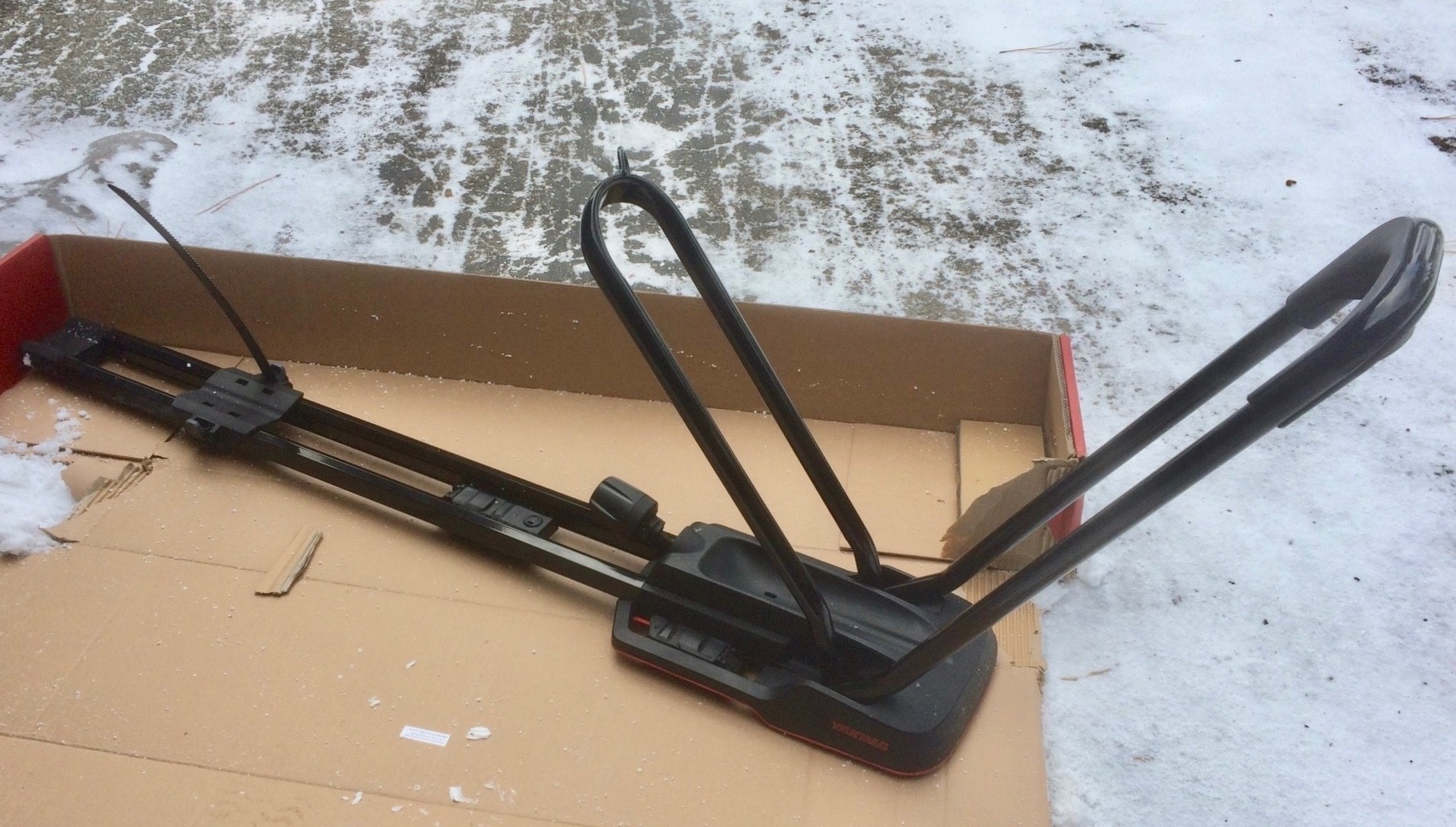
The Yakima HighRoad is relatively lightweight and take up very little space when folded down for storage. Plus, it comes fully assembled, which should save you some time on the install. Credit: Pat Donahue
Roof Mount Racks
Our top-performing roof racks in the 2026 test group achieved perfect scores for their effortless out-of-the-box readiness. The Yakima HighRoad set a remarkably high bar, arriving fully assembled and featuring a completely tool-free installation process that uses integrated hardware to secure it to almost any crossbar in minutes. Similarly, the Thule UpRide earned a perfect rating for its assembly, as it requires no technical setup before mounting to your vehicle. Both racks are relatively lightweight—ranging from 17 to 22 pounds—and feature intuitive mounting systems that make them as easy to remove for off-season storage as they are to install for a weekend trip.
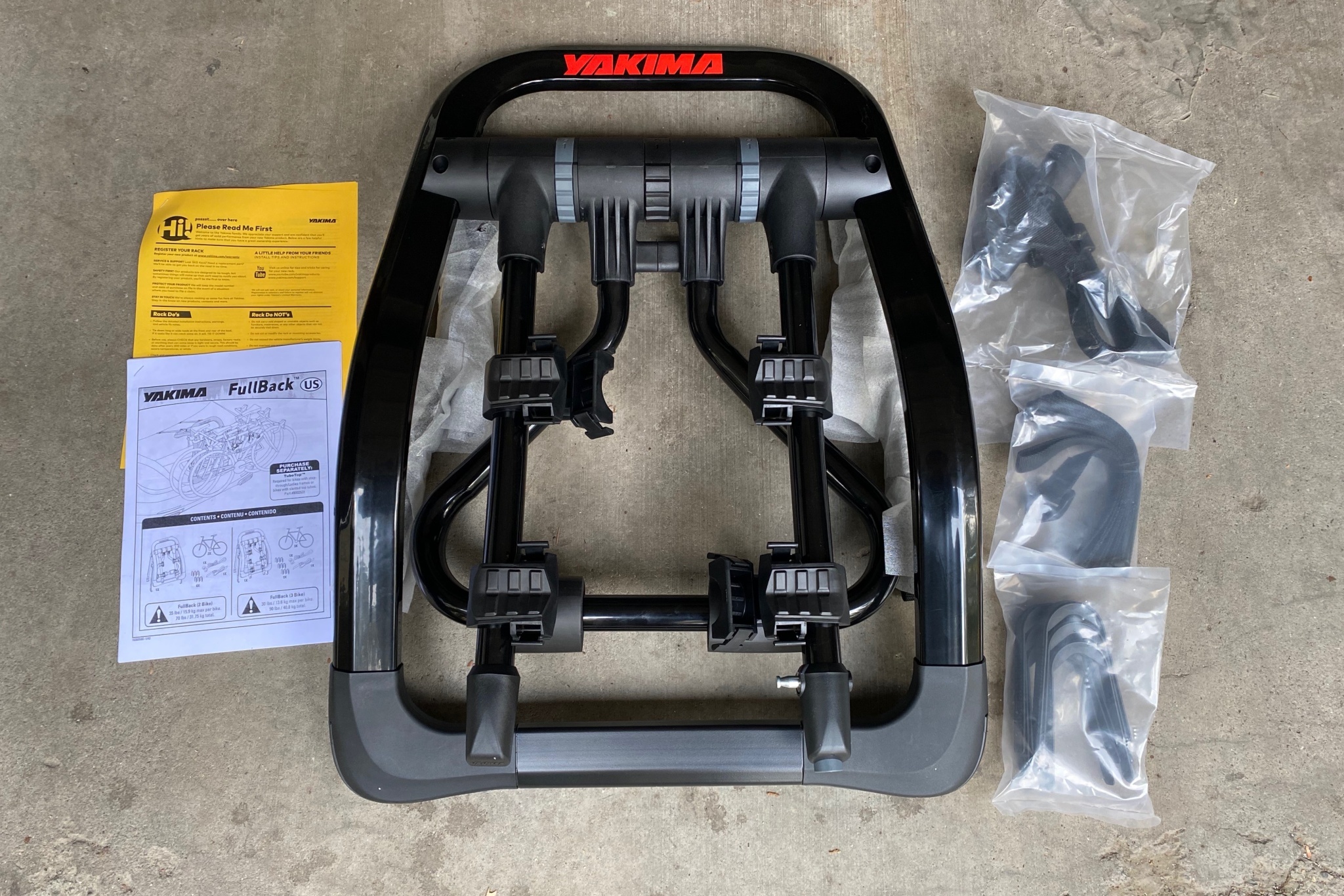
The Yakima FullBack 2 arrives fully assembled and ready to use. Credit: Jeremy Benson
Trunk Mount Racks
The Yakima FullBack 2 and the Allen Deluxe 2-Bike stand out as the most accessible options for those who want to avoid a complicated setup, as both are effectively ready to use straight out of the box. Their small physical footprint allows them to be shipped fully assembled, meaning you simply need to remove them from the packaging and fold the support arms into their active positions before mounting them to your vehicle. This plug-and-play nature makes them ideal for riders who need a quick transport solution without the hassle of a weekend project.
In contrast, the Thule OutWay Hanging requires a modest amount of initial assembly before its first use. While it is a more sophisticated system featuring steel cables and torque-limiting knobs, you will need to spend approximately 15 minutes attaching the protective pads and inserting the bike support arms. Once this one-time configuration is complete, however, the rack mirrors the convenience of its competitors, allowing for rapid attachment and removal during the rest of the 2026 riding season.
To evaluate durability, we didn’t just look for a “good-on-paper” build quality; we put these racks through a gauntlet of real-world abuse to see which ones would eventually develop the dreaded hitch-wobble or hardware fatigue. Our 2026 testing protocol moved beyond smooth asphalt and onto the kind of rowdy, washboard roads that act as a vibration-testing lab for your vehicle’s suspension. By loading these racks to their absolute limits with 70-pound e-bikes and modern downhill rigs, we were able to pinpoint exactly where certain designs begin to falter under sustained stress.
Repeated use is the only way to uncover the long-term reliability of pivot points, ratcheting arms, and secondary security features. We spent months opening, closing, and re-tensioning every mechanism to ensure that the “new rack” feel didn’t disappear after a season of mud and road salt. This high-frequency testing revealed that while lightweight materials are great for fuel economy, the industrial-grade steel and reinforced alloys found in heavy-duty models are what truly survive a year of back-to-back adventures on unpaved terrain.
When you venture off-pavement or attach a rack to the rear of a high-vibration vehicle like a travel trailer, you aren’t just testing the rack—you’re testing the manufacturer’s faith in their own engineering. While both 1Up USA and Kuat offer premium protection, their approaches to off-road and RV “coverage” differ significantly in the fine print.
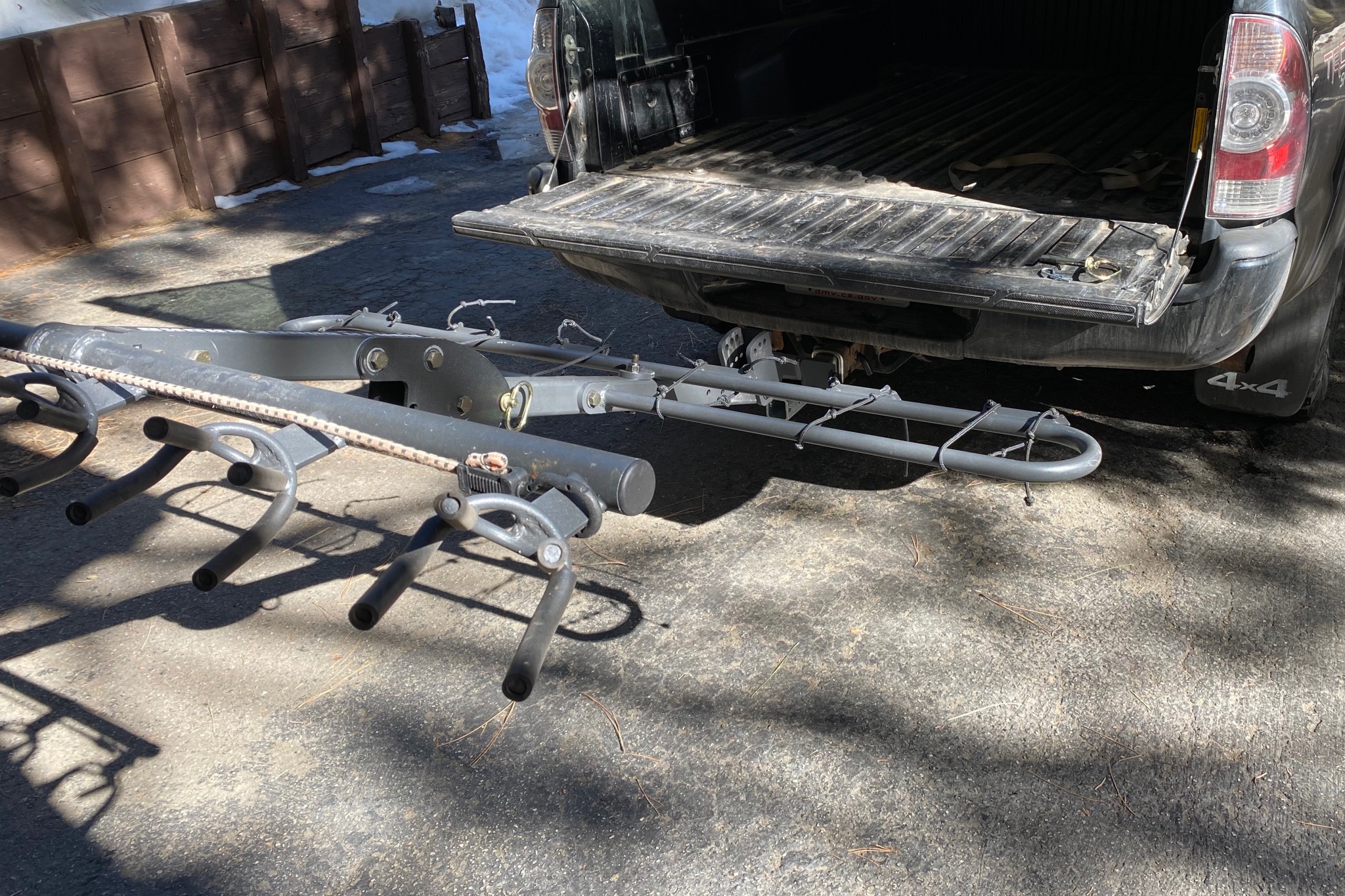
With a high weight limit and a 6-bike carrying capacity, the North Shore NSR-6 is one of the hardiest racks we used. Credit: Jeremy Benson
The North Shore NSR-6 is another rack with a built-to-last feel. The NSR-6 is constructed entirely of metal. It is assembled with wide-gauge bolts that seem very unlikely to give out. The fork cradles are strong, and the rope rear-wheel fasteners are simple and far more durable than rubber or plastic ratchet systems. If the rope breaks, simply replace it. The tilt mechanism may be a little more involved than other models, but the durability factor is sky-high.
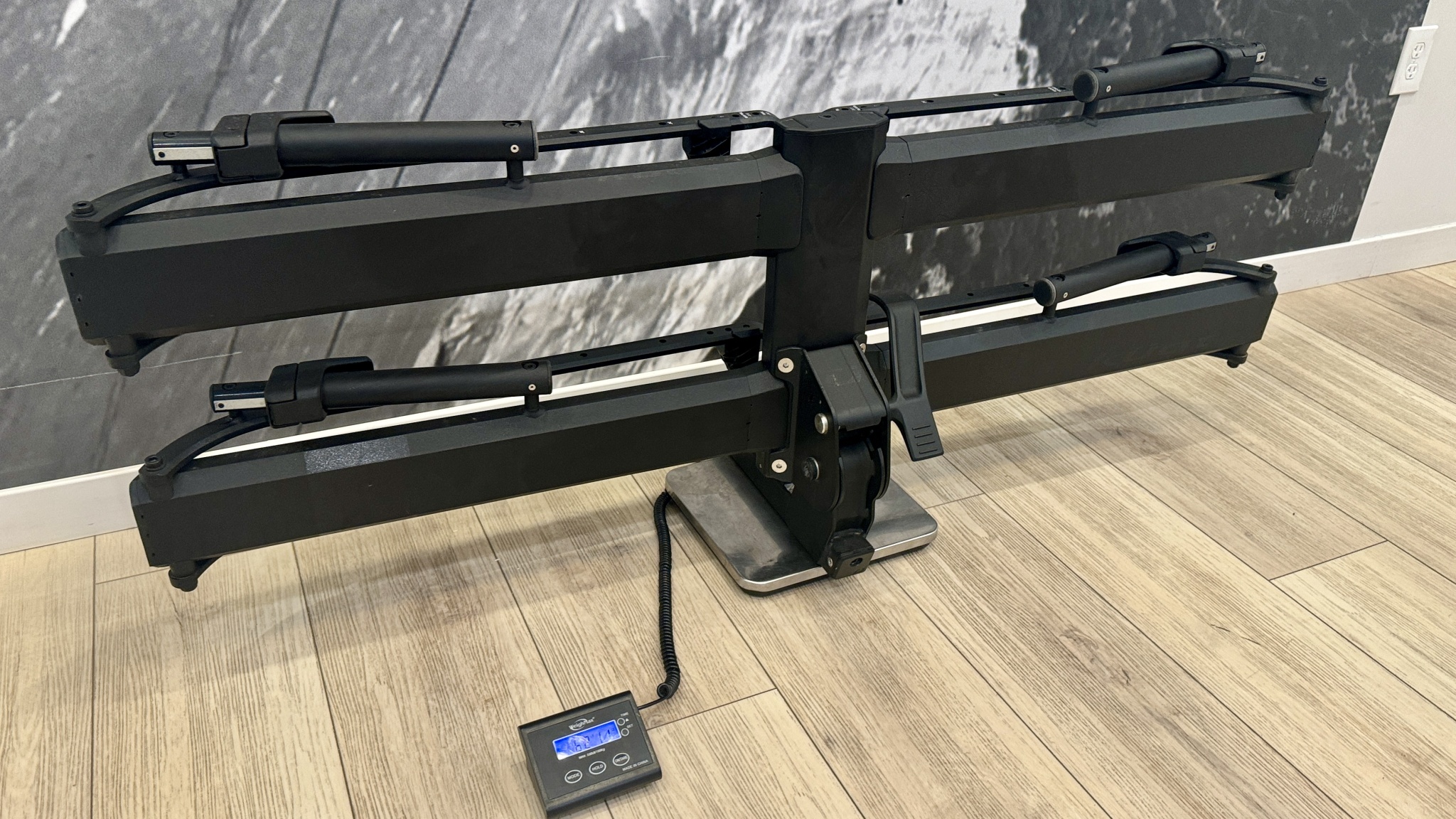
The Kuat Piston Pro is constructed almost entirely of metal, which means it’s quite heavy but also durable. Credit: Joshua Hutchens
From a durability standpoint, the 1Up Super Duty stood out to our test team with a robust, almost overbuilt design. Its 100-pound-per-tray weight capacity means it is virtually impossible to overload with any modern bicycle, including heavy long-range e-bikes. The construction is refreshingly simple: no plastic parts, just extruded aluminum and stainless steel hardware. This “all-metal” philosophy makes it exceptionally resilient to UV damage and road salt. Furthermore, 1Up’s commitment to repairability is a major longevity win—because every single component is available as an individual replacement part, a minor fender bender or a worn-out pivot doesn’t necessitate buying an entirely new rack. While the raw aluminum can show surface scratches over years of use, there is no paint to chip and no steel to rust, so its structural integrity remains unchanged.
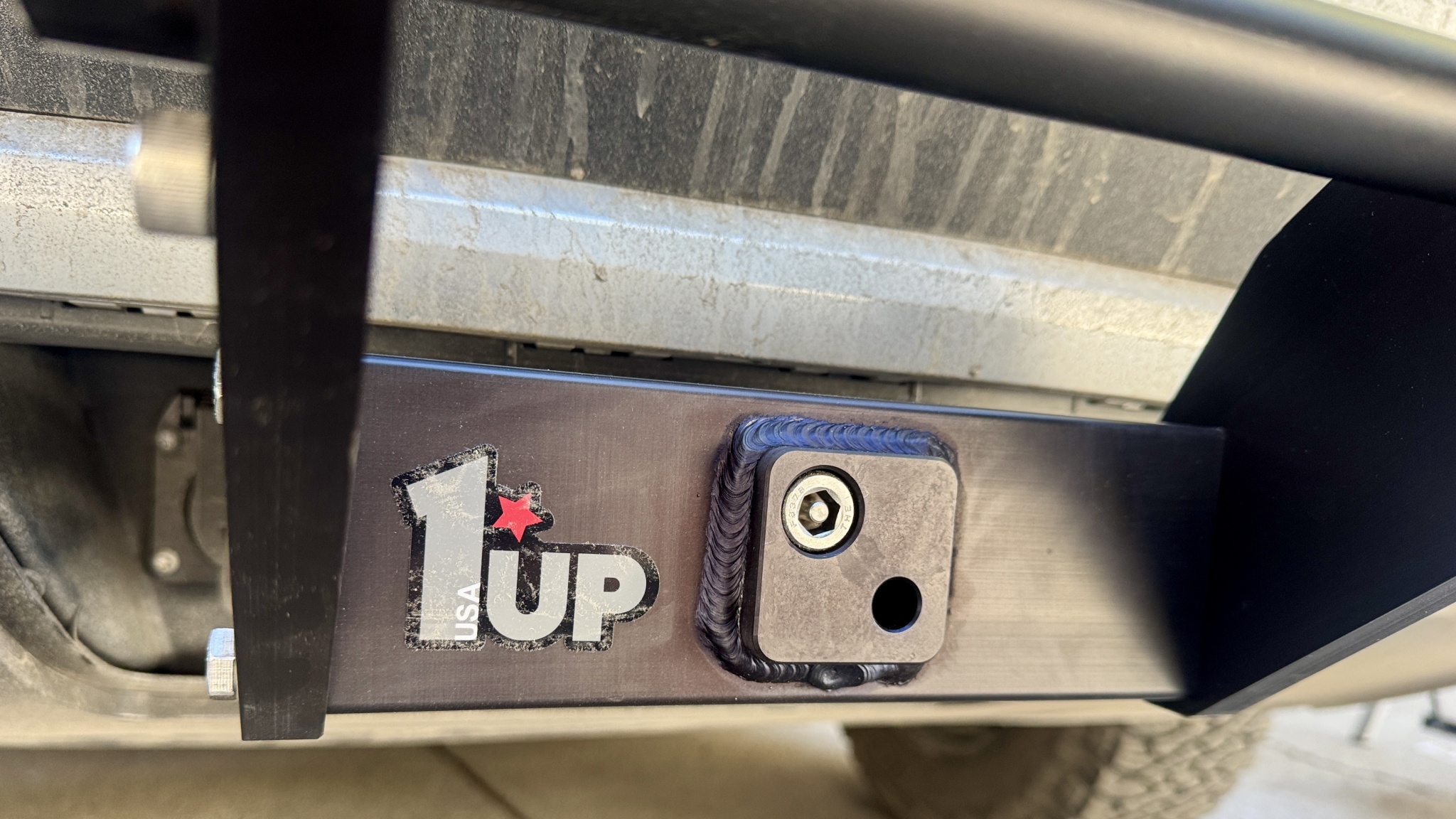
The Super Duty is a robust offering with no plastic anywhere. Credit: Joshua Hutchens
The Kuat Piston Pro (and its high-end sibling, the Pro X) takes a more refined approach to durability. Rather than just anodized alloy, it features a premium TIGER DRYLAC powder-coat finish engineered to resist fading and chipping, even in harsh climates. The addition of genuine Kashima-coated struts—the same low-friction coating found on high-end suspension forks—ensures the ratcheting arms operate smoothly for years without seizing. While the Piston is significantly more complex than the 1Up, featuring pneumatic internals and integrated electronics, its automotive-grade hardware and stainless steel accents held up flawlessly throughout our rowdy road testing.
The Hollywood CrossTrack’s hitch mechanism has play in the receiver, causing the rack to rattle while driving, which may reduce the durability of both the rack and the bikes. Credit: Joshua Hutchens
Get the Wiggles Out
Many bike racks will have a little play in them. This is not ideal for the hitch’s durability, and if it’s really loose, the bikes will jostle around. An effective quick fix is a hitch tightener.
Other Notabe Bike Racks
We’ve spent a lot of time testing bike racks, and even more time using them for our own personal rides. The selection you see above is a non-exhaustive list of the racks we have used over the years; we narrowed it down to truly the best models, but couldn’t fit them all. Listed below are a few other bike racks we considered, or have used in the past, but that didn’t make the cut in today’s competitive lineup.
Kuat Trio – This is a fork-mount roof rack that we like quite a lot. Kuat has devised an innovative solution that can carry bikes with any axle standard at the fork, which makes it a versatile option, but you still have to remove your wheel to load your bike, and we tested other roof-mount racks without this requirement.RockyMounts BrassKnuckles – The BrassKnuckles is a roof-mount rack that secures your bike via the front wheel (read no frame contact). It has a simple and sturdy design, but it has no locking mechanism, and has a high load height that makes it difficult to use on taller vehicles.Saris Bones 2-Bike – This trunk-mounted rack is lightweight and can fit nearly any vehicle, but that’s where the pros stop. It has an all-plastic construction, no locking mechanism, and carries your bike through direct contact with the frame. Trunk-style racks are usually easier and more affordable, but the perks don’t outweigh the cons for those who use their rack regularly.Hollywood Destination E-Bike Rack – This hitch-style rack is easy to assemble and has a loading ramp that is helpful for heavier bikes. But nearly everything after that feels overly complicated and tedious. It also has no lackluster security features and too many plastic parts to inspire confidence.Kuat Sherpa 2.0 – This is a tray-style hitch mount that we generally like for its simple design and light weight. However, it didn’t hold up against other racks we tested that were a little bit more versatile and less expensive, so the Sherpa got the boot.-Thule Verse – Thule’s latest hitch rack builds on the general platform that made the T2 a success. With excellent ergonomics and the ability to hold 60 pounds per tray, the rack is compatible with most ebikes. This rack is not expandable, but it does offer an aftermarket loading ramp.
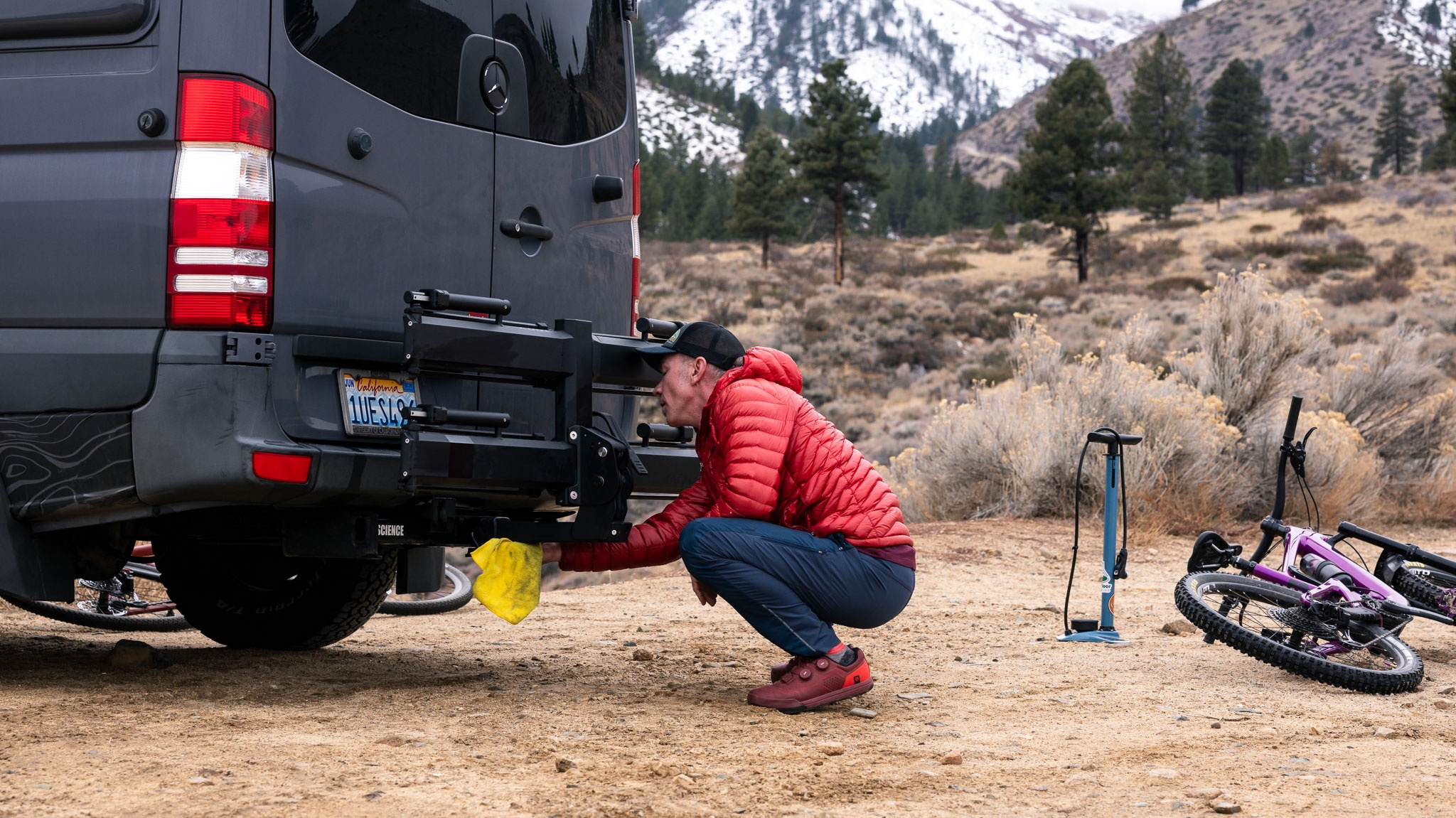
Loading up your bike and getting to the trailhead should be the least memorable part of your ride, and a dependable bike rack can help. Credit: Matt Lighthart
Conclusion
This comparative analysis is the result of years spent buying, testing, and abusing the industry’s most popular racks. While almost every model in our 2026 test fleet can perform dutifully, each has distinct strengths and weaknesses that may make or break your user experience.
Our best piece of advice for finding your “bike rack soulmate” is to start by objectively evaluating your vehicle and your specific stable of bicycles. A rack that is perfect for a lightweight carbon road bike on a small sedan is often a disaster for a 75-pound e-MTB on the back of a high-clearance 4×4. We hope this breakdown allows you to make a confident purchase decision that keeps your gear secure and your focus on the ride.
We have been researching, testing, and publishing detailed bike reviews for many years. Whether you’re looking for trail mountain bikes or a new bike helmet, we have recommendations on the bike gear that will improve your ride.