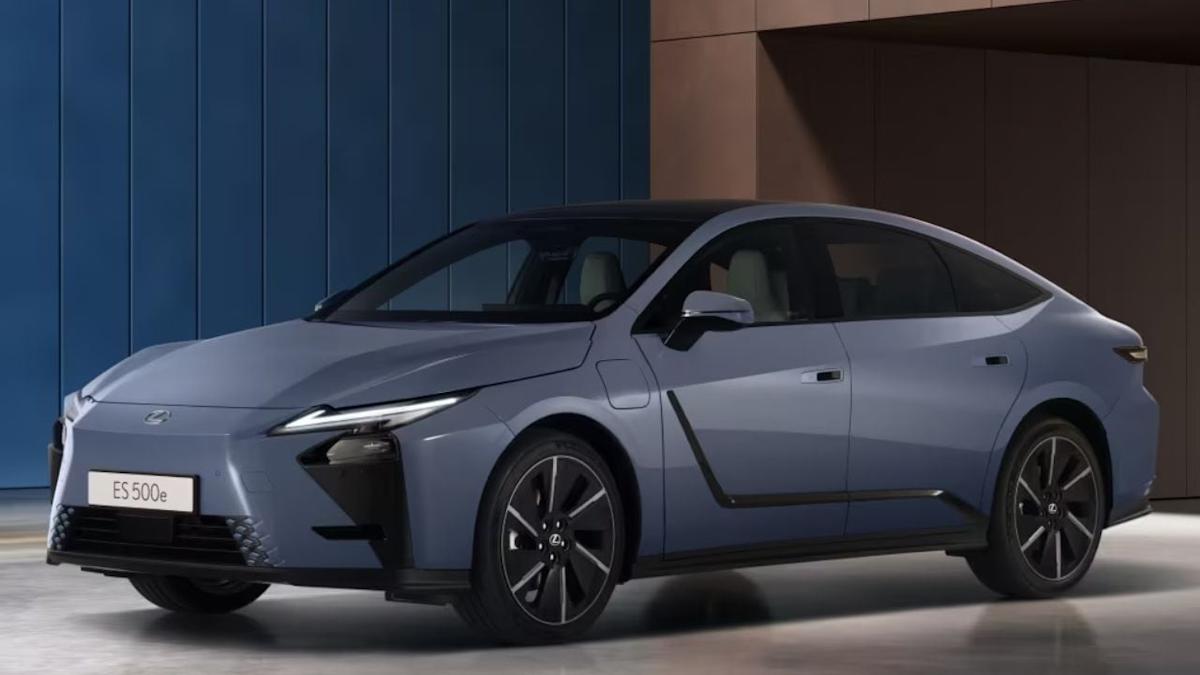
The next-generation Lexus ES is arriving with changes that clearly reflect where the modern auto industry is heading. And while much of the attention is naturally focused on the first fully electric version of this long-running luxury sedan, the real surprise lies somewhere else: the pricing.
In the U.S., the new electric ES and the new hybrid ES sit remarkably close to each other, something that is still far from common in today’s market.
Up through the 2025 model year, the ES was still available with a conventional gasoline engine. For 2026, that changes completely. Buyers will now choose only between a hybrid and a fully electric version, which makes this one of Lexus’ clearest statements yet that electrification is no longer a side path but the center of the brand’s next chapter.
The Electric And Hybrid ES Are Priced Surprisingly Close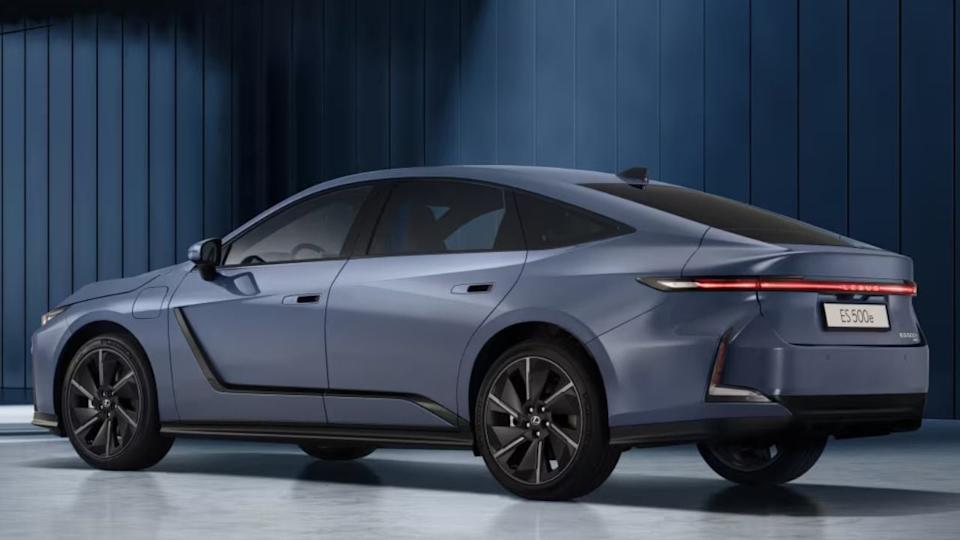
Photo Courtesy: Autorepublika.
What makes this transition especially interesting is the pricing strategy. The all-electric ES 350e starts at $48,795 in Premium trim, while the ES 350h Premium hybrid starts at $50,995. That means the electric version undercuts the hybrid by about $2,200, an unusual move in a segment where EVs still often carry a noticeable premium.
Lexus has also kept the overall structure of the car very close across both powertrains. The new ES uses the same multi-pathway platform for hybrid and battery electric versions, and both share the same overall design language. The wheelbase measures 116.0 inches, which helps preserve the long, elegant proportions expected from a midsize luxury sedan.
That approach gives Lexus a practical advantage. Instead of making the electric ES feel like a completely separate product, the company is presenting both versions as part of one unified model family. For buyers, that may make the shift to electric feel less disruptive than it often does with rival brands.
Range And Charging Show Where Lexus Still Has Room To Improve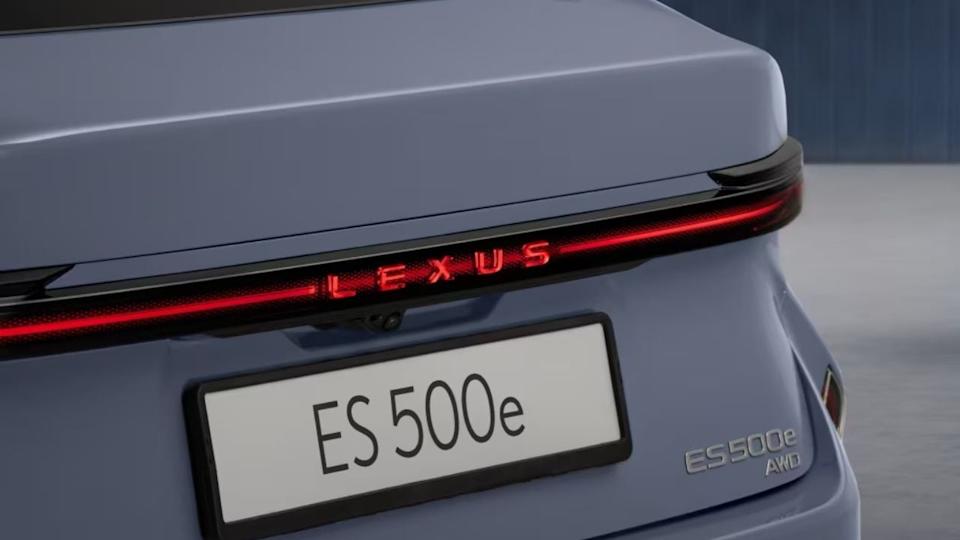
Photo Courtesy: Autorepublika.
The electric ES 350h uses a 74.7 kWh battery and carries a Lexus-estimated driving range of 307 miles. The dual-motor, all-wheel-drive ES 500e uses the same battery pack but offers less range because of the added power and extra motor. Lexus has not highlighted a longer range figure for the 500e, and in its earlier preliminary release, it estimated about 250 miles for that version.
Charging, however, is one area where Lexus is trying to keep the car competitive. The new ES adopts the NACS port and also supports Level 1 and Level 2 AC charging through an 11 kW onboard charger. Lexus says DC fast charging can take the battery from 10% to 80% in around 30 minutes under ideal conditions. That gives the ES access to a much broader charging ecosystem, including Tesla Superchargers, but the charging speed itself is still more conservative than what some newer rivals are targeting.
That is where the gap becomes easier to see. BMW’s newly announced i3 sedan is targeting a much more aggressive charging and range profile, with BMW pointing to up to 440 miles of preliminary EPA estimated range and DC fast charging as high as 400 kW. Against that, the Lexus looks more cautious.
The Hybrid Keeps Familiar Lexus Logic Alive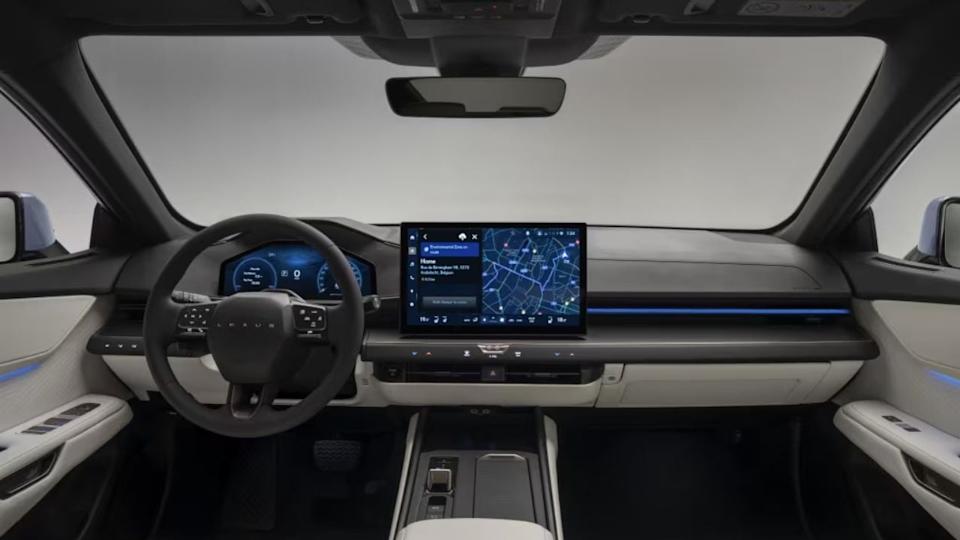
Photo Courtesy: Autorepublika.
The hybrid ES stays closer to Lexus tradition. The ES 350h uses the brand’s latest hybrid system and will be offered in both front-wheel drive and all-wheel drive form. Unlike a plug-in hybrid, it does not need to be charged externally. Instead, it relies on the familiar Lexus and Toyota formula of combining a gasoline engine with electric assistance for better efficiency and smoother operation.
Interestingly, Lexus is not offering a more powerful 500h-style hybrid in this generation. That means the most performance-oriented ES will actually be the electric 500e, not the hybrid. Lexus says the ES 500e can reach 62 mph in about 5.7 seconds, while the ES 350h remains focused more on refinement and efficiency than outright speed.
The two powertrains also will not arrive at exactly the same time. Lexus says the all-electric ES 350e is expected in dealerships in April, while the hybrid ES 350h will follow later, with June 2026 currently listed on the U.S. consumer site.
With this new ES, Lexus is not just introducing another luxury sedan. It is making a very deliberate point that a traditional hybrid and a fully electric model can now live side by side with almost no pricing gap at all. That alone makes the new ES one of the more revealing launches in today’s luxury market, because it shows just how much the old assumptions about electrification are starting to change.
This article originally appeared on Autorepublika.com and has been republished with permission by Guessing Headlights. AI-assisted translation was used, followed by human editing and review.
Read More
Four Things You Should Never Use WD-40 On