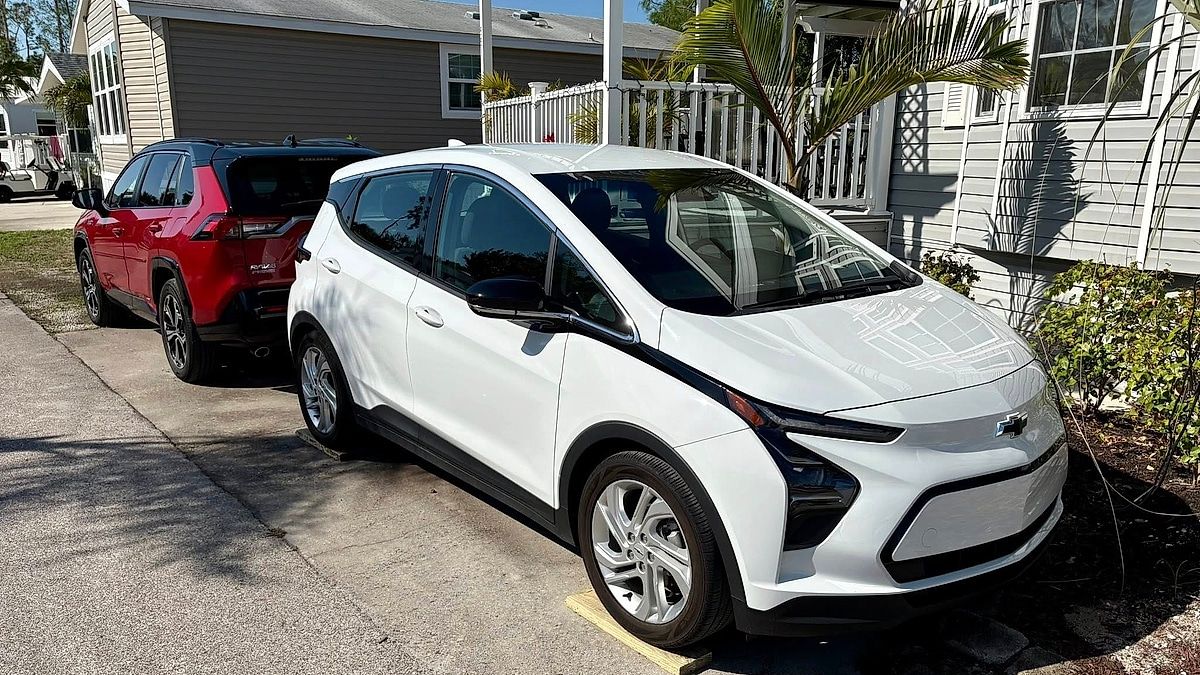
Spring has arrived, and America’s snowbirds are heading north, leaving vehicles behind for weeks or even months. But parking your car long-term, especially an EV or plug-in hybrid, can lead to dead batteries, reduced range, or costly headaches when you return. The good news? Avoiding those problems is easier than most owners think. We spoke with an experienced dual-home owner who manages both a Chevy Bolt EV and a Toyota RAV4 Prime year after year without issues. Here’s exactly how he does it.
Our Expert For This Story – Gordon Groff
We were lucky to meet Chevy Bolt and Toyota RAV4 Prime owner, Gordon Groff, online in a Chevy Bolt forum. Gordon will be contributing to a series of stories here at Torque News over the coming weeks. He’s a five-year plug-in convert and a former technical writer. He has a knack for making technical topics easy to understand, and we feel lucky to have him helping us out. He’s also what we’d call a “practical EV owner.” He adopted EVs to make his driving easier and more enjoyable, and I think he’ll be able to articulate how and why in our stories.
How To Leave Your Plug-In or EV When You Depart – State of Charge
Gordon has found that the best state of charge for leaving an EV to six for six months at a time is about 20%. He learned this via owners’ manuals (remember, he was a technical writer), word of mouth with other EV owners, and in online forums. Gordon says that you should resist the urge to top off your high-voltage battery.
How To Leave Your Plug-In or EV When You Depart – 12-Volt Battery Minder
Gordon explained that the 12V battery in a Bolt is more likely than the one in the RAV4 Prime to live a long life. It has to do with how the low-voltage battery and high-voltage battery interact. The good news for Bolt owners is that Bolt batteries tend to last five or more years. Many are approaching ten years in service. Gordon says,
The Bolt EV uses the large traction battery to top off its 12V battery anytime it needs to. This is a vastly superior engineering solution to Toyota’s, so it’s hard to kill the 12V of a Bolt.
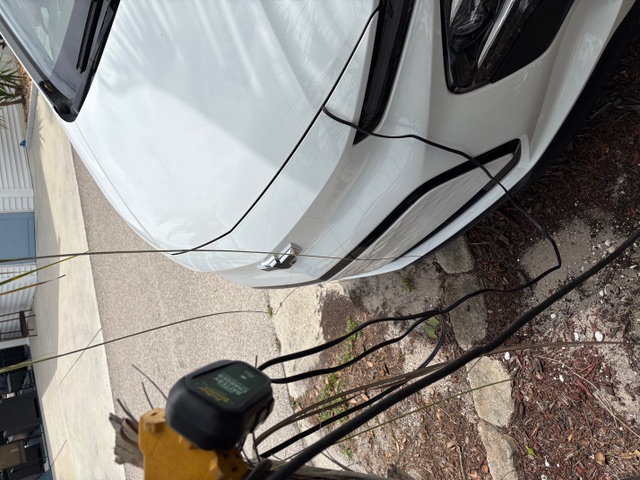
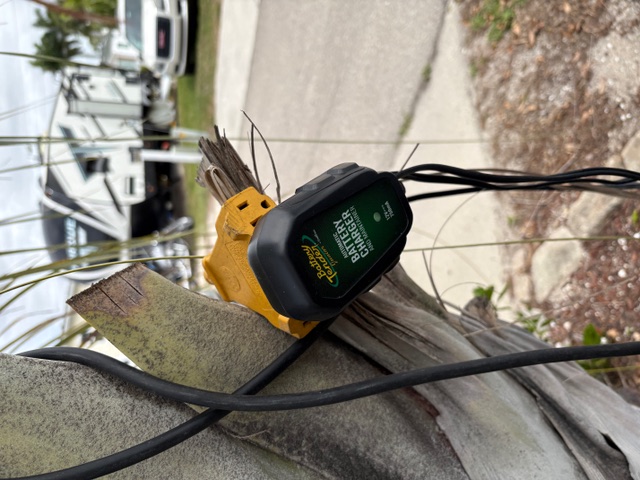
Gordon connects his 12V battery to a battery minder. By doing so, the high-voltage battery stays at its state of charge and does not try to keep the 12V healthy all season long as it sits. “Our experience to date using this system (Low SOC and 12v trickle charger) for multiple seasons has been perfect. There is no loss of traction battery SOC at all, even over 8 months of sitting in the FL heat. In fact, both vehicles have shown a higher EV mile range on the dash display than when originally parked.”
The brand that Gordon has had good luck with is Battery Tender, and the model is called Junior. It’s a pretty simple device. It plugs into a normal outside or garage outlet, and you connect it to the battery of the car. Battery Tender says the Junior is compatible with all 12V lead-acid, flooded, AGM, and gel cell batteries from major brands. The company says, “Smarter than a trickle charger, our advanced charger and maintainer provides a full charge before switching to float mode to keep your battery at an optimal level.”
Gordon says that once he returns, the Bolt is simply disconnected from the Battery Tender and ready to use. He usually tops up the high-voltage battery and begins using it right away after a series of inspections.
How To Leave Your Plug-In or EV When You Depart – The RAV4 Prime
If you know you are leaving your RAV4 Prime at some point, it is wise to run it low on gas before adding some fresh gas, so that the car is left to sit. Also, change the oil before you leave if it is getting close to its change interval. These are good habits I’ve learned from my time at Car Talk.

How To Leave Your Plug-In or EV When You Depart – Rodents
One concern for anyone with a car left sitting is rodent damage. If your conscience allows, have a pest control company visit your property and make recommendations on how best to manage pests. If your vehicle is outside, they can even periodically change baits for you. Alternatively, use products that deter mice.
Leaving an electric vehicle to sit for six months while you are at another location need not be worrisome. As Gordon has proven, you can easily set up a Battery Tender and return to a vehicle that will be ready to use. Here’s a quick punch list of best practices:
-Use a 12V Battery Tender-type device.
-Leave your Traction battery at around 20% SOC, not full.
-Change your oil if the car is a plug-in hybrid-electric.
-Think ahead to rodent management.
-Always use a windshield sun screen to preserve your dash
-Close any moonroof sunshades.
-Remove any lithium-ion battery-containing products from the vehicle (Jump starters, air pumps, flashlights, etc.)
-Alert your insurer that you are leaving the car. You may earn a discount.
-Be sure your HOA allows the vehicle to be left outside if you plan to do so.
-Show a trusted neighbor the key storage location.
Returning to Your Car
When you return to your vehicle, don’t just start it and drive away. Take a few minutes to inspect it carefully. Look for signs of rodent activity, especially under the hood and inside the cabin air filter housing, two of the most common nesting spots. Check tire pressure, inspect fluid levels, and give the vehicle a thorough cleaning or professional detail to bring it back to life. Also, confirm your state inspection is current before getting back on the road.
A big thanks to Gordon Groff for sharing his proven, real-world approach to long-term vehicle storage. If you have tips of your own, we’d love to hear them in the comments.
Story Note: This story is not an advertisement for the battery tender device or mouse prevention product mentioned. We have no relationship with the brands.
Images by Gordon Groff and John Goreham
John Goreham is a 14-year veteran of Torque News. An accomplished writer and a long-time expert in vehicle testing, Goreham also serves as the Vice President of the New England Motor Press Association and has a growing social media presence. He’s also a 10-year staff writer and community moderator for Car Talk. Goreham holds a B.S. in Mechanical Engineering and an undergraduate Certificate in Marketing. In addition to vehicle and tire content, he offers deep dives into market trends and opinion pieces. You can follow John Goreham on X and TikTok, and connect with him on LinkedIn.
Follow us today…