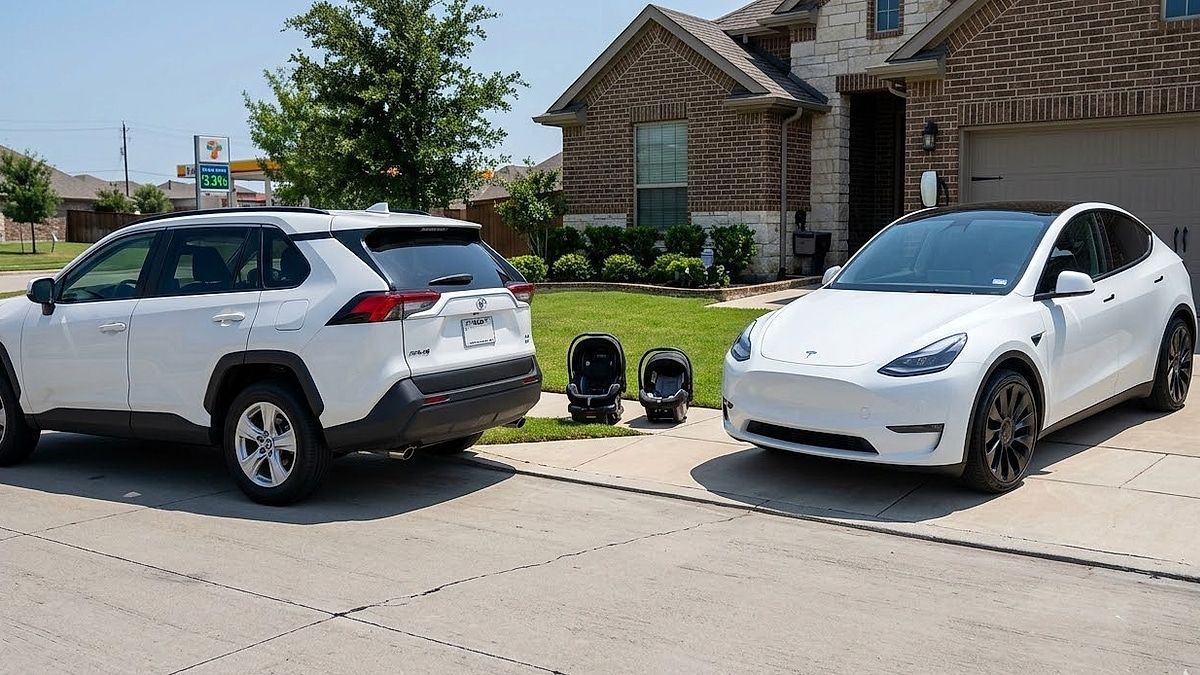
As a senior reporter for Torque News with 30 years of experience investigating the automotive industry, I’ve seen countless owners stand at the crossroads of reliability and innovation. Today, that crossroads is defined by a single question: Is it time to trade the “bulletproof” Toyota RAV4 for a Tesla Model Y?
This report analyzes a real-world dilemma faced by a Texas owner, Isaias J. Perez, who is considering swapping his 2021 RAV4 XLE for a Tesla to combat rising gas prices. I break down the actual “Information Gain” regarding total cost of ownership, family practicality with car seats, and the looming maintenance risks of both platforms. Whether you are chasing “Free EV Miles” in the Texas grid or holding onto a paid-off Toyota, this analysis provides the technical clarity needed to make a $40,000 decision.
Isaias, a dedicated member of the Toyota RAV4 Discussion Facebook Group, recently sparked a massive debate by sharing his internal struggle. He wrote:
“I’m thinking of selling my 21 RAV4 XLE and getting a Tesla Model Y. I’m afraid the future holds a heavy price for gas, and was wondering if anyone on here has made that change? We mostly drive to and from work, and we have two car seats in the back. Has anyone done the change? Pros and Cons? I’ve had my RAV4 for 3 years, and it’s been so good to me, no issues at all. But how are Teslas?”
I’ve spent three decades under the hoods and in the driver’s seats of everything from air-cooled imports to the latest “Juniper” Tesla refreshes, and I can tell you that Isaias is asking the right questions at the exact right time. In my recent investigation into why Toyota’s hybrids currently set the standard, I noted that the new Toyota RAV4 perfected the existing formula instead of reinventing the wheel, which is exactly why its 2021 model has been so “good” to him.
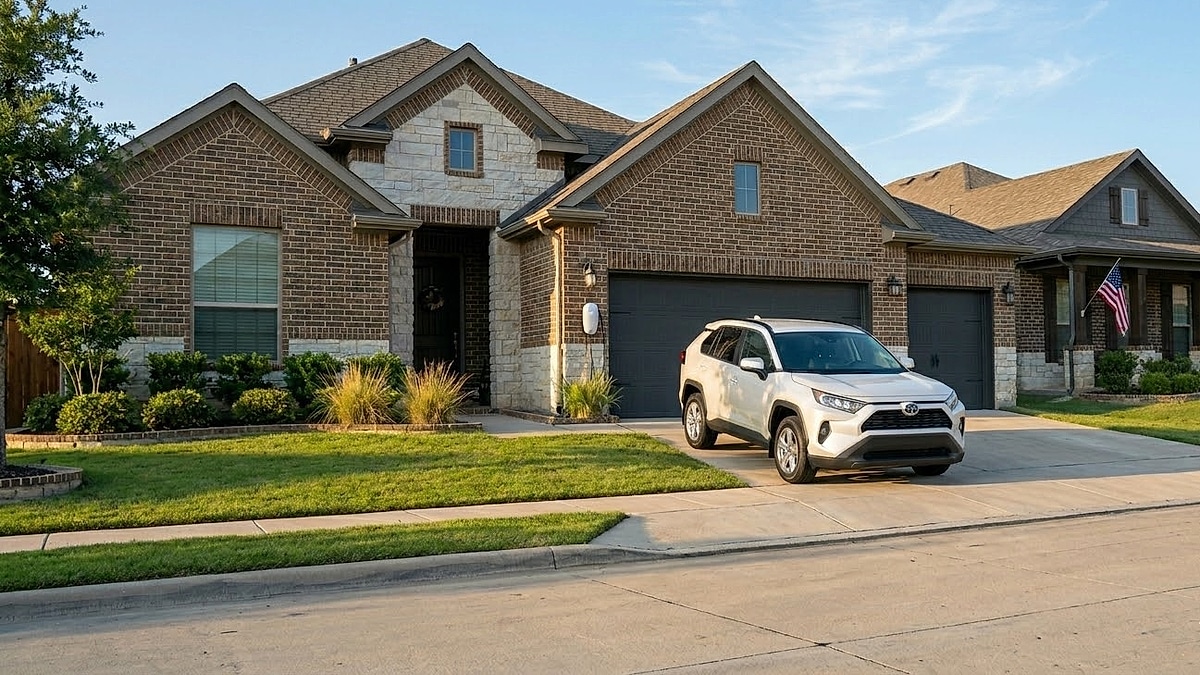
However, the “heavy price for gas” he fears is a localized reality. According to the U.S. Energy Information Administration (EIA), retail gasoline prices are projected to hover around $3.34 per gallon through 2026, while Texas-specific energy plans often allow for significantly lower charging costs. But before you jump ship, you have to look at the “hidden” math. As I previously warned readers, Toyota’s reputation for reliability can lead to deferred maintenance, which is the quickest way to turn a reliable Toyota into a money pit.
My Take
From my view, Isaias is in a “Golden Zone” of ownership. He has a 2021 XLE—a vehicle that has already taken its biggest depreciation hit and has proven itself reliable. Moving to a Tesla Model Y isn’t just a fuel-source change; it’s a lifestyle and financial pivot.
Tesla ownership in 2026 is vastly different from what it was five years ago. While the Model Y was recently named the Best Electric Vehicle for 2026 by Consumer Reports, that “Best” tag comes with caveats that a long-term Toyota owner might find jarring. You are trading physical buttons for a screen and a local dealer network for a centralized, often overwhelmed service app.
I’ve seen this play out dozens of times. An owner sees the gas bill hitting $150 a month and thinks the Tesla is “free” by comparison. But in Texas, while your “fuel” drops to $40 a month, your insurance premium often jumps by $100 a month due to the high repair costs of Tesla’s cast-aluminum frames. When you factor in the “Tesla Tax” on tires, which wear out 20% faster due to the vehicle’s weight, the “savings” can vanish into thin air.

From My View
Isaias mentioned the “two car seats in the back.” This is where the rubber meets the road literally. I’ve tested both of these cabins extensively. The RAV4 has a traditional, boxy door opening that is a dream for parents. The Model Y, while offering a flat floor, has a sloping roofline that can lead to a few “bonked heads” when leaning in to buckle a screaming toddler.
In a recent technical discussion on r/TeslaLounge, one parent highlighted the struggle, mentioning, “I have a 5-year-old and 1-year-old in a Model Y, and I honestly hate it… there is BARELY room for me to squeeze in between… the reach to buckle middle kid would be impossible,” which you can find in the full discussion here.
Compare that to the RAV4. My colleague at Steven Toyota notes that the RAV4 PHEV nearly doubles the range of traditional EVs, and its interior utility for families remains the benchmark. If you are doing the “work and back” shuffle in Texas heat, the RAV4’s physical AC vents and intuitive controls are, in my experience, superior to digging through three sub-menus on a touch screen just to aim the air at your face.
What You Need To Know
To give Isaias and you the best advice, I’ve compiled this analysis of the transition.
The Insurance Trap: In many Texas ZIP codes, insuring a Model Y costs roughly $2,100 per year, compared to $1,750 for a RAV4. That $350 difference eats up nearly three months of “gas savings.”
The “Cablegate” Risk: If Isaias keeps the RAV4, he must check the high-voltage cable connector. As I’ve reported, Toyota is quietly acknowledging that the “fixed” RAV4 Hybrid may still have a major $5,000 defect known as “Cablegate.”
Tire Life Expectations: Expect to replace tires on a Model Y every 25,000 to 30,000 miles. The RAV4 will easily see 50,000 miles on a set of quality all-seasons.
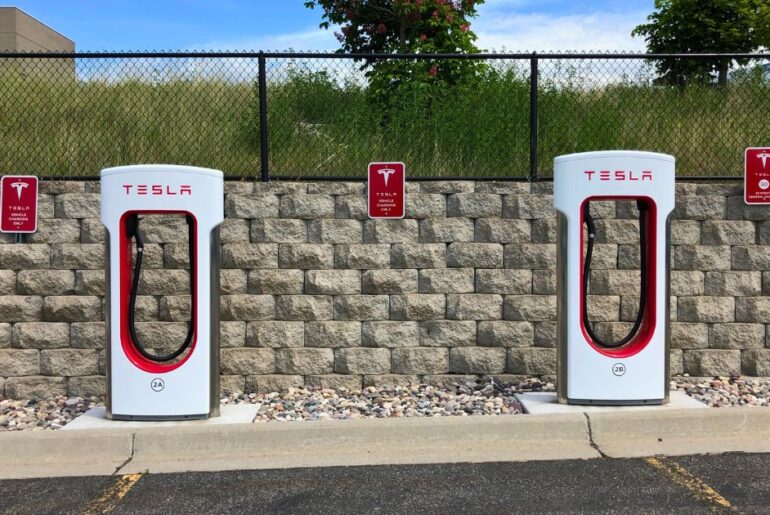
Charging Infrastructure: If you can’t charge at home in Texas, don’t buy the Tesla. Relying on Superchargers quickly turns your “cheap” electric miles into “Premium Gas” prices.
Field Observations from Owner Communities
The transition from Toyota to Tesla is a well-trodden path, but it isn’t always smooth. On r/TeslaModelY, a former Toyota owner noted the stark difference in build philosophy: “The Model Y is classified as an SUV, but it is not… It’s basically a sports car disguised as a sedan… I already curbed one of the wheels, making a sharp turn… that the [RAV4] made almost every single day without a single issue,” which you can read in this Reddit thread.
Based on my 30 years of experience, this aligns with how different suspension tuning can be. The RAV4 is built for utility and comfort; the Tesla is built for speed and tech. If you enjoy the “truck-lite” feel of your Toyota, the Tesla’s stiff ride (especially on 20-inch wheels) might feel like a step backward in daily comfort.
Key Takeaways
Don’t Fear the Gas Pump: While gas prices are volatile, the total cost of ownership (TCO) for a paid-off 2021 RAV4 is almost always lower than taking on a new $45,000 loan for a Tesla.
Verify Your Charging: In Texas, the “win” only happens if you have a Level 2 home charger.
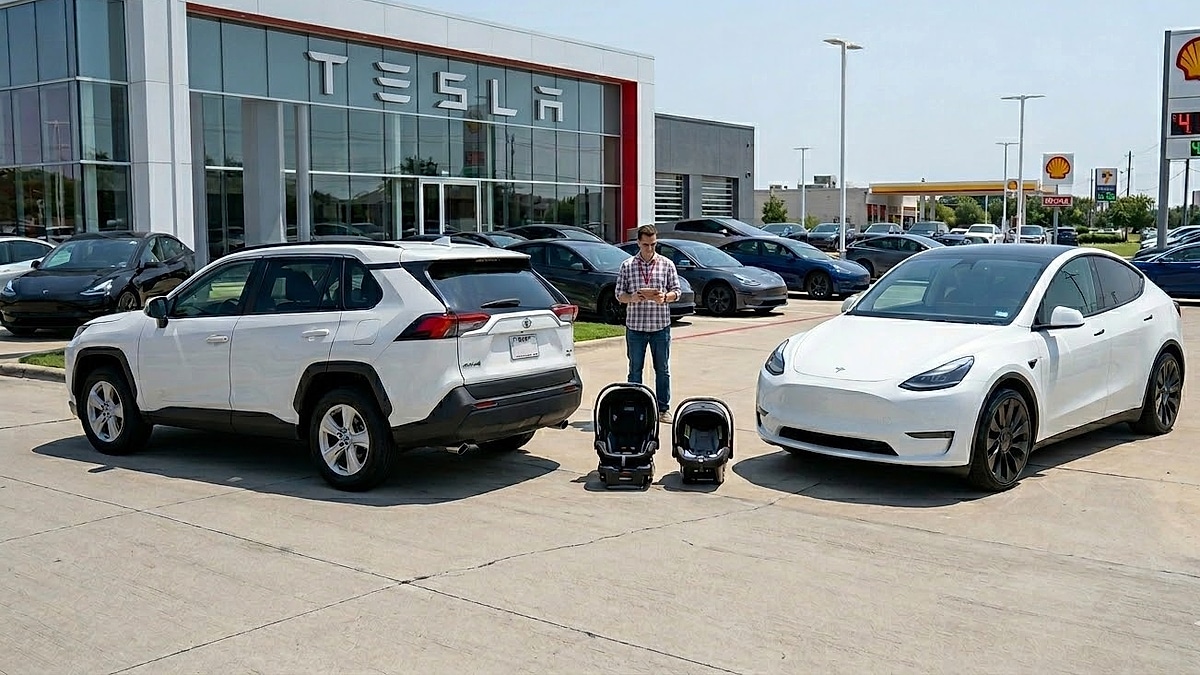
Check the Car Seats: Take your actual car seats to a Tesla showroom. The sloping roofline of the Model Y is the “buyer’s remorse” factor for parents.
Maintenance vs. Repair: You trade oil changes (RAV4) for high-cost potential out-of-warranty repairs (Tesla).
Before You Buy…
Ultimately, the choice between the rock-solid reliability of a 2021 Toyota RAV4 XLE and the cutting-edge allure of a Tesla Model Y comes down to whether you value “known costs” or “future tech.” While Isaias is right to keep an eye on the shifting tides of Texas gas prices, my three decades of investigating the automotive market suggest that the $1,100 in annual fuel savings often evaporate when you factor in higher insurance premiums and accelerated tire wear from a heavy EV. If your Toyota is paid off and performing without a hitch, you are already winning the financial game.
My advice? Take those car seats to a Tesla showroom for a real-world “fit test” before signing any paperwork, because once that RAV4 is gone, so is the peace of mind that comes with the world’s most proven hybrid platform.
It’s Your Turn
I’ve laid out the data on why Isaias might want to stick with his “bulletproof” 2021 XLE, but the most important evidence comes from you, the people actually behind the wheel every day. Have you made the jump from a RAV4 to a Model Y? Did the gas savings actually manifest in your bank account, or did the insurance and tires eat the profits?
What Would You Do? Tell us what you think in the comments below! Please leave your comments in the Add new comment link below.
About The Author
Denis Flierl is a 14-year Senior Reporter at Torque News and a member of the Rocky Mountain Automotive Press (RMAP) with 30+ years of industry experience. Based in Parker, Colorado, Denis leverages the Rockies’ high-altitude terrain as a rigorous testing ground to provide “boots-on-the-ground” analysis for readers across the Rocky Mountain region, California EV corridors, the Northeast, Texas truck markets, and Midwest agricultural zones. A former professional test driver and consultant for Ford, GM, Ram, Toyota, and Tesla, he delivers data-backed insights on reliability and market shifts. Denis cuts through the noise to provide national audiences with the real-world reporting today’s landscape demands. Connect with Denis: Find him on LinkedIn, X @DenisFlierl, @WorldsCoolestRides, Facebook, and Instagram.
Photo credit: Denis Flierl via Isaias J Perez
Follow us today…