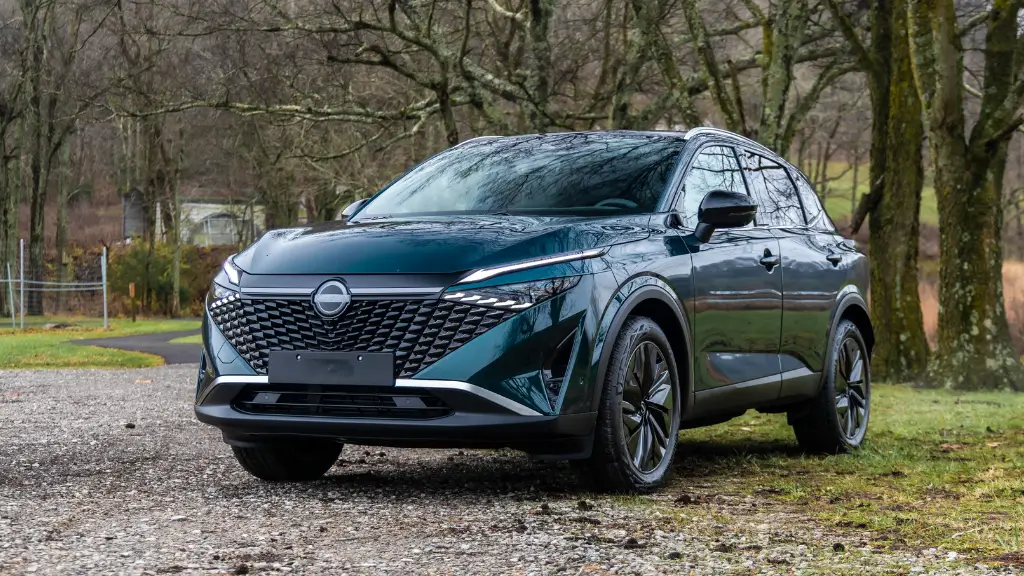
The new system uses a gas engine to generate electricity for the motor, positioning Nissan to compete as U.S. hybrid sales are expected to reach 18.4%.
On the Dash:
Nissan plans to introduce its e-Power series hybrid in the Rogue later this year, targeting growing hybrid demand.
Hybrids are expected to reach 18.4% of U.S. sales, while EV share is forecast to decline to 7.1%.
The system offers EV-like driving without a plug, addressing consumer hesitation toward full electrification.
Nissan is preparing to introduce its e-Power series hybrid system in the U.S. later this year, launching the technology in a new version of its Rogue compact SUV as hybrid demand accelerates.
The e-Power system uses a gasoline engine as a generator to power the vehicle’s motors, which exclusively power the wheels. Unlike traditional hybrids such as the Toyota Prius, the gas engine does not directly drive the vehicle. The system also differs from extended-range electric vehicles by using a smaller battery and not requiring a plug.
The timing aligns with shifting market dynamics, including rising gas prices, slower-than-expected electric vehicle adoption and increased interest in hybrid alternatives. S&P Global Mobility forecasts hybrids will account for 18.4% of U.S. new-vehicle sales this year, up from 12.6% last year and 7.3% in 2023. In contrast, pure EVs are expected to represent 7.1% of sales, down from 8% last year.
Nissan’s e-Power system is entering its third generation since debuting in Japan in 2016. The company has sold more than 1.6 million vehicles equipped with the technology across nearly 70 countries.
To meet U.S. performance expectations, Nissan developed a more powerful 1.5-liter, three-cylinder turbocharged engine for the system, along with updated packaging and engineering improvements. The engine is designed to improve efficiency at higher speeds while continuing to function solely as a generator.
The system’s driving characteristics include strong acceleration and regenerative braking, with reduced noise, vibration, and harshness compared to traditional internal combustion vehicles. The setup eliminates the need for a conventional transmission and driveshaft.
While Nissan has not disclosed official fuel economy figures for the upcoming Rogue, a European version of the Rogue Sport equipped with e-Power achieved more than 40 miles per gallon in heavy city driving. The current Rogue achieves more than 30 MPG depending on the model.
The system may appeal to consumers hesitant to adopt fully electric vehicles, as it does not require charging and maintains familiar refueling behavior. Nissan said the platform is modular and could be adapted to other vehicles, though no additional U.S. applications have been confirmed.