The short story here is that, no, electric turbochargers are not gimmicks. They’re the real deal, with the ability to noticeably boost power and improve efficiency compared to the typical turbo units. But a bigger question may be whether these things are turbochargers at all. Remember, the classic definition of a turbo involves the concept of using exhaust gas to spin a turbine, which then compresses fresh air and forces it into the motor. With more air meeting more fuel, the result is more power. Yet what differentiates an electric turbo is that it actually doesn’t have to use exhaust gas to get the job done — it can rely on electricity instead.
Now, to be clear, the so-called electric turbochargers used in cars like the Porsche 911 Turbo S are engineered to use both exhaust gas and electricity in concert. For instance, an inherent problem with typical turbos is that it takes a certain amount of time between when you press on the accelerator and when the exhaust gases build up enough for the spinning turbine to make a noticeable difference in performance. Yet a key benefit of electricity is that it gets the turbo up to speed with no lag. Then, once the exhaust-gas pressure does get high enough, the unit can turn off the electricity and run in the traditional turbo manner.
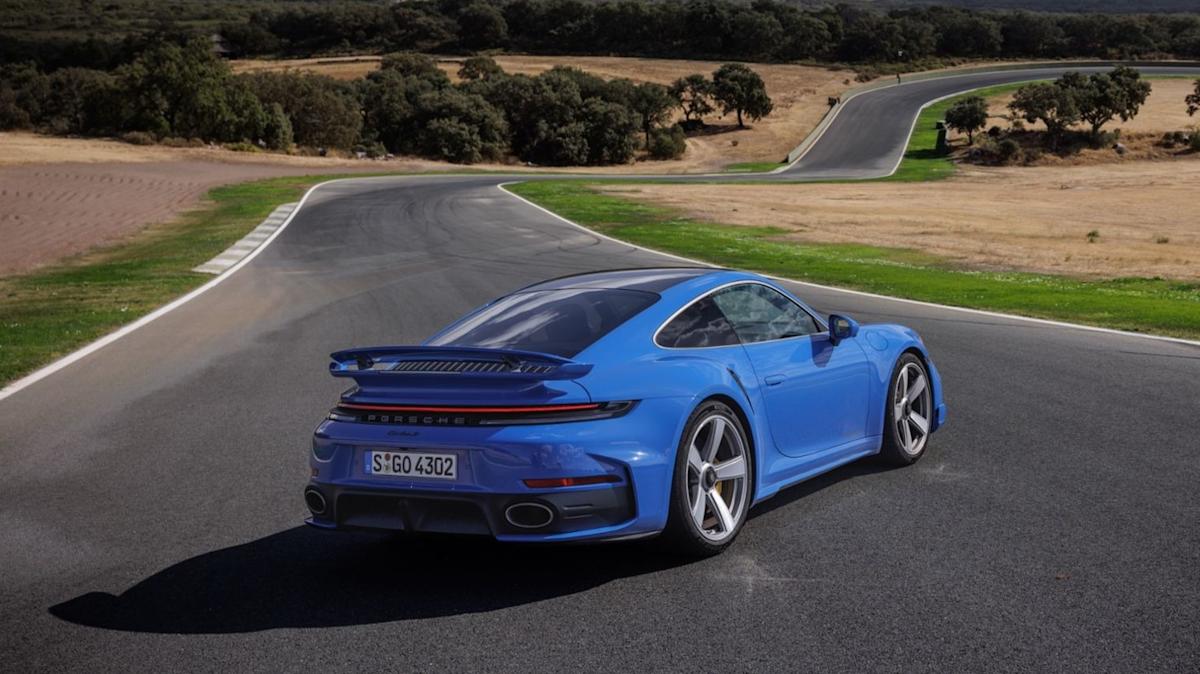
How does that come together on the road? Well, the ’26 Turbo S, now also packing Porsche’s T-Hybrid system to go with its two electric turbochargers, can leverage 701 horsepower to race to 60 mph in 2.4 seconds (with the Sport Chrono pack) and hit a top speed of 200 mph (on summer tires). It has a 14-second-quicker Nürburgring time than its predecessor, too.
Read more: Here Are The Worst Car Myths
Advantages and disadvantages of electric turbos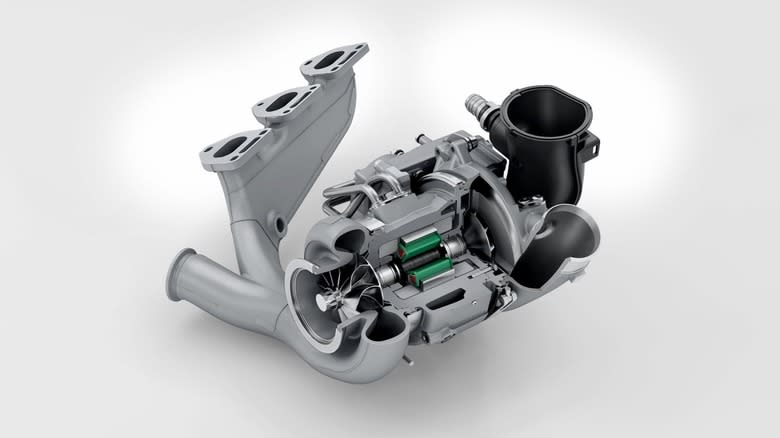
Electric turbocharger from 2024 Porsche 911 Carrera GTS – Porsche
The fact that electric turbos can be spun up using electric motors also opens up a great opportunity to recuperate energy in roughly the same manner as with regenerative braking. In the Porsche’s case, the electric motors turning the turbos can be used to control just how fast their turbines are spinning, essentially acting as brakes in the process. This captures the energy spinning the turbines, which can then be fed back into the car’s electrical system instead of lost through a wastegate, for instance.
Generally speaking, electric setups allow for larger turbos as well, and that leads to further green gains: Increasing the size of the turbo means the exhaust gases can flow through easier, leading to more complete combustion and fewer emissions. It’s not really an option for regular turbos, though, since the increase in turbo size means more pressure is needed for it to be effective, which means more lag time is required to build up that pressure.
All that’s good news. What’s not so good about electric turbos — at least for now — is their added expense and complexity. In terms of cost, well, they were originally developed for one of the most high-priced forms of high performance racing, Formula 1, where steering wheels can cost more than your daily driver. Moreover, the few production cars now offering the systems — including not only the 911 Turbo S but also certain Mercedes-AMG machines and the road-legal Ferrari F80 – are likewise plenty pricey. As for how complex the systems are, remember Lusser’s Law of System Reliability, which says the more components in a given system, the more likely something will break simply based on sheer mathematics. And we don’t mean more lap records.
Want more like this? Join the Jalopnik newsletter to get the latest auto news sent straight to your inbox, and add us as a preferred search source on Google.
Read the original article on Jalopnik.