Dear Alex,
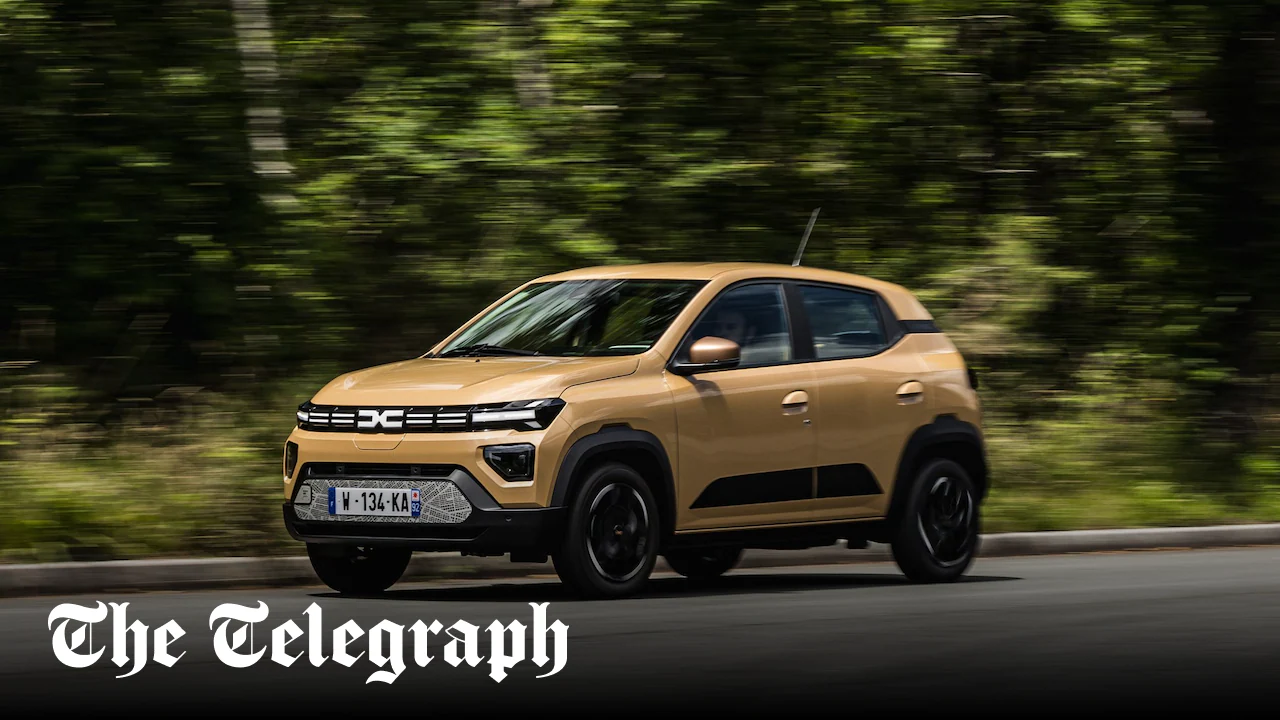
My daughter’s Dacia Spring is a great little car for her weekly commuting of about 100 miles. My other daughter has seen the car’s low Euro NCAP rating and says it is unsafe; she won’t get in it. Can you help me describe why that is not the case?
– PF
Dear PF,
I’m not so sure that I can. It’s true that a low score in the industry-standard Euro NCAP crash tests doesn’t necessarily equate to an unsafe car. That’s because the overall star rating usually takes into account driver assistance systems which, to my mind, are of debatable merit, especially if they work so poorly that people turn them off anyway.
That’s why I always advise looking more deeply at the detail within the Euro NCAP report. This is divided into four sections: adult occupant protection, child occupant protection, protection of vulnerable road users and safety assist (those electronic driver aids), with each section awarded a percentage score.
To work out how well a car will protect its occupants, the first two sections relate directly to the way the car deforms in Euro NCAP’s crash tests. Most modern models get a score of 80 to 90 per cent. Anything above 90 is impressive; anything below 80 is slightly sub-par, although probably a stretch to describe as “unsafe”.
The Spring’s scores in these two sections were 49 per cent and 56 per cent respectively. And to reiterate: those results have nothing to do with driver aids, and everything to do with the car’s structural integrity.
Indeed, Euro NCAP’s crash testers pointed out that the Spring’s doors were difficult to open after the impact, which gives an idea of the extent of the deformation of its bodyshell.
Yet context is required. Small cars tend not to do brilliantly in these crash tests. The Kia Picanto, for example, scored 79 per cent and 64 per cent (admittedly better than the Spring’s).
Does this make the Spring an unsafe car? That depends on what you compare it with. If your daughter was previously riding a motorcycle or scooter for her commute, for example, the Spring is almost certainly a safer option, simply because it offers that much more protection.
What’s more, crash safety is almost always about one’s appetite for risk. If, for, example, your daughter switched to her Spring from a 20-year-old hatchback, it may well be that the Spring isn’t less safe by comparison. After all, crash testing standards have risen over the years and Euro NCAP’s scoring benchmarks have been raised with them.
However, I imagine that almost any small car from the last few years will offer a greater level of protection than the Spring. So while I wouldn’t necessarily call it unsafe, it’s also true that there are plenty of new cars that offer a considerably higher level of safety for not much more outlay.