Key Points
Rivian’s R2 SUV will compete directly with Tesla’s Model Y.
Both companies could ultimately win long-term.
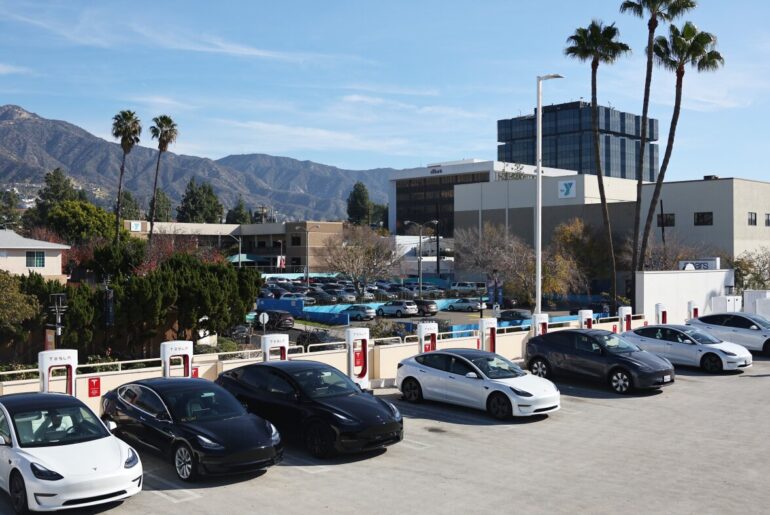
For years, Tesla (NASDAQ: TSLA) has had much of the U.S. EV market to itself. There’s a reason why Tesla’s market cap is well above $1 trillion, while most other EV stocks are valued at less than $20 billion. Tesla controls more than half of the U.S. EV market, a commanding market position fueled by its most popular vehicle: the Model Y.
The Model Y represents more than 70% of Tesla’s vehicle sales. But next month, the Model Y will have a new competitor: Rivian’s (NASDAQ: RIVN) R2 SUV. How scared should Tesla investors be? And how bullish should Rivian investors be? The answer is more surprising than you’d expect.
Will AI create the world’s first trillionaire? Our team just released a report on the one little-known company, called an “Indispensable Monopoly” providing the critical technology Nvidia and Intel both need. Continue »
Expect Rivian to eat into Tesla’s market share
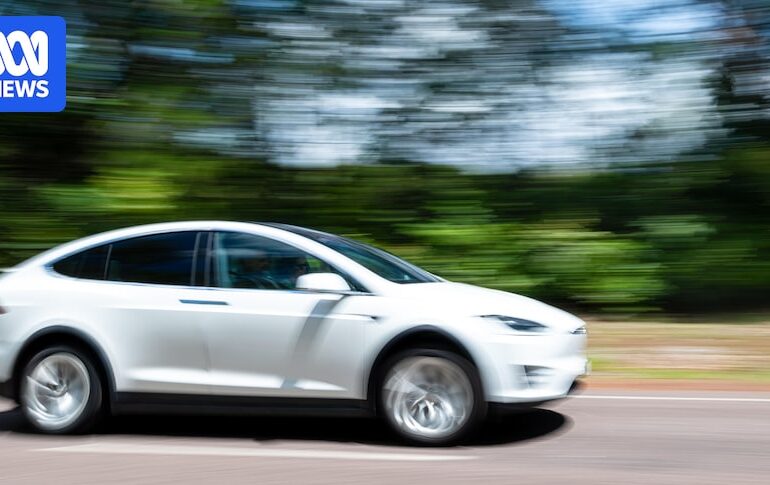
Tesla’s Model Y, a crossover design, was the top-selling EV in 2025. An estimated 317,800 units were sold last year. The next top-selling model was Tesla’s Model S, a sedan. The rest of the top-selling EVs of 2025 have something in common: Most are SUVs. Tesla’s Model S is the only sedan to crack the top 10. Tesla’s Model Y is the only crossover. There are two full-sized trucks, too. But the rest of the list — a total of six out of 10 — are SUVs.
Notably, Tesla does have an SUV on the market: its luxury Model X vehicle. But that vehicle’s starting price of $90,000 is a non-starter for most vehicle buyers. Plus, CEO Elon Musk revealed earlier this year that Tesla will likely discontinue all production of that model.
In total, we can glean two things from this information. First, car buyers love buying Teslas. Second, car buyers love buying SUVs. And yet Tesla doesn’t have an affordable SUV in its lineup. The Model Y — a crossover — is as close as it gets, which is likely why that model is so successful. Producing an affordable SUV is more difficult than producing an affordable crossover, however, as SUVs are typically larger, requiring more raw materials and factory work to produce. But starting next month, Rivian is expected to start deliveries on what I consider the holy grail of EVs in the U.S.: a feature-packed, long-range SUV priced under $50,000.
It’s not hard to put the pieces together. Tesla’s vehicle sales rely heavily on Model Y sales. And next month, Tesla will arguably face its stiffest competition yet in the form of Rivian’s R2 SUV. This should be good news for Rivian and bad news for Tesla. But there’s a chance that more competition for Tesla’s Model Y will hurt the company’s prospects less than you might think.
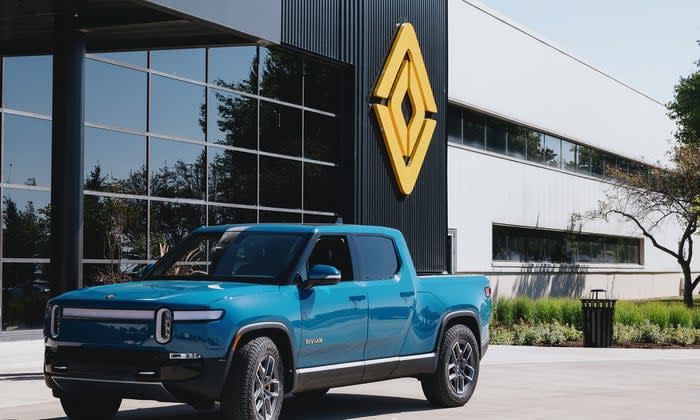
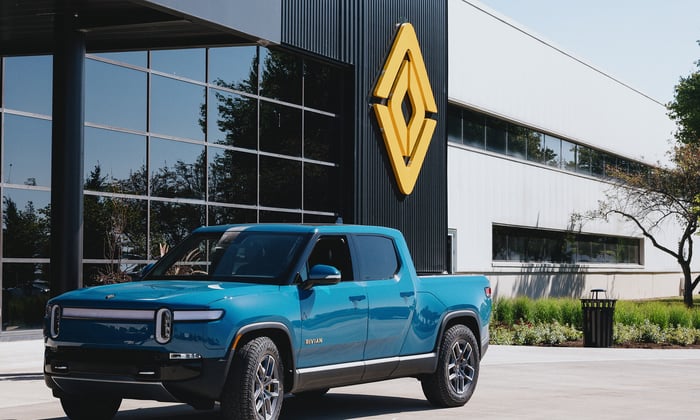
A Rivian R1T truck in a parking lot.
Image source: Rivian.
Tesla’s valuation won’t hinge on Model Y sales
Take a look at Tesla’s valuation and you’ll quickly realize that its $1.2 trillion market cap isn’t predicated on its auto manufacturing business. Tesla’s auto volumes fell for the first time in 2025, and analysts aren’t confident that a turnaround will arrive anytime soon. And yet Tesla’s share price continues to hit new highs. Why? Because the market doesn’t view this legacy business as critical for Tesla’s future prospects.
“Tesla is ‘entering a transition phase,’” observes a recent report from Reuters, “where it is asking investors to underwrite potential revenue from self-driving software in its cars and robotaxi business before auto sales recover.” In short, the market is now valuing Tesla as an artificial intelligence (AI) and autonomous driving stock, not a manufacturing business. The robotaxi market alone, which Tesla intends to compete in heavily, could be worth $5 trillion to $10 trillion over the long term. If Tesla succeeds in capturing that opportunity, the decline of its legacy auto business will be fairly easy to stomach.
Oddly enough, both Rivian and Tesla have room to succeed. Rivian stands to gain market share at Tesla’s expense, while Tesla has the chance to target markets far bigger than its current sales footprint. So yes, Tesla has reason for concern when it comes to Rivian’s R2 launch. But that one challenge won’t make or break the company’s current valuation, which incorporates far more than just auto sales.
Don’t miss this second chance at a potentially lucrative opportunity
Ever feel like you missed the boat in buying the most successful stocks? Then you’ll want to hear this.
On rare occasions, our expert team of analysts issues a “Double Down” stock recommendation for companies that they think are about to pop. If you’re worried you’ve already missed your chance to invest, now is the best time to buy before it’s too late. And the numbers speak for themselves:
Nvidia: if you invested $1,000 when we doubled down in 2009, you’d have $447,961!*
Apple: if you invested $1,000 when we doubled down in 2008, you’d have $47,222!*
Netflix: if you invested $1,000 when we doubled down in 2004, you’d have $495,179!*
Right now, we’re issuing “Double Down” alerts for three incredible companies, available when you join Stock Advisor, and there may not be another chance like this anytime soon.
*Stock Advisor returns as of March 21, 2026.
Ryan Vanzo has no position in any of the stocks mentioned. The Motley Fool has positions in and recommends Tesla. The Motley Fool has a disclosure policy.