Stay informed with free updates
Simply sign up to the Electric vehicles myFT Digest — delivered directly to your inbox.
At least 12 global carmakers are scaling back their electric vehicle plans amid stubborn demand for combustion engines and a rollback of supportive policies in both the US and Europe.
Last week, Honda abandoned its plan to stop making combustion engine cars by 2040 and forecast $16bn in losses over the next two years from its EV strategy overhaul. Mercedes-Benz, Ford, Stellantis and Volvo Cars have also cut their all-electric targets.
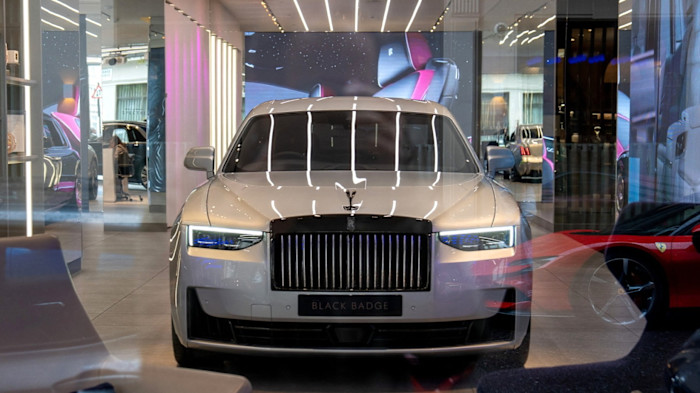
Among luxury brands, BMW-owned Rolls-Royce is the latest to change course, announcing this week that it would continue making petrol engine vehicles beyond 2030.
Bentley, Lotus, Audi and Porsche have already scaled back plans to go fully or 80 per cent electric over the next decade, with many choosing to extend the availability of plug-in hybrid cars in their line-ups.
Volkswagen-owned Lamborghini also recently abandoned its plan to launch its first fully electric car, the Lanzador, by 2030. The model will be a plug-in hybrid instead.
“The rejection rate of the full electric cars is increasing,” said chief executive Stephan Winkelmann. “The emotional part [of a Lamborghini] is the vibration of the car, how you steer, how you brake, and one of the biggest [factors in] the rejection of fully electric cars was the missing sound of the engine.”
Ferrari last year halved its 2030 EV production target but is pressing ahead with its first electric model, saying it aims to provide the same “driving thrill” whether the car is petrol, hybrid or battery-powered.
Chief executive Benedetto Vigna has repeatedly said Ferrari would not force fans to give up the familiar roar of its petrol engines.
Bentley, which is also owned by Volkswagen, said last year that it would continue selling plug-in hybrids beyond 2035, ditching its EV-only target.
The transition to EVs had been slower for luxury cars.
In 2023, Rolls-Royce became one of the first luxury brands to launch an all-electric vehicle, the Spectre. Ferrari will begin taking orders for its all-electric Luce in May, while Bentley will launch its first electric model next year — two years behind its initial target.
“During the time since Rolls-Royce Spectre launched, the world has changed,” said Chris Brownridge, chief executive of Rolls-Royce Motor Cars.
Since Donald Trump came to power, the US president’s administration has ended federal tax credits for people buying EVs, cut spending on charging infrastructure and watered down vehicle emission targets. The EU has also weakened its emission targets.
Brownridge stressed that the company would push ahead with EV launches while continuing to sell cars with the traditional Rolls-Royce V12 petrol engine.
FT calculations suggest that changes to EV strategies, including cancelled car launches and investment plans, have cost the global car industry at least $75bn in the past year.