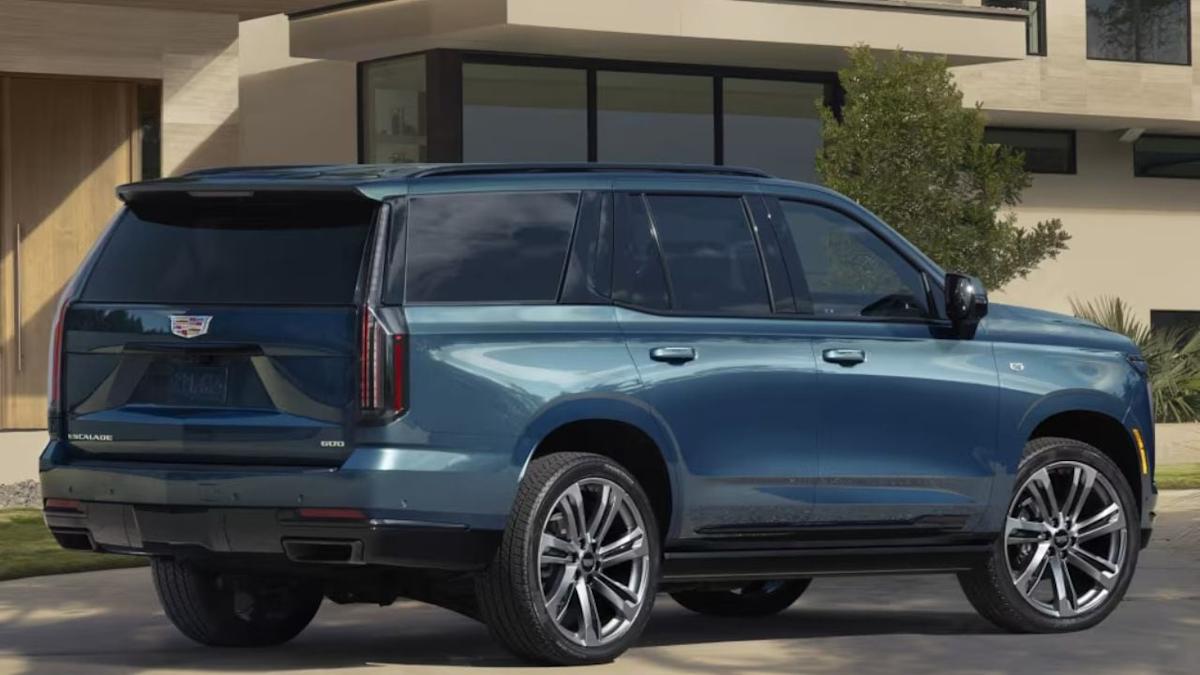
Cadillac is in the middle of one of the biggest transformations in its modern history, with a clear goal of restoring its place among the world’s luxury leaders. The brand has already made several bold moves, from launching the ultra-exclusive Celestiq to rapidly expanding its EV lineup. One of the clearest examples is the Escalade IQ, which recently earned MotorTrend’s 2026 SUV of the Year title and has become one of Cadillac’s most visible symbols of its electric push.
At the same time, General Motors’ luxury division has also been experimenting with how it presents vehicle specifications. Back in 2019, Cadillac introduced a naming system based on torque, expressed in rounded Newton meter figures.
The idea was to shift attention away from engine displacement and toward real output, especially as electric vehicles began to make traditional engine-based naming feel less relevant. In theory, it was a modern solution for a changing market.
The Naming System Never Really Connected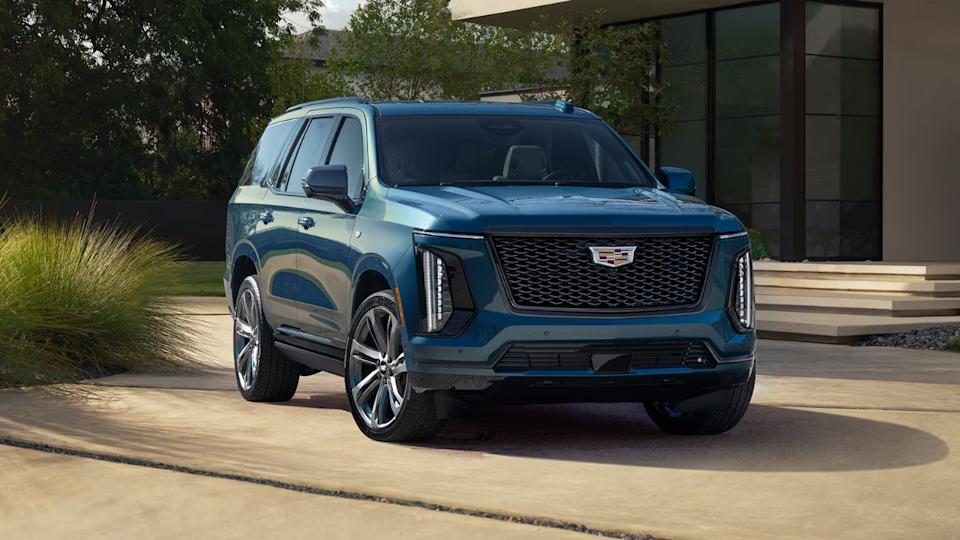
Photo Courtesy: Cadillac.
In practice, though, the strategy created confusion rather than clarity. For many buyers, the numbers looked arbitrary and difficult to decode, and the problem was even more obvious in the United States, where torque is traditionally discussed in lb-ft, not Newton meters. A badge such as “900 E4” on the Vistiq was meant to point indirectly to about 650 lb-ft of torque, but that was never the kind of information most luxury buyers were likely to read naturally from a model name. Instead of making performance easier to understand, the system often made Cadillac’s lineup feel more complicated.
Now Cadillac is changing course. The brand has confirmed that starting with the 2027 model year, it will drop the NM-based badging entirely, beginning with the Vistiq. MotorTrend reported that Cadillac said the move is meant to streamline the appearance of the rear badging. In practical terms, that means the Vistiq will lose the numeric “900” portion of its badge, while E4 will remain as a simpler identifier for a dual-motor all-wheel-drive electric setup.
The same approach is expected to spread across the rest of Cadillac’s electric range. The Escalade IQ is set to lose its “1000” badge, while single motor models such as the Optiq will no longer rely on extra numeric badging to highlight output. In other words, Cadillac is moving toward cleaner, easier-to-read model names just as its EV lineup becomes a bigger part of the brand’s identity.
Gas Models Are Being Simplified Too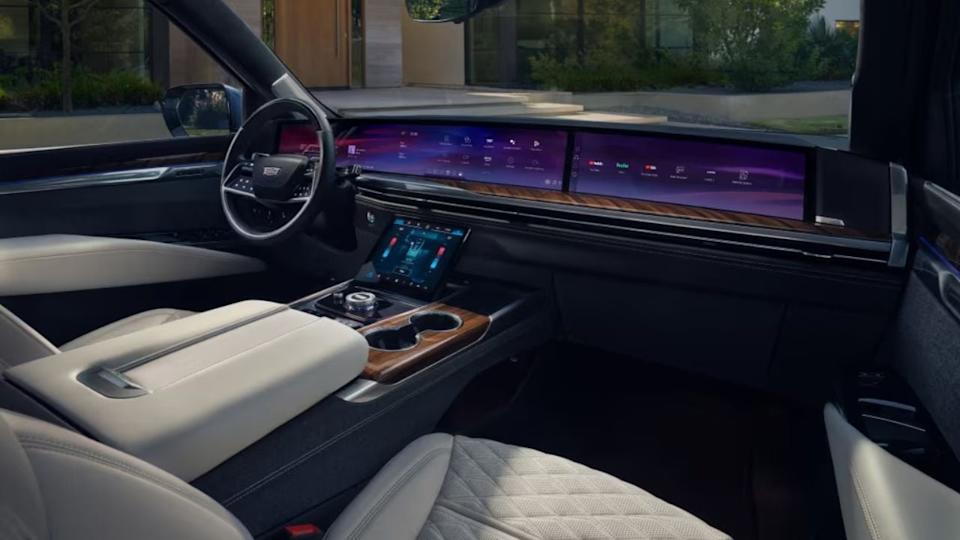
Photo Courtesy: Autorepublika.
The change will not be limited to EVs. Cadillac is also simplifying the naming of its gasoline-powered vehicles. Turbocharged models will keep the “T” designation, but without the extra numbers that used to follow it, while naturally aspirated models will move toward an even cleaner naming structure. That means vehicles such as the CT5 and Escalade will fit more neatly into a broader, less cluttered system that is easier for buyers to understand at a glance.
This shift arrives as Cadillac is also trimming and reshaping its portfolio. The XT4 is already officially listed by Cadillac as discontinued in 2025, and GM has confirmed that the CT4 will end after the 2026 model year. Those decisions make it clear that Cadillac is focusing its efforts more tightly on the vehicles and segments it sees as most strategic and most profitable going forward.
A Simpler Identity For A More Flexible Future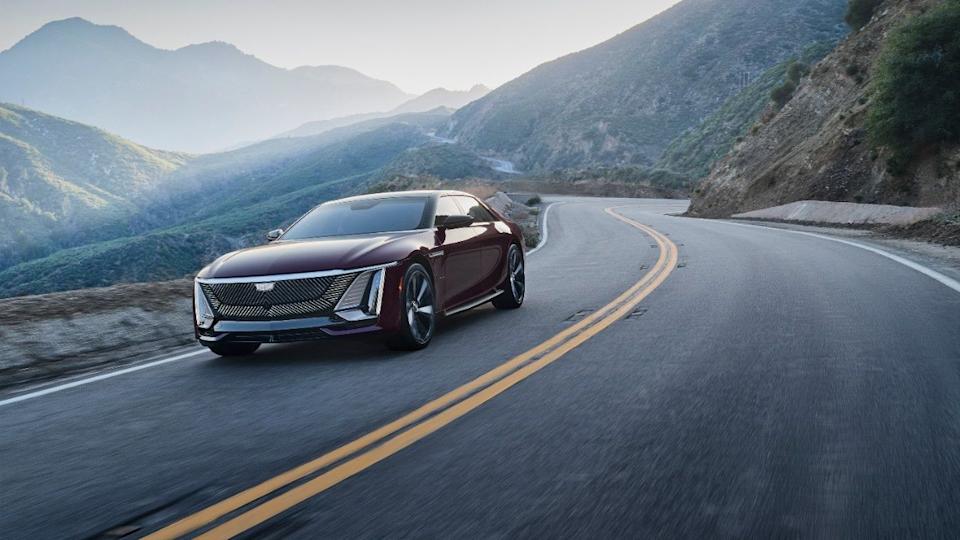
Photo Courtesy: GM.
That makes the new naming strategy part of a much larger plan. Cadillac is not just trying to make its vehicles easier to understand. It is also giving itself more freedom to improve performance, range, and technology over time without having to constantly adjust badges to match exact output figures. That kind of flexibility matters more as the brand continues moving deeper into electrification and tries to build a cleaner, more recognizable identity across a lineup that now ranges from the Optiq to the Celestiq and Escalade IQ.
In that sense, this is less about admitting failure and more about recognizing what buyers actually respond to. Cadillac clearly wanted a more technical and forward-looking naming system, but the market never fully embraced it. Now the brand is simplifying the message at exactly the moment when its product strategy is becoming more ambitious. If Cadillac wants its vehicles to feel more intuitive, more premium, and more globally coherent, this is probably the right time to make that change.
This article originally appeared on Autorepublika.com and has been republished with permission by Guessing Headlights. AI-assisted translation was used, followed by human editing and review.
Read More
Four Things You Should Never Use WD-40 On