The BYD Sealion 7 is a mid-size electric SUV priced from $54,990 before on-road costs. It sits in one of the most competitive segments in Australia, going up against the Tesla Model Y (from $58,900), Kia EV5 (from $56,770) and XPeng G6 (from $54,800). Two variants are available: the rear-wheel-drive Premium at $54,990 and the all-wheel-drive Performance at $63,990, both before on-road costs. This is a review of the Premium variant.
The Sealion 7 launched in Australia in February 2025 and quickly became one of the country’s best-selling EVs. In 2025 it was the second best-selling EV (1998) behind the Tesla Model Y (2546). That is a strong result for a model in its first year on sale.
+SCORE BREAKDOWN
Good points
Comfortable rideWell equipped for the priceSpacious cabinADAS works well without being intrusiveCompetitive pricing
Could be better
Steering is too light in Comfort modeClimate controls buried in touchscreenDC charging speed trails some rivalsRearward visibility is poorExterior
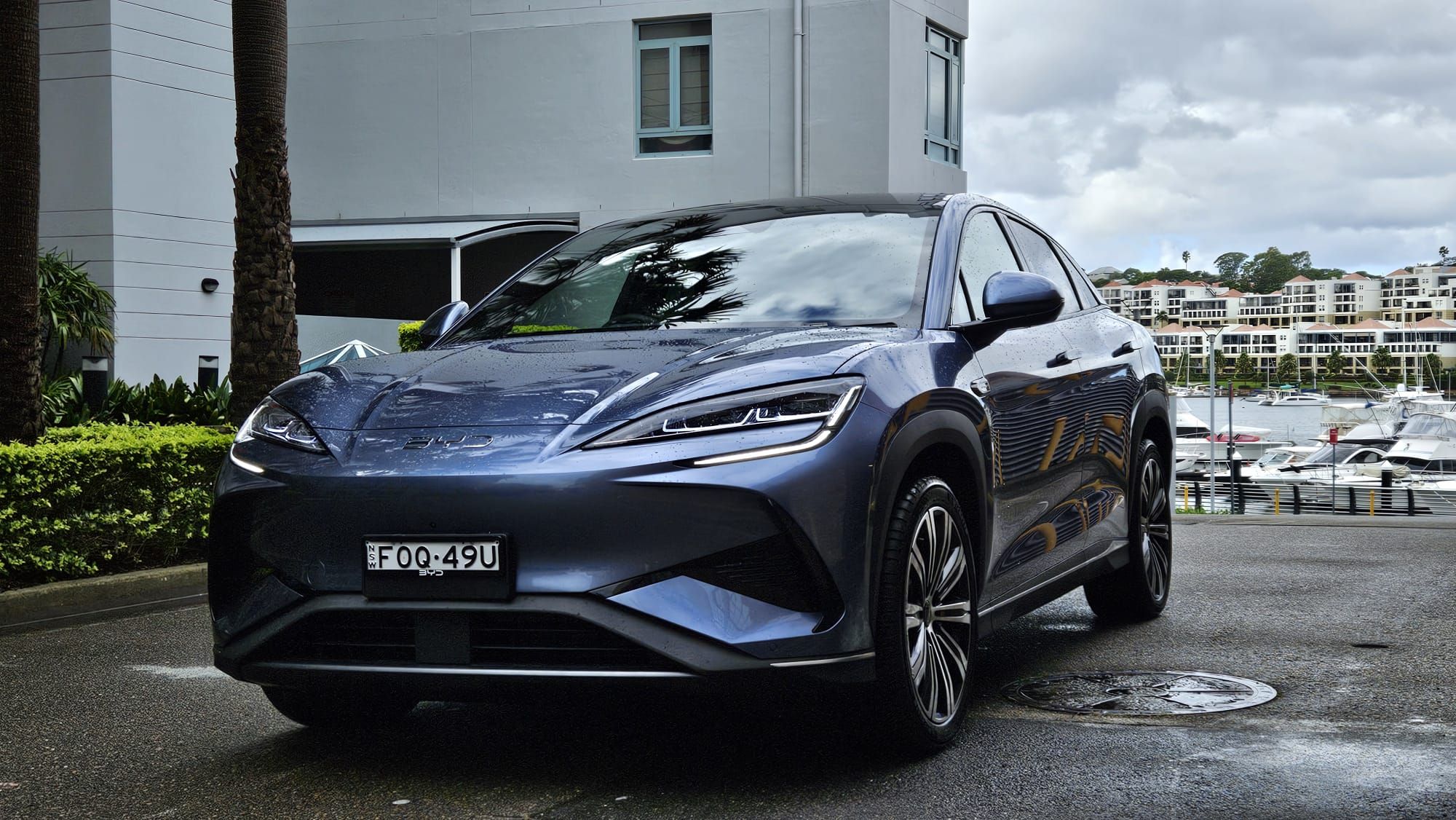
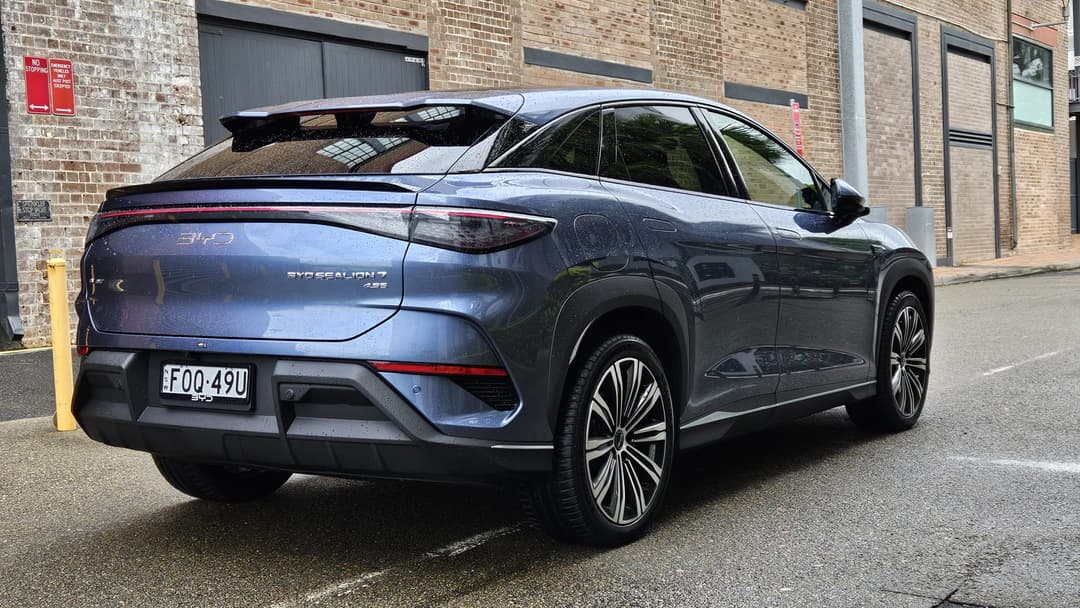
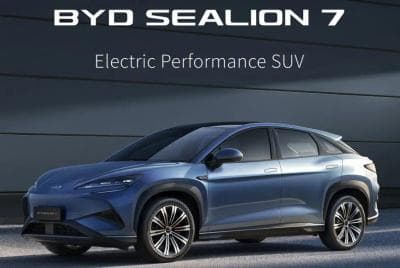
The Sealion 7 has a coupe-style SUV profile with a sloping roofline and wide stance. The design is clean and modern, with slim LED headlights, sculpted body panels and retractable door handles that sit flush when the car is locked or moving. It looks premium without being divisive.
At 4830mm long, it is large for a mid-size SUV. The 19-inch alloy wheels on the Premium are wrapped in Continental EcoContact 6 tyres, with a wider 255/45 R19 rear and 235/50 R19 front for better traction. Four paint options are available: Aurora White (standard), Atlantis Grey (+$1500), Cosmos Black (+$1500) and Shark Grey (+$2000).
 Inside
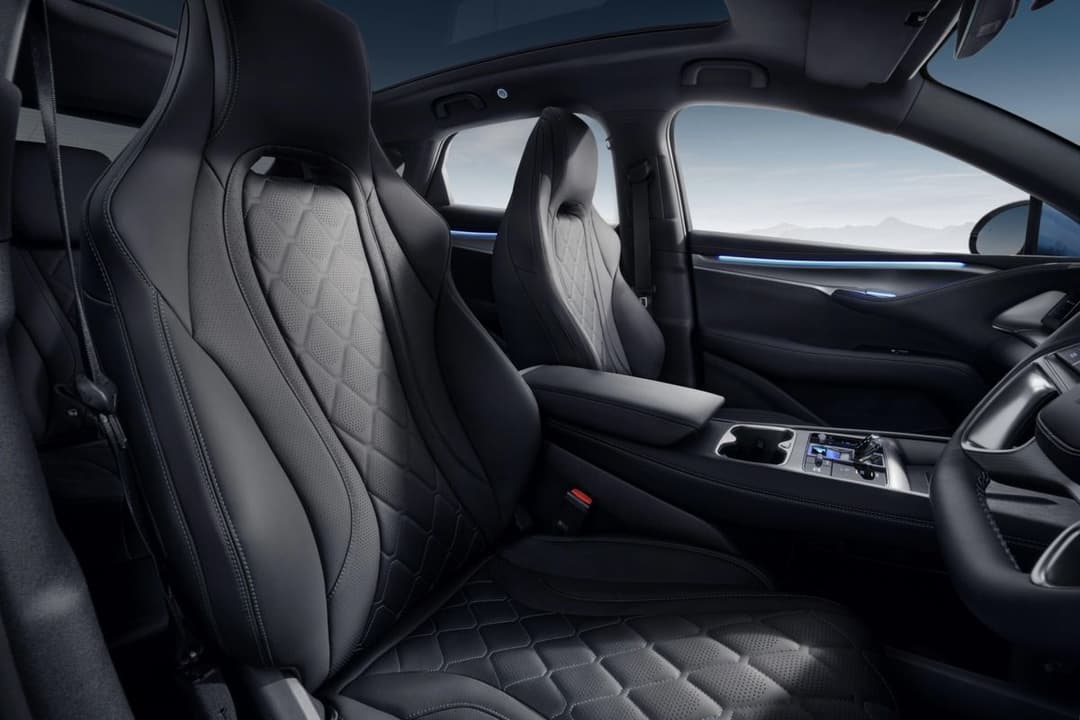
The cabin feels modern and well put together. Black leather upholstery, grey plastics and metal-look trim give it an understated look. The seats are plush and comfortable, and the soft-touch materials extend to areas like the lower centre console and glovebox lid, which is unusual at this price point.
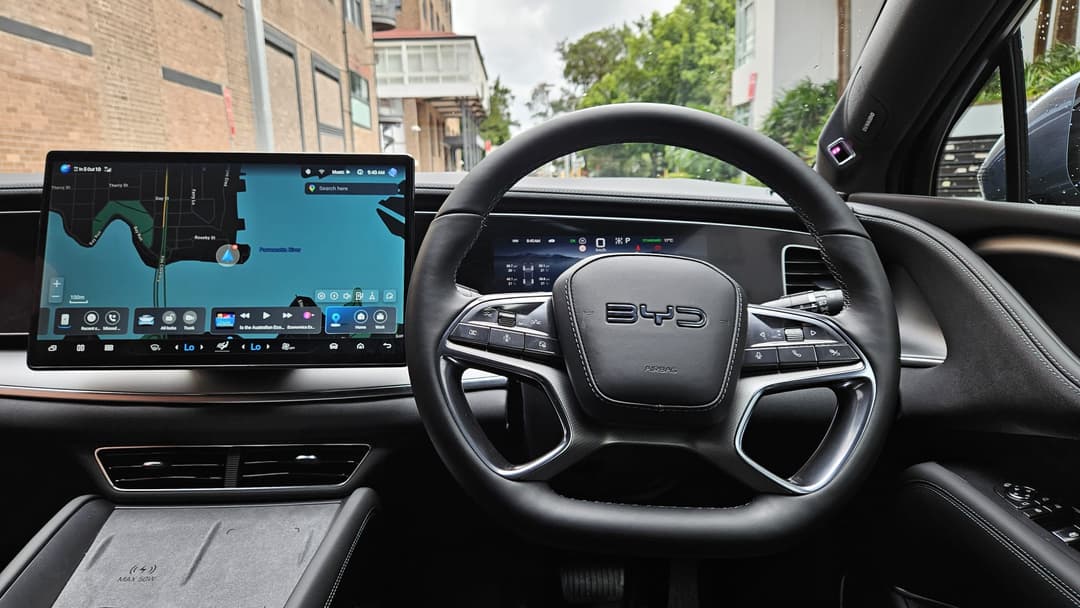
The headline feature is the 15.6-inch rotating touchscreen. It is sharp and responsive, and can rotate 90 degrees into portrait mode. Climate controls are buried in the screen, but BYD has a useful workaround: a three-finger swipe adjusts temperature (vertical) or fan speed (horizontal), and this works even while Apple CarPlay is active. Physical air vents are also present, which is a welcome touch.
The 10.25-inch digital instrument cluster sits low on the dash and can attract dust and glare at certain angles. A head-up display supplements it well. Wireless Apple CarPlay is standard; Android Auto is wired. The 12-speaker Dynaudio sound system is decent without being exceptional.
Rear passenger space is generous. There is good legroom and headroom for adults. The panoramic sunroof has a powered sunshade, which is handy in Australian summers. Storage is practical throughout, with dual cupholders, a deep centre console bin, door bottle holders and map pockets front and rear.
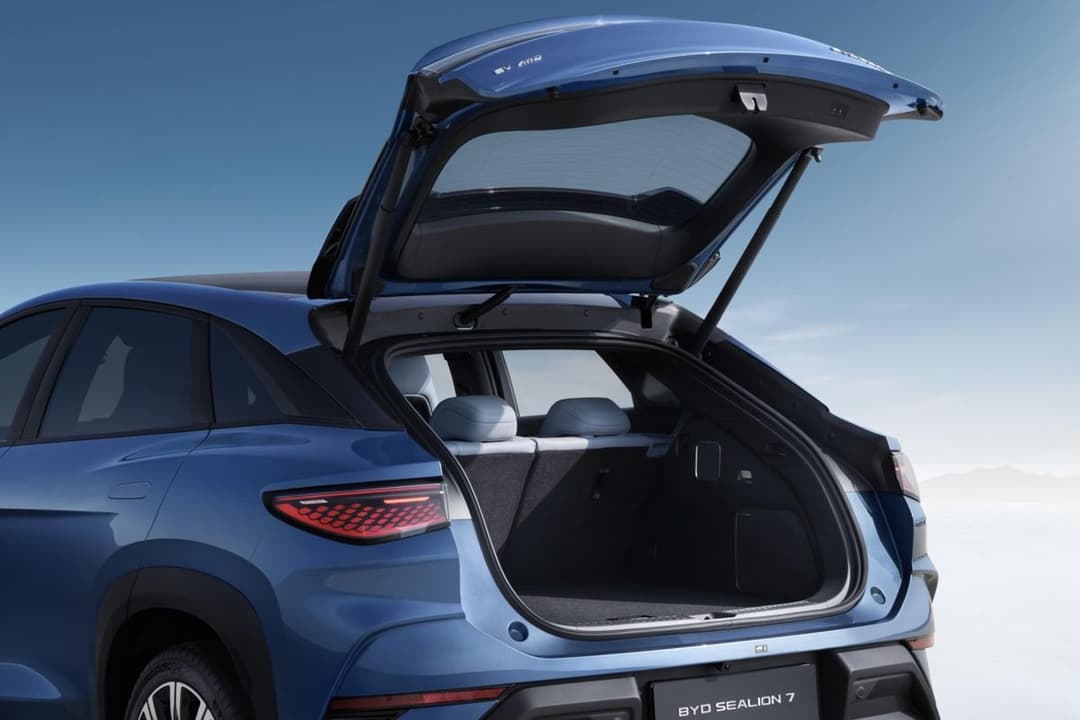
The boot holds 500L with the seats up and the frunk adds 58L under the bonnet, a good place to store charging cables. The rear seats split 60:40 and fold flat. ISOFIX anchors and top tethers are easy to access. The powered tailgate is standard on both variants.
 On the Road
The Sealion 7 is comfortable to drive. The suspension is tuned on the firmer side compared to other BYD models, which gives it a more planted, premium feel. It handles large bumps and road undulations well, though there is some chatter over smaller imperfections.
Steering is adjustable between Comfort and Sport modes. Comfort is too light for most situations. Sport is the better choice as it adds weight and feel without being heavy. There is not much body roll, which helps both driver and passenger comfort.
The single rear motor produces 230kW and 380Nm. It is quick off the mark in Normal and Sport modes. Eco mode dials back performance to protect range. One quirk: when you lift off the accelerator, there is a brief moment before the car starts to decelerate, which can catch you off guard. Regenerative braking has two settings, Standard and Larger, but neither is strong enough to enable one-pedal driving.
Road noise can be noticeable on rough surfaces, and wind noise is present at highway speeds. Rearward visibility is limited due to the sloping roofline and small rear window, but the 360-degree surround camera is high quality and helps when parking.
Specs
2025 BYD Sealion 7 Price and Specs Revealed: Undercuts Tesla Model Y by over $8000
Read More →
 Battery, Range and Charging
Both variants share the same 82.56kWh lithium iron phosphate (LFP) Blade battery. The Premium has a claimed WLTP range of 482km, which is ahead of the Tesla Model Y RWD (466km), Kia EV5 Air Standard Range (400km) and XPeng G6 Standard Range (435km).
In real-world testing, energy consumption came in around 18.0kWh per 100km, a little worse than the the claimed 17.1kWh/100km.
AC charging supports 11kW, which is a first for BYD in Australia. DC fast charging peaks at 150kW, with a claimed 10-80% charge time of 32 minutes. These speeds are about average for the segment.
Battery and Charging Specs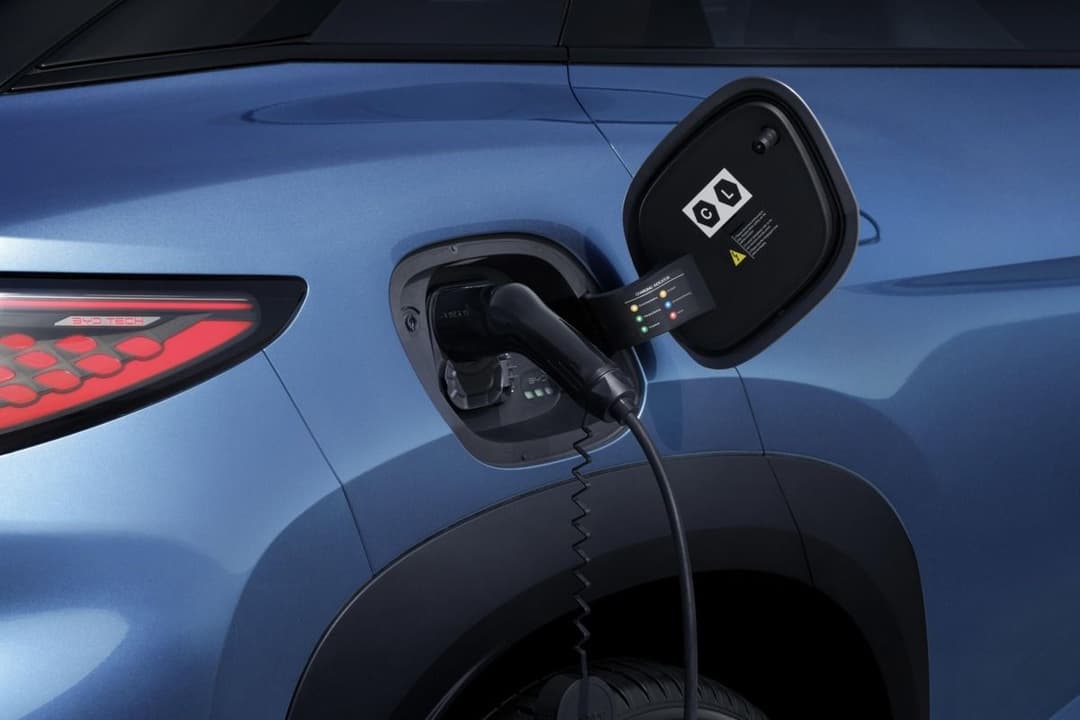
Loading…
Warranty and Running Costs
The Sealion 7 comes with a six-year/150,000km vehicle warranty and an eight-year/160,000km battery warranty. Service intervals are every 12 months or 20,000km. Capped-price servicing covers 10 years, with a total cost of $4,157 for the Premium.
For comparison, the Tesla Model Y has a 8-year/160,000km warranty, the XPeng G6 a five-year/220,000km warranty, and the Kia EV5 a seven-year/unlimited-kilometre warranty. The Kia leads on warranty terms, but the BYD is solid for the segment.
Warranty and Service SummaryRecommendation
The BYD Sealion 7 is a well-rounded family EV. It is comfortable, spacious, well equipped and priced below most of its key rivals. It does not lead the class for driving engagement or DC charging speeds, but it delivers where most buyers care most: practicality, features and value.
In many ways it is the Camry of electric SUVs. It is dependable, easy to live with and built for everyday use. The Premium variant is the pick of the range. It has more range than the Performance, a strong standard features list and a lower price. The Performance adds power and AWD but costs $9,000 more, which is hard to justify for most buyers.
If you are looking for a family EV around the $55,000 mark, the Sealion 7 Premium should be on your shortlist. It is more established than newer Chinese brands, cheaper than the Tesla Model Y and Kia EV5, and easier to live with than a screen-only car like the Model Y.
If you are however willing to spend more money, there are more interesting options in the segment such as the Xpeng G6 ($59,800), Zeekr 7x ($63,900) and Tesla Model Y ($68,900).
Loading…
Add zecar as a preferred source on Google Search 🔍