
“Hearst Magazines and Yahoo may earn commission or revenue on some items through these links.”
This story was updated in March 2026 with new products and information.
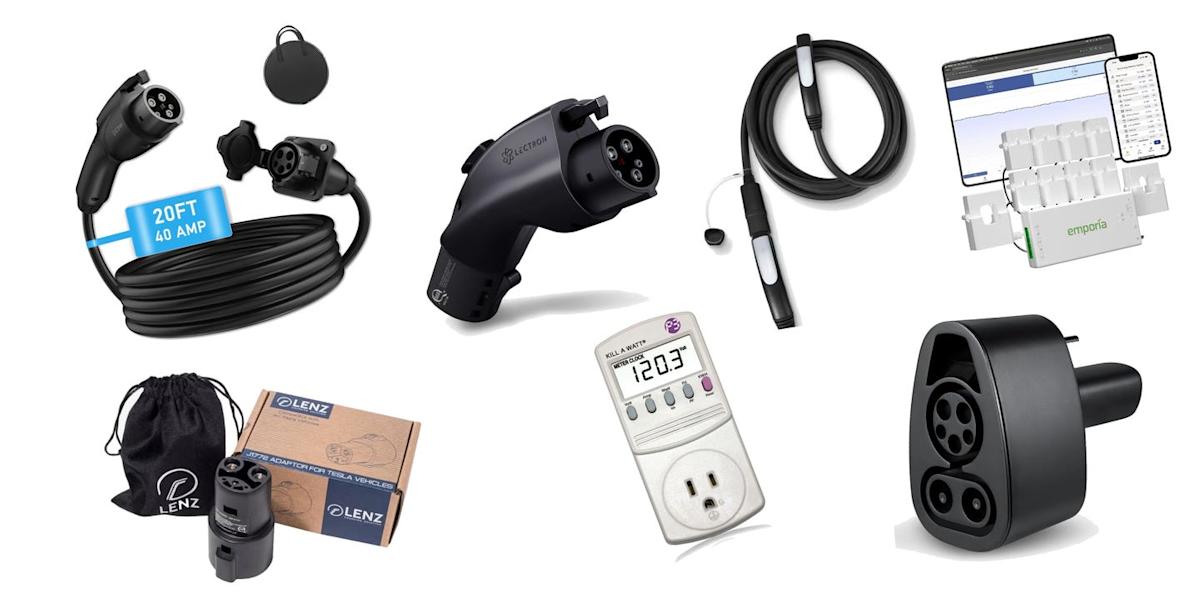
Navigating the ever-changing realm of electric vehicles (EVs) is no easy task. Owning and operating an EV requires the proper gear and accessories, particularly when it comes to charging. The options are vast–ranging from charging adapters and extension cables to electricity usage monitors that provide charging information. With these tools, drivers will be better prepared to tackle the unique challenges and opportunities that EVs offer.
Our Favorite EV Charging Accessories
With such a wide selection, it’s natural to feel overwhelmed. Where do you start, and what do you really need? We’ve created a list of the top EV charging accessories on the market, based on both the personal experience of our editors as well as consumers’ thoughts in the form of reviews and buying trends.
Our Favorite EV Charging Accessories for 2026Lectron NACS (Female) to J1772 (Male) Charging Adapter
This compact adapter is a simple solution to charging your J1772 EV at Tesla’s growing range of destination chargers (over 50,000 of them, according to Tesla), as well as with Tesla’s Wall Connector—a perennial pick of ours as one of the best at-home EV chargers. The Lectron NACS to J1772 adapter maxes out at 48 amps and 250V for compatible vehicles and is small enough to keep in the glove compartment.
While already a convenient adapter to have on hand for non-Tesla vehicles, it will soon become even more useful. The North American Charging Standard (NACS) Tesla uses for its chargers is going to become even more ubiquitous with Ford, GM, Mercedes-Benz, Nissan, Volvo, Polestar, and Rivian all announcing their future EVs will drop their existing platforms for a more unified charging ecosystem.
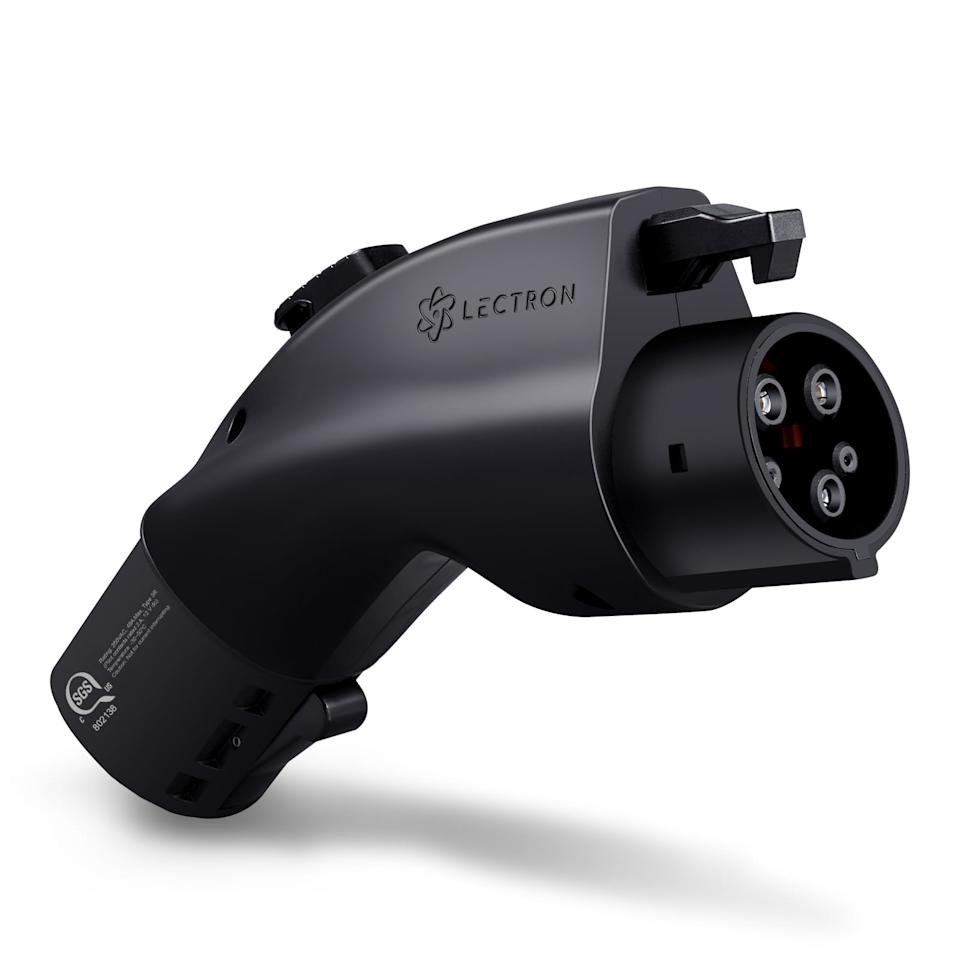
Lectron NACS (Female) to J1772 (Male) Charging Adapter
amazon.com
$113.98
LectronLenz J1772 (Female) to NACS (Male) Charging Adapter
On the flip side is this J1772 (female) to NACS (male) adapter, which allows Tesla owners to charge on non-Tesla charging stations. As with the aforementioned Lectron adapter, this unit is most useful for Tesla owners, but once Ford, GM, and others start adding NACS connectors to their EVs, an adapter such as this one will be required if you come across non-NACS Level 1 and Level 2 chargers down the metaphorical and literal road.
This particular adapter is a bestseller on Amazon. It’s IP54 rated and SGS certified to comply with UL 2251 and CSA C.22.2 No. 281–17 standards (USA and Canada safety standards for electrical connections).

Lenz J1772 (Female) to NACS (Male) Charging Adapter
amazon.com
$27.99
LenzLectron CCS (Female) to NACS (Male) Charging Adapter
As the name suggests, this Lectron adapter enables Tesla EVs (and eventually other EVs that adopt the NACS plug) to charge on Combined Charging System (CCS) DC fast-charging connections at up to 150 kW. It features a built-in temperature monitoring system capable of reducing the throughput should the unit get too hot.
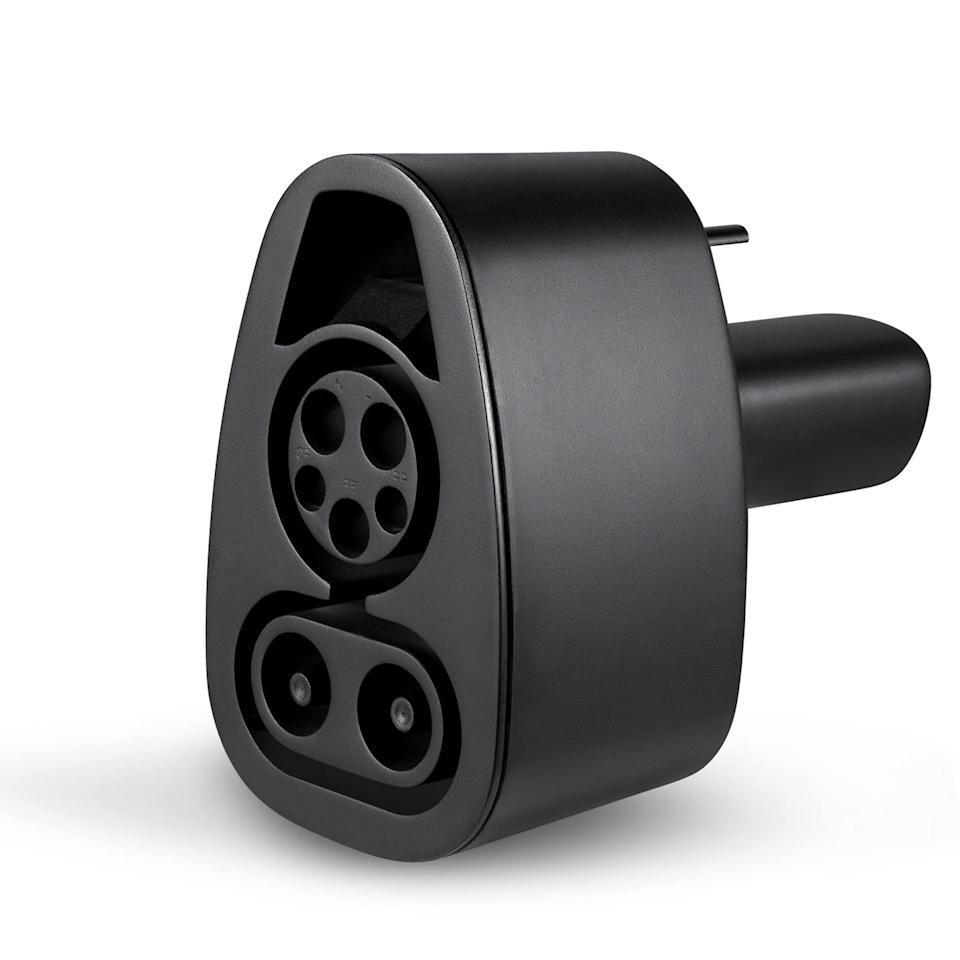
Lectron CCS (Female) to NACS (Male) Charging Adapter
amazon.com
$129.99
LectronEVCONN EVConn J1772 Extension Cable, 20ft 40A 110V-240V
This EVConn J1772 extension cable lengthens the reach of any J1772 connector so you can connect to your vehicle’s charging port from farther away. This unit works with both Level 1 and Level 2 chargers and supports up to 40 amps.
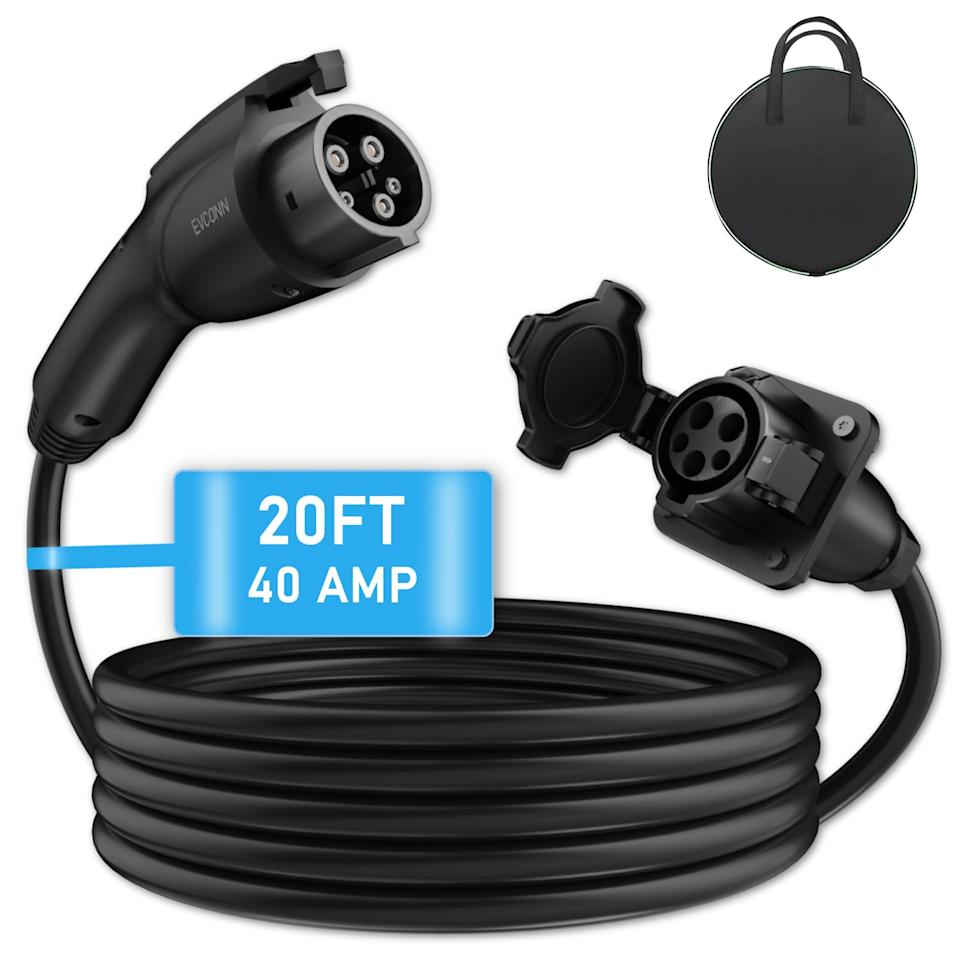
EVCONN EVConn J1772 Extension Cable, 20ft 40A 110V-240V
amazon.com
$89.99
AmazonLectron 20-Foot NACS Extension Cable
This Lectron 20-foot NACS extension cable works on Tesla’s NACS plugs. It’s rated for 48 amps or 11.5 kW charging capacity and is safe for outdoor use. Lectron notes this charger works with Tesla High Powered Wall Connectors, all generations of Tesla Destination Chargers, and Tesla Mobile Connectors. It will not work with Tesla Superchargers, and it does not control the door on the Tesla charge port as Tesla’s connectors do.
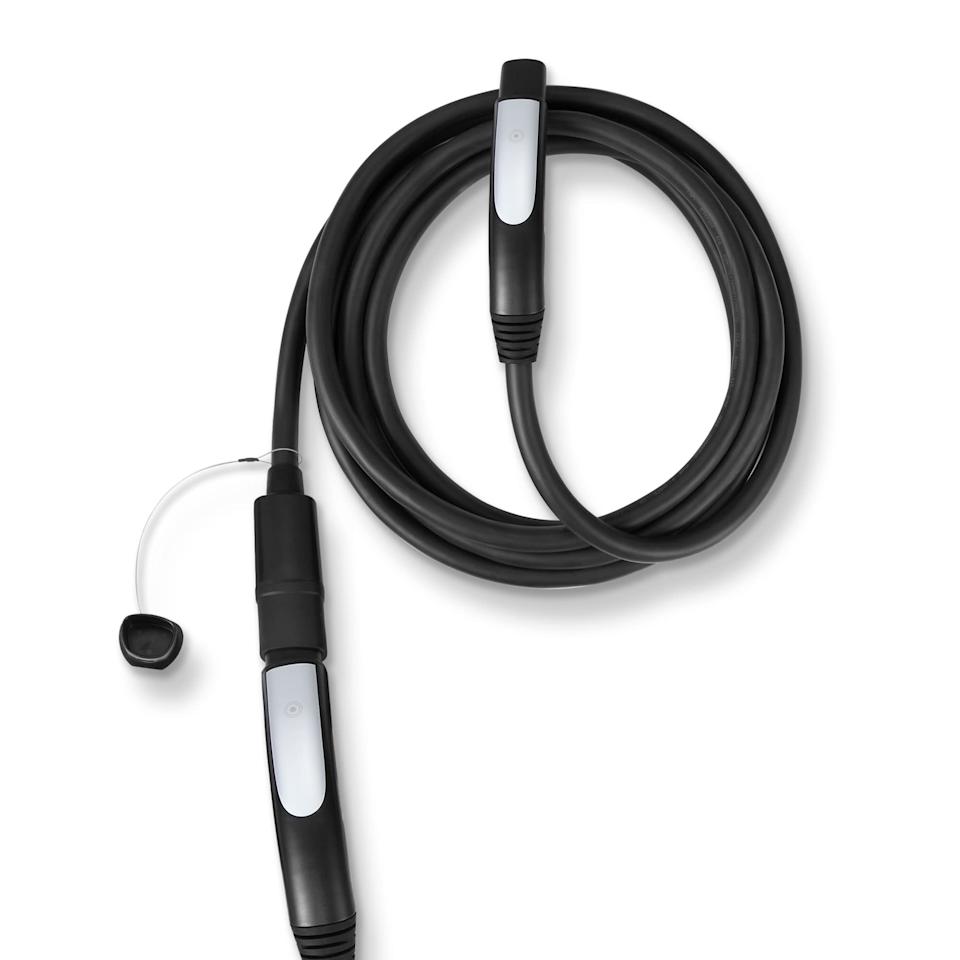
Lectron 20-Foot NACS Extension Cable
amazon.com
LectronEMPORIA Emporia Vue 3 Home Energy Monitor
The Emporia Smart Home Energy Monitor is a more capable energy monitoring and tracking solution for anyone wanting to track consumption directly at the source—your breaker box. It installs fairly easily into most circuit panels with its clamp-on current sensors. What sets it apart is its continuous energy monitoring capabilities. It works alongside Emporia’s Android and iOS apps to make energy consumption tracking—for your EV charging as well as the rest of your house—easy, whether you’re at home or away.
It includes eight 50-amp sensors and features a 2.4-GHz Wi-Fi connection with data refreshes every second within 2 percent accuracy. One-second data is stored for three hours, one-minute data is stored for seven days, and one-hour data is kept indefinitely for long-term usage statistics. All data can be exported from Emporia’s mobile or web apps for personal tracking.
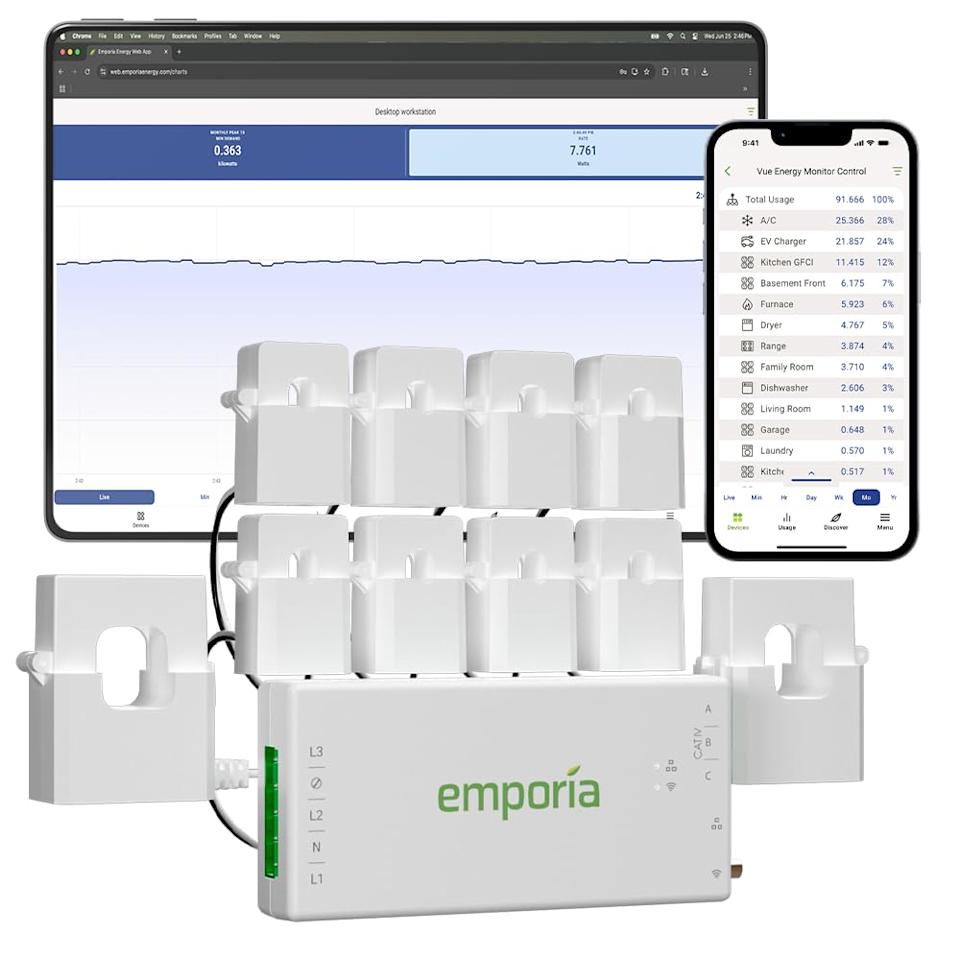
EMPORIA Emporia Vue 3 Home Energy Monitor
amazon.com
$149.99
AmazonP3 Kill-A-Watt Electricity Usage Monitor
If you want to monitor your energy usage when charging via a 120V connection, the Kill-A-Watt is a simple solution for doing so. Roughly the size of two mid-size smartphones stacked atop one another, this unit can track electricity usage by day, week, month, or even year, extrapolating information from shorter time periods.
It features an LCD display that can cycle through volts, amps, and wattage within 2 percent accuracy.
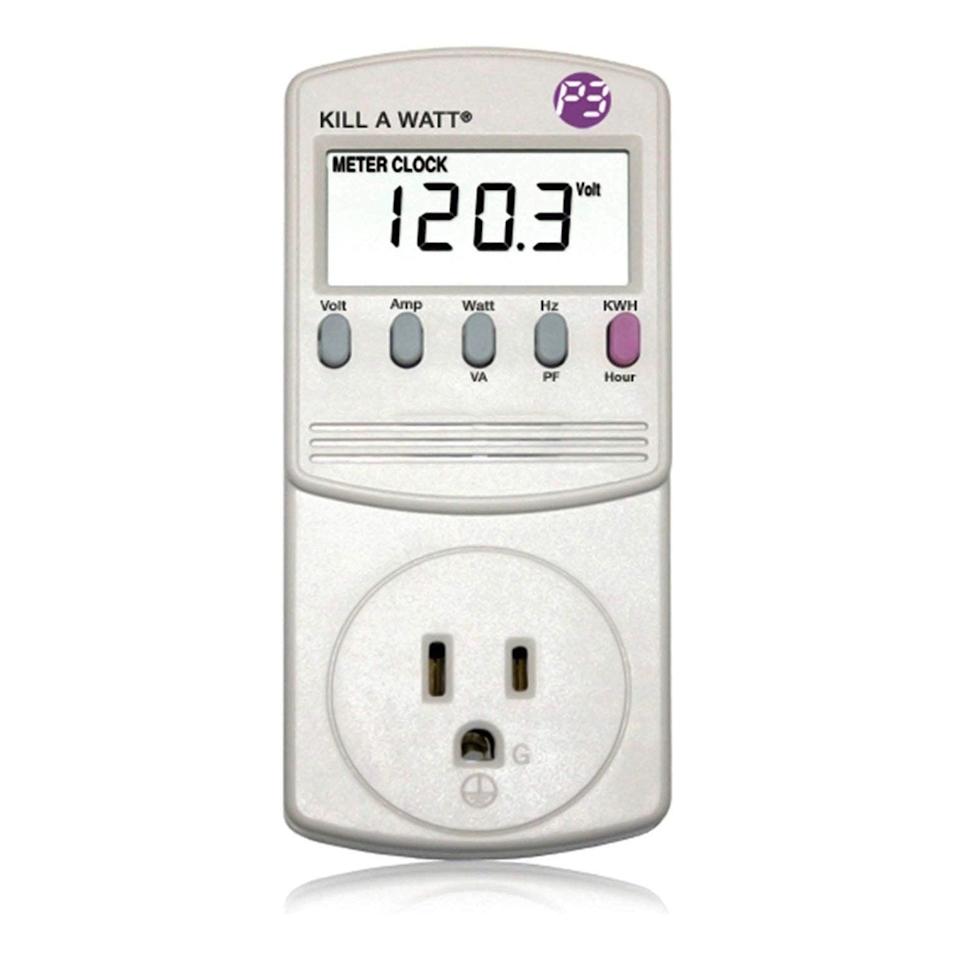
P3 Kill-A-Watt Electricity Usage Monitor
amazon.com
$31.00
Kill-A-WattSpigen DuraPro Cable Garage Door Pass Protector
After spending hundreds (if not thousands) of dollars on setting up EV charging equipment, the last thing you want to do is subject it to any unnecessary wear and tear. One way to reduce that risk is to ensure the cable doesn’t take unnecessary abuse from the garage door when charging your vehicle outside.
The Spigen DuraPro Garage Door Pass Protector combats this by creating a little bridge of sorts for the charging cable to safely pass through without additional pressure on it. Assuming your garage door has a seal at the bottom, the Spigen DuraPro can securely fit underneath your garage door without leaving space to allow critters in (at least those with four legs).
This has been specifically designed for Tesla’s Mobile Connector and Gen 3 Tesla Wall Connector, but any cable within the half-inch range should work, since the protector is made of a soft plastic that can flex. In our time testing this protector, we found it easy enough to use, but even as thin as it is, it does still leave a small gap at the bottom of our garage door and the opening the cable goes through is large enough to let even large insects inside, as visible in the image below.
If you don’t mind risking bugs getting into your garage, though, and want to prioritize protecting your cable, this is still an affordable option that’s otherwise easy to use and well-built.
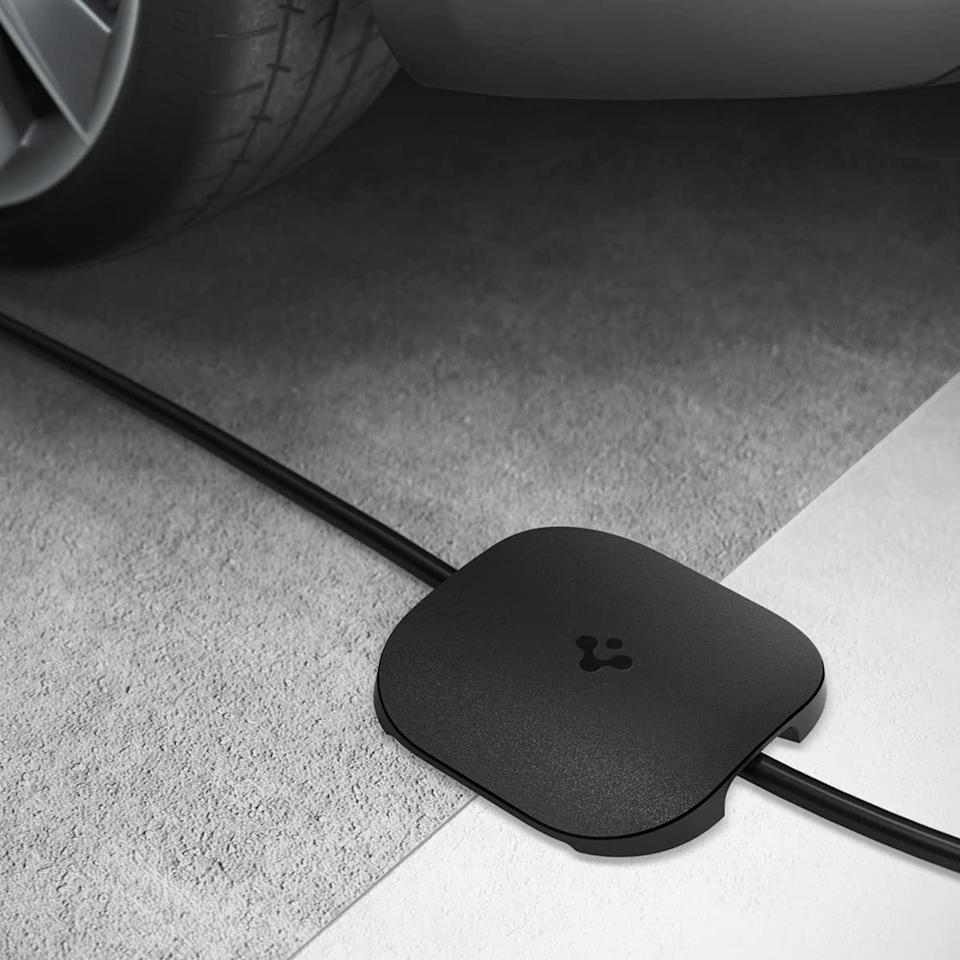
Spigen DuraPro Cable Garage Door Pass Protector
amazon.com
$21.99
SpigenSpigen DuraPro Cable Garage Door Pass Protector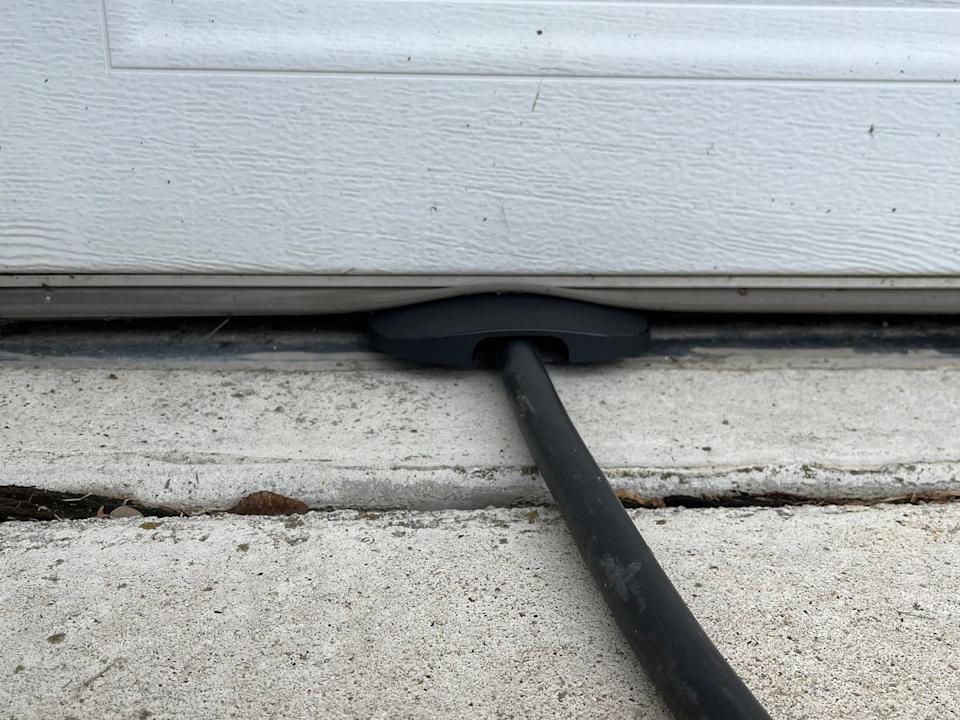
Dave VanderWerp – Car and Driver
Cable Shield The Ultimate Electric Vehicle Cable Protector
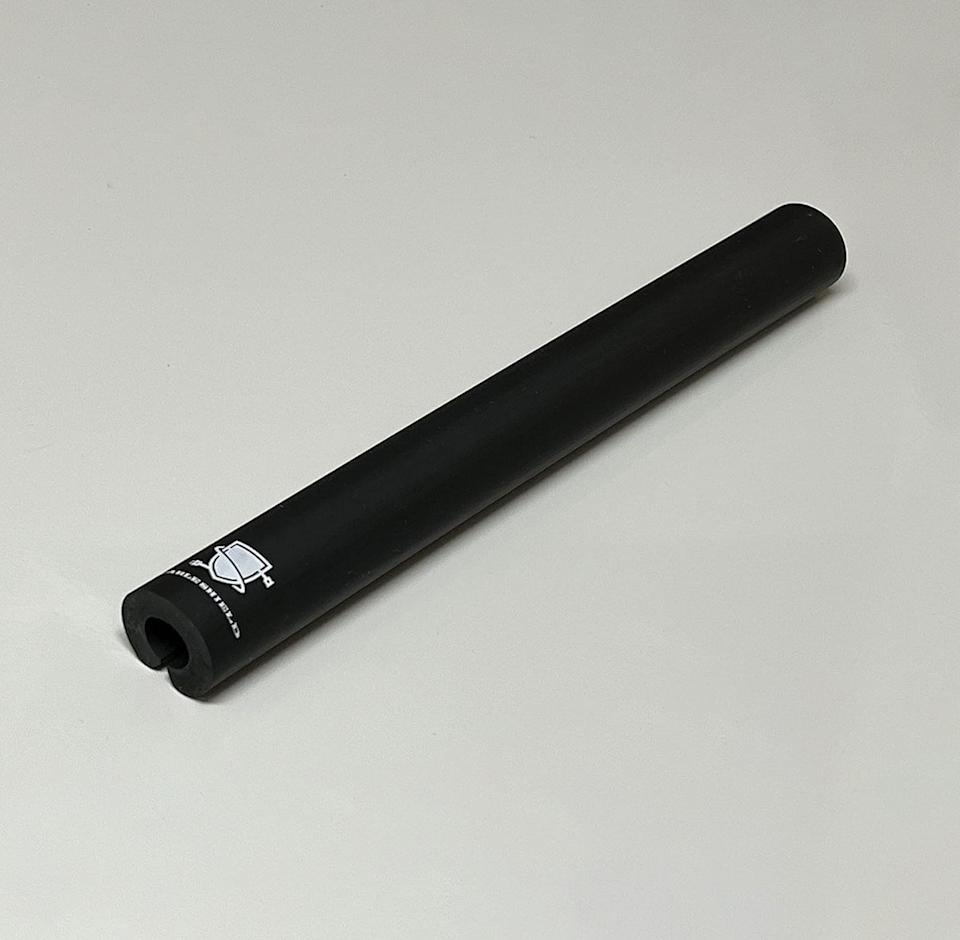
Another cable protection option is the Cable Shield. It’s a best-seller on Amazon and fairly straightforward: You wrap the sleeve completely around the part of your charging cable that sits underneath the garage door.
In principle, it’s simple to use and it even comes in two sizes (large and extra large) to fit whatever diameter cable you may have. While it did manage to protect our charging cable in testing, it proved challenging to get the cable inside the wrap to the point where pliers were required to coax it into place.
This model also caused an even more dramatic gap at the bottom of the garage compared to the Spigen cable protector, which could lead to more than just insects (mice, snakes, and other small creatures) getting inside your garage.
However, if you want to prioritize your charging cable above all else, this does offer fantastic protection and is solid enough that it should be able to withstand years of use. It’s also made here in the United States.
Cable Shield The Ultimate Electric Vehicle Cable Protector
amazon.com
$20.00
Cable ShieldCable Shield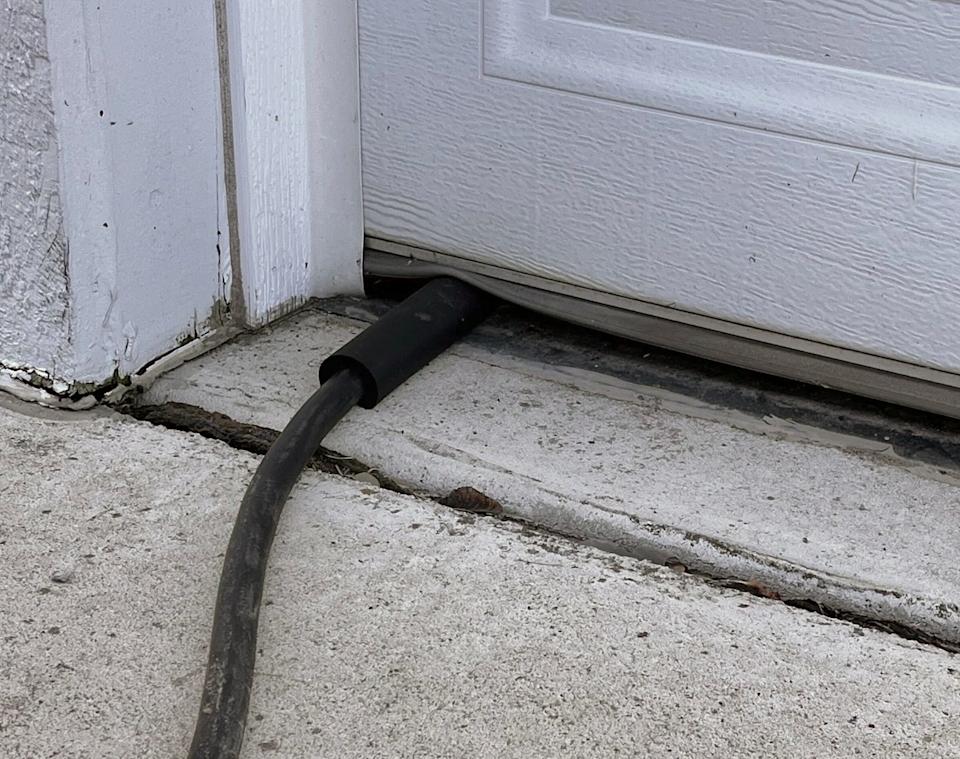
Dave VanderWerp – Car and Driver
FAQsWhat are the different types of EV charging connectors?
There are various EV charging connectors out there, but the most common are:
Type 1 (J1772): Common in North America for Level 1 and Level 2 AC charging and currently used by most North American EV manufacturers that aren’t Tesla.
Type 2 (Mennekes): The standard chosen by the European Union for AC EV charging stations.
CHAdeMO: Most widely used by some Japanese automakers for DC fast-charging, but its popularity is dwindling in favor of DC alternatives.
CCS (Combined Charging System): Available in two versions, Type 1 and Type 2, and used for DC fast-charging.
NACS (North American Charging Standard, previously referred to as the “Tesla Plug”): Originally designed by Tesla specifically for its own vehicles, the brand eventually changed the name and opened the standard, allowing other EV manufacturers to use the connection in their vehicles. Ford, GM, Mercedes-Benz, Nissan, Volvo, Polestar, and Rivian have all announced plans to move to NACS.
What charging cable or connector is compatible with my EV?
This will vary depending on the EV you own. Generally speaking (for North America), Teslas use the NACS connection while non-Tesla vehicles typically use a J1772 connection.
That said, always refer to your vehicle’s owner’s manual or manufacturer website. They will specify the type of connector your EV uses. Additionally, most modern EVs have labels or markings near the charging port indicating the type of connector they accept.
How long does it generally take to charge an EV using different chargers?
Charging times will vary greatly based on the specific charger’s power output, any adapters between the charger and the vehicle, and the EV’s battery bandwidth/capacity. Generally speaking, you can expect the following timeframes for most standard-size electric vehicles:
Level 1 (120V AC): 4–24 hours depending on battery size.
Level 2 (240V AC): 3–8 hours.
DC Fast-Charger (Level 3): 30 minutes to 2 hours for approximately 80% charge, depending on the power of the charger and the EV’s compatibility.
Is it safe to charge my EV in the rain or other wet conditions?
Yes, EV charging systems are designed with safety features that protect against electrical hazards, even in wet conditions. However, always ensure charging equipment is in good condition, properly connected, and free of visible damage before use.
Always consult your EV manufacturer or a qualified electrician for specific concerns related to charging.
Lectron
Why Trust Us?
The Gear Team helps readers make informed purchasing choices about automotive gear, tools, and accessories through hands-on product evaluations and comprehensive testing. Car and Driver’s renowned testing standards mandate that we use all products we feature, and that our findings and recommendations are based on personal experience and knowledge. We won’t claim to have tested something we haven’t, and we’ll never recommend a product we wouldn’t buy ourselves.
The Gear Team’s product selection and gear picks are editorially independent; Car and Driver has a strict policy against accepting payment for placement in articles. We’ve evaluated dozens of product categories, like interior cleaners, dog seat covers, and shop vacs.
Visit our Tested & Trusted page to see the very best in automotive gear. Read more about our testing process here.

Gannon Burgett – Car and Driver
You Might Also Like
Gift Guide: Best Ride-On Electric Cars for Kids
Future Cars Worth Waiting For: 2025–2029