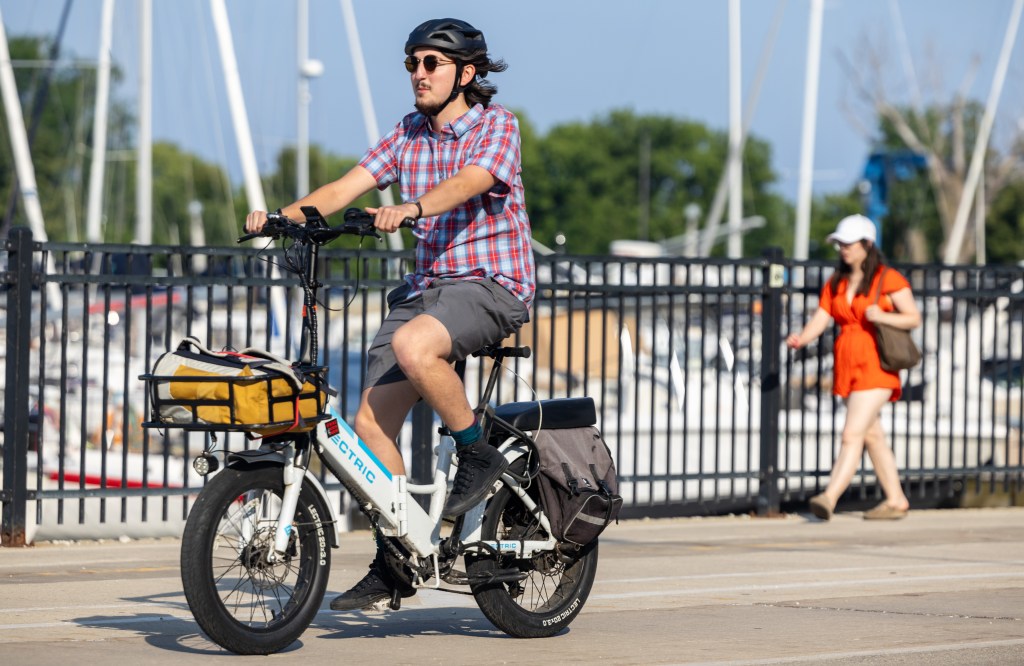
Joining other area municipalities, Batavia is instituting local regulations on e-bikes and e-scooters.
The Batavia City Council recently voted to approve an ordinance updating a portion of the city’s code to regulate these devices’ use.
Many other suburban municipalities have recently taken up legislation in response to concerns about these devices’ safety — from nearby St. Charles to Highland Park and Park Ridge.
The council discussed the matter in February, and then considered an ordinance at its Committee of the Whole meeting on March 10 before voting in favor of implementing the regulations at its meeting on Monday.
At the March 10 meeting, Batavia Police Chief Eric Blowers said that the ordinance closely follows guidance from Ride Illinois and was reviewed by the Batavia Active Transportation Advisory Committee. It also closely follows state statute, he said.
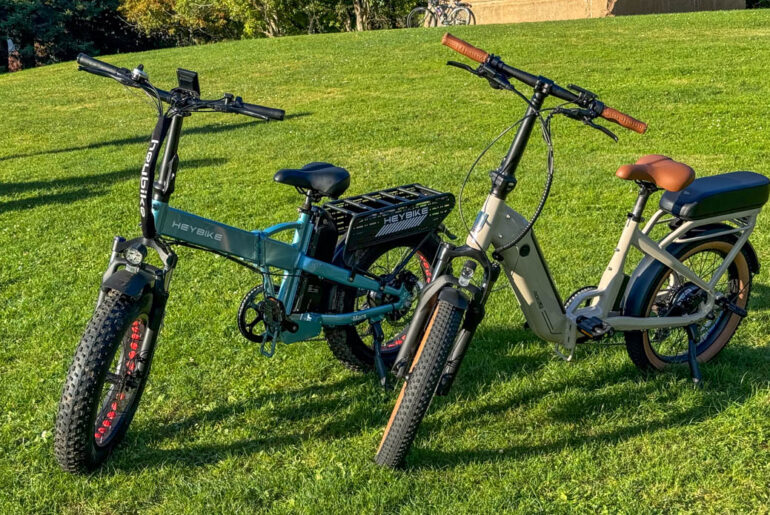
Under Illinois law, e-bikes, sometimes referred to as low-speed electric bicycles, are different from an electric motorcycle. An e-bike must have an electric motor of less than 750 watts, and is split into three classes.
Class 1 e-bikes have motors that only provide assistance when the rider is pedaling, whereas Class 2 e-bikes have an electric motor that cuts out when the brake is applied. Class 3 e-bikes, like Class 1, have a motor that stops when its rider stops pedaling. Riders must be 16 years old or older to use Class 3 e-bikes, according to state law.
State law also dictates that a rider can operate a low-speed electric bicycle on any roadway a traditional bike can use, including in bike lanes, but that e-bikes can’t be operated on sidewalks.
According to the 2025 Illinois Rules of the Road from the Secretary of State’s Office, low-speed electric and gas bicycles may not exceed 20 mph.
Previously, Blowers expressed a particular concern with “e-motos,” or electric motorcycles, being used on shared paths, sidewalks and roadways. According to Blowers, an e-moto can often exceed 20 mph without its rider pedaling, and sometimes lacks pedals entirely. They’re not currently regulated under state law, but municipalities often regulate them as they do motor vehicles, he said.
Low-speed electric scooters, on the other hand, are regulated by the state, which requires riders to be 18 years old or older. There are no state definitions for faster e-scooters, Blowers has said, and he has noted that the city may be able to create another classification for these scooters.
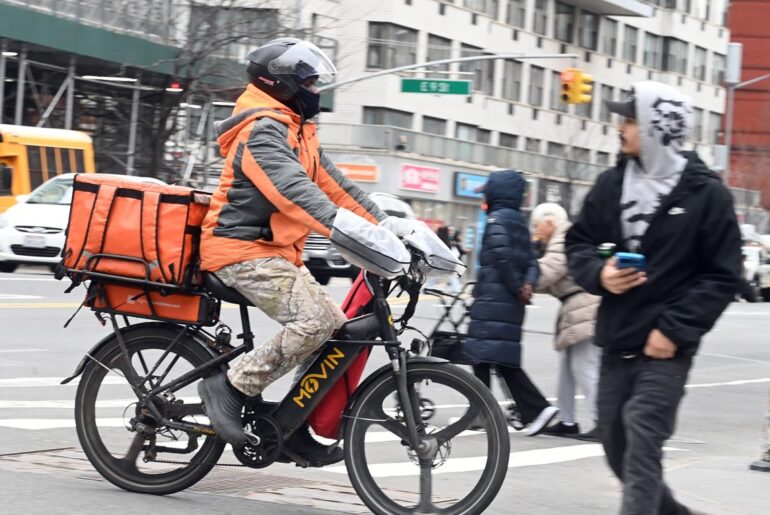
The ordinance approved Monday defines the different classes of e-bikes, indicating that they may be used on roadways and bicycle paths, but not on sidewalks. It also requires any e-bike user under 16 to wear a helmet, and that all riders’ e-bikes have lights on them for nighttime use. Anyone operating a Class 3 e-bike must be 16 years old or older.
E-motos, on the other hand, are prohibited in the city.
Class 1 low-speed electric scooters and micromobility devices, however, can be used on roads, bicycle paths, trails and sidewalks, according to Batavia’s regulations. Blowers has said that the term “micromobility device” functions as a sort of catch-all term for devices not otherwise defined by the ordinance. The city regulations also create a second class of electric scooters and micromobility devices that can be operated on public roads, trails, bike paths and designated paths in the city. These devices can’t be operated on state highways, however, or on streets or highways within the city with a posted speed limit higher than 35 mph.
Class 1 or 2 low-speed electric scooters and Class 2 micromobility devices can only be operated by those 18 years of age or older, the city’s rules indicate. Anyone operating a Class 1 micromobility device — which Blowers said could include things like electric skateboards and hoverboards — must be at least 13 years old. The city requirement that riders of e-scooters must be 18 years old or older aligns with state statute, according to Blowers.
Ald. Kevin Malone questioned instituting an age requirement for e-scooters, saying that if Batavia were to allow the state law to govern, they would not have to amend their regulation in the event the state law changes.
Blowers clarified that the city had added a second classification for higher-speed e-scooters, but he did note that the city may have to modify its regulations if state law changes.
Ald. Tim Lanci said the age threshold of 18 years old was “odd,” given that 16-year-olds can drive cars, and also suggested that perhaps the city should not regulate e-scooters in hopes that the state law will change. But Blowers explained that legal counsel had advised the city to adhere to the state statute.
As for enforcement, Blowers, at the Committee of the Whole meeting, indicated that the city’s plan is for low initial fines, with increases for repeat offenders and the ability to use warnings instead. There is also the possibility of holding parents accountable for violations by minors.
Asked by Ald. Alice Lohman about enforcement, Blowers said the department’s goal is to “educate” children and focus on “egregious conduct” when it comes to enforcement.
Then, at Monday’s meeting, the matter came forward for final approval. Ald. Jennifer Baerren emphasized that the proposed regulations align with regulations implemented by the state, and that fees could be used in cases of violations of the policy.
Ald. Kevin Malone, at the meeting, said he felt the ordinance “threads the needle well” in terms of allowing these sorts of devices, while also “working in some accountability.”
“They’re a great benefit to our town, and I think it helps people get around and shop in our shops and get to school,” Malone said. “We also want to make sure people are safe and using them appropriately.”
Ald. Tim Lanci noted that “filling those gaps” left by the state is “absolutely necessary,” saying the state is “behind the times a little bit on this.”
And, going forward, Ald. Bob White emphasized the importance of the city taking on an educational role when it comes to the new regulations.
The memo included in Monday’s meeting agenda notes that the city intends to communicate the new rules through things like social media, community relations events and community partnerships.
“I think it’s critical that we as a City Council are out at the farmers market,” White said, “talking about the difference between (Class 1, 2 and 3 e-bikes) and an e-mobility device versus an e-moto.”
mmorrow@chicagotribune.com