A proposal from the Bureau of Land Management (BLM) could significantly expand where electric mountain bikes are allowed on public trails across the central Colorado River Valley — and the idea is drawing strong reactions from local trail users.
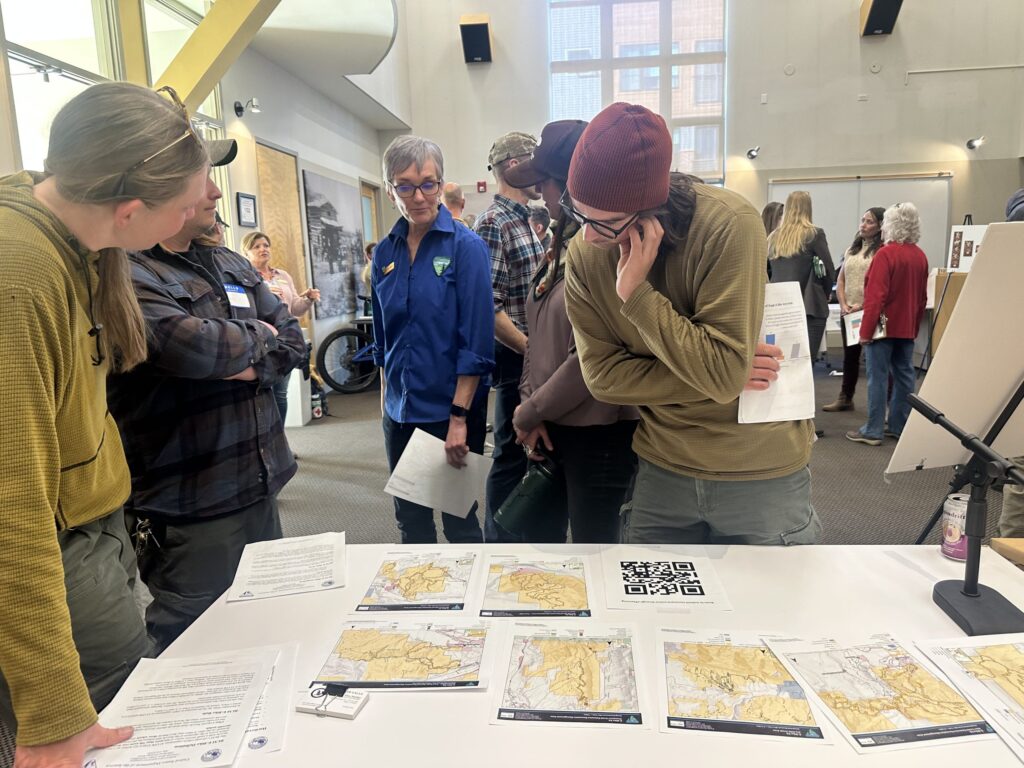
At a public meeting in Eagle on March 11, staff from the BLM’s Colorado River Valley Field Office (CRVFO) outlined a plan to consider allowing class 1 electric bikes on all trails currently designated for mechanized use within the field office’s jurisdiction. The proposal would affect roughly 200 miles of trails stretching along the Interstate 70 corridor between Wolcott and Parachute and into the Eagle and Roaring Fork River valleys.
Before making a decision, the agency has begun an environmental review process required under the National Environmental Policy Act (NEPA). Officials say the proposal is still in its earliest stage, known as public scoping, where community members can raise issues the agency should analyze before drafting an environmental assessment.
Jacob Casey, a planning and environmental specialist with the CRVFO, said public input during the scoping period helps determine what issues the agency will study.
“If there are concerns about soils, wildlife habitat, vegetation or user conflicts, this is the time to tell us so we can analyze those impacts before making a decision,” Casey said.
The Eagle meeting was the first of two public meetings hosted by the field office as part of the 30-day scoping period, which runs through March 25.
The CRVFO manages more than 220 miles of mechanized trails on BLM land, often in partnership with local governments and trail organizations. Those systems include popular trail networks near Eagle, Gypsum, Rifle and Carbondale.
Currently, only about 18 miles of trails within the CRVFO allow class 1 e-bikes, all located in the Grand Hogback trail system outside Rifle. Meanwhile, all classes of e-bikes are allowed on motorized trails in the office’s management area.
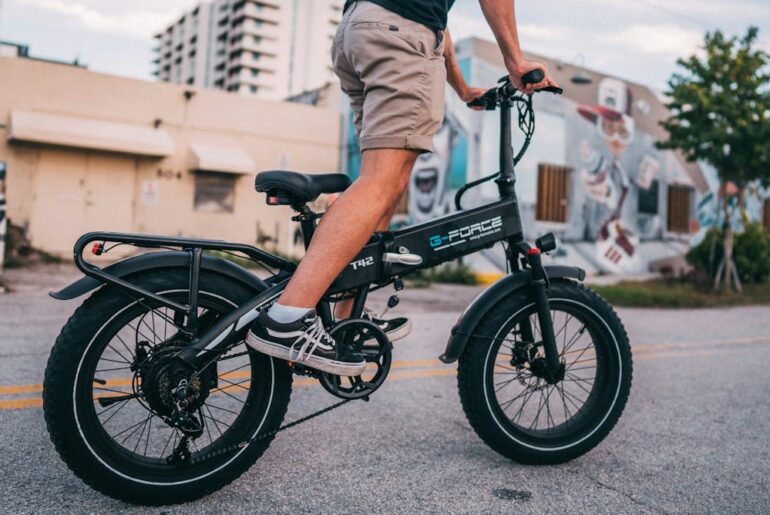
Under federal policy, a class 1 e-bike is defined as a bicycle equipped with a motor that provides assistance only while the rider is pedaling and that stops providing assistance at about 20 miles per hour.
Because e-bikes include a motor, federal land managers must evaluate whether allowing them on certain trails would change environmental impacts or user experiences.
According to CRVFO field manager Lisa Dawson, the process will likely take about a year — “although our hope is it would be sooner than that,” she said — meaning any changes to trail access would likely not occur until seasonal trail closures lift in the spring of 2027.
While the agency emphasized that no decision has been made, the proposal has already sparked debate among trail users.
Some residents who attended the Eagle meeting expressed concern that allowing e-bikes on more trails could lead to increased speeds, safety issues or pressure to allow additional types of motorized vehicles.
Eagle resident Annie Eagan said she worries that opening trails to one category of e-bike could create a “slippery slope.”
“Once you open up the trails to class 1 e-bikes, then the other ones will start to follow,” she said. “And speaking of slippery slopes, if you get someone on an e-bike coming up on walkers or other bicyclists, and they think, ‘I’ll just go around them,’ suddenly they’re off the trail creating a new path.”
Others see the technology as an opportunity to make trails accessible to a wider range of people. Nick Brummer, also of Eagle, said that allowing class 1 e-bikes on area trails will create a more welcoming environment for both visiting and local riders.
“I don’t ride an e-bike, but my wife — who’s had three knee surgeries — does,” he said. “This allows us to ride together, which would otherwise never happen.”
Supporters also emphasize that class 1 e-bikes differ significantly from motorcycles or throttle-powered electric bikes, which don’t require users to pedal, and can reach higher speeds.
The Grand Hogback trail system outside Rifle offers one example of a trail network where class 1 e-bikes mingle with unmotorized mountain bikes. Part of an early BLM pilot project, the network has allowed class 1 e-bikes since its inception five years ago.
Alison Birkenfeld, a board member and former vice president of the Rifle Area Mountain Bike Organization (RAMBO), said some stakeholders initially had concerns.
“Admittedly, some of us were skeptics because we didn’t know how e-bikes would interact with traditional riders, and we worried about trail damage,” she said. “But we’ve had zero issues, and some of us have been proven wrong.”
“We’ve also seen the economic benefits of welcoming e-bikers to our town and trail system,” said RAMBO president Lindsey Williams. “Most of our e-bikers are older analog bikers who just want to keep riding.”
Still, other advocacy groups believe in a cautious approach to major land use changes.
The Roaring Fork Mountain Bike Alliance (RFMBA), which builds and maintains trails throughout the Roaring Fork Valley — including networks like Red Hill and the Crown that could be affected by the proposal — said it supports a careful public process to determine where class 1 e-bikes make sense.
In a statement, the group said pedal-assist bikes can help more people access the outdoors, but that some trails may not be appropriate for the technology. “We understand the benefits that class 1 [e-bikes] can provide for people seeking improved health and exercise through pedal-assist technology. At the same time, we believe it is appropriate to have some mountain bike trails where class 1 [e-bikes] access remains prohibited.”
RFMBA suggested that trail design and user patterns should factor into decisions about access. “For example, a directional trail primarily used by mountain bikers may be a better location to allow class 1 [e-bikes] access than a high-use, two-way trail where most users are hikers, runners and dog walkers,” the group said.
Conservation groups have also raised concerns about the scope of the proposal.
“While many of us enjoy the benefits and fun that e-bikes offer, the BLM’s proposal essentially provides blanket approval for a new motorized use across all trails open to mountain bikes in the [CRVFO],” said Juli Slivka, senior director of policy and programs for Carbondale-based Wilderness Workshop.
Slivka said the group believes potential impacts to wildlife and recreation experiences should be evaluated on a case-by-case basis, rather than applied across the entire trail system.
BLM officials say the scoping process is designed to review exactly those types of concerns before any decision is made. Members of the public can submit comments on the proposal through March 25 via the BLM’s NEPA project website: www.bit.ly/blm-e-bikes