Recently revealed patent filings are pointing to a Toyota plug-in hybrid truck coming providing flexibility for electric-only driving and gas when you need it.
Toyota Plug-In Hybrid Truck Patent Filings
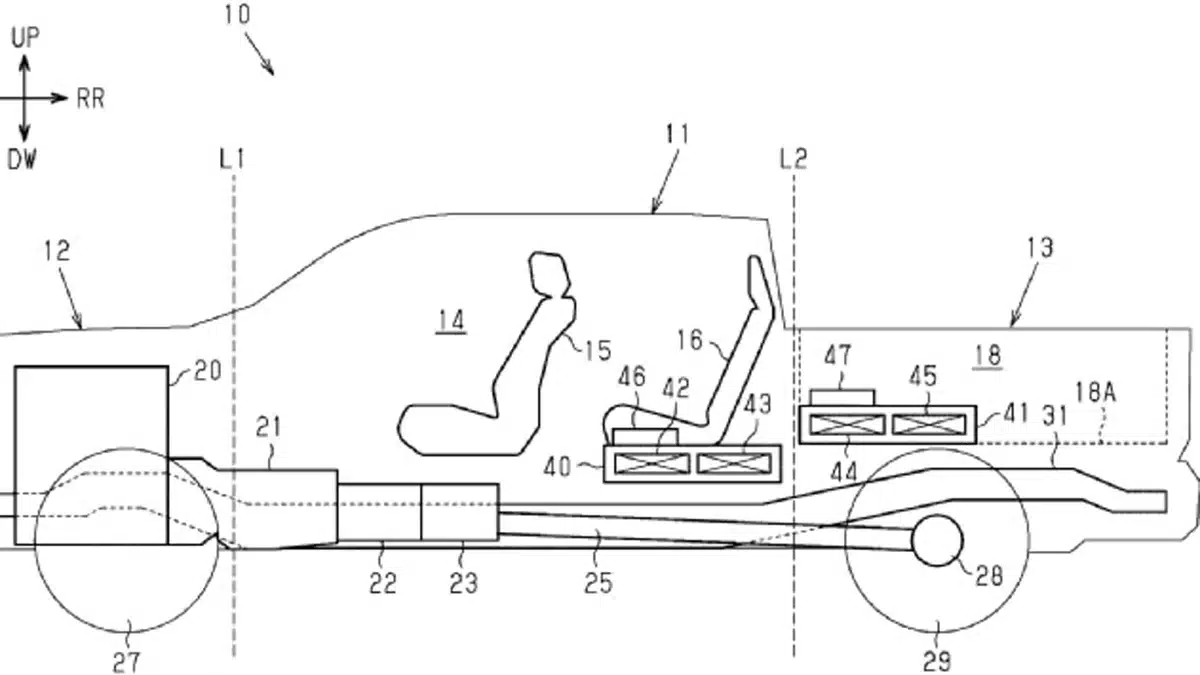 In this patent filing, the batteries are split between the seats and the bed. (Photo courtesy US Patent Office)
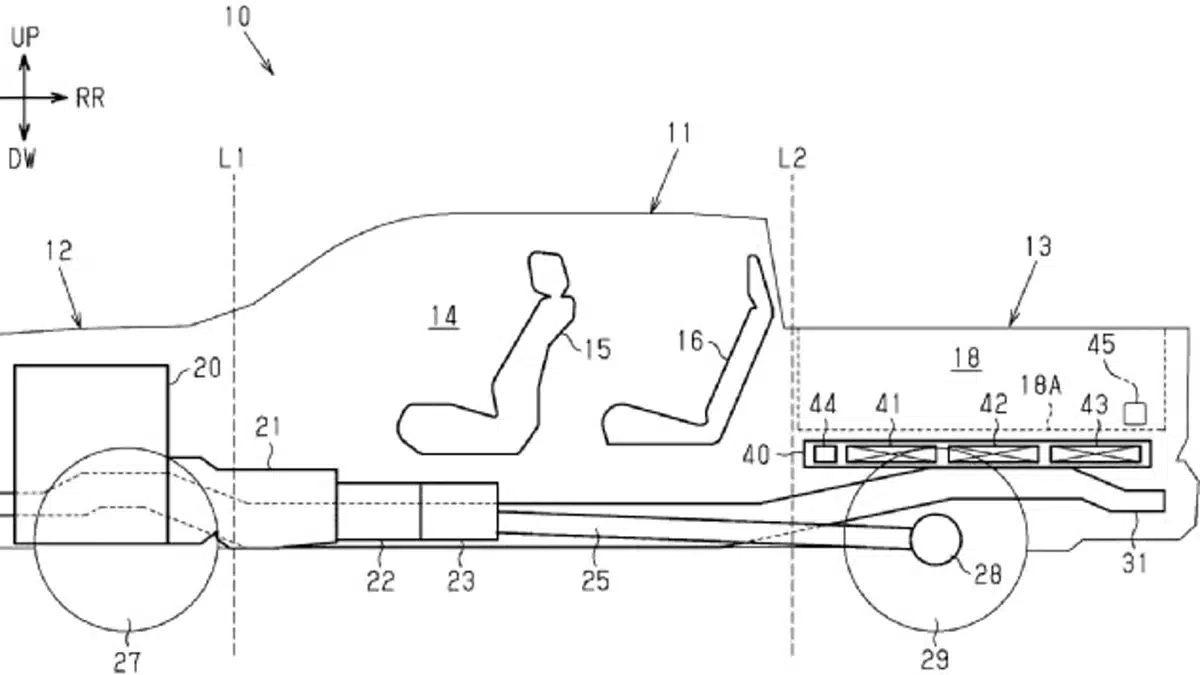
First reported by CarBuzz and published March 5, outlines two different engineering strategies for integrating battery packs into a pickup platform. The designs appear applicable to trucks like the Tacoma or Tundra and focus heavily on preserving usability, particularly bed space and interior packaging, which are critical in this segment.
The filings detail several battery placement concepts, including configurations under the truck bed, beneath rear seats and combinations of both. One design consolidates the battery entirely under the bed, while another splits the pack into two separate units located under the seats and within the bed structure. These variations suggest Toyota is evaluating trade-offs between energy capacity, weight distribution and real-world practicality.
For a plug-in hybrid or PHEV, the idea would be the truck would drive on electric only at times using the battery’s stored energy until it is depleted then the engine would power the truck. There are many examples of PHEV vehicles on the road today with 30-40 electric-only mile ranges. For those owners, they drive to work on electric, charge at work if needed then drive home on electric. It is a much cheaper option than using gas for daily commutes. Then, for longer trips, they use the gas engine. For a truck, this means electric for most empty driving commutes and gas engine for hauling or towing.
As with all patent activity, none of these concepts guarantee a production model. Automakers routinely explore multiple solutions before committing to a final design. Still, these filings signal that Toyota is seriously assessing how to bring plug-in hybrid capability to a truck, something currently absent from the U.S. market.
Current Benchmark: i-FORCE MAX Hybrid Trucks Already on Sale
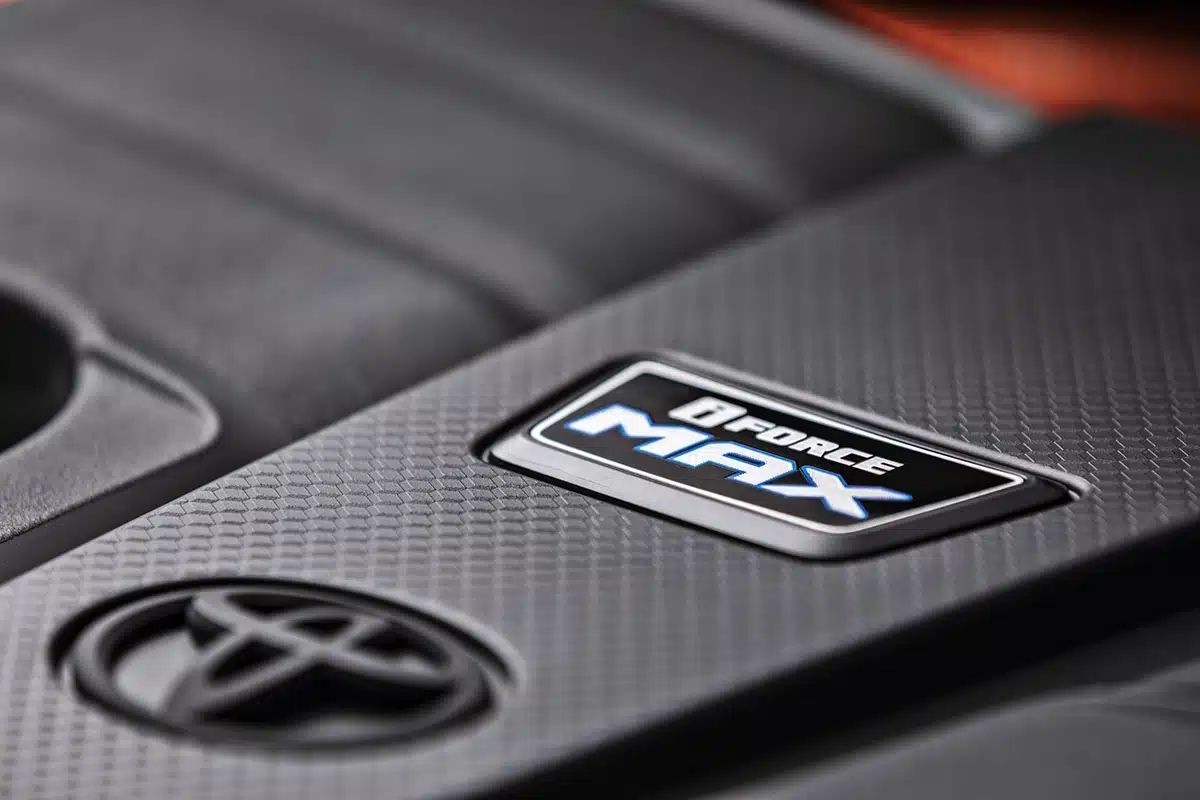 Toyota has been using hybrid powertrains in trucks for some time now. (Photo courtesy Toyota)
Toyota isn’t starting from scratch. The company already sells electrified pickups in the U.S. through its i-FORCE MAX hybrid systems in both the Tacoma and Tundra, powertrains that prioritize performance as well as improved MPG over naturally aspirated engines.
In the midsize Tacoma, the i-FORCE MAX setup pairs a turbocharged 2.4-liter four-cylinder engine with an integrated electric motor inside the transmission. The result is up to 326 horsepower and 465 lb-ft of torque, making it the most powerful Tacoma ever produced and delivering a substantial torque increase over the previous V6.
The full-size Tundra takes a similar approach but scales it up. Its i-FORCE MAX system combines a twin-turbocharged V6 with an electric motor to produce 437 horsepower and 583 lb-ft of torque, numbers that rival or exceed many traditional V8-powered competitors while improving drivability and low-end response is better for towing.
Notably, both systems are designed as performance hybrids rather than plug-in hybrids. They use relatively small battery packs and rely on regenerative braking and the gasoline engine to maintain charge, meaning they cannot drive extended distances on electricity alone. That distinction highlights the gap Toyota’s new patents could fill.
Overseas Clues: Hilux Shows Toyota’s Electrification Strategy
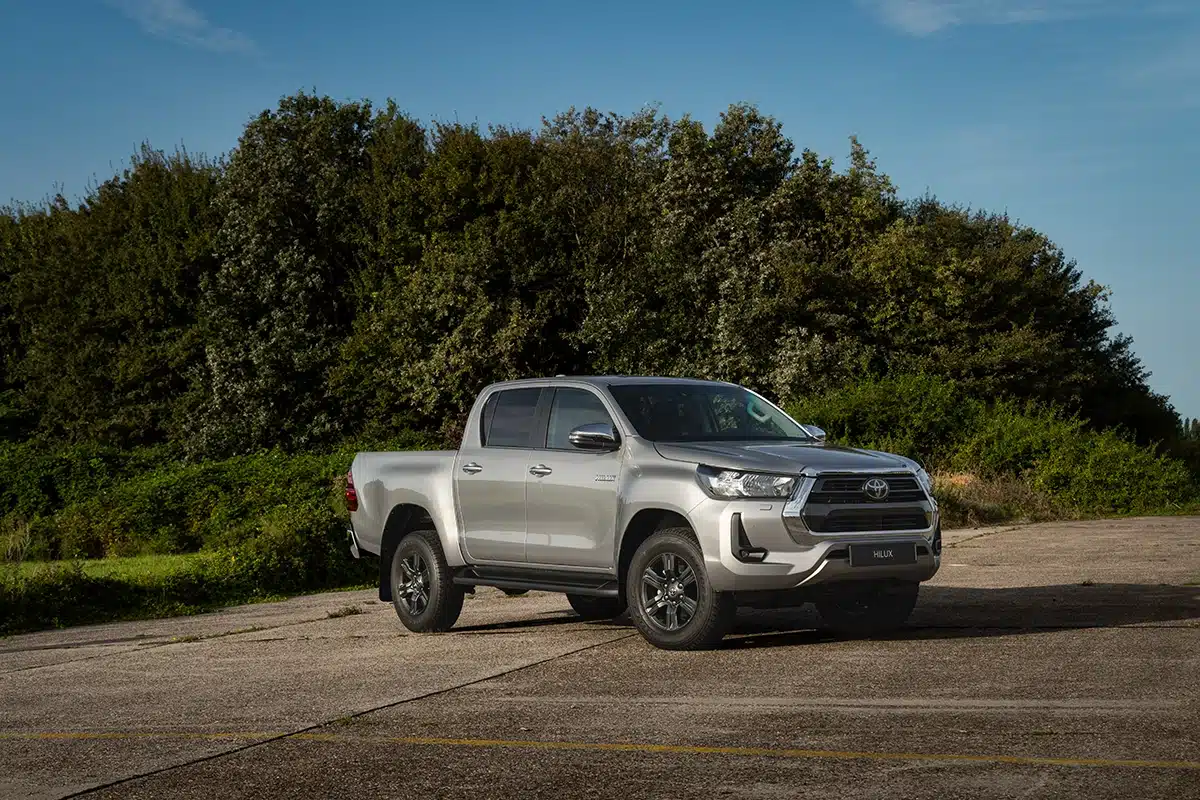 The Toyota Hilux diesel hybrid and fully electric Hilux point to more of Toyota’s focus on electrification. (Photo courtesy Toyota)
While U.S. buyers don’t yet have access to a plug-in hybrid Toyota pickup, global markets provide insight into the company’s broader electrification roadmap. The Toyota Hilux, the Tacoma-like cousin sold overseas, has already begun incorporating electrified systems.
One version features a 48-volt mild-hybrid setup paired with its diesel engine. This system uses a compact lithium-ion battery and motor-generator to improve efficiency, enhance stop-start smoothness and provide additional low-speed torque without compromising durability or payload.
Toyota has also tested a fully electric Hilux with a roughly 59 kWh battery pack and modest range, reflecting the engineering challenge of packaging larger batteries into a body-on-frame truck while maintaining capability.
Together, these approaches demonstrate Toyota’s multi-layered strategy: mild hybrids for incremental gains, full EVs for zero-emission capability and potentially plug-in hybrids as a practical middle ground.
A New Battleground in Electrified Trucks
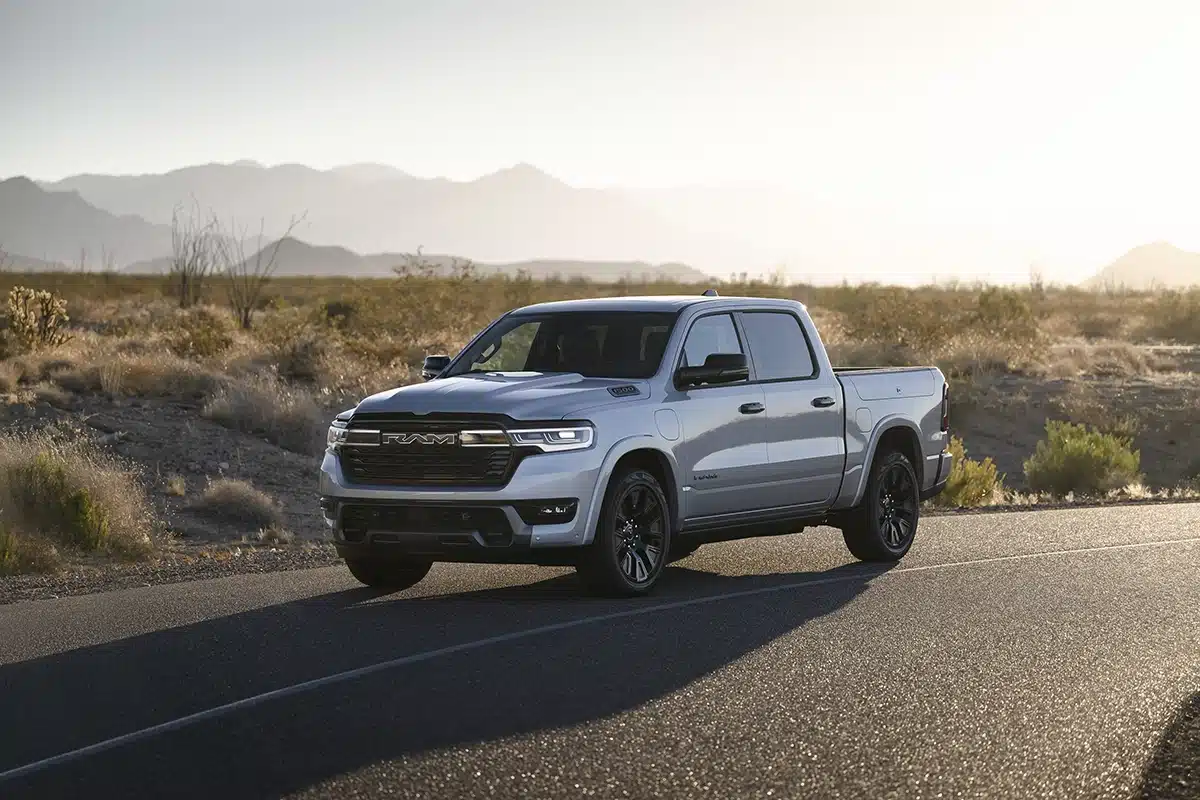 The other option being explored is an extended-range EV like the Ram REV. (Photo courtesy Ram Trucks)
Toyota’s potential move into plug-in hybrid pickups comes at a pivotal moment. Fully electric trucks continue expanding, while traditional hybrids, like the Tacoma and Tundra, offer improved efficiency without requiring charging infrastructure.
At the same time, Stellantis is preparing its extended-range electric Ram pickup, further blurring the line between EVs and hybrids. This truck will use the 3.6-liter Pentastar V6 to charge the battery which powers the wheels. The gas engines provides no direct power to the wheels itself. It is estimated to have upwards of 690 miles of range with further details still to be announced.
A plug-in hybrid Toyota pickup would slot directly into this evolving landscape, offering electric-only driving for short distances while retaining the long-range flexibility truck buyers demand.
Toyota hasn’t confirmed production plans tied to these patents. But when viewed alongside its existing i-FORCE MAX trucks and global Hilux experimentation, the direction becomes clearer: Toyota is systematically building toward its next electrified pickup and a plug-in hybrid may be the missing piece.
 Tim Esterdahl