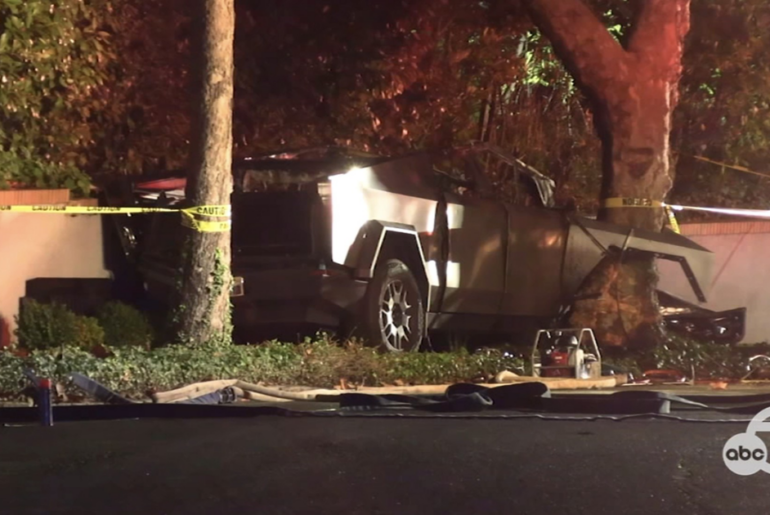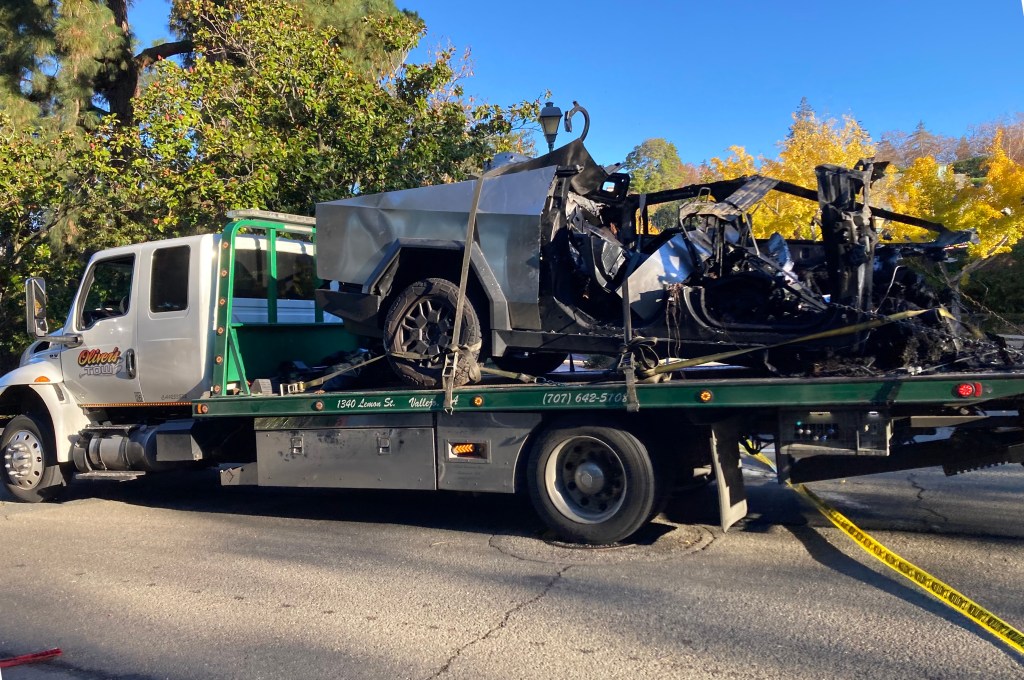
Jordan Miller, the only survivor of a fiery 2024 Tesla Cybertruck crash in Piedmont that killed three of his friends, is suing Tesla over its electronic door-opening systems.
The lawsuit is part of a growing body of litigation faulting Tesla’s electronically operated doors, with at least 15 deaths reported in incidents where occupants or rescuers were unable to open the doors of a Tesla that had crashed and caught fire, Bloomberg News reported.
After the truck hit a tree and caught fire, Miller, in the front passenger seat, was trapped inside until a friend from a different vehicle smashed a window with a tree branch and hauled him out, according to the lawsuit and witness reports.
Miller’s injuries, according to the lawsuit, included burns to his airways and lungs from smoke inside the burning truck, and third-degree burns to his left leg and hand, as well as damage to his intestines and broken vertebrae.
His lawsuit claimed Tesla knew selling its vehicles without door handles on the outside posed a deadly entrapment threat.
“Failures with Tesla doors, including the Model Y, X, and Cybertruck have continued for years,” the lawsuit alleged.
But the electric-vehicle company, led by CEO Elon Musk and with a major factory in Fremont, “consciously disregarded the safety of occupants in Tesla vehicles, and prioritized aesthetics over function,” the lawsuit in Alameda County Superior Court alleged.
Miller also suffered emotional and psychological trauma. He is seeking unspecified damages. Tesla did not immediately respond to requests for comment.
In event of a crash, because Cybertrucks lack external door handles, and their outside door-release buttons require electrical power, rescuers can be unable to open the doors, the lawsuit said. The vehicles’ windows — touted by Tesla as “armor glass” — make rescues “that much more difficult,” the lawsuit said.
The truck’s owner’s manual states that if power is lost, the door-release buttons inside the vehicle won’t work, so the manual door releases must be used, the lawsuit said.
“The operation and location of manual releases in the Cybertruck are ‘somewhat all over the map’ and do not follow the norm established by other electric vehicle models,” the lawsuit said. The Cybertruck owner’s manual entry for opening a front door with no power says the manual door release in front of the window switches needs to be pulled up, and the door pushed open.
The lawsuit describes 10 other incidents of people becoming trapped in crashed Teslas, including a Cybertruck in 2024 in Texas, resulting in a dozen deaths
Miller was a graduate of Piedmont High in the East Bay, as were his friends who died in the crash: Soren Dixon, 19; Krysta Tsukahara, 19; and Jack Nelson, 20. All three died from smoke inhalation, and suffered serious burns, according to autopsy reports. Dixon had more than twice the legal limit for alcohol in his blood, and also had cocaine and methamphetamine in his blood. Tsukahara and Nelson had alcohol and cocaine in their blood.
The families of Tsukahara and Nelson sued Tesla in October in Alameda County Superior Court, alleging the door-opening systems contributed to their deaths.
Miller’s lawsuit added Tesla as a defendant on March 6. An earlier version named as defendants Dixon’s estate, and Charles Patterson, allegedly the Cybertruck’s owner.