Your support helps us to tell the story
From reproductive rights to climate change to Big Tech, The Independent is on the ground when the story is developing. Whether it’s investigating the financials of Elon Musk’s pro-Trump PAC or producing our latest documentary, ‘The A Word’, which shines a light on the American women fighting for reproductive rights, we know how important it is to parse out the facts from the messaging.
At such a critical moment in US history, we need reporters on the ground. Your donation allows us to keep sending journalists to speak to both sides of the story.
The Independent is trusted by Americans across the entire political spectrum. And unlike many other quality news outlets, we choose not to lock Americans out of our reporting and analysis with paywalls. We believe quality journalism should be available to everyone, paid for by those who can afford it.
Your support makes all the difference.Read more
Chinese car giant BYD is introducing a breakthrough launch in the electric car industry when it comes to charging speed.
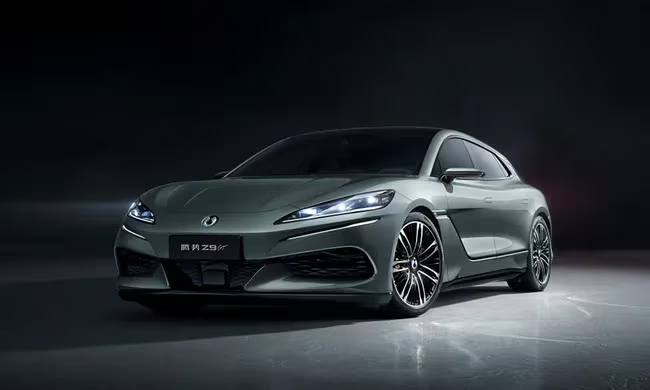
The company’s premium Denza brand will arrive in Europe next month with a new grand tourer called the Z9GT that promises to recharge dramatically faster than almost any electric car currently on sale. Using what BYD calls ‘Flash Charging’, the car can top up from 10 to 70 per cent in just five minutes and reach 97 per cent in around nine minutes – figures that start to look close to the time it takes to fill a petrol tank.
Even more impressively, the system is claimed to work almost as quickly in extreme cold, with a 20 to 97 per cent charge taking about 12 minutes at temperatures as low as -30C. The technology relies on a new version of BYD’s Blade battery combined with ultra-high-power charging stations capable of delivering up to 1,500kW.
BYD says it will begin installing the chargers in the UK as part of the Z9GT’s launch later this year. The model is expected to be showcased at the Goodwood Festival of Speed in July. This launch underlines how quickly the focus of the EV market is shifting away from simply increasing range and towards dramatically reducing charging times.
open image in gallery
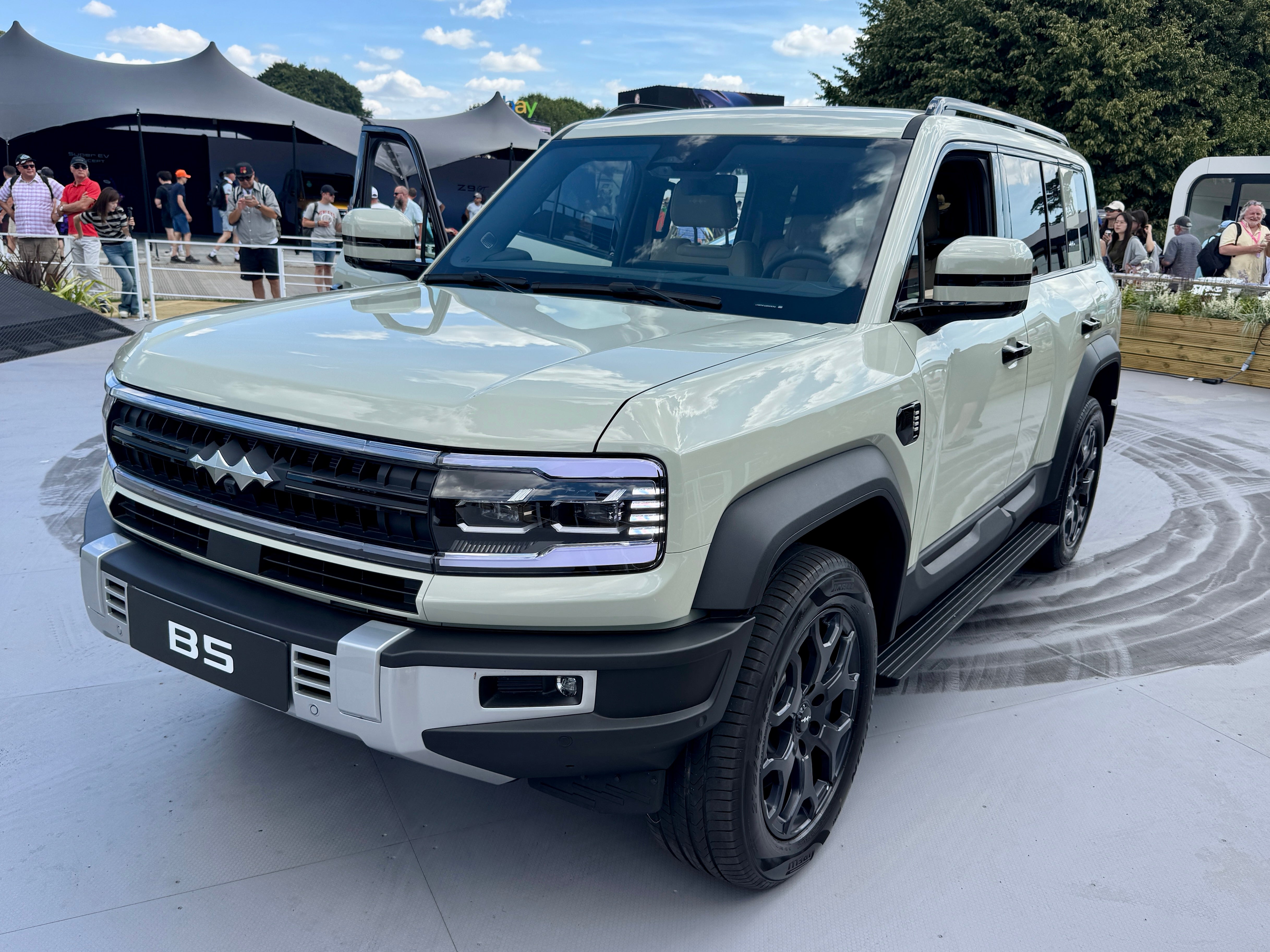
The Denza B5 was shown at last year’s Goodwood Festival of Speed and will go on sale later this year to challenge the Land Rover Defender (Steve Fowler)
For years, critics of electric cars have argued that long charging stops are the biggest barrier to switching from petrol or diesel. But the industry’s latest wave of technology suggests that argument may soon start to look outdated.
The new BMW iX3 is the first production model built on the German brand’s next-generation Neue Klasse platform. The SUV is designed around an 800-volt electrical architecture that allows charging speeds of up to 400kW – enough to add more than 200 miles of range in around 10 minutes.
That kind of rapid top up is becoming a central selling point for the next generation of EVs. Mercedes is taking a similar approach with its all-new electric CLA, which also uses 800-volt technology to enable charging speeds of up to around 320kW. Under the right conditions, the car can add roughly 200 miles of range in 10 minutes, turning a quick coffee stop into a meaningful recharge.
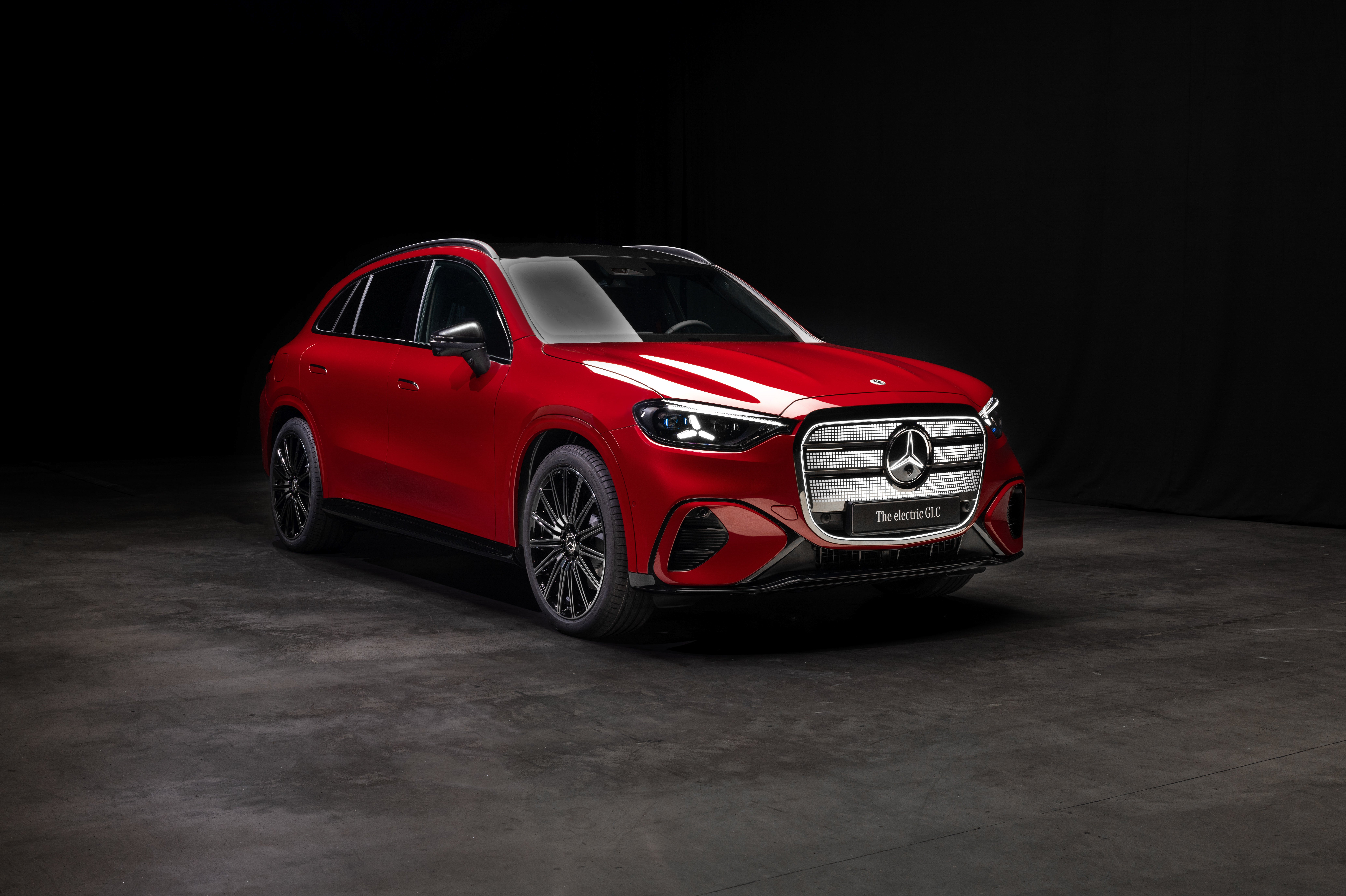
Other upcoming electric models are following the same pattern. Mercedes’ electric GLC SUV, for example, promises up to 330kW charging capability and the ability to add around 160 miles of range in 10 minutes.
The technology that makes this possible is largely centred around higher-voltage battery systems. Traditional EVs typically use 400-volt electrical architecture, but many new models are moving to 800-volt designs that allow far higher power levels to be delivered without overheating cables or batteries.
open image in gallery
The new Mercedes GLC EQ promises to add around 160 miles of range in ten minutes (Mercedes-Benz AG)
However, ultra-fast charging is only useful if the infrastructure exists to support it. That’s why manufacturers are increasingly investing directly in charging networks following Tesla’s lead with its Supercharger network. BYD’s new Flash Charging system is designed specifically to work with its own ultra-powerful charging stations, with thousands already installed in China and more planned globally.
Across Europe, the wider rapid-charging network is expanding quickly as well, with high-power chargers capable of 350kW already becoming common at motorway services and charging hubs around the UK.
Put all of that together and the direction of travel is clear. Early electric cars focused on range as the key selling point, but as battery capacity improves and infrastructure grows, the industry’s next big competition is about how quickly you can recharge.
If BYD’s claims prove realistic, the gap between plugging in and filling up may soon become very small indeed.
![Electric vehicle drivers are being unfairly penalized in Pennsylvania [letter]](https://www.evshift.com/wp-content/uploads/2026/03/635a89eeaf962.image_-770x515.jpg "Electric vehicle drivers are being unfairly penalized in Pennsylvania [letter] | Letters To The Editor")