Mayor Patrick Ward says the City of Lyndhurst has received numerous resident complaints about unnecessary noise, prompting enhanced noise ordinance enforcement.
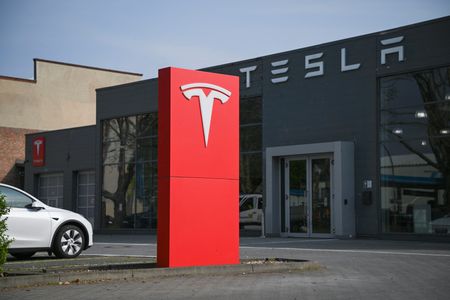
LYNDHURST, Ohio — After more than a year of weekly protests outside the Tesla dealership in Lyndhurst, city officials say complaints from residents about excessive noise prompted enforcement of local noise ordinances and the designation of a “quiet zone” along Mayfield Road.
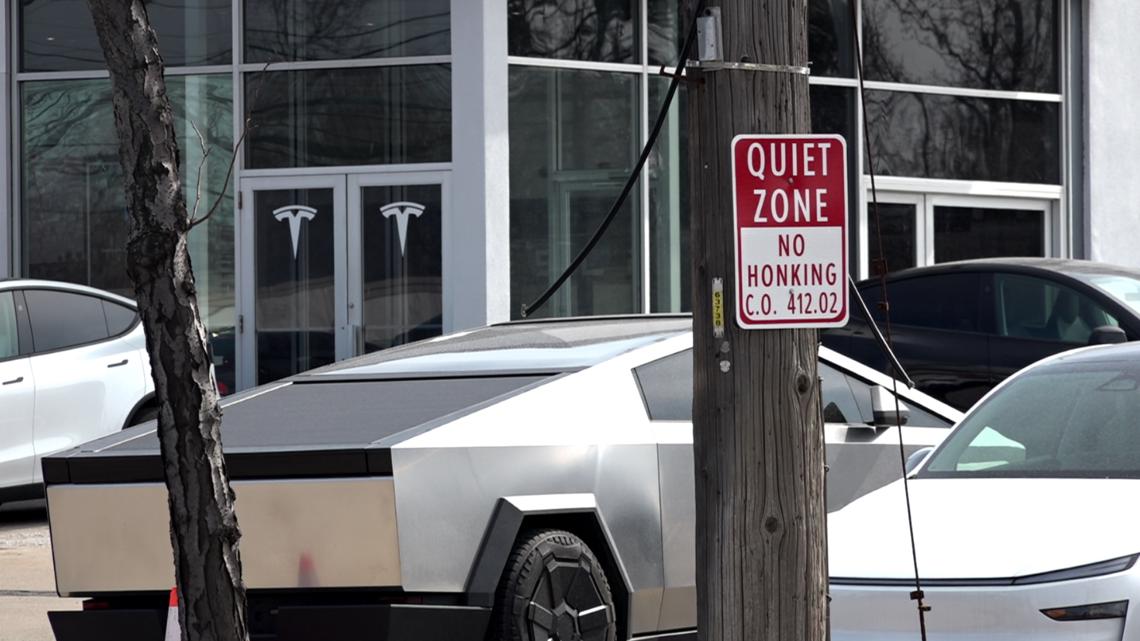
On what organizers described as week 57 of demonstrations, protesters arriving outside Tesla discovered newly posted signs designating the area as a “Quiet Zone,” limiting the use of vehicle horns except in emergencies.
According to the city, the move follows ongoing cooperation with protest organizers but comes in response to what officials say were numerous resident complaints about unnecessary noise, particularly frequent honking by passing motorists.
City cites existing ordinances
Lyndhurst officials pointed to several provisions in the city’s codified ordinances, including:
Section 438.20, which prohibits the use of a vehicle horn except to warn other drivers or pedestrians.Section 648.11, which bans loud, unnecessary or unusual noise that disturbs the comfort, health or safety of others.Section 412.02, which allows the city to designate “Zones of Quiet,” where horns may only be used in emergencies.
The quiet zone stretches from the city’s eastern border to Richmond Road — an area officials say has seen repeated instances of indiscriminate honking encouraged during protest activity.
Police issued verbal warnings only, and no citations were written, city officials said.
“We have enjoyed a very good relationship with the organizers,” Mayor Patrick Ward said in a statement to 3News. “They have thanked the City and our Police Department for the attention and cooperation, and we, likewise, have thanked them for the communication and coordination. We don’t mind the activity, but the neighbors are getting a little rattled and would appreciate a bit less noise.”
Protesters relocate
Organizers said roughly 55 people attended the protest during a recent demonstration. After police began pulling over motorists who honked within the quiet zone, about 45 protesters moved farther west to continue demonstrating in front of Lyndhurst City Hall and the Police Department, while a smaller group remained outside Tesla.
Police later advised demonstrators that Lyndhurst’s citywide ordinance limiting horn use would also be enforced near City Hall. Officers continued stopping drivers who honked, protesters said, warning that citations could be issued in the future.
“We moved just far enough to be outside the area of Tesla,” protester Janos Jalics told 3News at Monday’s Lyndhurst City Council meeting. “They even were like, ‘No noise near the churches,’ which is a little strange considering that we were allowed to park next to the church.”
The demonstrations outside Tesla have been part of a weekly, peaceful protest movement opposing Tesla CEO Elon Musk and his influence in national politics. Organizers have repeatedly said the protests are not directed at Tesla employees or customers.
Next steps
Organizers also say they are seeking support from local business owners and faith leaders willing to address council members regarding the enforcement and its impact on the protests.
City officials say enforcement of the noise ordinances is intended to balance residents’ concerns with the right to peaceful assembly.
“We don’t want to trample on anyone’s (rights) and we don’t want to see anyone else’s infringed upon, because everybody has the right to peaceful enjoyment of their home and their neighborhood on a Saturday afternoon,” Ward said in a Monday interview. “We’ve tried to curb the behavior — at least the encouraging behavior — tried to (tell the protesters), you know, ‘Let’s not hold signs that encourages honking.’”
However, First Amendment attorney Brian D. Bardwell says the ordinance raises concerns.
“If there’s going to be a horn-honking regulation, then they’ve got to make sure that the city knows that that’s got to be enforced across the board against everyone, and not just against them (the protesters),” Bardwell explained. “And if the city decides to go forward with that and is selective in the way they’re prosecuting and they’re doing it based on the exercise of people’s First Amendment rights, that’s where I start getting phone calls, and that’s where cities start getting sued.”