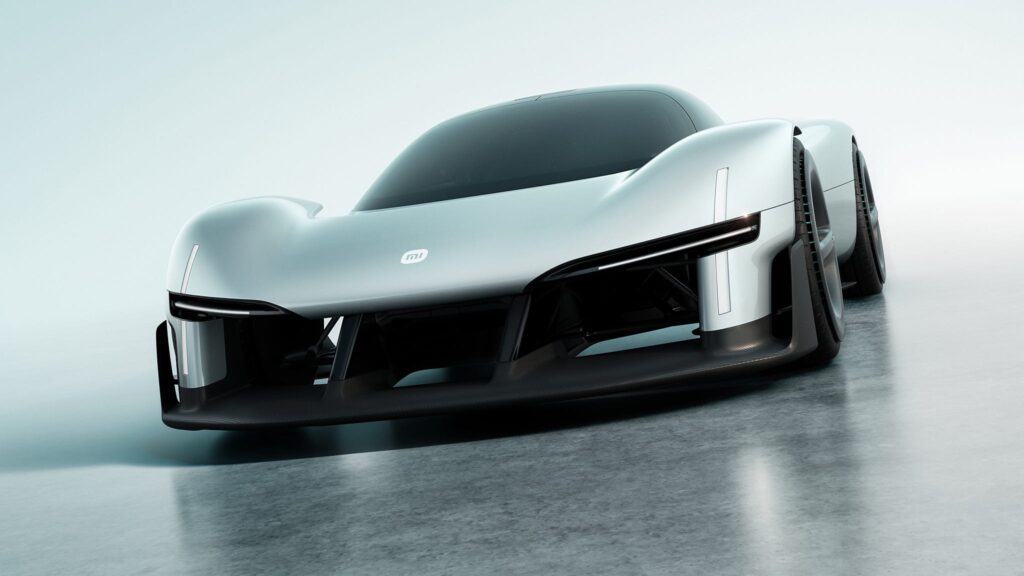
PlayStation’s Gran Turismo must have seemed a venerable antique to the software engineers working on the first car from Chinese smartphone and software tech company Xiaomi. When the Xiaomi SU7 sedan hit the road in March 2024, various iterations of Kazunori Yamauchi’s hyper-realistic racing sim had been entertaining automotive enthusiasts for 27 years. In January this year, old met new in the digital world: The 1,527-hp SU7 Ultra was added to the Gran Turismo roster, making Xiaomi the 36th automotive brand to be featured in the series. And now Xiaomi has become the first Chinese automaker to reveal a concept vehicle designed explicitly for Gran Turismo.
Created at the personal invitation of Kazunori Yamauchi, who drove the mega-quick SU7 Ultra sedan in real life in 2025, the Xiaomi Vision Gran Turismo joins storied company on his PlayStation franchise. Brands such as Ferrari and Lamborghini, Porsche and Mercedes-AMG, Genesis and Toyota, Corvette and Jaguar have created some of the 50 digital Gran Turismo concepts launched into Gran Turismo games since 2013. But with the reveal of the Xiaomi Vision Gran Turismo in Barcelona, the Chinese tech company becomes just one of a dozen or so automakers to have built a life-size model of their Gran Turismo concept. You’re looking at China speed in action—remember, no customer-owned Xiaomi vehicle on the planet is more than two years old.
ADVERTISEMENT – CONTINUE READING BELOW
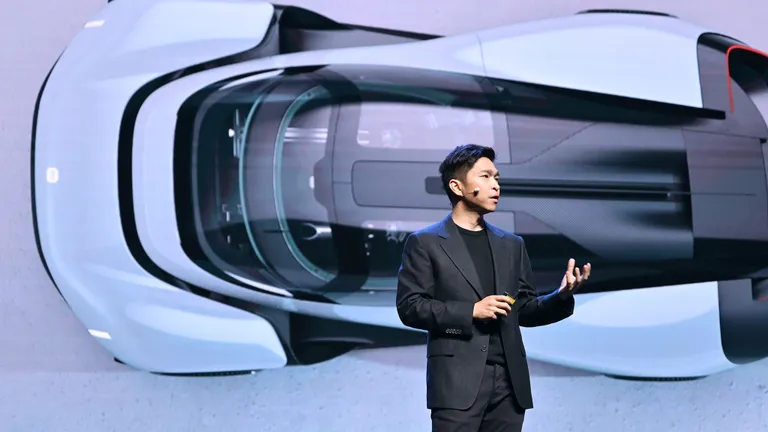
Shaped under the direction of Xiaomi design chief Tianyuan Li, who spent almost a decade at BMW before joining the Beijing-based automaker in 2021, the Xiaomi Vision Gran Turismo has great stance and proportion and surfacing, and its aerodynamic concept is as radical as that of an Aston Martin Valkyrie or Lotus Evija. “It gave us a chance to rethink hypercar design from a tech company’s perspective,” Li says. “We are in the era of intelligent electrification and AI, and we asked ourselves, ‘If Xiaomi was to create a hypercar, what would it look like?’”
Finding the answer to that question was put to designers at Xiaomi’s studios in Shanghai, Beijing, and Munich. The Vision Gran Turismo concept was done in Munich with a lot of input from Xiaomi’s Chinese team, says Jean-Arthur Madelaine-Advenier, design director at the German studio. “We had a lot of very bold and fresh ideas from China. But you need some experience to refine the surfaces. When you’re a young designer, you have a lot of ideas, and you tend to put too many on a car. When you get older, you learn that a good design should just be two or three key messages.”
ADVERTISEMENT – CONTINUE READING BELOW
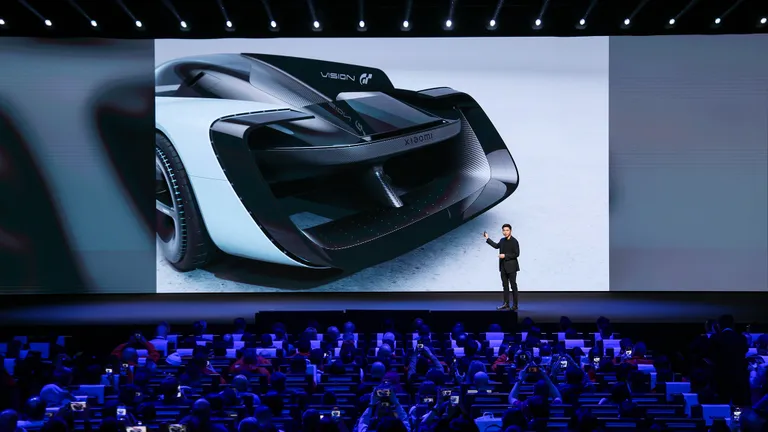
And the key messages of the Xiaomi Vision Gran Turismo’s design? First, that in an electric-powered hypercar, aerodynamic efficiency is everything. “We could be fast in a straight line with low drag or fast in the corners with high downforce, but we thought finding the perfect balance between drag and downforce would be the most optimal for an EV hypercar, and our idea was to meet our aerodynamic targets without extra wings,” Li says. As a result, the Xiaomi Vision Gran Turismo’s central body is teardrop shaped, and every structural member, including the suspension control arms, has an airfoil cross-section. Air enters from the front of the car and flows through sculpted passages under and around the body before exiting at the rear via a gaping outlet delineated by a giant looping taillight.
The aerodynamic devil is in the detail, however. That giant taillight is surrounded by a series of micro-vents that are used to stimulate airflow beyond the rear extremities of the bodywork and reduce drag-inducing turbulence at the rear of the car. Dubbed Active Wake Control, the system is designed to use real-time vehicle speed and yaw data to determine the rate of the airflow through the vents. Another interesting aero idea is wheel covers that use magnets to keep them stationary, as they appear to float above vanes that draw cooling air toward the brakes. Xiaomi claims the Vision Gran Turismo has a drag co-efficient of 0.29, setting up a virtuous circle of efficiency: Less drag means the car requires less energy to move at speed, and that means a smaller and lighter battery can be used. And that means the car can be lighter overall and deliver higher performance from a given powertrain output.
ADVERTISEMENT – CONTINUE READING BELOW