
Source: SteckerBiker | The Slovenian brand STRiX is positioning itself in an interesting niche between a specialist vehicle, civilian hard-enduro machine, and rally project. On Kickstarter, the pre-launch page for the campaign ‘STRiX: tactical electric enduro motorcycle | The Road to Dakar‘ is already visible and marked as ‘Launching soon.’ Kickstarter describes these pre-launch pages as a way to gather potential backers before the campaign officially starts, allowing them to receive automatic notifications once it goes live.
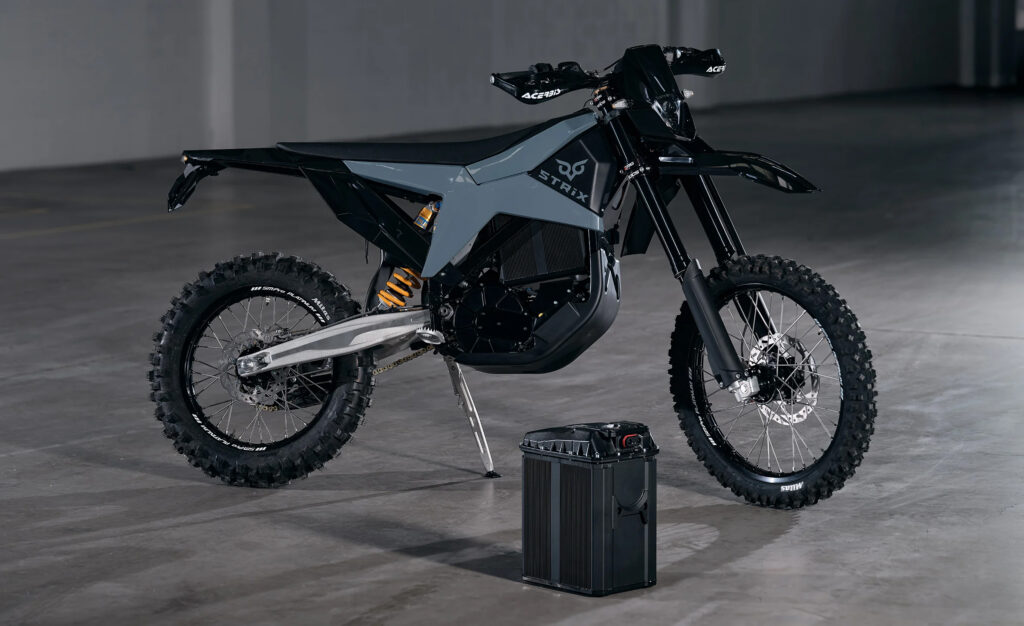
What stands out is STRiX’s strategic direction: the company continues to position its technology as a solution for professional and tactical applications, but now explicitly wants to bring this ‘tactical-grade technology’ into the civilian off-road market.
Staying true to its military origins
This move aligns closely with the image STRiX has built since its founding. The company was established in 2023 in Maribor, Slovenia, and describes its core product as an electric hard-enduro motorcycle built to military standards for extreme missions.
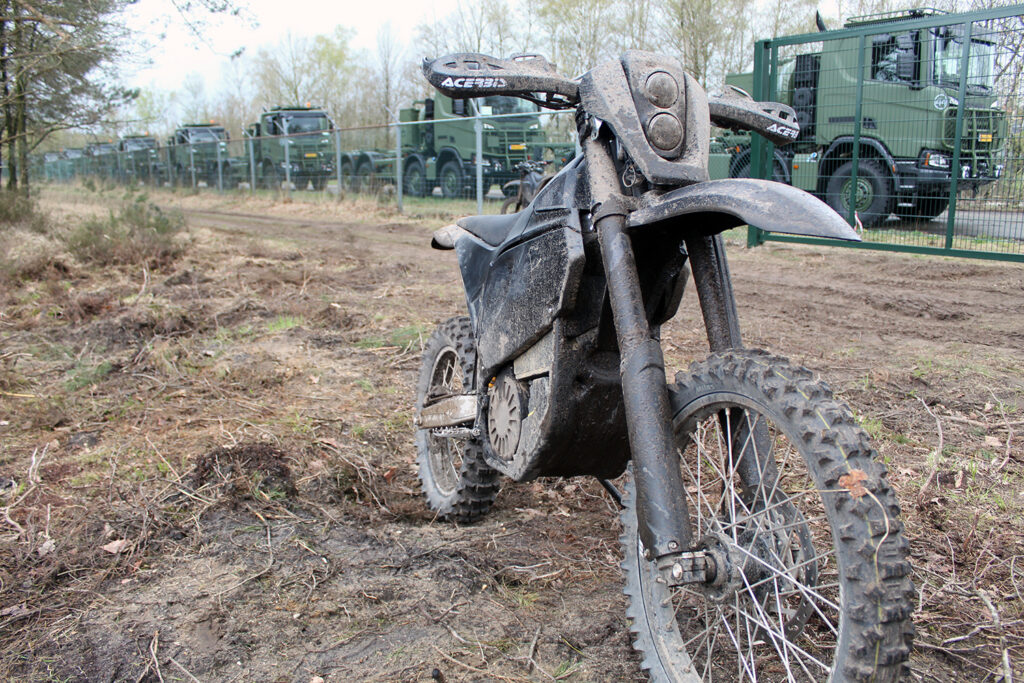
The focus is therefore not lifestyle off-roading but durability, stealth characteristics, versatility, and rugged engineering designed for demanding environments. On its website, STRiX highlights features such as silent operation, low thermal signature, swappable batteries, high payload capacity, and customizable software.
The military positioning appears to be more than marketing. During a test event with the Belgian Army, the STRiX Hard Enduro was evaluated in a military setting. In that context, THE PACK Global described the motorcycle as primarily developed for defense applications.
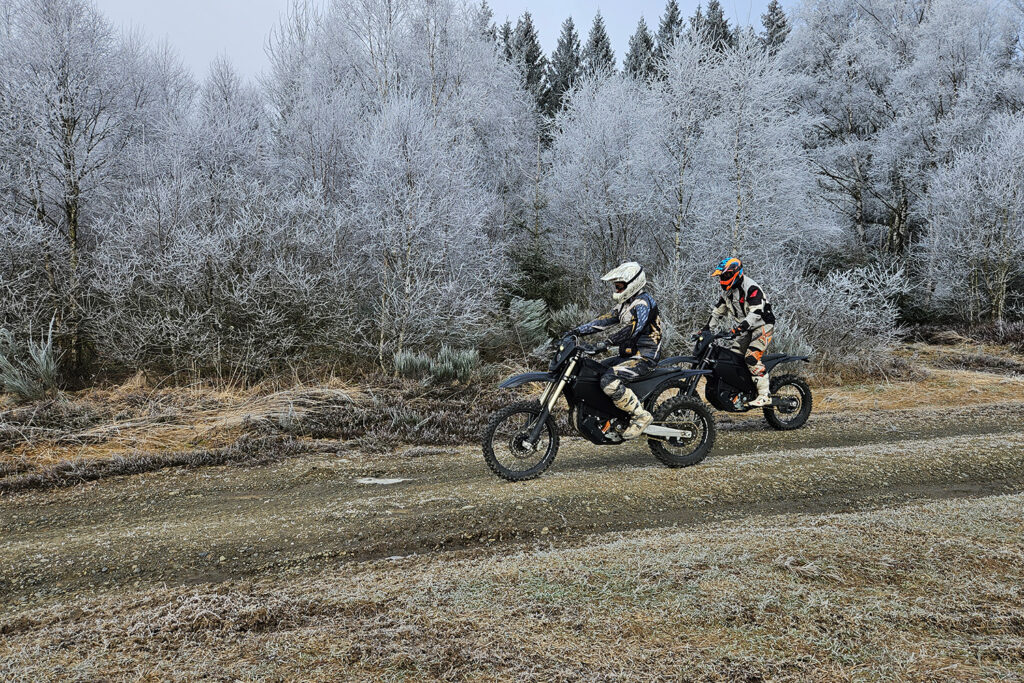
Earlier this year, STRiX also reported returning to Belgium for an international tactical event involving elite units from several European countries. The company has also hosted the Slovenian Minister of Defence and a delegation from the Ministry of Defence at its headquarters.
Taken together, these milestones show a clear and deliberate trajectory: a platform developed for military applications that is now gradually expanding toward the civilian market.
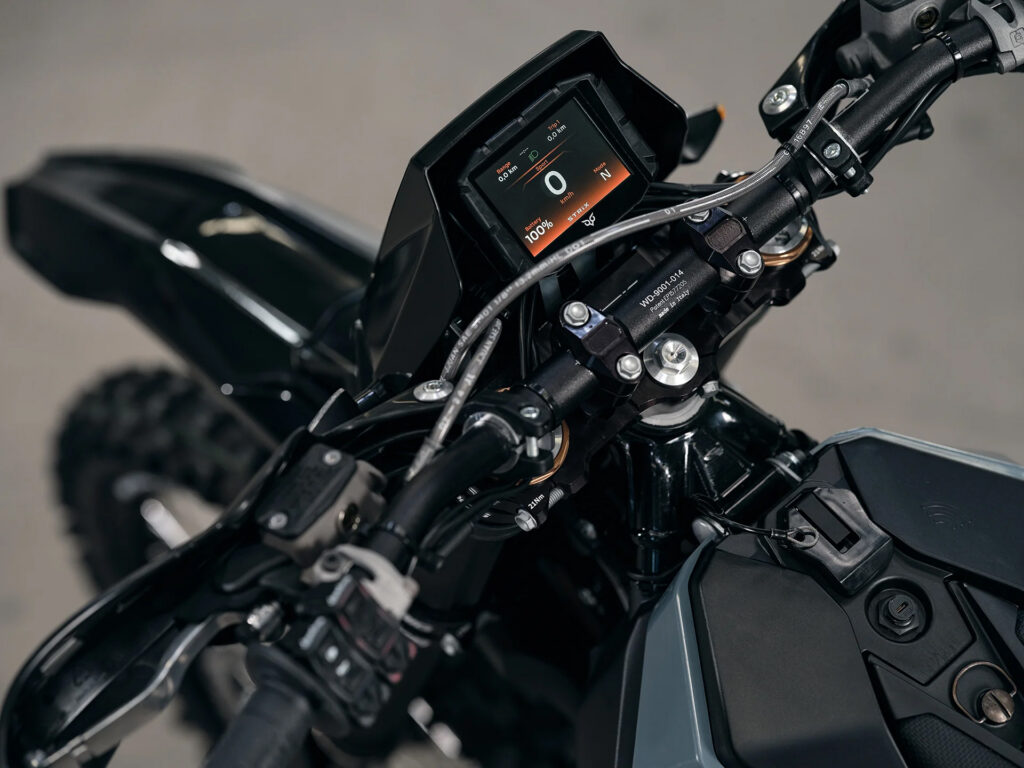
Hard Enduro with swappable battery and serious performance
Technically, STRiX continues with the concept already known from earlier reports: a no-compromise electric enduro built around a swappable battery system, a lightweight CrMo frame, and a strong focus on traction, throttle response, and off-road capability.
According to the current product page, the specifications include:
67 kW peak power
975 Nm torque
138 kg weight
Top speed: 130 km/h
Range: 40–80 km
Ride time: 80 minutes to four hours
AC charging time: around two hours
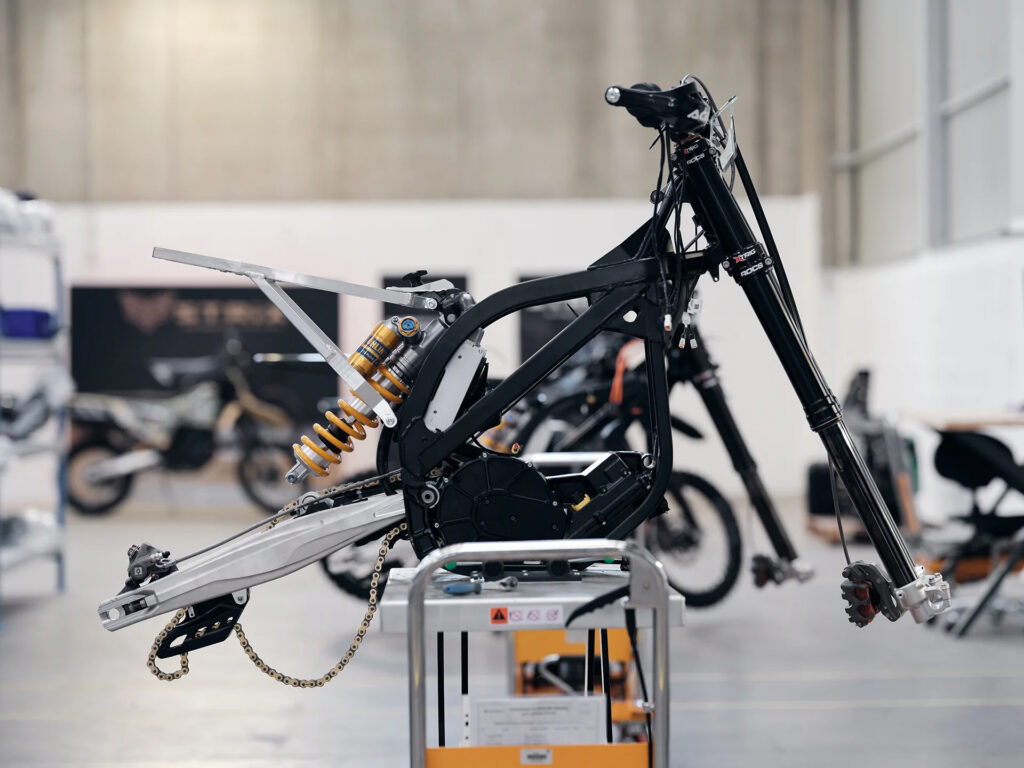
The removable battery is officially listed with:
6.22 kWh capacity
345 V nominal voltage
18 Ah
40 kg weight
1,500 cycles
Additional features include up to 150 kg payload, a reverse gear, IP67/IP68-protected components, and L3e-A3E homologation currently in progress (making it suitable for riders with a full motorcycle license).
Interestingly, earlier reports around the military prototype mentioned slightly different numbers. During the Belgian Army evaluation, figures included 70 kW power, 1,050 Nm at the rear wheel, approximately 130 kg weight, 6.3 kWh battery capacity, and external DC charging up to 18 kW, allowing charging from 20 to 80 percent in roughly ten minutes.
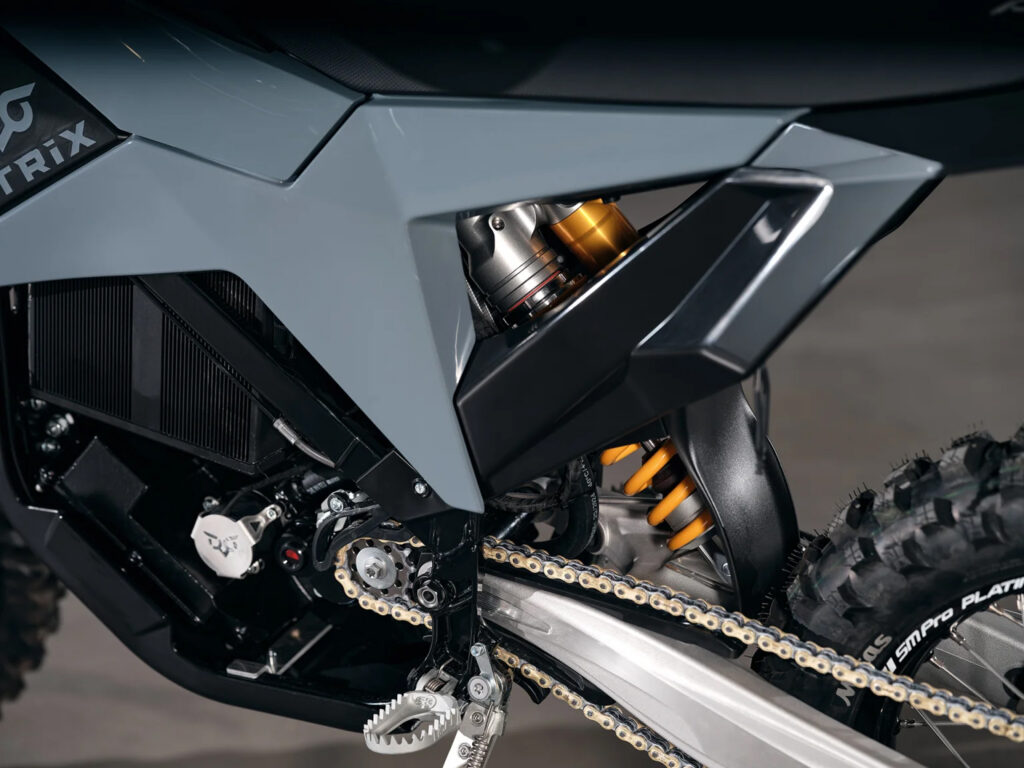
Suspension details were also specified at that time, with Showa components at the front and Öhlins at the rear.
While there are minor discrepancies between the earlier military configuration and the current product page, the overall philosophy remains consistent: high power, swappable batteries, rugged construction, and an architecture designed for demanding use cases.
Kickstarter as a bridge to the civilian off-road market
This is where the Kickstarter campaign gains its real strategic significance. Rather than the launch of a typical garage start-up, it appears more like the next step for an already established specialist manufacturer that is opening its platform to civilian customers.
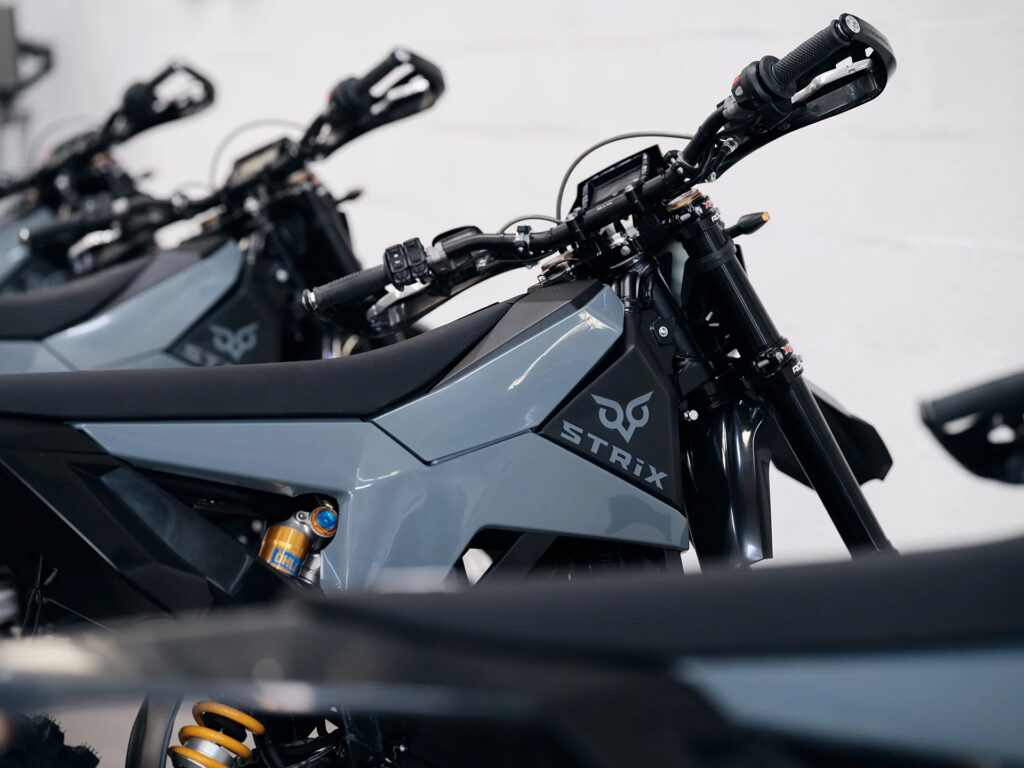
The campaign title directly connects the production motorcycle with the rally narrative ‘The Road to Dakar.’ At the same time, STRiX clearly embraces its military-inspired profile as a unique selling point rather than hiding it.
For the brand, Kickstarter is therefore likely more than a funding tool. It also serves as a platform for visibility, community building, and early market feedback.
Dakar 2027 adds more than just marketing
The project gains additional momentum through STRiX’s newly announced Dakar ambitions. The company is collaborating with Portuguese rally rider Pedro Bianchi Prata to develop an electric competition bike aimed at participating in the 2027 Dakar Rally in the Mission 1000 category.
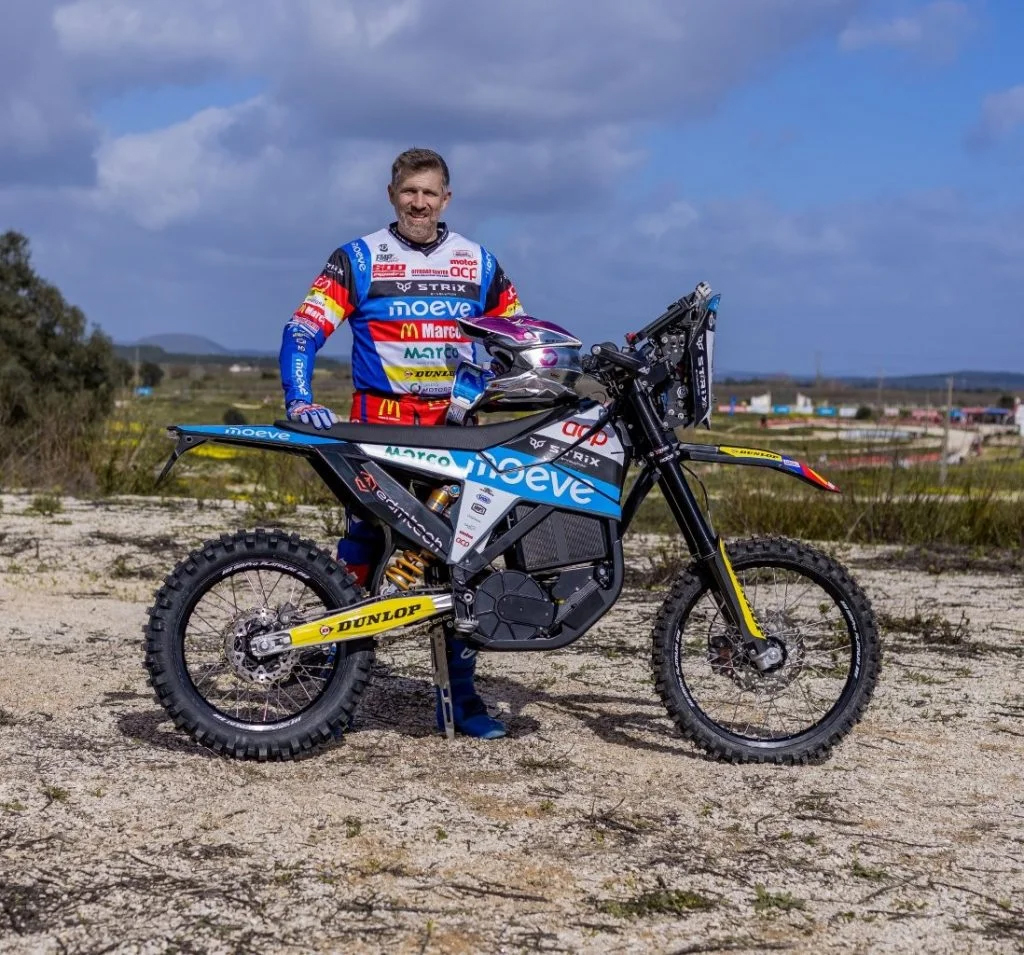
According to STRiX and partner LusoMotores, the development roadmap for 2026 includes four international rally events and additional Baja competitions in national, European, and world-cup series. These races will effectively serve as a rolling test laboratory.
A key focus lies on the energy system. Together with EDMTECH, the team aims to increase energy density within the same packaging volume while improving real-world range under racing conditions.
Energy company MOEVE will act as the main sponsor, and a multi-part documentary series following the journey to Dakar has also been announced.
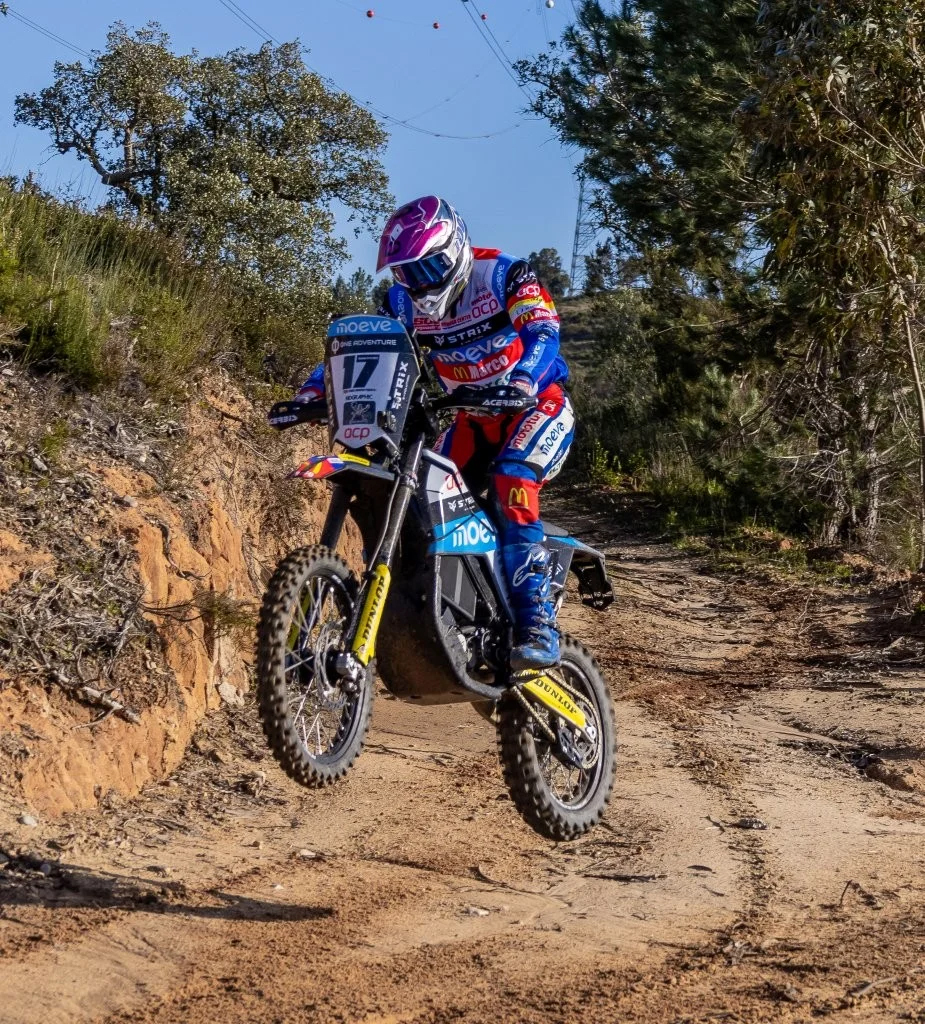
The Mission 1000 connection is more than just a headline. Dakar describes the category as an open development laboratory for alternative powertrains under real desert conditions.
For the 2026 Dakar, electric motorcycles from Segway and Arctic Leopard are expected to dominate the category. According to THE PACK, around six electric bikes could compete on daily stages of roughly 100 km, while official Dakar communication mentions seven motorcycles in total for the category.
For STRiX, a successful entry would therefore be significant not only from a sporting perspective but also technologically, as range, thermal management, weight, and battery architecture will be tested under extreme conditions.
The SteckerBiker perspective
With STRiX, a new player enters the field of hard off-road motorcycles, where electric models are increasingly proving they can be more than just a novelty, provided they can genuinely challenge combustion bikes in demanding terrain.
The path taken so far is unusual. STRiX first positioned itself as a defense supplier and military-focused specialist before moving toward the civilian market. That strategy may actually prove smart: ongoing contracts and professional applications can provide a far more stable foundation than launching directly into the recreational market.
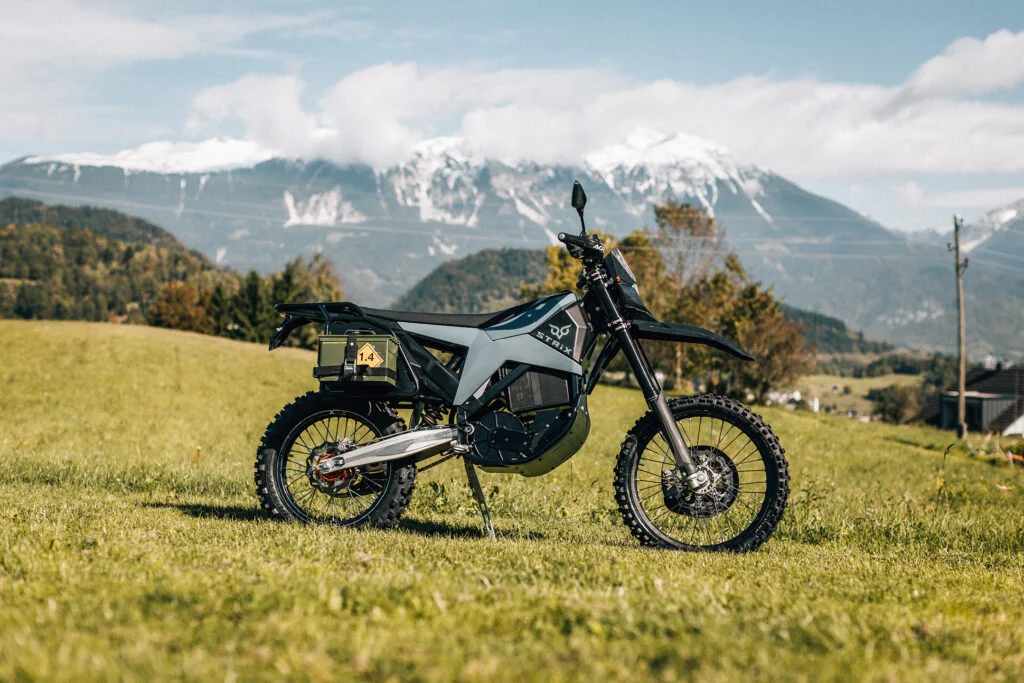
At the same time, the brand’s Dakar 2027 ambitions add another layer of interest. Mission 1000 remains one of the few arenas where electric off-road concepts must prove themselves under truly extreme conditions. For now, the category is shaped mainly by Segway and Arctic Leopard, making it particularly interesting to see where STRiX will position itself.
During EICMA 2025, SteckerBiker had the opportunity to take a closer look at the motorcycle and speak with one of the engineers. He mentioned a planned frame system that would allow spare swappable batteries to be carried directly on the bike, a feature that could be extremely valuable in rally scenarios and potentially attractive for civilian off-road use as well.
For now, it will be fascinating to watch how STRiX evolves from a military-inspired hard-enduro specialist into a serious civilian off-road brand.
If you prefer to read the original (German language) article from SteckerBiker/THE PACK News, here is the link:
Previous article(s) about STRiX at THE PACK: