
While the implantation of electric cars was well underway in North America—and particularly in Canada—over the last few years, major political and financial shifts have turned the tide over the past year.
Indeed, the imposition of tariffs on vehicles imported to the United States, along with the ending or reduction of government subsidies on both sides of the border, has severely hindered the sales and profitability of electric models. This has pushed several manufacturers to overhaul their plans for the coming years.
Consequently, since last year, an unprecedented number of electric vehicles have been withdrawn from the market well before the end of their expected life cycle, and several others have been abandoned before even reaching showrooms.
Here is a gallery of those electric models that disappeared from the Canadian market in 2026 or will ultimately never see the light of day.
Acura RSX


Acura RSX Prototype Makes Global Debut at Monterey Car Week


Initially unveiled as a prototype in August 2025, the Acura RSX marked the return of an iconic name, transformed for the occasion into an electric compact SUV. Scheduled for late 2026, this model was intended to be the first electric vehicle designed entirely in-house by Honda on its new global platform, integrating the ASIMO OS operating system and bidirectional charging capabilities. However, as recently as yesterday, Honda abruptly canceled the project before its launch. Citing low demand for EVs, tariff pressures related to the assembly of this model (which was to be produced in Ohio), and competition from China, the manufacturer chose to redirect its investments toward hybrid powertrains, accepting a colossal financial loss of $21.4 billion for all its cancelled programs.
Acura ZDX
Withdrawn from the Canadian market after only a 2024 model year that was stretched until last September, the Acura ZDX symbolizes the premature end of the technical partnership between Honda and General Motors. Despite aggressive discounts reaching $10,000, this SUV based on the Ultium platform failed to find its audience. With this disappearance, coupled with the cancellation of the RSX project, Acura now finds itself in a precarious position: the brand no longer offers any electric vehicles to its customers and has no new battery-powered models in development for North America.
Chevrolet BrightDrop

Front 3/4 view of the 2025 Chevrolet BrightDrop 400 driving through a city.

Front 3/4 view of 2025 Chevrolet BrightDrop 600 driving on a highway in a city with buildings in background.

Front 3/4 view of the 2025 Chevrolet BrightDrop 600 all-electric walk-in van. Pre-production 2025 Chevrolet BrightDrop shown. Available production model may vary.

Close-up view of infotainment screen in the 2025 BrightDrop 600 with cameras being used to parallel park.

2025 Chevrolet BrightDrop 400 shown with aftermarket upfit installed. Production model may vary.
General Motors ended production of its BrightDrop electric van at the CAMI plant in Ingersoll, Ontario, in October 2025. Although this site was celebrated as Canada’s first large-scale EV manufacturing plant, the project was abandoned due to an electric commercial vehicle market that moved much slower than anticipated. Disappointing sales, combined with the removal of tax credits in the U.S. and an uncertain regulatory framework, rendered the model non-viable. GM specified that production will not be relocated, signaling the permanent disappearance of the BrightDrop lineup in its current form.
Ford F-150 Lightning
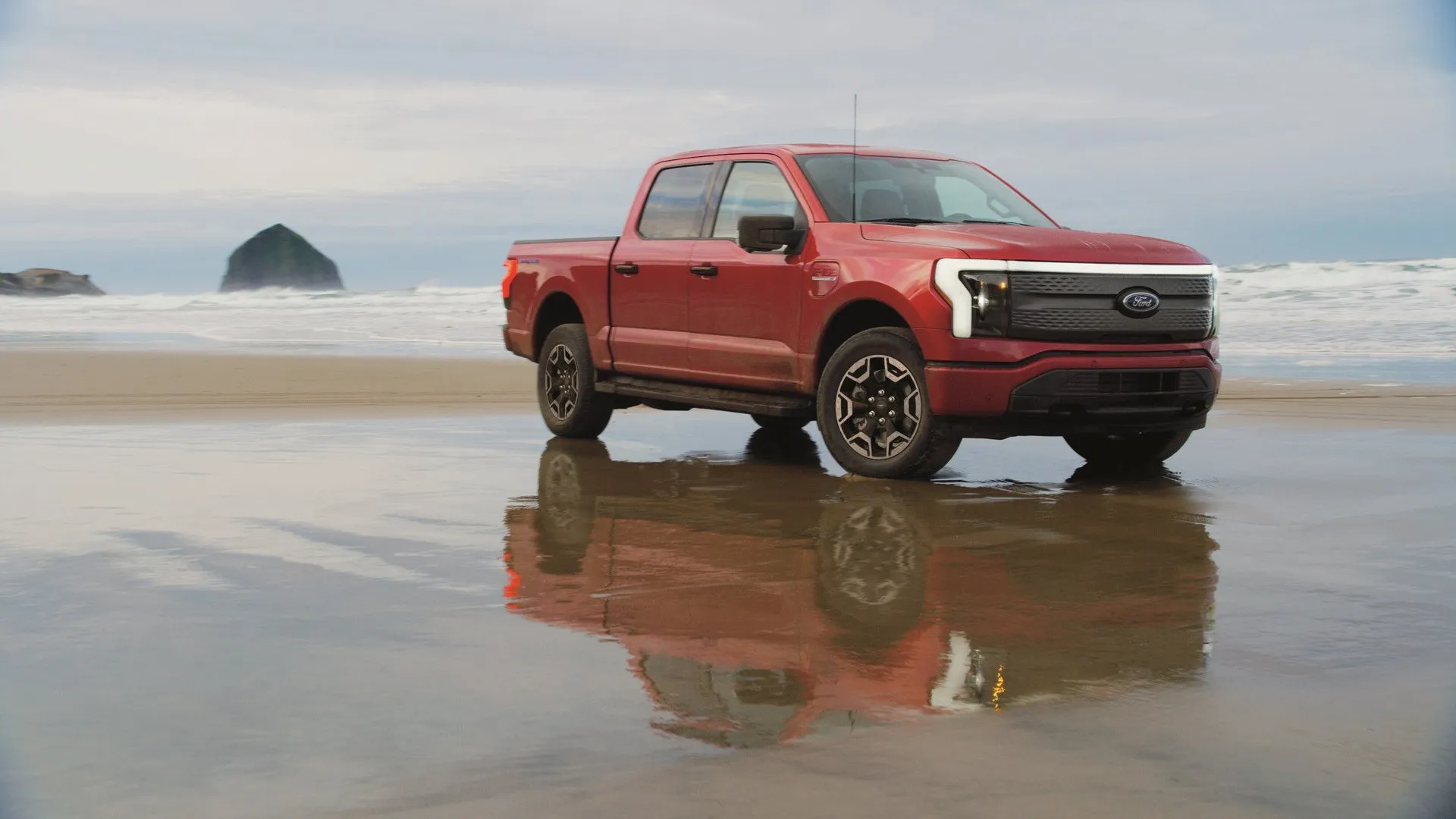
The Ford F-150 Lightning, a pioneer among electric pickups, was withdrawn from the Canadian market at the end of 2025. Despite notable initial success in Quebec, insufficient overall demand and high production costs made the model unprofitable for the manufacturer. In 2027, this model will return as an Extended Range Electric Vehicle (EREV). This new version will use a gasoline engine serving exclusively as a generator to power the electric motors, bringing the total range to over 1,126 km to better meet towing and cold-weather needs.
Ford Three-Row Electric SUV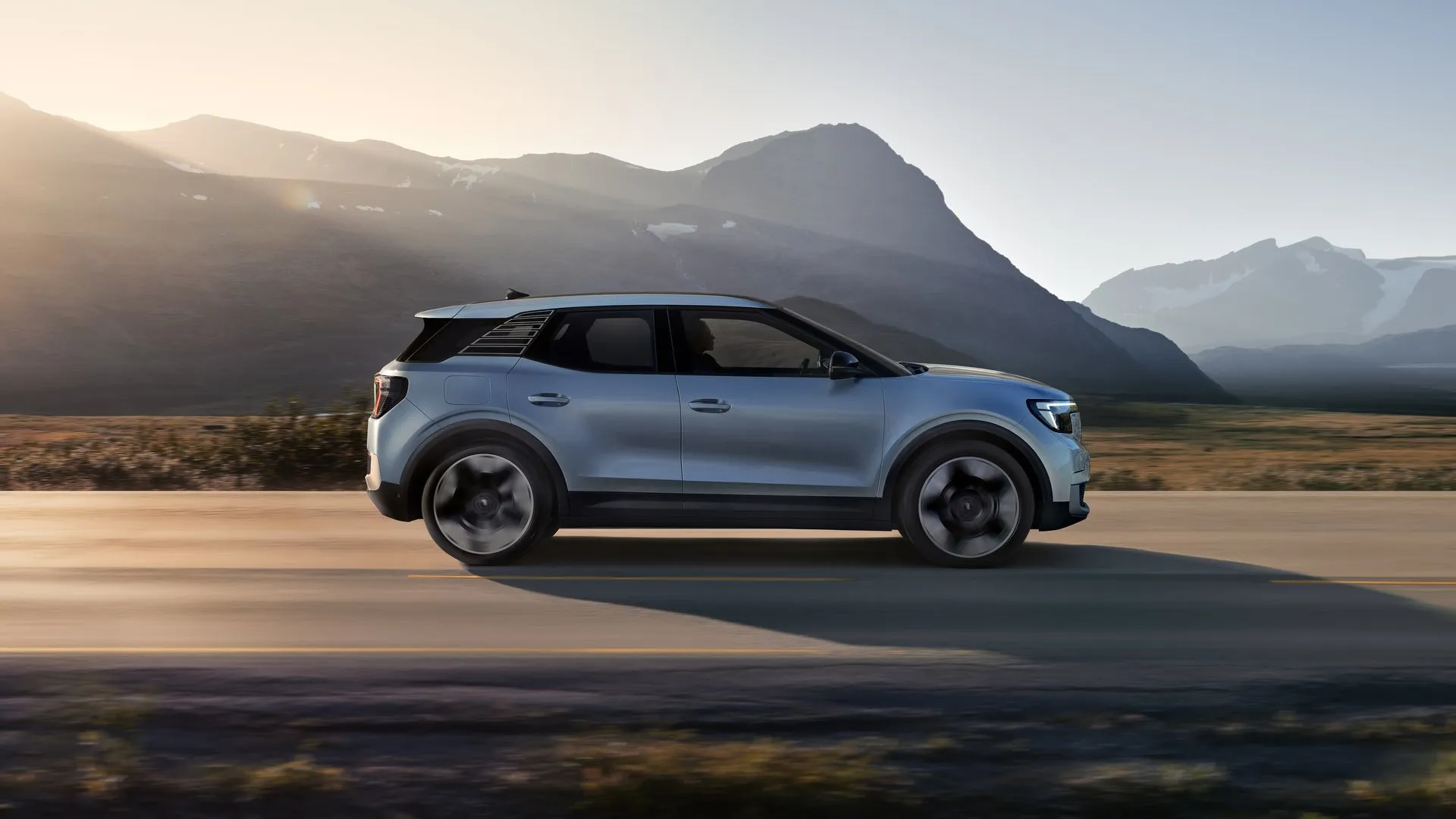 2025 Ford Explorer EV | Photo: Ford
Ford’s three-row electric SUV project, which was initially intended to transform the Oakville, Ontario plant into a major electrification hub, has been officially canceled. This strategic pivot, resulting in a write-down of approximately $1.9 billion for this specific program, reflects the manufacturer’s desire to move away from large, low-profit electric models in favor of more lucrative segments. The Oakville facility was ultimately reassigned to the production of gas-powered and hybrid Super Duty pickups. Ford is now directing its investments toward hybrid powertrains and the development of more compact, affordable electric vehicles via its advanced research teams.
Genesis Electrified G80
The Genesis Electrified G80 is officially withdrawn from the North American market, and its presence in Canada will end once the final inventory units are sold. Despite a range of 454 km and a refined design, this luxury sedan suffered from a high base price (over $105,000) and fierce competition from German brands and Tesla. Its withdrawal is also linked to the imposition of U.S. customs tariffs on vehicles manufactured in South Korea. This departure cancels the planned arrival of the 2026 version, which was supposed to offer a lengthened wheelbase and a redesigned interior. Genesis is now concentrating its electric strategy on its SUVs, such as the GV60, GV70 EV, and the future GV90.
Honda 0 Series Saloon
The Honda 0 Series Saloon, the flagship model of the new “Series 0” electric range, was officially canceled yesterday before its commercial launch. This futuristic vehicle with a wedge design was meant to embody Honda’s “Thin, Light, and Wise” approach, integrating Level 3 semi-autonomous driving and the Asimo OS artificial intelligence system. However, faced with a sharp decline in EV demand and global tariff pressures, Honda sacrificed this program to limit colossal financial losses estimated at 21.4 billion Canadian dollars. This historic reversal, leading to the brand’s first annual loss since 1957, forces the manufacturer to prioritize its next-generation hybrid powertrains.
Honda 0 Series SUV
The Honda 0 SUV, a mid-size electric vehicle prototype, was intended to embody a new era of mobility with an adaptable cabin and advanced driver assistance technologies. Using the ASIMO operating system and steer-by-wire controls, it promised optimized maneuverability and customization. However, much like the Series 0 Saloon, the SUV was canceled yesterday.
Honda Prologue


2024 Honda Prologue Elite


Launched in 2024, the Honda Prologue will see its production end in December 2026, closing a life cycle of only three years. This mid-size SUV, the result of a partnership with General Motors on the Ultium platform, suffered a brutal sales slump of over 74% at the start of 2026, following the repeal of U.S. federal tax credits. Although the model initially garnered interest, Honda has decided to abandon any plans for a refresh or second generation. The brand is now redirecting its investments toward expanding its hybrid lineup (Civic, CR-V, Accord), as its other electric vehicle projects have also been put on ice.
Honda Three-Row Electric SUV
Also at Honda, the launch of a large three-row electric SUV was canceled a few months ago, a decision motivated by a softening of demand in North America and the legislative impacts of the “Big Beautiful Bill.” With the scheduled removal of the $7,500 federal tax credit by the Trump administration in September 2025, Honda judges the profitability outlook for this segment to be too uncertain. Consequently, the manufacturer reduced its global electric investments from 10 trillion to 7 trillion yen to refocus on hybridization. At the time this model was canceled, Honda claimed the other Series 0 EVs would see the light of day, but we now know that will not be the case.
Hyundai IONIQ 6

2026 Hyundai Ioniq 6 | Photo: Hyundai


The Hyundai IONIQ 6 will skip the 2026 model year in Canada. Hyundai Canada has chosen not to import the refreshed version immediately in order to clear significant inventories of 2025 models still at dealerships. The restyled sedan will finally make its debut in the country in the fall of 2026 as a 2027 model. Notably, the 641-horsepower IONIQ 6 N high-performance variant is not affected by this delay; it will be the sole representative of the 2026 vintage in the lineup, introducing the new design with slimmed-down headlights that will later be generalized.
Jeep Wagoneer S

2025 Jeep® Wagoneer S Launch Edition

2025 Jeep® Wagoneer S Launch Edition

2025 Jeep® Wagoneer S Launch Edition

2025 Jeep® Wagoneer S Launch Edition

2024 Jeep® Wagoneer S Launch Edition Radar Red Interior
The Jeep Wagoneer S, the brand’s first fully electric SUV in North America, finds itself in an uncertain position for the year 2026 in Canada. Although Stellantis has not yet confirmed its withdrawal, rumors indicate it could skip the 2026 model year, which still does not appear on the brand’s online configurator. This potential setback is attributed to sales forecasts falling below expectations and the cancellation of certain electric vehicle subsidies in the United States.
Kia Niro EV
The Kia Niro EV will take its bow in Canada after the 2026 model year, with only the hybrid powertrain remaining for 2027. A pioneer for the brand, this model helped democratize electrification by offering a competent option at a lower price than more modern EVs. Its withdrawal is explained by a pricing position that has become complex: at over $48,600, it faced internal competition from the new EV4 sedan and the EV5 compact SUV. The planned arrival of the small EV3, expected to start under $40,000, allows Kia to replace the Niro EV with a more technological and affordable solution, simplifying its strategy toward all-electric.
Mercedes-Benz EQE


EQE 500 AMG Line 4MATIC; Exterior: spektralblau | Interior: schwarz/anthrazit; vorläufige Werte WLTP: Stromverbrauch kombiniert: 21,1-17,8 kWh/100 km; CO2-Emissionen kombiniert: 0 g/km // Mercedes-Benz EQE 500 4MATIC (combined electrical consumption (provisional, WLTP): 21,1-17,8 kWh/100 km; combined CO2 emissions (WLTP): 0 g/km); Exterior: spectral blue | Interior: black/anthracite;

Mercedes-Benz EQE 350+ Electric Art (Stromverbrauch kombiniert (WLTP): 18,7-15,9 kWh/100 km; CO2-Emissionen kombiniert (WLTP): 0 g/km); Exterieur: Opalithweiß; Interieur: Gelb Helios/Weiß // Mercedes-Benz EQE 350 Electric Art (combined electrical consumption (WLTP): 18,7-15,9 kWh/100 km; combined CO2 emissions (WLTP): 0 g/km); Exterior: opalite white, Interior: yellow helios/white


Mercedes-Benz EQE 350+ Electric Art (Stromverbrauch kombiniert (WLTP): 18,7-15,9 kWh/100 km; CO2-Emissionen kombiniert (WLTP): 0 g/km); Exterieur: Opalithweiß; Interieur: Gelb Helios/Weiß // Mercedes-Benz EQE 350 Electric Art (combined electrical consumption (WLTP): 18,7-15,9 kWh/100 km; combined CO2 emissions (WLTP): 0 g/km); Exterior: opalite white, Interior: yellow helios/white
Mercedes-Benz ended production of the EQE sedan toward the end of 2025, closing a particularly short life cycle. This decision stems from disappointing sales, which plummeted by 39% in 2024, and a distinctive design that failed to appeal to the brand’s traditional clientele. Starting at $76,050, the EQE struggled to remain competitive against Tesla and BMW, notably suffering from limited range on its AMG performance versions. The manufacturer is now simplifying its range to prioritize more advanced 800-volt architectures. The EQE lineage will be replaced by the future electric C-Class and GLC, as well as an electric E-Class with a more classic design expected for 2027.
Mercedes-Benz EQE SUV

EQE 500 4MATIC SUV (WLTP: Stromverbrauch kombiniert: 22,5-18,9 kWh/100 km; CO2-Emissionen kombiniert: 0 g/km); Exterieur: AMG Line, samtbraun metallic; Interieur: AMG Line, Nappa Leder balaobraun/nevagrau // EQE 500 4MATIC SUV (WLTP: Combined electric energy consumption: 22.5-18.9 kWh/100 km; combined CO2 emissions: 0 g/km); Exterior: AMG Line, velvet brown metallic; Interior: AMG Line, Nappa leather balao brown/neva grey

EQE 350 4MATIC SUV (WLTP: Stromverbrauch kombiniert: 22,5-18,6 kWh/100 km; CO2-Emissionen kombiniert: 0 g/km); Exterieur: AMG Line, obsidianschwarz metallic; Interieur: AMG Line, Leder schwarz/spacegrau // EQE 350 4MATIC SUV (WLTP: Combined electric energy consumption: 22.5-18.6 kWh/100 km; combined CO2 emissions: 0 g/km); Exterior: AMG Line, obsidian black metallic; Interior: AMG Line, Leather black/space grey

EQE 350 4MATIC SUV (WLTP: Stromverbrauch kombiniert: 22,5-18,6 kWh/100 km; CO2-Emissionen kombiniert: 0 g/km); Exterieur: AMG Line, obsidianschwarz metallic; Interieur: AMG Line, Leder schwarz/spacegrau // EQE 350 4MATIC SUV (WLTP: Combined electric energy consumption: 22.5-18.6 kWh/100 km; combined CO2 emissions: 0 g/km); Exterior: AMG Line, obsidian black metallic; Interior: AMG Line, Leather black/space grey

EQE 350 4MATIC SUV (WLTP: Stromverbrauch kombiniert: 22,5-18,6 kWh/100 km; CO2-Emissionen kombiniert: 0 g/km); Exterieur: AMG Line, MANUFAKTUR alpingrau; Interieur: AMG Line, Leder schwarz/spacegrau // EQE 350 4MATIC SUV (WLTP: Combined electric energy consumption: 22.5-18.6 kWh/100 km; combined CO2 emissions: 0 g/km); Exterior: AMG Line, MANUFAKTUR alpine grey; Interior: AMG Line, Leather black/space grey

EQE 350 4MATIC SUV (WLTP: Stromverbrauch kombiniert: 22,5-18,6 kWh/100 km; CO2-Emissionen kombiniert: 0 g/km); Exterieur: AMG Line, obsidianschwarz metallic; Interieur: AMG Line, Leder schwarz/spacegrau // EQE 350 4MATIC SUV (WLTP: Combined electric energy consumption: 22.5-18.6 kWh/100 km; combined CO2 emissions: 0 g/km); Exterior: AMG Line, obsidian black metallic; Interior: AMG Line, Leather black/space grey
Much like the sedan, the EQE SUV also saw its production stop a few months ago due to sales that were lower than hoped for. Despite its technological ambitions, its rounded design—which abandoned the brand’s characteristic style—failed to convince the traditional customer base in the face of Tesla or BMW. Starting at $94,900, the SUV suffered particularly from limited range on its AMG performance version (370 km).
Nissan Electric Sedans
Nissan ended the development of its two future electric sedans (codes LZ1F and LZ1E) last year, which were intended to replace the Maxima and Altima in North America. The company cited a declining sedan market and production costs that were too high—with an estimated starting price beyond $45,000. This strategic shift postpones the arrival of larger new electric models to 2028. Note that Nissan Canada is distancing itself from the U.S. by continuing to market the Ariya crossover for 2026, even though it is being discontinued south of the border due to tariffs imposed on its assembly in Japan.
Ram 1500 REV (Electric)

2025 Ram 1500 REV front three-quarters

2025 Ram 1500 REV front three-quarters

2025 Ram 1500 REV front three-quarters

2025 Ram 1500 REV rear three-quarters

2025 Ram 1500 REV Tungsten interior
Stellantis has officially canceled the development of the fully electric Ram 1500 REV pickup, citing insufficient demand for large battery-powered trucks in North America. Initially intended to rival the Silverado EV, this project was abandoned before its launch in favor of a return to more traditional internal combustion engines. However, the manufacturer has repurposed the “1500 REV” name to designate its future Extended Range Electric Vehicle (EREV) version, previously known as the Ramcharger. This 2027 model will use a V6 engine serving exclusively as a generator to power a 92 kWh battery, promising a total range of 1,110 km and a towing capacity of 14,000 pounds.
Tesla Model S
Tesla will officially close the chapter on the Model S, with production ceasing in the second quarter of 2026. Launched in 2012, this sedan was the first vehicle entirely designed by the brand, permanently transforming the image of electric cars through its unprecedented blend of luxury, technology, and performance. Elon Musk called this withdrawal an “honorable retirement,” marking the company’s definitive strategic pivot toward artificial intelligence. Production space at the Fremont factory will now be reassigned to the manufacturing of the Optimus humanoid robot. Although this historic model is disappearing from the new vehicle catalog, Tesla ensures that technical support and parts will remain available for current owners.
Tesla Model X
As with the Model S, Tesla will end production of the Model X in 2026, marking the end of the luxury SUV with “Falcon Wing” doors. Launched in 2015, this model is apparently being withdrawn to allow Tesla to focus on artificial intelligence and robotics. Despite this, Tesla confirms that current owners will continue to benefit from technical support, spare parts, and software updates throughout the life of their vehicle. With less than 3% of the brand’s total sales in 2025, the Model X is definitively yielding its place to the Model 3 and Model Y.
Volkswagen ID.Buzz
The Volkswagen ID. Buzz, the electric reincarnation of the famous Microbus, will skip the 2026 model year in Canada and the United States. Faced with a slowdown in EV demand and a high price point—exceeding $80,000 in this country—the manufacturer has opted for a “strategic pause” in production. This decision allows the brand to focus its resources on selling off remaining 2025 model inventories. Although some dealers fear a permanent withdrawal, Volkswagen confirms a return for the 2027 model year, planning to use this hiatus to install a new battery offering more range.
Volkswagen ID.7
The Volkswagen ID.7, an electric sedan similar in size to the Passat, will not be marketed in North America. After initially delaying its arrival to prioritize the launch of the ID. Buzz, the manufacturer finally canceled the program in January 2025. Volkswagen justifies this withdrawal by citing a “difficult market climate” for electric vehicles and changing sales dynamics. Although the model has been displayed at various Canadian auto shows and continues its career in Europe and China, it will never join the ID.4 in our dealerships.
Volvo EX90
The Volvo EX90, the brand’s flagship electric SUV, will not be marketed in Canada for the 2026 model year. This decision is a direct consequence of trade tensions and the 25% counter-tariffs imposed by Canada on vehicles manufactured in the U.S. outside of CUSMA (USMCA), as the model is assembled in South Carolina. With a starting price of $113,770, the addition of such taxes would make the vehicle financially unaffordable for consumers. Representing only 1% of Volvo’s sales in the country with 143 units sold in 2025, the manufacturer prefers to suspend imports while waiting for a normalization of customs relations, while continuing to sell off remaining 2025 model inventories.