A version of this story appeared in CNN’s What Matters newsletter. To get it in your inbox, sign up for free here.
The Biden administration was all in on electric vehicles. The Trump administration is all but hostile to them.
Ford used to call the transition to EVs a new Model T moment. Now it’s regrouping, taking a $19.5 billion hit and pulling back from the revolution.
GM is also retreating from its plans for EVs. Chrysler is hitting the “reset” button.
Meanwhile, innovation in China has many wondering whether US companies will be left behind, assuming consumers do ultimately pivot away from internal combustion engines.
China’s government formulated a plan for its auto industry and has stuck to it. The US government, in successive elections, has done the opposite of that. And now President Donald Trump has begun a war on Iran, which is spiking the price of gasoline.
I talked to Chris Isidore, who covers the auto industry for CNN, to see what his reporting says about how the US auto industry will cope with its country’s mercurial politics and the unreliable price of gas. Our conversation, conducted by email both before and after the war began, and edited for length and style, is below.
WOLF: The Biden administration was all in on EVs. The Trump administration pulled the plug, ahem, on government support. How is the US car industry dealing with the whiplash?
ISIDORE: The automakers are pulling back on their EV plans but not shelving them permanently. That’s because they have to be concerned that the next administration will restore some of the tougher emissions rules. Or that the Trump administration will fail in its efforts to block California and and a number of other states from preventing the sale of traditional gasoline-powered cars at some point in the next decade.
It’s also because EV demand continues to grow in Europe and Asia, and the automakers need to be competitive worldwide. And they face growing competition from Chinese automakers, who now dominate the EV market.
ISIDORE: Probably not. It typically takes a prolonged gas price increase to change customers’ car buying habits. There was no large scale move towards EVs when gas prices hit $5 a gallon in June of 2022. Buyers recognize that a car is the proverbial long-term purchase and also that these are likely a shorter term increase in prices. The more prolonged increase in gas prices in the 1970s did open the door for fuel efficient imports from Japan to capture some US market share but it still took decades for that growth to have such “foreign” brands capture a majority of the US market. And even if there was suddenly more demand for EVs, it takes years for automakers to change their vehicle lineups.
WOLF: Is it fair to say that the US political system has hurt the US car industry in recent years?
ISIDORE: Yes and no. Ever-changing tariff rules are not helpful for making long-term plans. Nor is it easy to deal with different parts of the country having different emission rules.
But America has long supported driving through massive road construction, and thus the demand for automobiles. There is no doubt that the United States is the most profitable market for automakers on the planet.
That’s true even for companies like Hyundai, which has to pay tariffs on the cars imported from South Korea. The US is more profitable than its home market. That’s partly because of the buying habits of American car-buyers, not strictly political policy. But policy does recognize the importance of car-buying to the public.
WOLF: Is the prediction still that more Americans will be driving EVs in the years to come, or has President Donald Trump (and US consumer preference) effectively turned the EV market into a niche thing in the US?
It’s probably too much to say EVs will remain a niche market. But the plans to have an all-electric future by the middle of next decade have definitely been put on hold. US EV sales overall last year were essentially flat. And they’re likely to remain soft in the early part of this year due to the rush of many buyers to purchase an EV in the months before the $7,500 tax credit expired on October 1. But sales could start to climb in the future, especially if automakers introduce cheaper EVs, as they are talking about doing.

WOLF: I keep reading about how good and cheap Chinese EVs are — more integrated with phones and technology. Will US EVs catch up or are we effectively ceding innovation to the Chinese?
ISIDORE: Chinese EVs clearly lead the market right now. And that’s helped partly by the massively greater demand for EVs in China than in Europe and the US. But I think it’s too much to say that Western automakers have lost the EV market to the Chinese permanently.
WOLF: Moving on the tariff issue. Trump promised auto tariffs — which are not affected by the recent Supreme Court decision limiting Trump’s emergency powers — would start a new golden age of American manufacturing. How’s that looking at the moment?
ISIDORE: Overall, the goods-producing sector of the economy was down about 60,000 jobs in January compared with a year earlier. Much of that was driven by the loss of 83,000 manufacturing jobs.
So the idea of tariffs leading to a massive investment in US factories and reshoring of manufacturing is a myth. Part of that is due to the fact that tariffs drive up the cost of manufacturing that depends on foreign inputs. Part of that is increased use of AI to increase productivity. And part of it is due to the fact that it takes a long time to build a factory here.
Despite Trump talking about trillions of dollars in plans to invest in the US since he took office, few manufacturers, especially in the auto industry, have announced plans to shut foreign plants and relocate production here, especially any time soon.
WOLF: The US industry is specifically tied to both Canada and Mexico. Will Trump’s trade policy and the renegotiation of the United States-Mexico-Canada Agreement (USMCA) change that current system?
ISIDORE: There will certainly be changes in the rules. But the automakers do keep getting various changes and exemptions they sought to keep operating the way they have for several decades, with parts and vehicles moving freely across the two North American borders. I would imagine that the changes will end up being more in the margins than a fundamental change that moves all car production, and parts production by suppliers, solely to the US and away from Canada and Mexico.
Who is doing well and who is doing poorly navigating this?
WOLF: How are US car companies are currently dealing with the erratic American political system?
ISIDORE: For the most part they’re paying for the tariffs and having only a modest increase in costs being passed onto consumers. The price of vehicles is driven mostly by supply and demand and competition from rival companies. Not the cost of things like tariffs. If automakers could freely pass along all their costs to consumers, I would never have had to spend so much time writing about bankruptcies and bailouts 16 to 17 years ago.
But as much as the automakers are paying more due to tariffs, they’ve achieved savings of as much or more from no longer being subject to fines for exceeding emissions rules on the vehicles they sell. That means no longer spending billions to buy regulatory credits from automakers like Tesla. And it means they can discontinue some of the EV models and more fuel-efficient gas-powered models they were offering to get closer to meeting those emissions rules and concentrate on selling large trucks and SUVs, which are far more profitable.
WOLF: Which foreign car companies are doing the best job of integrating into the US market under Trump? Are any simply leaving?
ISIDORE: No automaker is leaving the US market. That’s because of what I said about this being the most profitable market for automakers. And because just about all of them operate plants here — not due to tariffs or trade rules, but because it makes sense to build cars close to the market in which you sell them.
And no foreign automaker has announced a massive shift to the US market under Trump. Toyota has announced plans to invest more in US plants. But it’s not building a new plant
WOLF: You’ve been covering the auto industry for a long time. What will it look like in 10 years and 20 years?
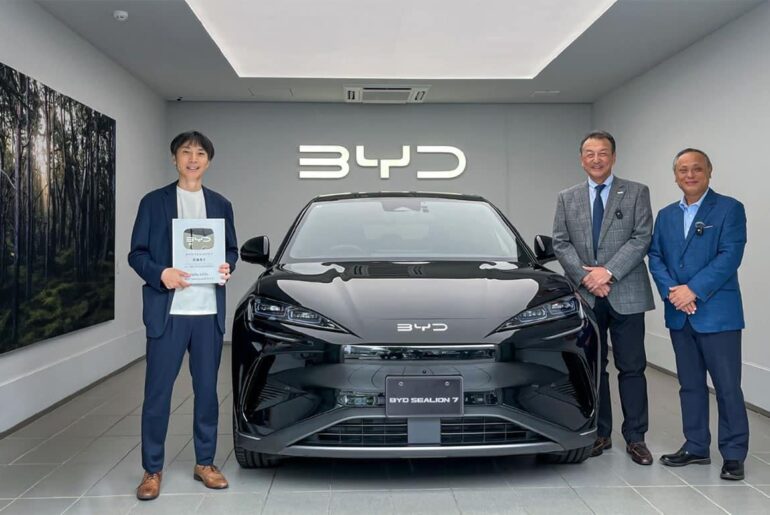
ISIDORE: Chinese automakers will likely be selling Chinese-branded cars here within 10 years. Likely sooner than that. That will be one of the more significant changes, similar to the entry of European and Japanese automakers in the past.
There will likely be more mergers within the industry, perhaps even the purchase of some major Western automaker by the Chinese. They already own Volvo, a fact few Volvo owners are probably aware of.
And while an all-electric future may no longer be reached in the US within 20 years, I suspect that traditional pure gasoline-powered cars will also be far less common than today — hybrids are going to become more important. And EVs will continue to gain modest market share.
And autonomous driving features will become more common, but I think that 20 years is too soon to see human-driven cars completely overtaken by fully autonomous cars.
Ride-hailing services will continue to have a growing share of miles traveled by Americans, but it’s not like the individually owned vehicles will go the way of the land-line telephone and be overtaken by new technology.