Two weeks after Canada began accepting import permits for Chinese-built EVs, not a single application has been processed — even as the Geely-controlled brand Lotus prepares what could be the first launch event for a Chinese-made model under the new tariff regime.
A spokesperson for Global Affairs Canada confirmed this week that no permits had been issued as of March 12, according to the Globe and Mail.
The quota system, which opened March 1, allows up to 49,000 China-built EVs into Canada annually at a 6.1% tariff — down from the 100% surtax imposed in October 2024.
Lotus Moves First
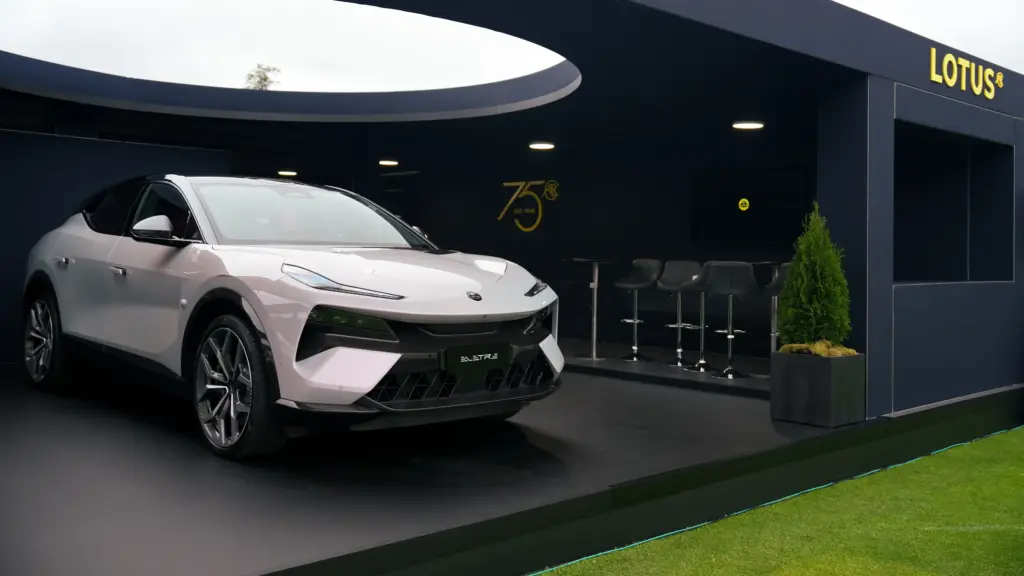
Geely‘s sports car brand Lotus is positioning the Eletre, an electric SUV manufactured at its Wuhan plant, as the first Chinese-made vehicle to launch in Canada under the new framework.
The company’s Americas chief Massimiliano Trantini told the Globe and Mail that the model has already completed Canadian homologation and that a launch event is planned “very soon,” with deliveries expected in the third quarter.
The Eletre would enter the market at roughly half its original planned price — a direct consequence of the tariff reduction from 100% to 6.1%.
In a press release issued on January 17 — one day after the trade deal was signed — Lotus described the policy as a “landmark” adjustment and said it would “directly reshape” the Eletre’s Canadian pricing strategy.
The company said the reduction would bring the planned retail price down by approximately 50%, with wholesale deliveries projected to achieve “exponential growth.”
Lotus described itself in the statement as the only mobility provider with a Chinese-made EV entering the North American market above the $80,000 price segment.
CEO Qingfeng Feng said Canada “has always been a strategically vital market” for the brand and that Lotus would “seize this opportunity to enhance investment in Canada to explore any potential tactical advantages and strengthen our footprint in the North American market.”
The company said its completion of North American homologation in 2024 and its network of six authorised Canadian dealerships — spanning 210 regional stores across 61 countries globally — positioned it to move faster than competitors still awaiting regulatory clearance.
Lotus currently operates six authorised dealerships in Canada and sells only the gas-powered Emira sports car in the market.
The company is part of Chinese billionaire Li Shufu’s Geely empire, which also controls Volvo, Polestar, Zeekr, and several other brands.
Tesla Already Benefiting
While Chinese-headquartered brands prepare their entries, Tesla has already moved to capitalise on the quota.
As EV reported earlier this month, Tesla pulled all US-made Model 3 inventory from its Canadian website and is expected to resume importing the sedan from its Shanghai Gigafactory under the 6.1% tariff rate.
The Model Y, produced at Tesla‘s European factory to bypass US tariffs, this week became eligible for Canada’s C$5,000 EV Affordability Program rebate after being priced at C$49,990 — just C$10 below the programme’s cap.
Tesla, Volvo, and Polestar — all of which have previously shipped China-built vehicles to Canada and hold existing regulatory approvals — are widely seen as the likeliest companies to secure the first permits.
BYD, Chery, and Geely Preparing
Behind the established brands, three of China’s largest automakers are working toward Canadian market entry by the end of 2026.
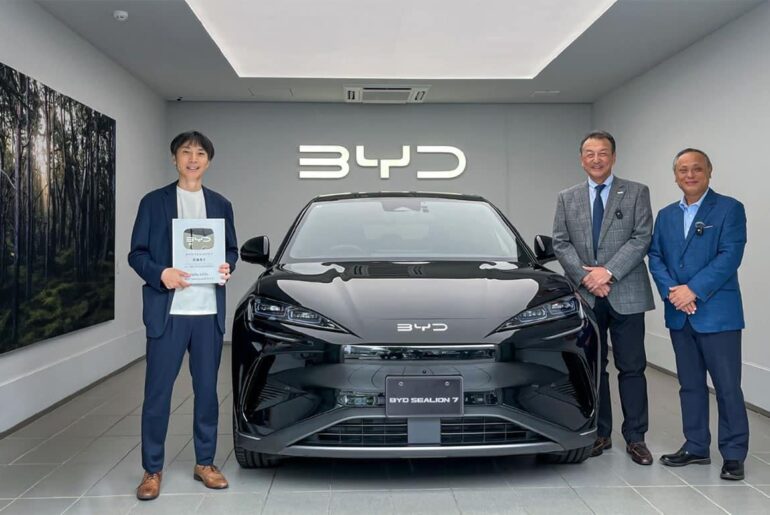
BYD is the furthest along among Chinese-headquartered manufacturers.
The company has registered its Shenzhen and Xi’an passenger vehicle factories with Transport Canada’s Appendix G preclearance registry — the only Chinese automaker to have done so as of early March, as EV first reported.
Those plants produce models including the Seal, Dolphin, Atto 3, and the compact Seagull — known as Dolphin Surf in Europe.
Two older BYD entries in the registry cover its commercial vehicle operations, including a bus assembly plant in Newmarket, Ontario that has supplied vehicles to the Toronto Transit Commission since 2019.
The Appendix G registration is a prerequisite that certifies a foreign manufacturer’s facilities as recognised for potential imports into Canada, but it is separate from the actual import permits administered by Global Affairs Canada under the new quota.
BYD‘s factory registration positions it to apply for those shipment-specific permits — which are valid for up to 60 days and can be filed up to 30 days before a shipment’s expected arrival.
No other major Chinese passenger car manufacturer — including Nio, XPeng, Chery, or Geely — appeared in the Appendix G registry.
Approached by EV in January, BYD said it was “unable to share specific details” on its Canadian plans.
XPeng declined to comment, while Nio and GAC Group did not respond to requests for comment. Li Auto said it is focused on other regions.
Chery has focused on recruiting Canadian-based staff in January for engineering, certification, and intelligent driving roles, referencing its Omoda and Jaecoo sub-brands.
Geely, beyond its Lotus push, has the broadest Canadian footprint through Volvo and Polestar, both of which redirected China-built production to European factories after the 2024 surtax.
Advisory firm DSMA, which is brokering talks between Chinese manufacturers and Canadian dealer groups, said the three companies expect to complete regulatory and commercial preparations in time for initial shipments by year-end, according to Automotive News.
Industry consultant Stephen Beatty, a former Toyota Canada executive, told the outlet that manufacturers without previously certified vehicles may require a year or longer to meet Canadian safety standards — suggesting that BYD, Chery, and Geely‘s first consumer deliveries could extend into 2027.
No Affordable EVs Required Yet
The early entrants face no pricing constraints.
As EV reported this week, final rules published in the Canada Gazette show that no affordable EV requirement applies in the first quota year.
The C$35,000 import price threshold kicks in only in 2027 at 10%, stepping up to 50% by 2030.
That creates a window for Lotus, Tesla, Polestar, and other premium brands to absorb early permits without any obligation to offer lower-priced models — a point of contention given that Prime Minister Mark Carney sold the deal partly on the promise of affordable EVs for Canadian consumers.
Local Production
Ottawa expects Chinese automakers to commit to joint-venture manufacturing in Canada within three years of the deal.
BYD has pushed back on that structure.
Executive VP Stella Li told Bloomberg this week that a joint venture “will not work” and that BYD would insist on owning and operating any Canadian facility outright.
Industry Minister Mélanie Joly has named Magna International as a potential partner for Chinese manufacturers, but the Canadian auto parts giant said it is still evaluating the new trade framework.
Magna has recently expanded its assembling partnerhsip with the Chinese EV maker XPeng by adding the P7+ sedan to the portfolio of its Austrian plant.