
I was thinking of the original 1998 Ford Focus en route to drive this plug-in hybrid SUV. Of how visionary engineers changed the terms of trade for family cars, the resulting high-specification hatchback providing the sort of feedback from the major controls previously available only in sports cars and high-end saloons. Ford knew that the public might not be able to name these dynamic qualities, but would appreciate them all the same, especially in comparison with rivals.
Those days are past, with the new norm being screeds of boilerplate Chinese SUVs, EVs and even more plug-in hybrids (PHEVs). In contrast to that epochal Focus, now it’s all bland design, with soggy steering, poor body control, terrible tyres and poorly trimmed interiors. Worse are the aggressive Advanced Driver Assistance Systems (Adas) and confusing, button-free, screen-based control systems.
Low expectations
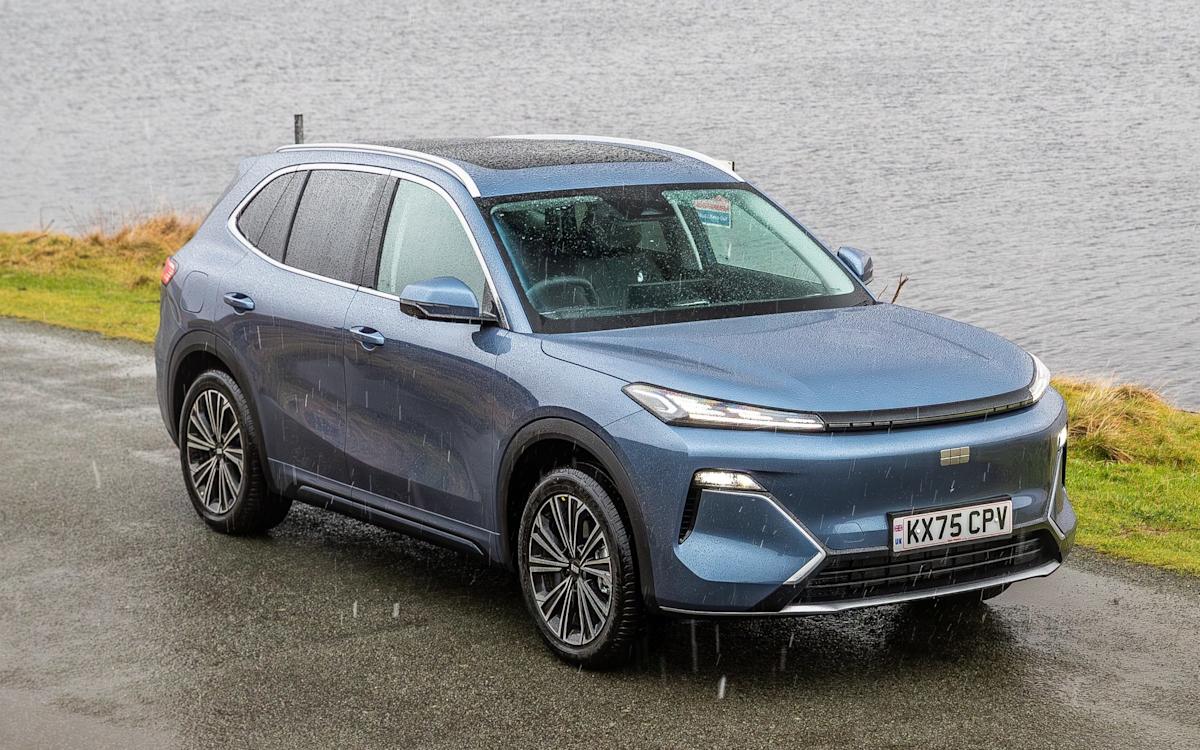
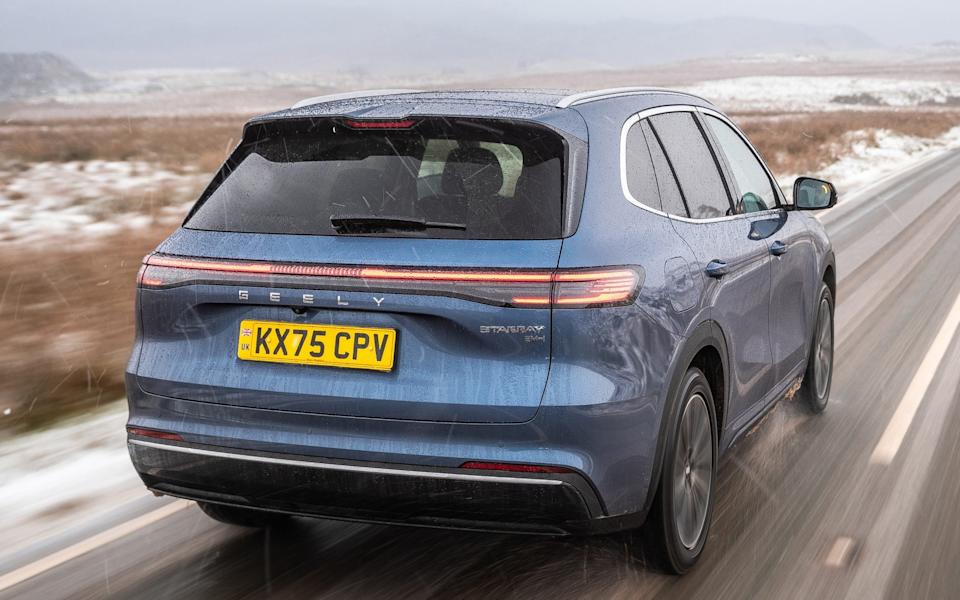
So I didn’t expect much of the Geely Starray PHEV. Its generic SUV looks render it instantly forgettable, especially in off-grey, off-blue or silver. It competes in the most popular 4.5m-plus class of SUV and like most of the competition it’s front-wheel drive and has MacPherson strut front suspension with a multi-link independent rear.
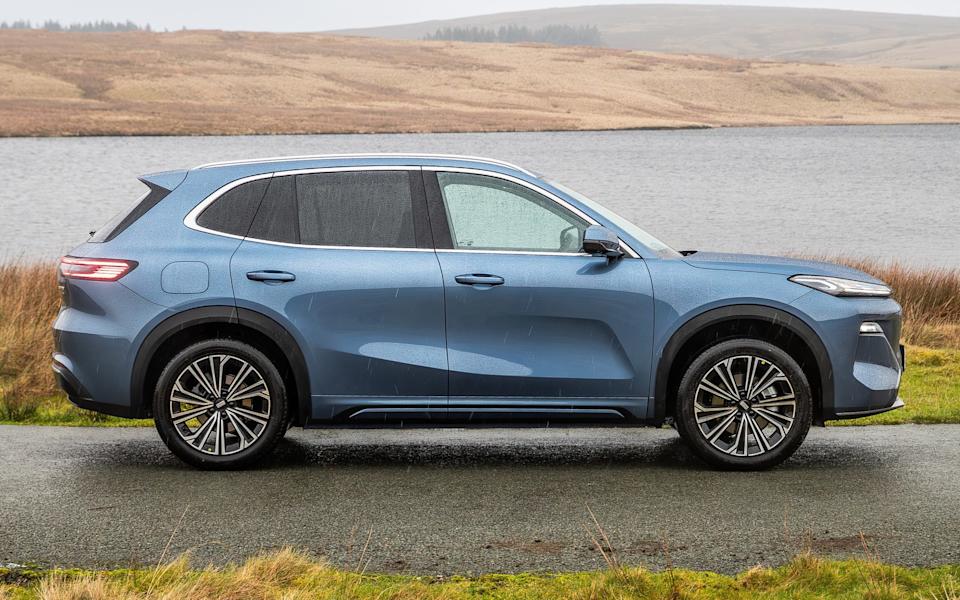
The Starray is front-wheel drive and has MacPherson strut front suspension with a multi-link independent rear
Geely (to give it its full name, Zhejiang Geely Holding Company Ltd), founded by entrepreneur Li Shufu, started making fridge parts in 1986. Motorcycle making started in 1994, car production in 1997. Then Geely went on a shopping spree starting with Volvo in 2010 and then, in no particular order: Lotus; Proton; Polestar; the London EV Company taxi firm; bike maker Benelli; flying car company Terrafugia; and Smart, along with numerous suppliers.
It builds cars under its own name as well as Zeekr and Lynk & Co models. It builds engines in a joint venture with Renault and also owns 17 per cent of Aston Martin. Last year, it built 4.1 million vehicles; when I last looked, it was the world’s 10th-largest car maker.
Inside job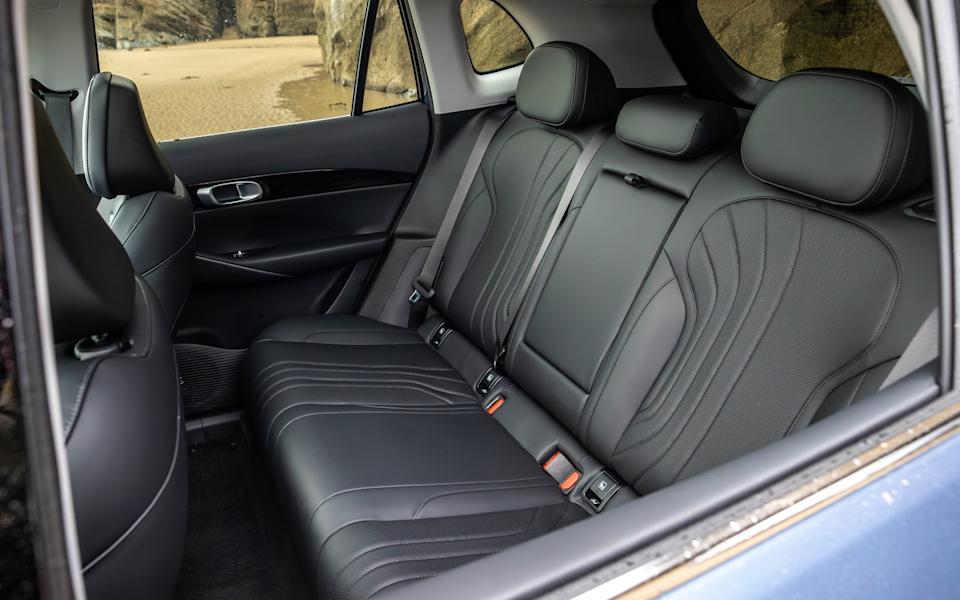
The seats are comfortable if not exactly supportive and there’s plenty of room in the back
Get up close, however, and the Starray seems pretty well put together. The doors shut with the same note and the panel gaps are consistent, although the powered tailgate creaks open at the speed of Dracula’s coffin lid.
Inside, the trim is a uniformly grey mix of man-made fabrics and synthetic leather, but the seats are comfortable if not exactly supportive. In the back, there’s head and legroom to spare and the seat-backs fold 60:40 to give a fairly flat load bed.
At 528 litres with the rear seats up and 2,065 litres with them folded, the boot is large for the class, with space underneath the floor for the charging cables and more.
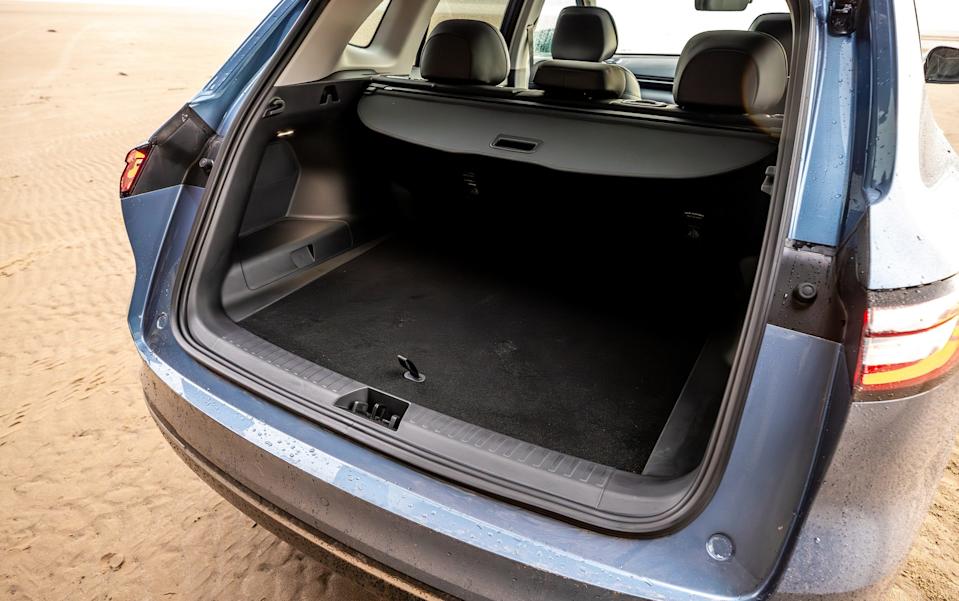
The boot is 528 litres with the rear seats up and 2,065 litres with them folded
Under the skin
The PHEV system is a two-motor unit within the housings around the 1.5-litre four-cylinder 97bhp/92lb ft petrol engine. The smaller motor is primarily responsible for charging current but assists the engine and the larger motor in Power mode. The larger motor is a 214bhp/193lb ft permanent magnet unit; in EV mode it alone drives the car, while Hybrid combines it and the petrol engine.
Two lithium iron phosphate (LFP) batteries are offered, 18.4kWh or 29.8kWh, which provide an EV range of up to 51 miles and 84 miles respectively. Charging is up to 30kW DC for the smaller-battery version, giving a 30 to 80 per cent charge in 20 minutes. The larger battery charges at 60kW DC for a 30 to 80 per cent fill in 16 minutes. As we all know, the quoted fuel economy and CO2 emissions of plug-in hybrids are arrant nonsense, but for the record, the small-battery version is quoted at 118mpg/54g/km and the larger one 201mpg/32g/km.
The smaller battery gives a 30 to 80 per cent charge in 20 minutes, while the larger one takes 16 minutes to do so
I drove the £32,690 Max upper-trim level, which has the smaller battery and weighs 1,770kg, but doesn’t have a quoted towing weight – the larger-battery version, called Ultra, is £34,990, weighs 1,815kg and will tow up to 750kg. The cheapest version is the Pro at £29,990.
On the road
The drive is selected via a capstan on the centre console, the pulling away gently using only the battery. The brakes feel abrupt at first; while you get used to it, they can still catch you out occasionally.
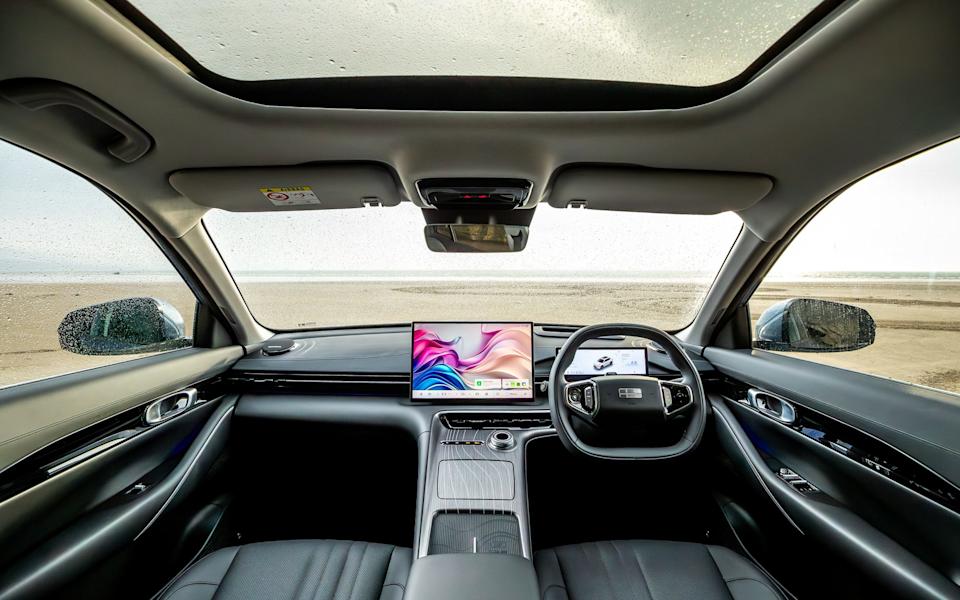
The drive is selected via a capstan on the centre console
This isn’t the world’s fastest PHEV, particularly when the battery charge runs out, and you can feel and hear the engine room noisily pouring on more coal when you attempt an overtake. The route was very modest, though, with only a bit of motorway, so for the most part it was stop-start, during which the battery could recuperate. Long journeys in hilly terrain would be tiring and noisy.
The springing and damping is soft and some might find the car’s gait borderline nauseous. The Starray rides bumps and mild potholes reasonably well, but it also pitches and heaves and never quite settles, even on straight, flat roads.
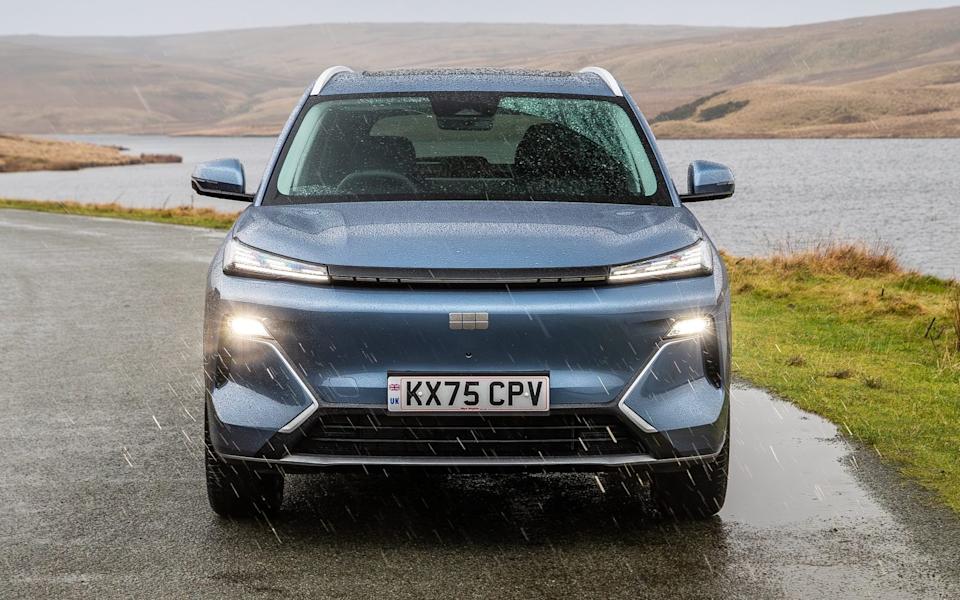
The Starray rides bumps and mild potholes well, but it never quite settles, even on straight, flat roads
A plus point is that the side-to-side movement of the body seems well damped and it doesn’t roll excessively while cornering.
Like most cars in this class, it’s a divorced drive, with little feedback from the steering and a wooden-feeling brake pedal.
There is also a lot of inbuilt frustration. The indicator stalk, for example, returns to its original position when operated, which means there’s no obvious way of cancelling the signal. And you know all is not well when they show you how to turn off the Adas driver assistance systems before you’ve even sat in the car. I left them on, but only for a while, since the lane-centring is annoying beyond belief and potentially hazardous in the way that it grabs at the wheel. Similarly the driver monitoring system is as strict and aggressive as an evil nanny.
The screen graphics are clear, but the small, narrow tiles mean it’s not easy to use. And while you can turn off most of the Adas systems, that’s not the work of the moment.
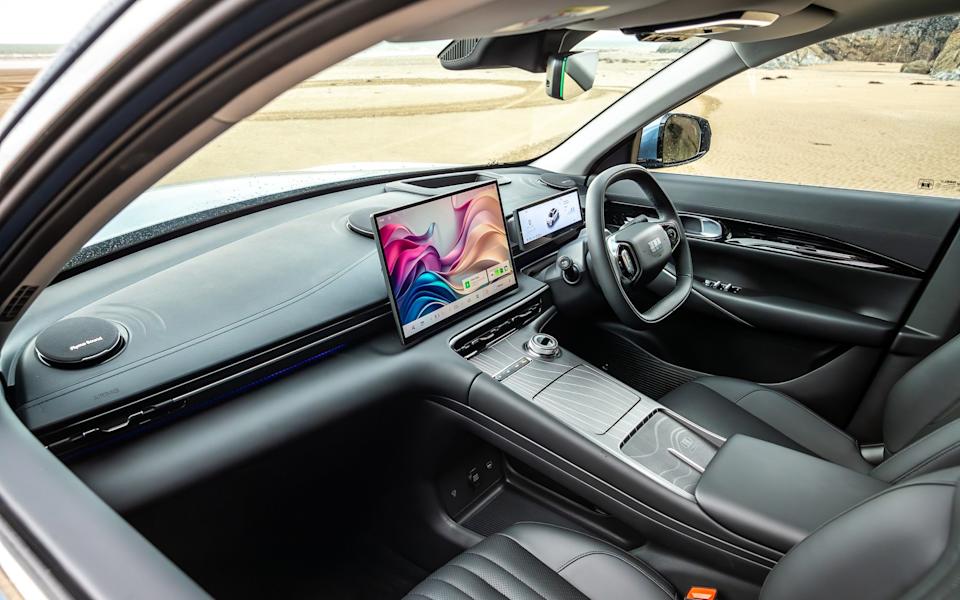
The screen graphics are clear, but the small, narrow tiles make it difficult to use
The Telegraph verdict
Consider that this and the similar, battery-powered EX5 were at one time going to be launched under the brand of taxi maker LEVC and perhaps there’s an indication of where the EM-i is aimed. Comfort, convenience and low-cost purchase and operation trump driver enjoyment, distinctive design or pride in ownership.
And that’s what the Starray EM-i feels like: a cab, built to perform a limited range of duties, be cheap to buy and run, with a veneer of sophistication and hi-tech.
That sort of commodified car will suit some, but there are almost 50 rivals in this family SUV market so you might want to try several others before making a decision.
The facts
On test: Geely Starray EM-i PHEV Max
Body style: Five-seat SUV
On sale: Now
How much? £29,999 to £34,990 (£32,690 as tested)
How fast? 105mph, 0-62mph in 8 sec
How economical? 118mpg (WLTP Combined), 40.1mpg on test
Engine and gearbox: 97bhp/92lb ft 1.5-litre four-cylinder petrol, twin-motor plug-in hybrid system and 18.4kWh lithium iron phosphate battery, front-wheel drive
Maximum power/torque: 258bhp/193lb ft
EV range: Up to 51 miles, 30 miles on test
CO2 emissions: 54g/km WLTP Combined
VED: £130 first year, then £195
Warranty: 6 years/125,000 miles (8 years/125,000 miles on battery)
The rivalsBYD Sealion 5, from £29,995
Very much the target for the Starray, this has similarly bland design, power outputs, LFP battery, fuel economy and fingernails-on-a-blackboard driver assistance systems.
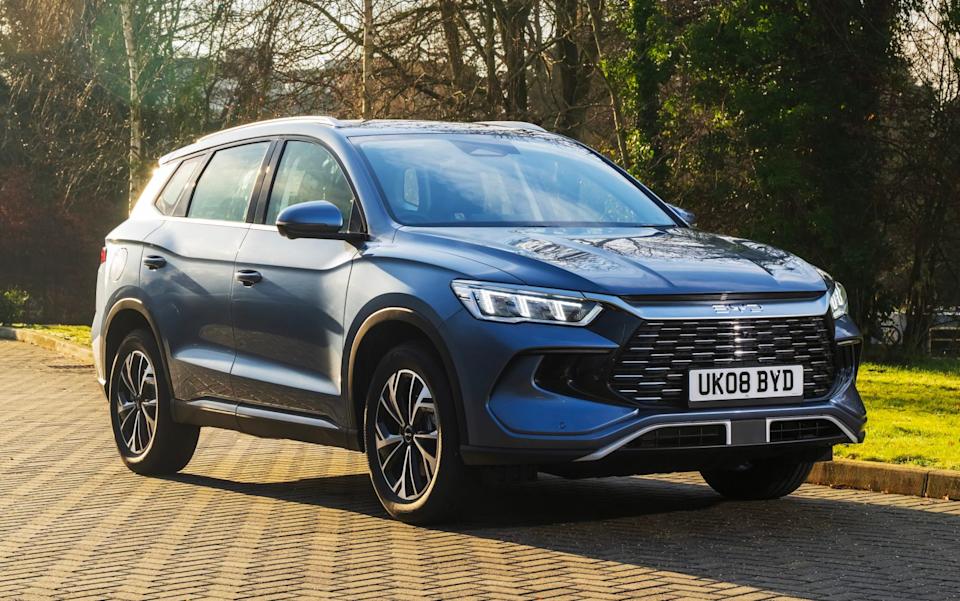
The BYD Sealion 5 has similarly bland design and not the most comfortable driver assistance systems
Jaecoo 7 PHEV, from £32,995
Looks like a Range Rover, but doesn’t drive like one. This Chery sub-brand is throwing these at the UK; how much they’ll be worth after three years remains to be seen.
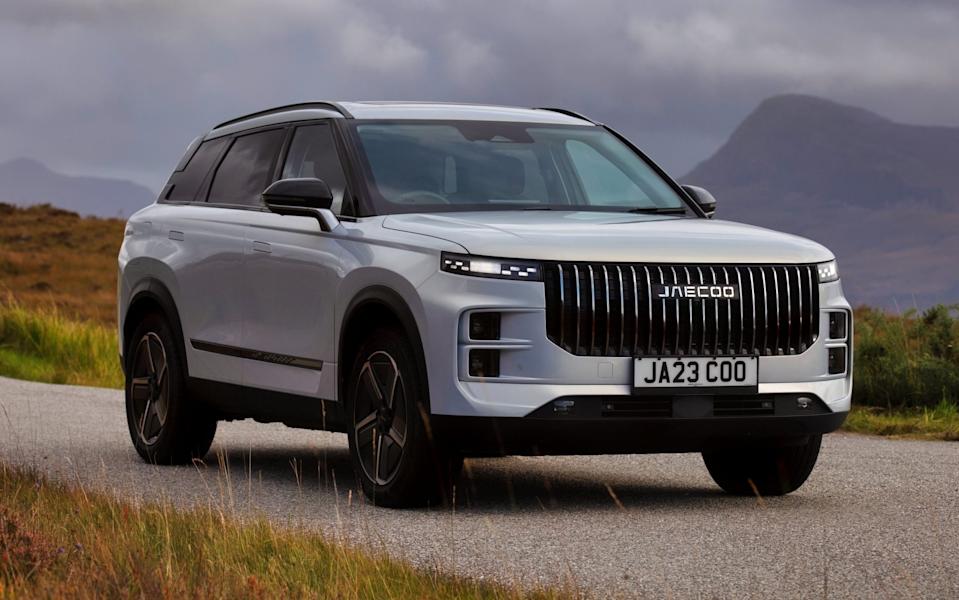
The Jaecoo 7 may look like a Range Rover, but it doesn’t drive like one