Most e-bikes are marketed around power, range, and tire size. But for many riders, the real difference comes from how a bike feels in everyday use. The Compact Utility Ebike from Windhorse is a good example, combining a 750W motor and fat tires with uncommon extras like turn signals, Bluetooth audio, and simulated moto sound.
The Market Still Focuses on the Usual Specs
There is nothing wrong with evaluating an e-bike by its motor, range, or wheel setup. Those are still core buying factors.
A stronger motor can help with hills and stop-start traffic. A larger battery can reduce range anxiety. Fat tires can improve confidence on mixed surfaces.
But those features are now so common that they are no longer enough on their own to make a bike memorable. Many models in the same category offer similar wattage, similar battery claims, and similar tire dimensions. As a result, product differentiation is increasingly happening elsewhere—in practical details, ride feel, and quality-of-life features.
That is where some compact e-bikes begin to feel more interesting.
Two Features That Still Feel Genuinely Uncommon
In a recent evaluation of a compact fat-tire e-bike, the biggest surprise was not the power delivery. It was the inclusion of two features that still feel relatively rare in the category: built-in turn signals and a Bluetooth speaker system with simulated motor sound.
Turn Signals Are More Useful Than They Sound
Most e-bikes now include at least a headlight and rear light. Brake lights are also becoming more common. But turn signals still are not standard across the category.
For urban riding, that matters.
A turn signal system adds a more visible way to communicate with traffic, especially in lower-light conditions or more complicated road environments. Hand signals remain important, but riders do not always feel equally confident using them in every setting—especially when accelerating from intersections, riding with one hand, or navigating denser streets.
That makes turn signals one of those features that may sound secondary on paper but can feel highly practical in daily use.
Bluetooth Audio and Simulated Sound Change the Personality of the Bike
The other unusual feature was a built-in Bluetooth speaker paired with simulated moto-style sound.
This is clearly not a necessity in the same way lights or brakes are. But it does change the character of the ride. Most e-bikes are designed to be quiet, discreet transportation tools. A model with integrated audio and optional sound simulation feels like it is aiming for something slightly different: not just utility, but also a bit of personality.
That may not matter to every rider. But for casual neighborhood riding, short leisure trips, or users who want their e-bike to feel more engaging, it is a notable difference.
And in a market where so many products start to blur together, that kind of distinction can matter.
Why These Features Matter More on a Compact E-Bike
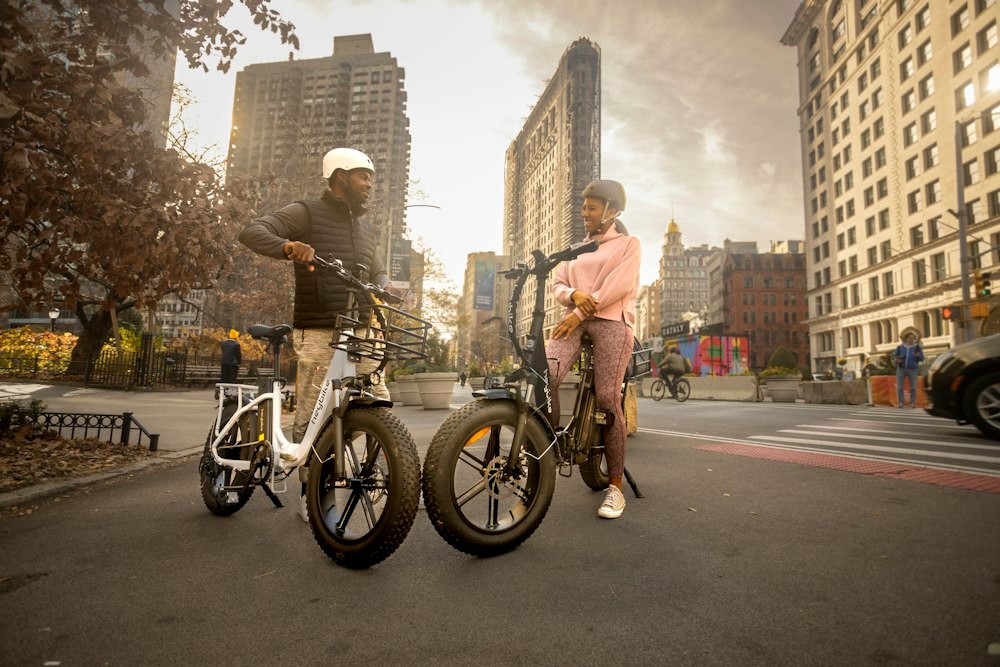
Compact e-bikes are often chosen for reasons that go beyond performance. Riders tend to buy them because they are easier to handle, easier to store, easier to mount, and often better suited to short urban trips than larger full-size models.
That changes the buying criteria.
When a bike is built for everyday city use, practical features become more important. Visibility matters more. Ease of charging matters more. Comfort over rough pavement matters more. Even entertainment features can matter more, because these bikes are often used for short repeat rides where overall experience plays a bigger role than raw speed.
BikeHacks’ commuter and buying guides reflect that same general principle: the best bike is not always the one with the biggest number, but the one that best fits how and where you actually ride.
The Underlying Performance Still Has to Be There
None of this means the core riding fundamentals can be ignored.
For a compact urban e-bike to work, it still needs enough real-world performance to feel stable and capable. In this case, that included a 750W motor, up to 65 N·m of torque, a 20 mph top speed, 16 × 4.0-inch fat tires, and dual suspension.
That combination makes sense for the category.
A 750W setup is enough to give a smaller e-bike confident takeoff and reasonable climbing support for urban routes. Fat tires help with grip and ride confidence across pavement, rougher streets, and light gravel. Dual suspension helps smooth out the constant imperfections of city riding—patched roads, curb transitions, expansion joints, and park paths.
These are not unusual features on their own. But they provide the baseline that allows the more distinctive features to matter. If the bike were uncomfortable or underpowered, the novelty features would not count for much.
A Practical Example of This Shift
One useful example of this design approach is the Windhorse V8 Mini, a compact fat-tire model that combines familiar urban e-bike fundamentals with a few less common extras. Its public product page highlights features such as 16 × 4.0-inch tires, dual suspension, a removable battery, built-in Bluetooth audio, simulated moto sound, and lighting that includes turn signals. Those details make it a good example of how some newer e-bikes are trying to differentiate through ride experience, not just spec-sheet escalation.
More importantly, it reflects a broader shift in the market: riders are no longer only comparing speed, power, and range. They are comparing convenience, comfort, safety cues, and how enjoyable the bike feels to use on ordinary days. For those interested in this product, V8 Mini is currently offering a $50 discount to subscribers.
What Buyers Should Actually Look For
If you are shopping for a compact e-bike today, it is still smart to start with the basics:
enough motor support for your terrain
battery range that matches your routine
tire setup appropriate for your roads
removable charging convenience
a fit that works for your height and riding style
But after that, it is worth paying closer attention to the details that shape real ownership:
Does the bike make city riding feel easier?
Does it help you stay visible in traffic?
Does it offer comfort on mixed surfaces?
Does it feel enjoyable enough that you will actually want to ride it often?
Those questions are often more useful than chasing the highest peak wattage in the category.
The Next Wave of E-Bike Competition May Be About Experience
As the e-bike market matures, brands will probably keep offering bigger batteries and stronger motors. But those alone will not be enough to stand out forever.
The next layer of competition is likely to come from how a bike feels in actual use—how intuitive it is, how comfortable it is, how easy it is to live with, and whether it offers thoughtful features that improve the ride in ways buyers notice immediately.
That is why uncommon features like turn signals, integrated audio, and more distinctive ride design deserve more attention than they usually get.
They may not replace the fundamentals. But they can be exactly what turns a competent e-bike into a memorable one.