Your support helps us to tell the story
From reproductive rights to climate change to Big Tech, The Independent is on the ground when the story is developing. Whether it’s investigating the financials of Elon Musk’s pro-Trump PAC or producing our latest documentary, ‘The A Word’, which shines a light on the American women fighting for reproductive rights, we know how important it is to parse out the facts from the messaging.
At such a critical moment in US history, we need reporters on the ground. Your donation allows us to keep sending journalists to speak to both sides of the story.
The Independent is trusted by Americans across the entire political spectrum. And unlike many other quality news outlets, we choose not to lock Americans out of our reporting and analysis with paywalls. We believe quality journalism should be available to everyone, paid for by those who can afford it.
Your support makes all the difference.Read more
Dacia has revealed an ambitious plan for the rest of the decade, confirming it will launch four fully-electric cars by 2030, while expanding into larger family vehicles and increasing the number of electrified models across its lineup.
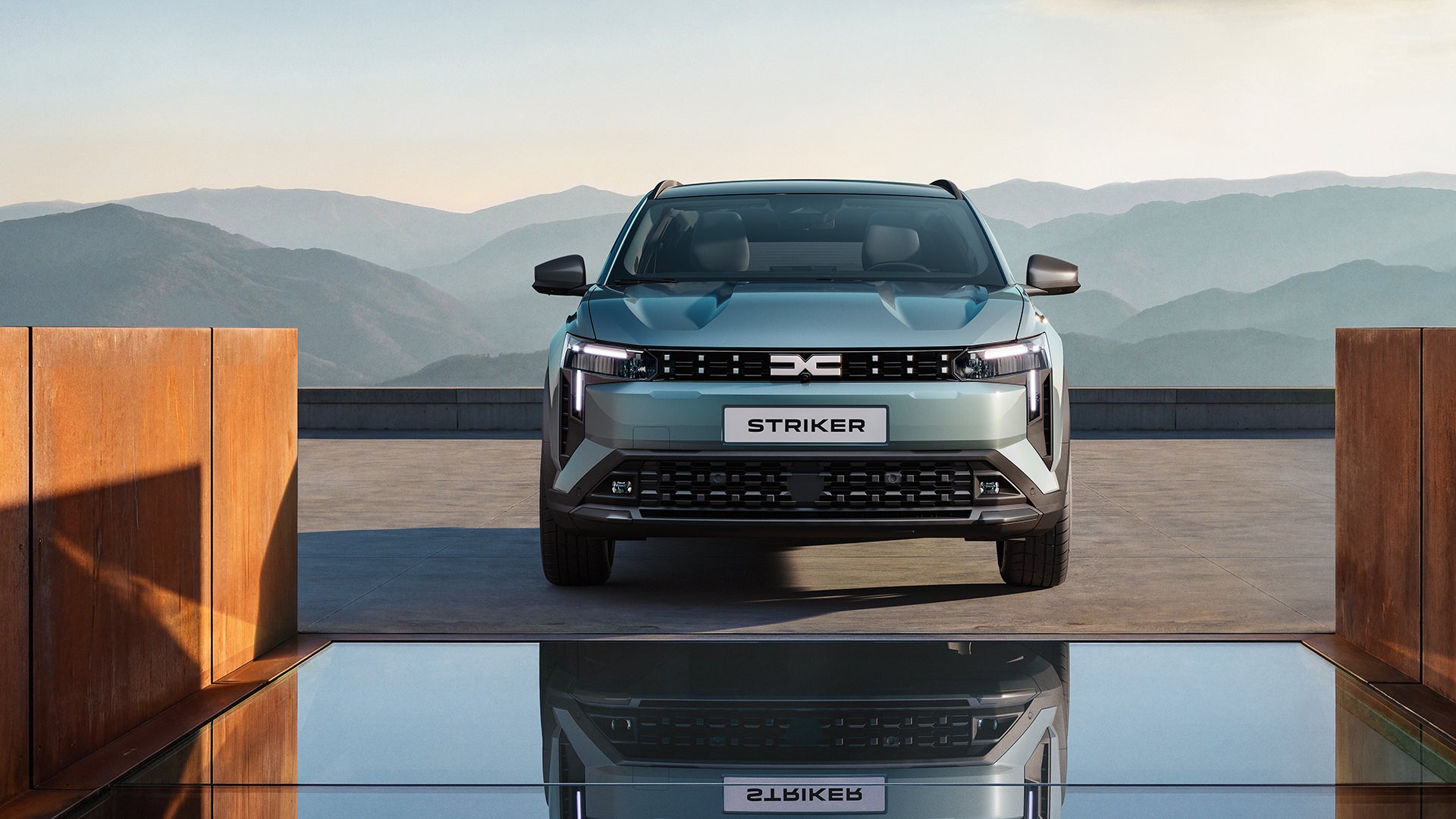
The strategy, announced during Renault Group’s futuREady Strategy Day, also included the first preview of a new C-segment crossover called Striker – signalling the brand’s intention to further grow beyond the small, budget cars that built its reputation.
The move signals a significant next step for a brand that has built its reputation on simple, robust and value-driven cars. Dacia says its success is underpinned by what it calls a “design-to-cost” approach that allows it to maintain a cost advantage of around 15 per cent compared with rivals.
.jpeg)
open image in gallery
The Dacia Striker reveals the latest design language for the budget brand (Dacia)
Dacia’s performance in Europe has been driven not only by competitive pricing but also by strong customer loyalty. According to the company, more than 70 per cent of existing owners buy another Dacia when they replace their car, while around 10 per cent move to another brand within Renault Group.
At the same time, Dacia continues to attract a large number of new buyers. Around 65 per cent of customers are said to be first-time buyers coming from outside the Renault Group.
Recent sales figures underline the brand’s strong position in the retail market. In 2025 the Sandero was Europe’s best-selling passenger car for the second consecutive year and has been the number one vehicle sold to private customers in Europe since 2017.
The Duster also remains a key pillar of the brand’s lineup, ranking as the second best-selling SUV to retail customers in Europe. Meanwhile the Bigster, Dacia’s entry into the larger C-SUV segment, became the best-selling C-segment SUV for retail buyers during the second half of 2025.
By the end of last year, the company reached another milestone, surpassing 10 million global sales since the launch of the original Logan in 2004.
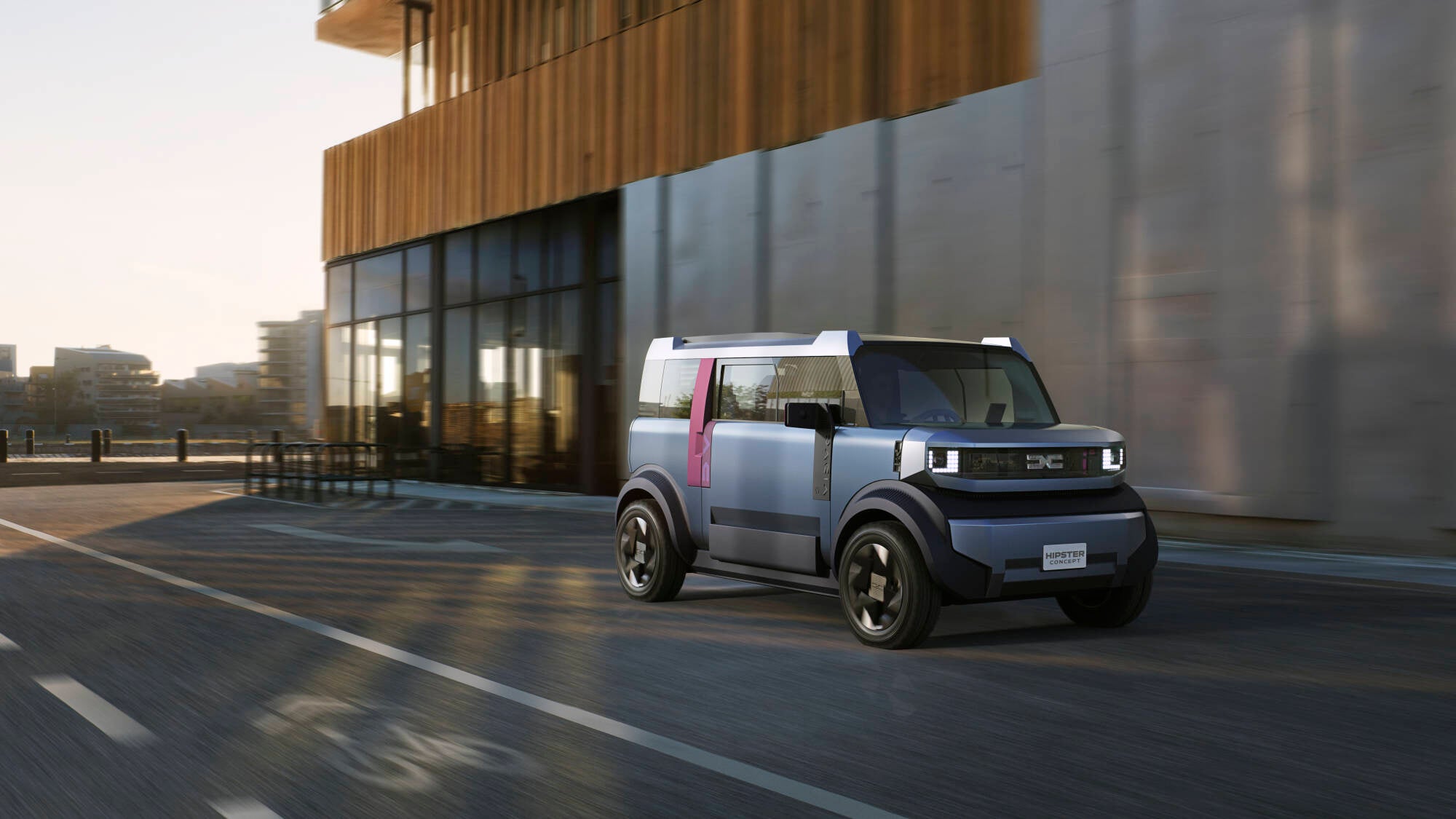
Dacia’s plan for the rest of the decade centres on electrification alongside a broader expansion into larger vehicle segments. The company has confirmed that it will launch four fully-electric vehicles by 2030, starting with a new A-segment electric car arriving this year. The model will use Renault Group’s AmpR Small platform, sharing tech with the new Renault Twingo, and will be built in Europe. Dacia says development took less than 16 months and that the car will start at under €18,000 (£15,600).
open image in gallery
Last year’s Dacia Hipster Concept hinted at what a new cheap all-electric Dacia could look like (Dacia)
Electrification will also spread across the wider lineup. Currently around one in four Dacias sold is electrified in some form – the company expects that figure to rise to two thirds of its total sales in the future as it introduces more electrified powertrain options.
Alongside the move into electric mobility, Dacia is also pushing further into the larger and more profitable C-segment. The brand currently expects C-segment vehicles to account for around one third of its sales mix in the coming years, up from about one fifth today.
As part of that push, Dacia used its Strategy Day presentation to reveal the name of a new model: Striker. The car is positioned as a C-segment crossover designed to complement the Bigster and is described as a multi-energy vehicle with different power options.
Striker combines elements of several body styles, blending the dynamism of a station wagon with the practicality of a spacious hatchback and the raised ride height of an SUV – it measures 4620mm in length.
The first pictures released show a strong vertical front end, aerodynamic styling and a distinctive daytime running light signature. The rear of the car features a glossy black element linking the tail lights, while subtle design touches such as a textured finish on some exterior components are intended to reinforce a durable and modern look.
.jpeg)
open image in gallery
The back of the Dacia Striker shows how the brand cleverly uses design to give its cars a bold and rugged look (Dacia)
The new crossover will include a hybrid version, a hybrid four-wheel-drive model and an LPG variant. Dacia says prices will start below €25,000 (£21,650).
Striker will sit alongside Bigster as part of what the brand describes as a complementary duo of larger vehicles aimed at strengthening its presence in the C-segment. The new model was shown in early form during the strategy presentation but will be fully revealed in June.
While new models and electrification are central to the brand’s plans, Dacia says it will also continue to evolve its existing lineup. The next generation of Sandero will feature a multi-energy powertrain range designed to align with the brand’s electrification roadmap.
At the same time the company says it will maintain the core elements that have defined the brand’s identity so far. These include accessible four-wheel-drive capability and its continued focus on LPG technology, both of which remain popular with many buyers looking for low running costs.