Tesla (TSLA +0.53%) is viewed as one of the most innovative and disruptive companies out there. However, it’s also a polarizing business, as the bulls and bears each have strong arguments for what will happen. Investors have to come to their own conclusions.
Where will Tesla stock be in five years?
Image source: Tesla.
Expect the unexpected
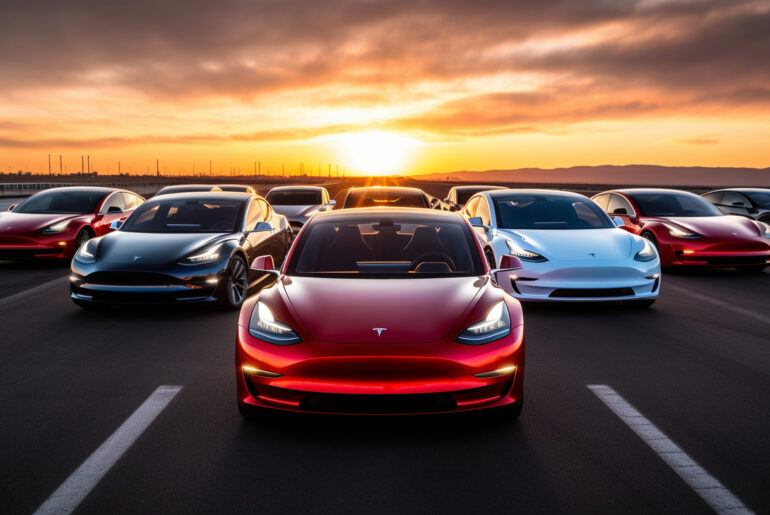
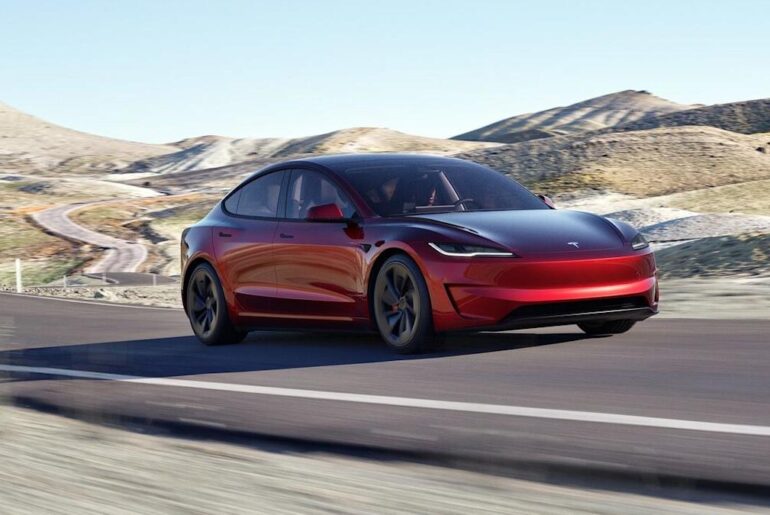
Investors can easily forget the fact that Tesla still sells automobiles. In 2025, 73% of its $94.8 billion in revenue came from electric vehicles (EVs). This is still a car company, albeit a struggling one.
Demand for EVs isn’t as robust as it used to be. Macro conditions aren’t the most supportive. The expiration of the $7,500 U.S. tax credit last year also doesn’t help.
More competition has entered the market, which pressures pricing power and limits Tesla’s ability to differentiate itself. Tesla has also decided to discontinue its Model S and Model X.
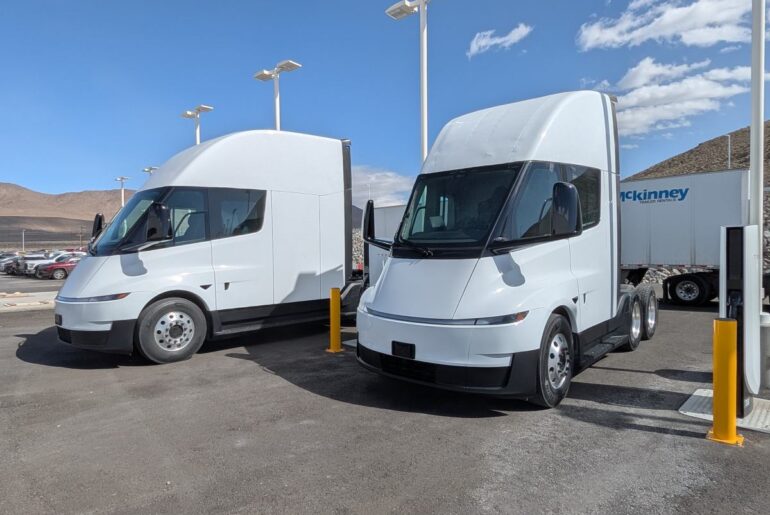
The business is fully focused on autonomous driving technology and robotics, with the purpose of bringing abundance to the world. Founder and CEO Elon Musk eventually wants Tesla robotaxis on roads all around the globe. And he wants to sell Optimus robots in commercial and consumer settings. But investors should anticipate extended timelines when it comes to progress.
Between now and 2031, investors should also expect the unexpected. Tesla’s strategy has undergone changes in the past. It would be silly to assume that things will stay the same going forward. What happens if Musk decides that driverless tech and robotics aren’t worth working on anymore and there’s another development that’s deserving of his attention? Tesla could then shift its focus on whatever the shiny new tech trend is.

Today’s Change
(0.53%) $2.09
Current Price
$398.82
Key Data Points
Market Cap
$1.5T
Day’s Range
$381.40 – $401.57
52wk Range
$214.25 – $498.83
Volume
4.2M
Avg Vol
65M
Gross Margin
18.03%
This is not a favorable setup for prospective investors
Either way, the market is fully supportive of what Tesla is doing, as demonstrated by its ridiculous valuation. The stock trades at a price-to-earnings ratio of 377. This has nothing to do with the current state of the business, which as mentioned, is a challenged EV maker.
Investors have extremely high hopes for what this company could become, not what it is today. That doesn’t provide a favorable opportunity for prospective shareholders.
Sure, the financial gains that could be achieved if Tesla robotaxis and Optimus robots find mass adoption could be jaw-dropping. However, we’re not even close to that point yet. And there’s no telling when, or if, this will even happen.
Tesla would need to executive flawlessly, which it hasn’t done in the past. The fact that there are variables outside of its control, like regulations, consumer perception, and availability of raw materials, also makes things very challenging.
For the stock to be a winner over the next five years, the business needs to outperform already sky-high expectations. It wouldn’t be surprising for Tesla to produce a disappointing return between now and March 2031.