Autoblog and Yahoo may earn commission from links in this article.
Half empty or half-full? Despite a 3.3% downturn in U.S. sales last year, Jim Donnelly, President and CEO of Mazda Motor America, Inc., is ever the optimist, convinced the company not only can “crest” the 400,000 mark for the third year in a row but come through with another sales record in 2026.
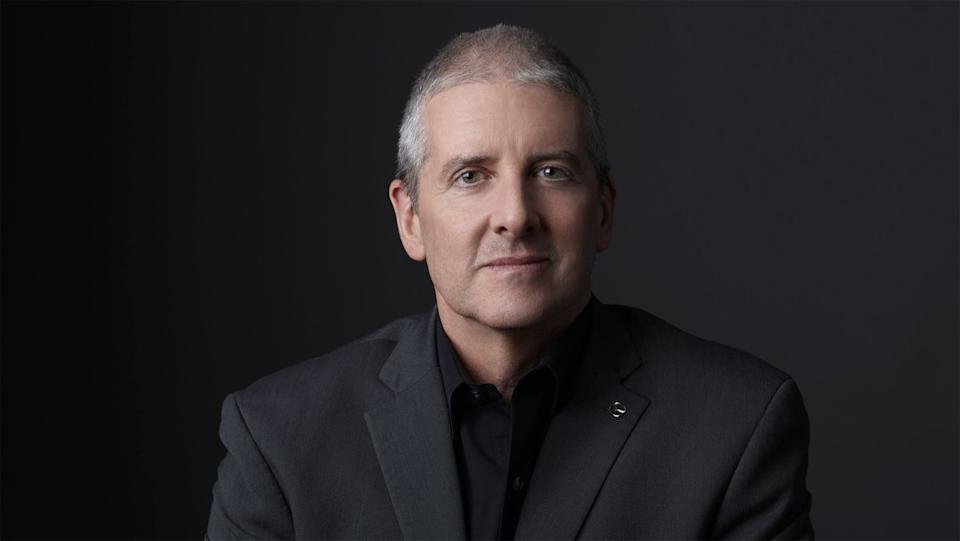
Mazda Motor America President and CEO Jim Donnelly.
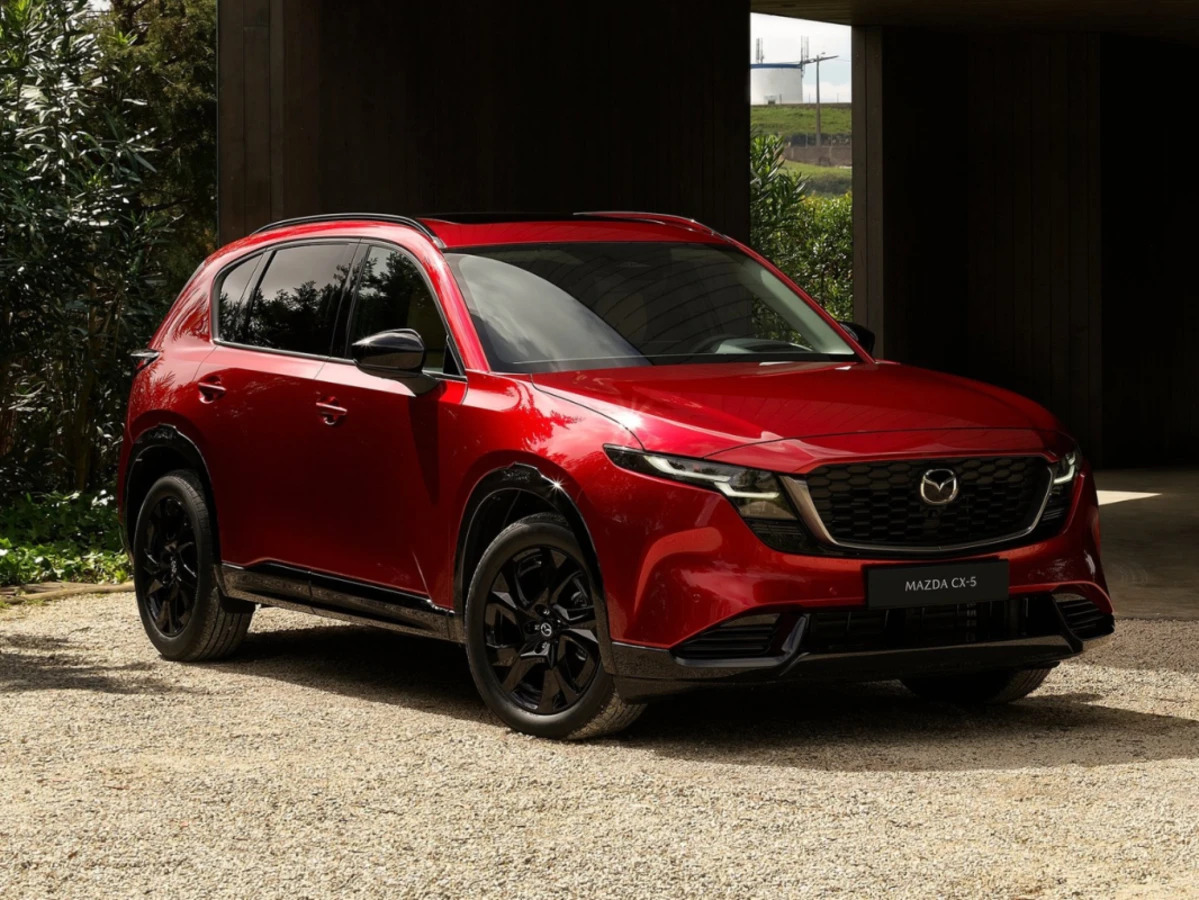
To deliver, he’s betting big on the arrival of the third-generation CX-5 crossover which introduces the Hiroshima-based automaker’s first hybrid drivetrain developed entirely in-house.
Related: Mazda CX-5 to Go Full Hybrid With New Skyactiv-Z Engine
From the days when it was largely dependent upon the quirky Wankel rotary engine, Mazda has traditionally followed its own path when it’s come to powertrain technology. But the CX-5 shows it falling a bit more in line with the broader industry trend towards electrification. For 2026, it offers conventional and plug-in hybrids in a number of product lines, including the flagship CX-90. And, as Donnelly told Autoblog in an exclusive interview, there will be still more coming in the next “24 to 36-month timeframe.”
Follow the Leader
“We’ve had an intentional follower mindset when it comes to electrification,” Donelly said during a break from a media drive of the new CX-5. That includes adding all-electric models to its line-up. The automaker’s initial entry, the short-range MX-30 failed to move the needle and was quickly pulled from the U.S. market. A long-range package was expected to debut in 2029 but, according to a January report by the Japanese news service Nikkei, it’s now been pushed back to 2029. Donnelly declined to officially confirm that – but notably didn’t deny the delay, explaining, “Clearly, we’re moving on a pathway towards that, but we feel the powertrains we have are fit for the U.S. market conditions right now.”
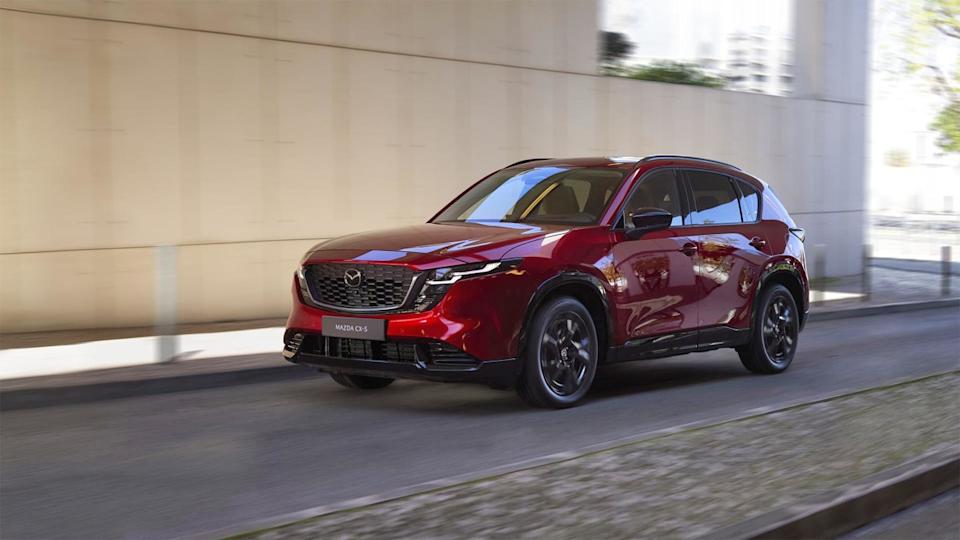
The 2026 Mazda CX-5 is the automaker’s first model with a homegrown hybrid.
The brand’s self-described “multi-solution” approach includes its first hybrid system, a twin-motor package developed by Toyota and now used in the CX-50. There’s also the plug-in hybrid package now offered in both the CX-70 and CX-90 models. As for the new SkyActiv-Z hybrid, Donnelly made it clear it won’t be limited to just CX-5. It would surprise few observers if it completely replaces the Toyota system. While both of the electrified packages deliver significant improvements in fuel economy over Mazda’s current gas-only SkyActiv drivetrains, the home-brew system, explained Donnelly, is meant to be “a driver’s hybrid, where you get the benefits of the efficiency improvements, but it’s very much the Mazda DNA in terms of the performance.”
Related: The Engine That Almost Killed Mazda — and Why It’s Still Alive Today
Don’t Count Out the Wankel
What we can bet on is that Mazda isn’t planning to become just another me-too brand when it comes to powertrains. It’s brought back its iconic rotary engine in an extended-range electric vehicle. Currently, this version of the MX-30 EV only is sold in Japan, but it offers hints of what might yet be coming.
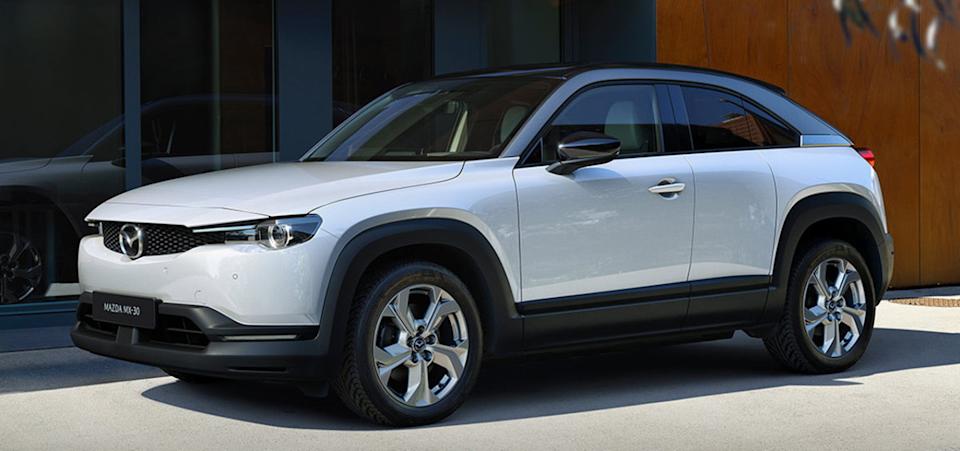
In Japan, the Mazda MX-30 EV is available with a Wankel-powered range-extender.Mazda (Mazda)
“There is work being done on the rotary, overall, and (it’s use as a) range-extender,” said Donnelly. “Rotary is such a part of our heritage…it will be part of our future. But I don’t have anything to announce today.”
Perhaps not, but Mazda offered some clues last October at the Japan Mobility Show in the form of the Vision X-Coupe Concept. Not only the latest example of Mazda’s eye-catching Kodo design language, it featured a new range-extended, rotary-powered drivetrain that, the automaker claimed, is capable of capturing CO2 so that it can leave the air cleaner, “the more you drive.” As Autoblog reported from Tokyo, that technology is more than just the typical flight of auto show fancy, Mazda insisted. It is getting ready to put the Mobile Carbon Capture system through a real-world test in a particularly challenging environment, fitted onto a Mazda Spirit Racing car competing in the upcoming the Super Taikyu endurance racing series.
Finding an Audience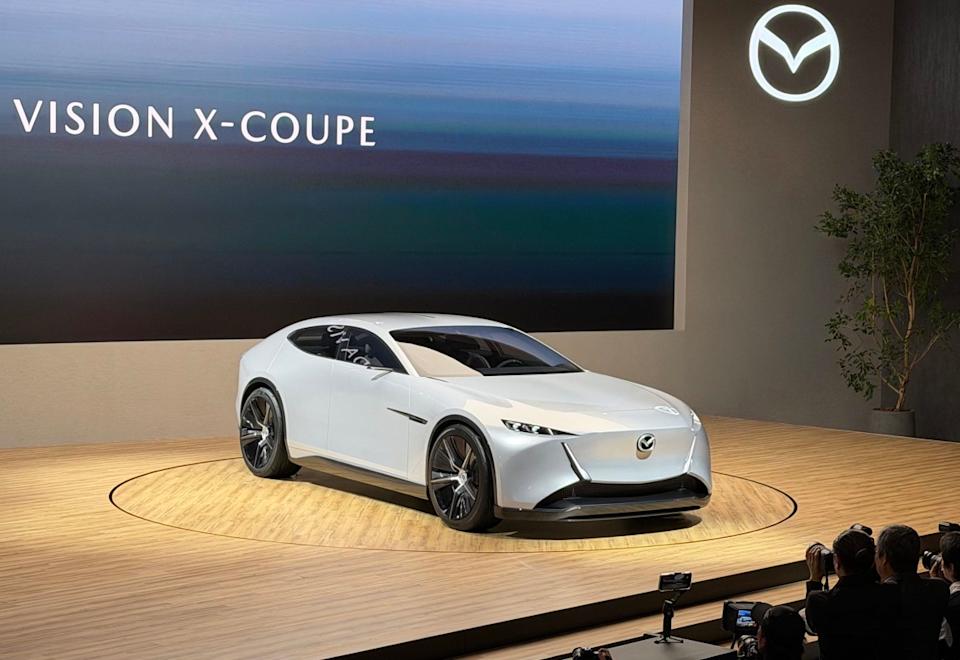
Mazda revealed the Vision X-Coupe at the Japan Mobility Show last October.
Mazda has had a roller-coaster history when it comes to both sales and profits. It nearly collapsed when early versions of the Wankel proved to have major technical flaws. It survived for years as a vassal of Ford Motor Co. It today has made good use of its close ties to Toyota. Not only does the bigger automaker provide technology and powertrain assistance but the two manufacturers launched the Toyota-Mazda Joint Assembly Plant in Alabama in 2021. It currently rolls out the CX-50, and strong demand has allowed Mazda to keep boosting production. The target is 130,000 this year, said Donnelly, with a goal of eventually boosting that to 150,000, the capacity on the Mazda side of the plant.
The automaker is in the midst of a 10-year plan first put in place by global CEO Masahiro Moro when he was running U.S. operations. It’s been paying off State-side. For years, the company struggled to grow much beyond 200,000 annual sales. It fell just short of 280,000 in 2019 and 2020, as COVID hit. But with new offerings, like the CX-50, launched in 2022, followed by the CX-90 and CX-70, demand came out of the pandemic with strong momentum. It surged to a record 424,382, a 16.8% increase, in 2024. Last year saw sales dip 3.3%, to 410,346. A variety of factors led to that slowdown, including the Trump tariffs which led it to adjust production plans for models like the Mexican-made CX-30 crossover and Mazda3.
Addressing Affordability
While Donnelly doesn’t call it a shift in “strategy,” he said, “We’ve adjusted our mix and how we want to go to market.” Notably, it moved production of the Mazda3 from Mexico to Japan. Ironically, because of the quirks of the Trump tariff program, that brought down the duties on the subcompact nameplate from 25 to 15%. That’s critical when it comes to targeting entry-level buyers, of course, and Mazda3 is now playing a key role in how the automaker addresses the challenge of affordability.
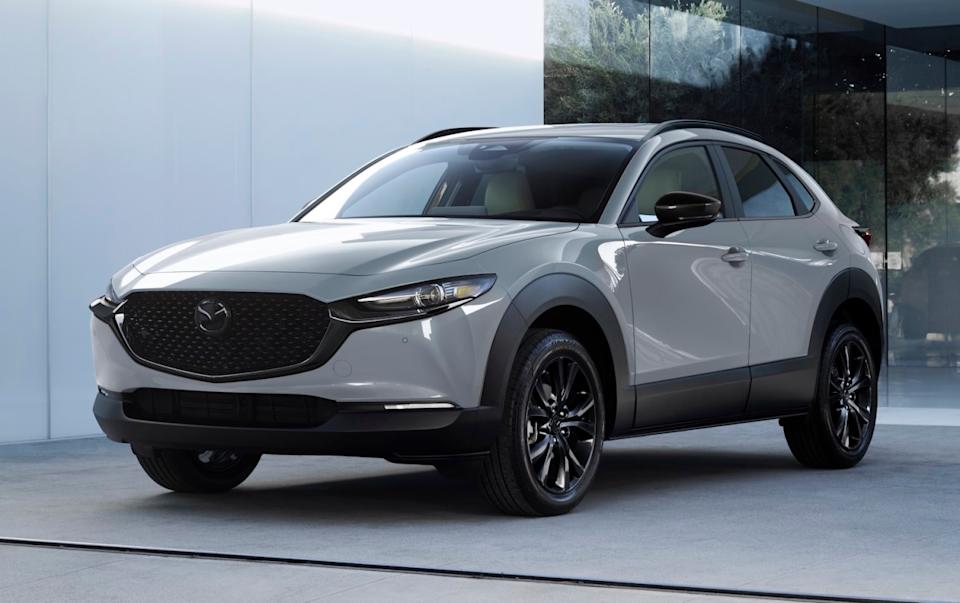
Mazda’s most affordable crossover, the CX-30.Mazda (Mazda)
The average transaction price of a new vehicle topped $50,000, an all-time record, in December, according to Edmunds. That has led to a growing crisis pricing millions of Americans out of the new vehicle market. For its part, the strategy Moro put in place is designed to cover a broader range of the market. While that means drawing in more affluent buyers with products like the CX-70 and CX-90, Mazda wants to provide a refuge for buyers on a budget, as well.
There is, said Donnelly, “no question this is an issue. Affordability concerns are very real and providing a limiter on the industry,” which could see a noticeable slump in sales in 2026, Mazda is forecasting. As a result, “We’re focusing more on Mazda3 to really address the affordability issue.” In its sedan form it carries a base price of $24,550. The Mazda3 hatchback starts at $25,550.
Related: I Drove the Slowest Mazda MX-5, Here’s My Honest Review
More Sedans?
Over the past two decades, sedans have rapidly lost traction in the U.S. market. Several manufacturers have effectively walked away from that market segment, Ford Motor Co., in particular. But the affordability crisis has some brands rethinking that trend, Ford CEO Jim Farley recently saying he would “never say never” to the idea of returning sedans to the line-up. For his part, Donnelly said that’s been obvious to Mazda. “There’s an opportunity there. Definitely a market there.” But when asked if that suggests more sedans and hatchbacks might be in the works, he replied, “Not in the near-term.” But longer-term? “There’s clearly a portion of the marketplace that sedans are still the right solution for.”
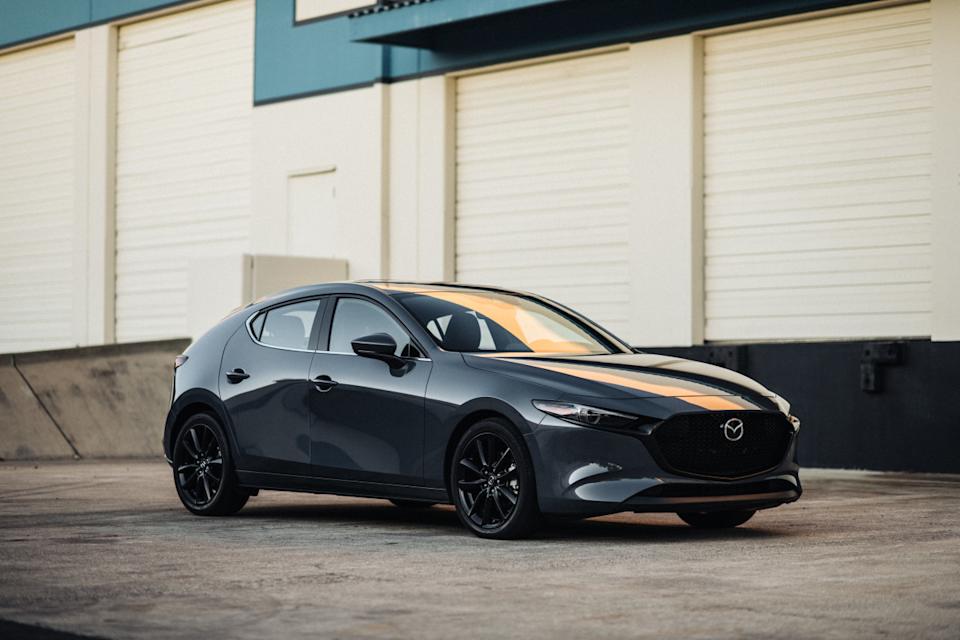
The Mazda3 is available as both a sedan and hatchback. They’re the most affordable options in the automaker’s line-up.Mazda (Mazda)
The Japanese automaker has other ways to address affordability, he noted. As part of a multi-billion-dollar investment in its retail operations, the company has worked with its dealers to boost not only new vehicle sales, but service retention – keeping owners coming back to Mazda service bays after their warranties expire. It’s also put a sharper focus on certified pre-owned vehicles, the CPO unit reaching a record 70,000 sales last year. That, said Donnelly, “has kept people in the Mazda family,” and makes it easier to win them over to the brand’s new products when they have the budget in the future.
Related: The Mazda CX-5 Has Achieved a Milestone Only Two Other Mazdas Ever Have
This story was originally published by Autoblog on Mar 7, 2026, where it first appeared in the Car Buying section. Add Autoblog as a Preferred Source by clicking here.