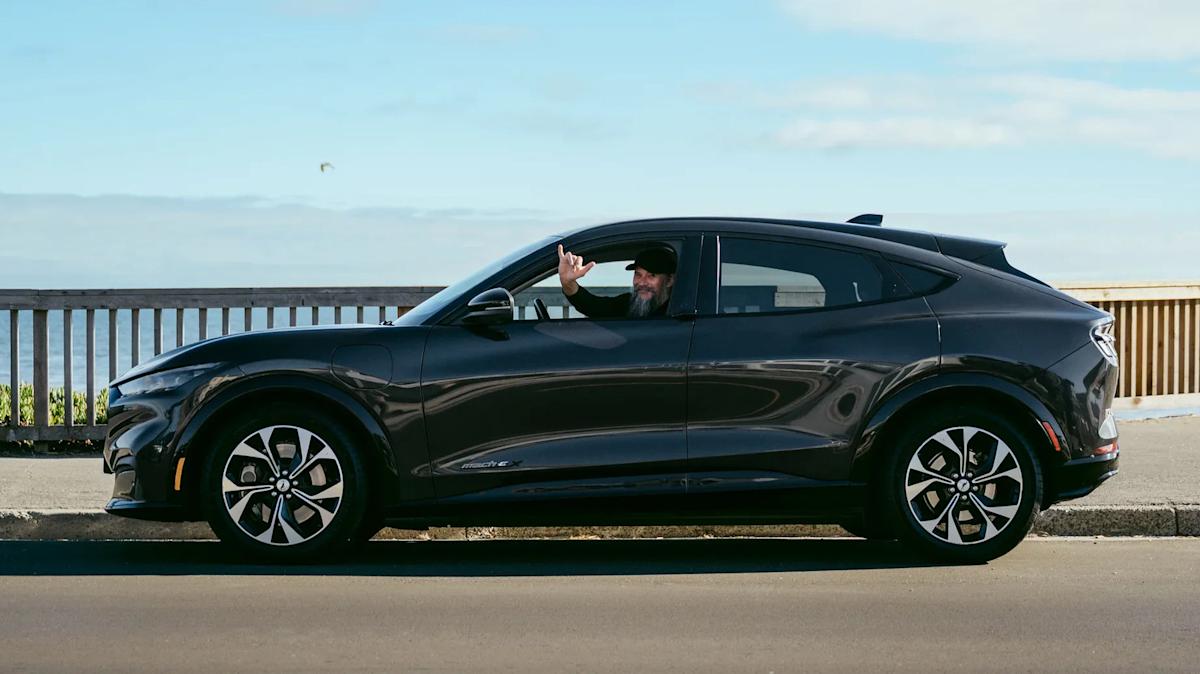
Earlier this year, David Blenkle watched the odometer in his 2022 Ford Mustang Mach-E cross the 300,000-mile mark. Considering how much better-built cars are than they used to be, hitting that kind of mileage in a new car is impressive but not unheard of — except for the fact that the Mach-E is electric. Because, as every anti-EV crusader knows, EVs constantly need new batteries, and battery replacements are incredibly expensive, which means this guy must have spent a fortune buying batteries. Wait, what’s that? His car is still on its original battery and doing just fine? That can’t be right.
Okay, so maybe he hasn’t had to replace the battery yet, but it’s definitely on its last legs, right? Any day now, Blenkle’s going to be forced to spend tens of thousands of dollars just to keep his disposable toy car running, and when that happens, he’s going to feel like such a fool. A rube, even! Except Forbes reports that with the Mach-E’s odometer now sitting at just over 316,000 miles, Blenkle reports only seeing 8% degradation, leaving him with 92% of the battery’s original life, and meaning his car still gets about 300 miles of range on a full charge.
Well, that’s definitely not going to help the narrative. Then again, the internet is still full of people who claim to be convinced the COVID vaccine killed more people than the virus did, so something tells me this particular narrative isn’t going anywhere either, no matter how much evidence there is that battery replacements are not a regular concern with EVs.
Read more: 11 Huge Engines With Surprisingly Low Horsepower
Looking at the data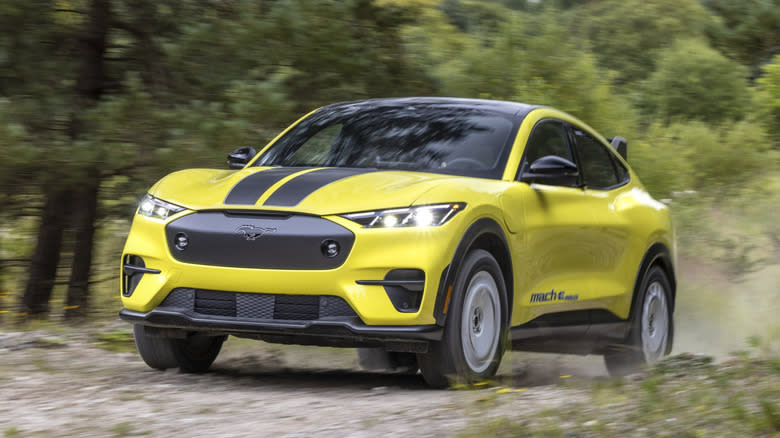
Ford Mustang Mach-E – Ford
At this point, there aren’t a lot of other EVs with more than 300,000 miles on them, so it’s hard to tell just how common Blenkle’s experience is among Mach-E owners. Ford says it designed the batteries in the Mach-E to still retain at least 90% battery health at 100,000 miles, but 300,000 is a lot more than 100,000. In fact, it’s three times more if you still believe those math people and their “calculations.”
Blenke’s charging habits appear to be pretty good too, which could help avoid degradation. According to Forbes, he never charges above 90% and seldom lets the charge drop below 20%. That said, while we don’t have a ton of data on how much EV batteries degrade after an extreme number of miles, Forbes did find a study from the research and analytics firm Recurrent that looked into high-mile (mostly Tesla) EVs and found battery degradation past 100,000 miles happens slower than a lot of people might assume. On average, it found that cars with 100,000 to 150,000 miles on them still had 86% battery health remaining, while cars between 150,000 and 200,000 miles retained 84%. Between 200,000 and 250,000 miles, that figure only dropped to 81%, and north of 250,000 miles, the average was still 80%.
There’s just no evidence that modern EV batteries are some ticking time bomb waiting to bankrupt you and ruin your life. There are certainly situations where degradation over time could be an issue, like if you used to be able to make a round-trip drive without stopping to charge and eventually find yourself unable to do so, but that scenario isn’t as common as some people might have you believe. Is an EV the right choice for everyone right now? Nope, but especially used, they’re a much better fit for a lot more people than their fiercest opponents would like to admit.
Want more like this? Join the Jalopnik newsletter to get the latest auto news sent straight to your inbox, and add us as a preferred search source on Google.
Read the original article on Jalopnik.